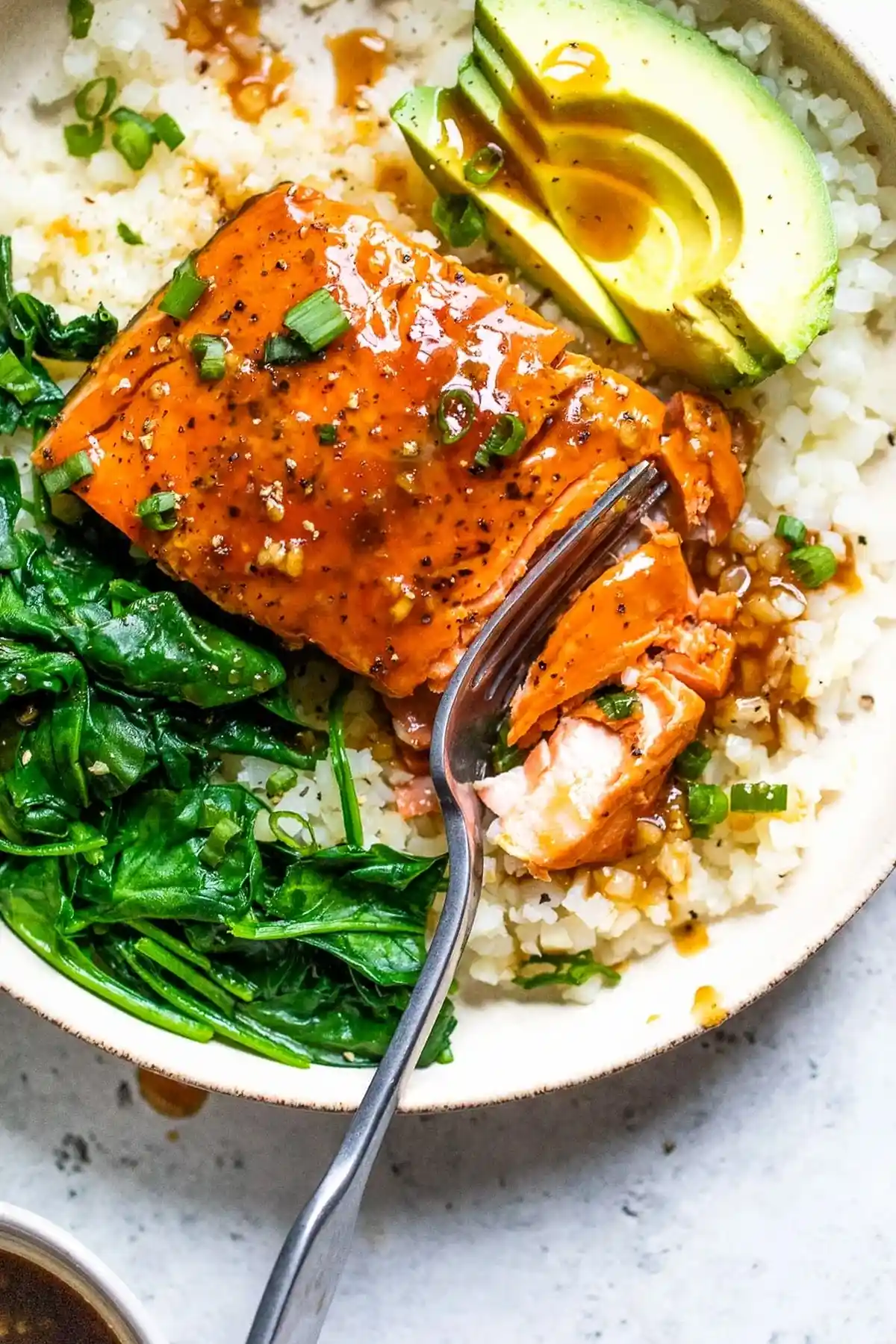
This teriyaki salmon bowl comes together in just 20 minutes for a fast and nutritious dinner. It combines glazed salmon with a cauliflower rice base and fresh vegetables for a balanced meal. It is an ideal option for those seeking a low-carb yet flavor-packed weeknight recipe.
List of ingredients
- 2 salmon fillets (thawed) – use skin-on fillets for better stability.
- Salt and pepper – used for basic seasoning of the fish.
- 1 tsp olive oil – for searing the salmon in the skillet.
- 3 garlic cloves (minced) – adds a pungent aromatic base to the glaze.
- 1/4 cup coconut aminos – a savory, soy-free alternative for the sauce.
- 2 tbsp maple syrup – provides a natural sweetness and thickness.
- 1 tbsp rice vinegar – adds a tangy acidity to balance the syrup.
- 1/2 tsp fresh ginger (grated) – provides a warm, spicy undertone.
- 2 tsp arrowroot – used as a thickening agent for the glaze.
- 12 oz. cauliflower rice (cooked) – serves as a healthy, low-carb base.
- 1 avocado – sliced for added creaminess and healthy fats.
- 3 cups spinach – fresh leaves for a nutrient-dense side.
- Green onion – thinly sliced for a fresh garnish.
step-by-step instructions
- Season the fish: Sprinkle a pinch of salt and pepper on both sides of the thawed salmon fillets.
- Sear the salmon: Heat olive oil in a large nonstick skillet over medium-high heat. Place the salmon skin side down and cook for 5 minutes.
- Flip and finish: Turn the fillets over and cook skin side up for 5-6 minutes. If the fillets are thick, cover the skillet with a lid to speed up the internal cooking process.
- Prepare the glaze: While the fish cooks, whisk together the coconut aminos, maple syrup, rice vinegar, grated ginger, and arrowroot in a small bowl.
- Cook the base: Prepare the cauliflower rice according to the package instructions and set aside.
- Sauté the garlic: Once the salmon is done, reduce the heat to medium-low and add minced garlic to the pan. Sauté for 1 minute until fragrant.
- Thicken the sauce: Lower the heat further and pour in the sauce mixture. Simmer until the glaze thickens, then spoon it generously over the salmon fillets. If the sauce is too thin, increase heat to medium.
- Assemble the bowls: Divide the cooked cauliflower rice into two bowls and top each with a salmon fillet and sliced avocado.
- Wilt the spinach: Wipe out the skillet and return it to medium heat with a drizzle of oil. Sauté the spinach for 2-3 minutes until just wilted.
- Final touch: Add the spinach to the bowls and garnish with sliced green onions.
Cooking Techniques for Perfect Salmon
Achieving a Crispy Skin
Heat the oil until it shimmers before adding the fillets to the pan. Press the salmon down lightly with a spatula to ensure the skin maintains full contact with the heat. Avoid moving the fish for the first five minutes to allow a golden crust to form.
Preventing Overcooking
Salmon continues to cook after it is removed from the heat source. Take the fillets off the pan when they are just slightly under your desired doneness. This prevents the protein from becoming dry, chalky, or overly firm.
Handling Thawed Fillets
Always pat your salmon fillets dry with paper towels before adding any seasoning. Excess moisture on the surface creates steam, which prevents a proper sear from forming. Dry fish ensures the teriyaki glaze adheres better to the crust.
Using the Lid Method
For fillets thicker than one inch, cover the skillet with a lid for a portion of the cooking time. This traps steam and heat, cooking the center of the fish without burning the exterior. This is particularly useful for wild-caught varieties which can be denser.
Ingredient Substitutions and Alternatives
Replacing Coconut Aminos
If coconut aminos are unavailable, you can use tamari or soy sauce for a similar savory profile. Tamari is a great gluten-free option that provides the necessary saltiness. Note that these may be saltier, so you may want to reduce the amount of added salt.
Using Different Sweeteners
Honey provides a thicker consistency and a floral note that pairs well with ginger. Agave nectar is another liquid alternative that blends easily into the sauce. Maple syrup is generally preferred for its distinct depth of flavor.
Alternative Grain Bases
Swap cauliflower rice for cooked brown rice for more dietary fiber and a heartier texture. Quinoa is another excellent choice that adds a nutty flavor and extra protein. White jasmine rice provides a more traditional Asian-style experience.
Swapping the Greens
Use steamed broccoli florets for a crunchier texture and more volume. Sautéed kale or collard greens offer a heartier alternative to spinach. Carrots or snap peas can be added for a pop of color and natural sweetness.
Thickening Agents Instead of Arrowroot
Cornstarch is the most common substitute and works very similarly to arrowroot. Tapioca starch also provides a glossy finish to the final glaze. Ensure you mix the thickener with a bit of cold liquid first to prevent lumps from forming.
Flavor Variations
Adding a Spicy Kick
Stir in a teaspoon of sriracha or red pepper flakes into the sauce mixture. This adds a heat level that cuts through the richness of the salmon and avocado. For a more complex heat, use a small amount of gochujang paste.
Citrus-Infused Glaze
Add a squeeze of fresh lime or lemon juice at the very end of the cooking process. This brightens the heavy notes of the maple syrup and coconut aminos. The added acid helps balance the healthy fats found in the avocado.
Nutty Toppings
Garnish the finished bowls with toasted sesame seeds for a classic look and taste. Crushed cashews or slivered almonds provide a satisfying crunch. These toppings add a necessary layer of texture to the soft rice and fish.
Umami Boosts
Add a pinch of mushroom powder to the sauce mixture to deepen the savory qualities. This enhances the overall flavor profile without adding significant calories. A drop of toasted sesame oil also adds a rich aroma to the dish.
Serving and Presentation Ideas
Creating a Platter Style
Instead of individual bowls, arrange the cauliflower rice on a large serving platter. Place the glazed salmon on top and surround it with avocado slices and wilted spinach. This format is ideal for family-style dinners or dinner parties.
Adding Pickled Elements
Top the bowl with quick-pickled carrots or sliced radishes. The vinegar from the pickles cleanses the palate between bites of the rich salmon. This addition provides a professional touch and a bright contrast in color.
Choosing the Right Bowl
Use wide, shallow ceramic bowls to keep the ingredients from stacking too high. This allows you to see every component of the meal clearly. It also makes it easier to mix the teriyaki sauce into the rice base.
Storage and Reheating Guidelines
Refrigerator Storage
Store leftovers in an airtight glass container to maintain the best freshness. The salmon and rice can be stored together for up to three days. Ensure the food has cooled slightly before sealing the lid to avoid excess condensation.
Best Reheating Methods
Reheat the salmon and rice in a skillet over low heat with a splash of water or broth. This prevents the fish from drying out and helps the sauce regain its glossy texture. Avoid using high heat, which can toughen the salmon.
Managing Avocado Oxidation
Do not store sliced avocado with the other ingredients in the same container. Keep the avocado pit in the container with the slices and squeeze fresh lemon juice over them. This prevents the fruit from turning brown through oxidation.
Meal Prep and Make-Ahead Advice
Prepping the Sauce
Whisk the sauce ingredients and store them in a small mason jar in the fridge. The sauce can stay fresh for up to one week. Simply shake the jar vigorously before pouring it into the skillet during the cooking process.
Cooking Rice in Advance
Prepare a large batch of cauliflower rice at the start of the week. Store it in individual portions to save time during busy weeknight dinners. Reheat the rice quickly in a pan or microwave just before assembly.
Marinating the Salmon
You can marinate the fillets in a small portion of the sauce for 30 minutes before cooking. This allows the flavors to penetrate the meat more deeply. Do not marinate for too long, as the acidity can begin to break down the texture.
Troubleshooting Common Issues
Sauce Too Thin
If the glaze is too runny, simmer it on medium heat for another minute. The arrowroot requires heat to activate its thickening properties effectively. Stir constantly to avoid scorching the sugars in the maple syrup.
Salmon Sticking to Pan
Ensure your nonstick skillet is properly heated before adding the oil. Use a thin metal or silicone spatula to gently lift the edges of the fish. If the salmon sticks, it usually means the sear has not yet fully formed.
Spinach Releasing Too Much Water
Sauté the spinach quickly over medium-high heat for a short duration. Overcooking the greens causes them to release excess water, which can make the bowl soggy. Remove them from the pan as soon as they wilt.
Frequently Asked Questions
Can I use frozen salmon?
Yes, you can use frozen fillets, but they must be completely thawed first. Thawing in the refrigerator overnight is the safest and most effective method. Pat the thawed fillets very dry to ensure a good sear.
Is arrowroot necessary?
Arrowroot is used to give the sauce a thick, syrupy consistency that clings to the fish. Without it, the sauce will be thin and will pool at the bottom of the bowl. You can substitute it with cornstarch if needed.
How do I know when salmon is done?
The salmon is cooked through when it flakes easily with a fork. The center should be opaque rather than translucent. For precision, use a meat thermometer to check for an internal temperature of 145 degrees Fahrenheit.
Can I make this vegan?
You can replace the salmon with extra-firm tofu blocks. Press the tofu to remove excess water before searing it in the pan. Follow the same sauce and assembly steps for a plant-based version of this bowl.
Print
Quick Teriyaki Salmon Bowl with Cauliflower Rice
- Total Time: 20 minutes
- Yield: 2 servings 1x
- Diet: Gluten Free, Dairy Free
Description
A quick and healthy 20-minute Teriyaki Salmon Bowl using cauliflower rice as a base, topped with avocado, spinach, and teriyaki-glazed salmon.
Ingredients
- 2 salmon fillets, thawed
- salt and pepper
- 1 tsp olive oil
- 3 garlic cloves, minced
- 1/4 cup coconut aminos
- 2 tbsp maple syrup
- 1 tbsp rice vinegar
- 1/2 tsp fresh ginger, grated
- 2 tsp arrowroot
- 12 oz. cauliflower rice, cooked
- 1 avocado
- 3 cups spinach
- green onion for garnish
Instructions
- Cook Salmon: Sprinkle salt and pepper on both sides of the salmon. Heat a large, nonstick skillet with olive oil over medium-high heat. Place the salmon skin side down and cook for 5 minutes. Flip the salmon over and cook skin side up for an additional 5-6 minutes.
- Prepare Sauce: While the salmon is cooking, whisk all of the sauce ingredients together in a bowl, and cook the cauliflower rice according to the package instructions.
- Glaze Salmon: Once the salmon is cooked, reduce heat to medium-low, add the garlic and sauté for 1 minute. Reduce the heat to low, pour the sauce into the skillet. Once thickened, remove skillet from the heat and spoon the sauce over the salmon.
- Assemble Bowl: Divide cauliflower rice into bowls, then top it with the cooked salmon and avocado.
- Cook Spinach: Wipe out the skillet, return to medium heat with a little more oil, and cook spinach until wilted, 2-3 minutes.
- Finish: Top the bowls with green onions and enjoy!
Notes
To make this paleo, omit the rice vinegar from the sauce. Substitutions: use regular white or brown rice instead of cauliflower rice, or use vegetables like broccoli, carrots, or kale instead of spinach.
- Prep Time: 10 minutes
- Cook Time: 10 minutes
- Category: Dinner
- Method: Sautéing
- Cuisine: Asian-American
Nutrition
- Serving Size: 1 bowl
- Calories: 568 kcal
- Sugar: 16 g
- Sodium: 849 mg
- Fat: 28 g
- Saturated Fat: 4 g
- Unsaturated Fat: 24 g
- Trans Fat: 0 g
- Carbohydrates: 40 g
- Fiber: 11 g
- Protein: 41 g
- Cholesterol: 94 mg