Prepare a tender and flavorful fish dinner using simple pantry staples. This method uses foil to lock in moisture, resulting in a flaky texture and a rich garlic butter glaze.
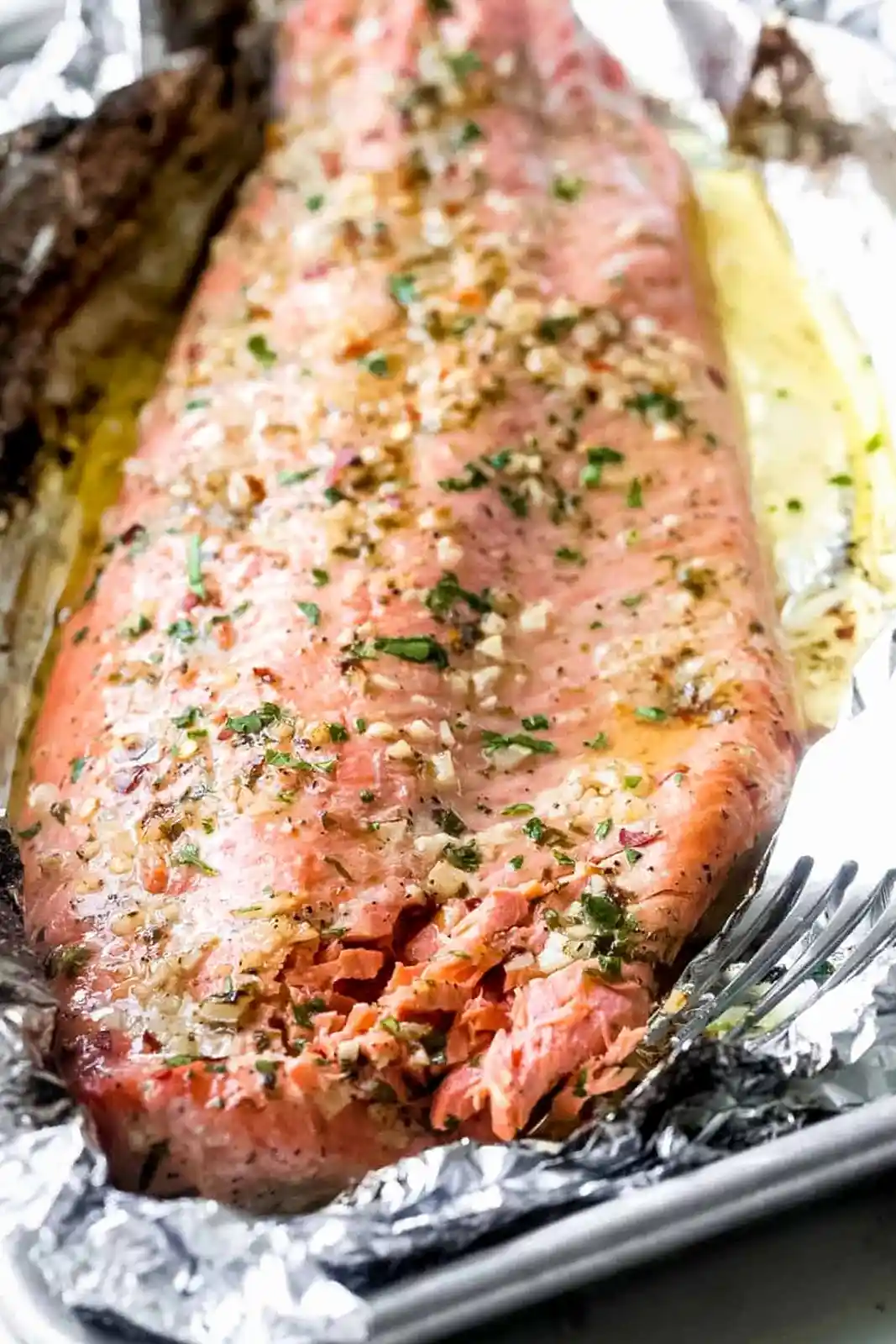
List of ingredients
- 1 ¼ pound sockeye or coho salmon (preferably wild-caught) – provides a firm, rich texture
- 2 tablespoons lemon juice – adds brightness and acidity
- 2 tablespoons butter (cold, cubed) – creates a creamy, emulsified sauce
- 2 cloves garlic (minced) – adds a pungent, savory depth
- ½ teaspoon salt – enhances all flavors
- ¼ teaspoon Italian seasoning – adds herbal complexity
- ¼ teaspoon red pepper flakes – provides a mild spicy kick
- ¼ teaspoon black pepper – adds subtle heat
- 1 tablespoon chopped parsley (optional) – used for a fresh garnish
step-by-step instructions
- Prepare the Oven: Position the rack in the center of the oven and preheat it to 375ºF.
- Reduce the Lemon Base: Combine lemon juice and minced garlic in a saucepan over medium heat. Simmer until the liquid reduces to approximately 1 tablespoon.
- Emulsify the Butter: Add 1 tablespoon of cold butter, remove the pan from heat, and swirl until melted. Briefly return to heat, then swirl again until fully integrated. Repeat this process with the second tablespoon of butter.
- Season the Sauce: Stir in the Italian seasoning, red pepper flakes, salt, and black pepper. Remove the pan from the stove.
- Prepare the Salmon: Place the salmon filet on a large piece of foil. Brush the garlic butter sauce evenly over the top of the fish using a spoon or brush.
- Seal and Bake: Fold the foil edges to seal the packet tightly so the sauce does not leak. Bake for 12-14 minutes or until the fish is mostly firm to the touch.
- Broil for Finish: Open the foil packet and place the salmon under the broiler for 2-3 minutes. Monitor closely to prevent burning.
- Garnish and Serve: Remove from the oven, sprinkle with chopped parsley, and serve immediately.
Selecting the Ideal Salmon
Prioritize Sockeye or Coho Salmon
Wild-caught Sockeye or Coho salmon is highly recommended for this recipe because of its firm texture. This variety maintains its structural integrity better than Atlantic salmon when steamed in a foil packet. The natural oil content in wild salmon blends perfectly with the garlic butter sauce.
Avoid Pink Salmon for This Method
Pink salmon tends to be more watery than other varieties. When baked in a sealed foil packet, this excess moisture can lead to a soggy result rather than a flaky one. Choosing a firmer fillet ensures the sauce adheres better to the fish.
Use Wild-Caught Fillets for Better Flavor
Wild salmon generally offers a deeper color and a more intense, clean flavor compared to farm-raised options. The leaner profile of wild-caught fish prevents the dish from feeling overly greasy. This allows the garlic and lemon flavors to stand out more prominently.
Mastering the Garlic Butter Sauce
Reduce Lemon Juice for Concentrated Flavor
Simmering the lemon juice and garlic before adding butter is a critical step. This reduction process removes excess water and concentrates the acidity. It ensures the final sauce is thick and flavorful rather than thin and watery.
Use Cold Cubed Butter for Proper Emulsion
Adding cold butter gradually while swirling the pan helps create a stable emulsion. If the butter is melted too quickly, the sauce may separate into oil and solids. Cold cubes allow the fat to integrate slowly into the lemon base.
Control the Heat During Butter Integration
Removing the pan from the heat between butter additions prevents the sauce from breaking. A gentle swirl is enough to melt the butter without overheating the proteins in the dairy. This technique results in a professional, velvety consistency.
Effective Foil Packet Techniques
Use Heavy-Duty Aluminum Foil
Thicker, heavy-duty foil is preferable to prevent accidental tears during the folding process. It also distributes heat more evenly across the fillet. This prevents hot spots that could lead to uneven cooking.
Create a Tight Seal to Trap Steam
Fold the edges of the foil securely to ensure no sauce leaks out during baking. A tight seal traps the steam inside, which gently cooks the salmon. This steaming process is what makes the fish exceptionally tender and moist.
Leave Small Headspace Above the Fish
Avoid wrapping the foil too tightly against the top of the salmon fillet. Leaving a small amount of air space allows the steam to circulate around the fish. This ensures the salmon cooks evenly from all sides.
Flavor Modifications and Substitutions
Substitute Lime for Lemon
Using fresh lime juice instead of lemon provides a zestier and more tropical flavor profile. Lime pairs exceptionally well with the garlic and red pepper flakes. This substitution is ideal for those who prefer a brighter, more tart taste.
Swap Italian Seasoning for Fresh Dill
Fresh or dried dill is a classic pairing for salmon and offers a cleaner, more herbal taste than Italian seasoning. You can substitute a quarter teaspoon of dried dill or a tablespoon of chopped fresh dill. This change gives the dish a more traditional seafood aroma.
Increase Heat with Additional Red Pepper
For those who enjoy a spicier meal, increase the red pepper flakes to a half teaspoon. This adds a noticeable kick that cuts through the richness of the butter. Ensure the flakes are evenly distributed in the sauce for consistent heat.
Recommended Side Dishes
Pair with Roasted Asparagus
Asparagus can be roasted on the same sheet pan as the salmon fillets. Toss the spears in olive oil and salt, then place them around the foil packets. They cook in roughly the same amount of time as the fish.
Serve Over Quinoa or Brown Rice
Whole grains like quinoa or brown rice are excellent for absorbing the excess garlic butter sauce. Simply spoon the remaining sauce from the foil packet over the grains. This prevents any of the flavorful glaze from going to waste.
Add a Side of Sautéed Spinach
Fresh spinach sautéed with a hint of garlic provides a nutritional balance to the meal. The slight bitterness of the greens complements the rich butter and acidic lemon. This combination creates a well-rounded and healthy dinner.
Storage and Reheating Guidelines
Store in Airtight Containers
Place cooled salmon in a glass or plastic airtight container to maintain freshness. This prevents the fish from absorbing other odors from the refrigerator. Ensure the salmon is completely cooled before sealing the lid to avoid condensation.
Refrigerate for Up to Three Days
Cooked salmon remains safe and tasty for 48 to 72 hours when kept at the correct temperature. Beyond three days, the texture may begin to degrade. Always check for a fresh smell before consuming leftovers.
Reheat Gently in the Oven
To avoid drying out the fish, reheat leftovers in the oven at 300ºF. Cover the salmon with foil and warm it until just heated through. This method preserves the moisture much better than high-heat options.
Avoid High-Power Microwave Settings
Microwaving salmon on high power often makes the protein rubbery and tough. If using a microwave, use a low power setting and heat in short 30-second intervals. Gently basting the fish with a bit of extra butter can help restore moisture.
Planning and Preparation
Prepare the Sauce in Advance
The garlic butter sauce can be made a day ahead of time and stored in the refrigerator. When ready to use, gently warm the sauce in a pan before brushing it onto the salmon. This reduces the active cooking time on the night of the meal.
Portion Salmon and Prep Foil Packets
You can wrap the salmon fillets in foil and store them in the fridge until you are ready to bake. Ensure the foil is sealed tightly to keep the sauce from leaking. This makes the process a simple matter of popping the packets into the oven.
Pre-Mince Garlic and Chop Parsley
Having your aromatics ready in small bowls streamlines the cooking process. Mincing the garlic and chopping the parsley beforehand prevents the sauce from over-reducing while you prep. This organized approach keeps the kitchen efficient.
Troubleshooting Common Issues
Check the Internal Temperature
Use a digital meat thermometer to ensure the salmon reaches an internal temperature of 145ºF. This is the USDA recommended temperature for food safety. Checking the center of the thickest part of the fillet prevents undercooking.
Adjust Time for Fillet Thickness
Baking times vary based on the thickness of your salmon cut. Very thin fillets may be done in as little as 10 minutes. Conversely, thick center-cut fillets may require up to 16 minutes in the oven.
Prevent Burning During the Broil
The broiler can cook fish very quickly, so it is important to monitor it constantly. Keep the oven door slightly cracked to manage the heat. Remove the fish immediately once the top has a slight golden-brown char.
Frequently Asked Questions
Can I use this sauce on other fish?
Yes, this garlic butter sauce works well with shrimp, cod, tilapia, or mahi mahi. Simply adjust the baking times based on the thickness and type of fish you are using. Shrimp, for example, will cook much faster than salmon.
Can I grill the salmon in foil?
Yes, place the sealed foil packets on a grill preheated to 375ºF. Cook for approximately the same amount of time as the oven method. Open the packets at the end to allow the fish to sear for a minute or two.
Why did my salmon release too much water?
This often occurs when using farm-raised or pink salmon varieties. These types of fish have higher water content and release more liquid during the steaming process. Using wild-caught sockeye generally solves this problem.
Do I have to broil the salmon?
Broiling is optional but highly recommended for the best results. It creates a caramelized exterior and a professional appearance. If you prefer a softer texture, you can skip the broiling step entirely.
Print
Garlic Butter Baked Salmon in Foil
- Total Time: 25 minutes
- Yield: 4 servings 1x
- Diet: Keto, Gluten-free, Paleo
Description
Garlic butter baked salmon in no time at all! Start with a simple lemon garlic butter sauce that’s super fancy but also really easy to make then we just pour this on top of a filet of salmon and bake it off in the oven wrapped in foil. The salmon is flakey and tender this way, and the garlic butter flavor is out of this world!
Ingredients
- 1 ¼ pound sockeye or coho salmon
- 2 tablespoons lemon juice
- 2 tablespoons butter (cold, cubed)
- 2 cloves garlic (minced)
- ½ teaspoon salt
- ¼ teaspoon Italian seasoning
- ¼ teaspoon red pepper flakes
- ¼ teaspoon black pepper
- 1 tablespoon chopped parsley
Instructions
- PREP: Position a rack in the center of the oven and preheat the oven to 375ºF.
- SAUCE: In a saucepan over medium heat, combine the lemon juice and minced garlic, allow the lemon juice to reduce to 1 tablespoon. Add in 1 tablespoon of butter, remove pan from heat and swirl so the butter starts to melt. Place back on the heat for a few seconds, removed and continue to swirl until butter completely melts. Repeat with second tablespoon of butter. When butter is completely melted, add the Italian seasoning, red pepper flakes, salt and pepper. Then, remove sauce from stove.
- BAKE: Place the salmon filet in a piece of foil large enough to fold over and seal. Using a brush or spoon, brush the salmon with the garlic butter sauce. Cover with foil so that all sides are properly closed so the sauce does not leak. Bake the salmon for 12-14 minutes or until mostly firm to the touch. Open the foil and allow the fish to broil under the broiler for 2-3 minutes, keeping an eye on it so the fish does not burn. Remove from oven, top with parsley. Serve immediately.
Notes
Baking time may vary slightly due to thickness of fish. Feel for firmness on the thickest part of the filet to make sure your fish is cooked through. I suggest using a good quality salmon for this recipe. Try to avoid using ‘pink salmon’ as this type of salmon is quite watery and will release lots of water in the baking process causing the fish to be wet and not flakey. The salmon can also be wrapped in foil and barbecued at 375º-400ºF for about the same amount of time give or take a minute or two.
- Prep Time: 5 minutes
- Cook Time: 20 minutes
- Category: Fish & Seafood
- Method: Baking
- Cuisine: American
Nutrition
- Serving Size: 1 serving
- Calories: 257 kcal
- Sugar: 0.2 g
- Sodium: 310 mg
- Fat: 15 g
- Saturated Fat: 4 g
- Unsaturated Fat: 11 g
- Trans Fat: 0 g
- Carbohydrates: 1 g
- Fiber: 0.2 g
- Protein: 28 g
- Cholesterol: 75 mg