This Filipino Chicken Adobo is a rich, savory stew featuring chicken braised in a pungent mixture of soy sauce and vinegar. It is a hearty meal that balances salty and acidic flavors with the aromatic addition of garlic and ginger.
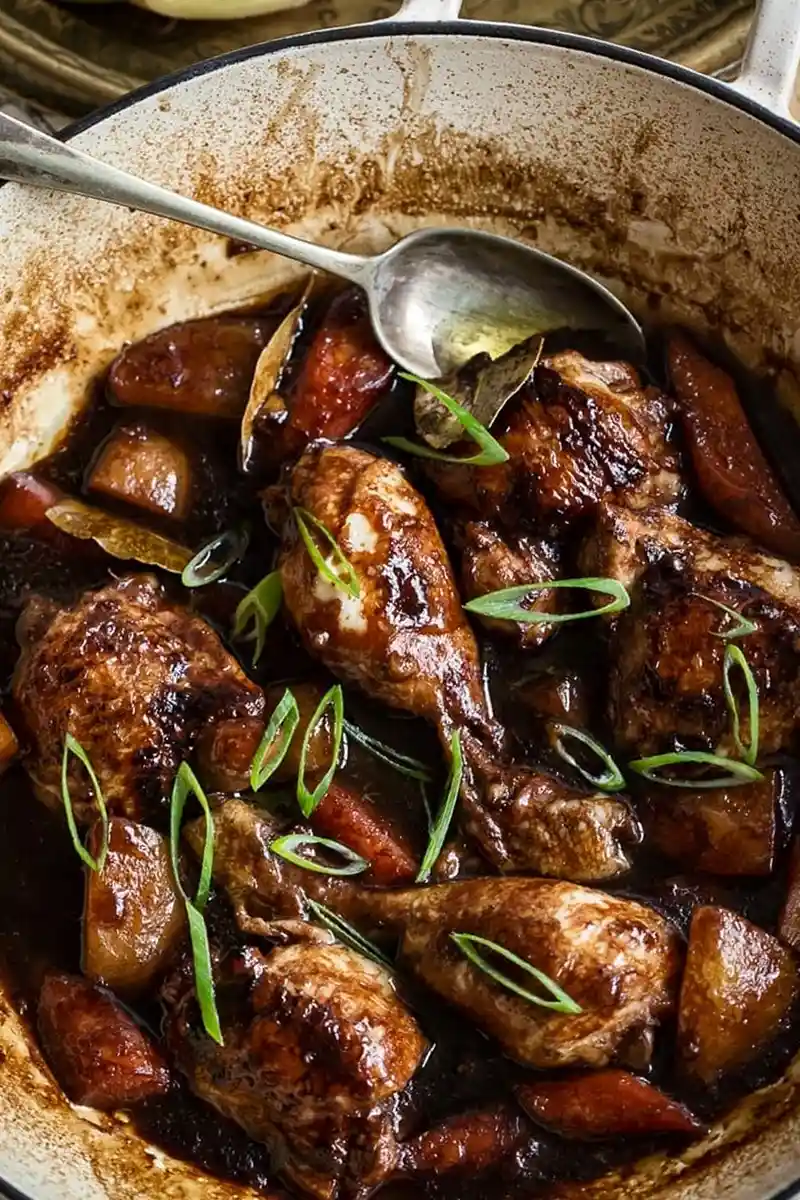
List of ingredients
- 8 chicken pieces (legs and thighs) – provides rich flavor and moisture.
- 125ml (1/2-3/4 cup) soy sauce – use Bragg or Kikkoman for a gluten-free version.
- 125ml (1/2-3/4 cup) rice vinegar – adjust the quantity to suit your acidity preference.
- 2 tbsp vegetable oil – used for searing and sautéing.
- 2 inch long piece of ginger (grated) – adds a warm, aromatic depth.
- 5 cloves garlic (crushed) – essential for the pungent base.
- 2-3 bay leaves – adds a subtle herbal note to the braise.
- 1/2 tsp fresh ground black pepper – provides a mild spice.
- 1-2 medium carrots (cut in large chunks) – adds sweetness and color.
- 3 medium potatoes (cut in large chunks) – helps thicken and balance the sauce.
- 125ml (1/2 cup) water – used to create the simmering liquid.
- 1 tbsp corn starch – used for the thickening slurry.
- 1 tbsp water – mixed with cornstarch.
- 1 spring onion (optional) – used for a fresh garnish.
- 1 lime – served in wedges to add a final bright touch.
step-by-step instructions
- Marinate the Chicken: In a large bowl, combine the soy sauce, rice vinegar, 1 tablespoon of oil, 4 crushed garlic cloves, half of the grated ginger, and black pepper. Add the chicken pieces and let them marinate in the refrigerator for 30 minutes.
- Sear the Meat: Heat a wok or deep pan over medium-high heat. Brown the chicken pieces for 3 minutes on each side, working in batches to avoid overcrowding the pan so they brown instead of steaming. Remove the chicken to a plate and set aside, keeping the marinade.
- Sauté and Simmer: Add 1 tablespoon of vegetable oil to the same pan with the remaining sliced garlic and ginger. Stir-fry for 1 minute without browning them. Return the chicken to the pan and add the reserved marinade, water, bay leaves, potatoes, and carrots. Bring the liquid to a boil, then reduce heat to low and simmer for 45 minutes until the vegetables are tender and the chicken is fully cooked.
- Thicken the Sauce: In a small bowl, whisk together the cornstarch and 1 tablespoon of water until smooth. Stir this slurry into the sauce and simmer for a few more minutes until the sauce reaches a coating consistency.
- Finish and Serve: Spoon the thickened sauce over the chicken pieces. Sprinkle with sliced spring onions and serve immediately with plain white rice and fresh lime wedges.
Mastering the Searing Process
Preventing the Chicken from Steaming
To ensure the chicken develops a deep brown crust, avoid adding too many pieces to the pan at once. Overcrowding lowers the pan temperature, causing the meat to release moisture and steam rather than sear.
Achieving the Maillard Reaction
Keep the oil hot before adding the chicken to trigger the Maillard reaction. This chemical process creates complex flavor compounds that significantly enhance the overall taste of the finished stew.
Managing Batch Cooking
If cooking in batches, allow the pan to return to a high temperature between each set of chicken pieces. This prevents the oil from cooling down and ensures consistent browning across all eight pieces.
Alternative Cooking Equipment
Using a Slow Cooker for Tenderness
For a more tender result, follow the recipe through the searing stage, then transfer everything to a slow cooker. Cook on low for 8 hours before stirring in the cornstarch slurry at the end to thicken the sauce.
Fast Results with an Instant Pot
To save time, sear the chicken and sauté the aromatics using the sauté function. Add all braising ingredients and cook under high pressure for 10 minutes, then manually release the pressure and thicken the sauce with cornstarch.
Choosing the Right Braising Vessel
A carbon steel wok or a heavy-bottomed deep pan is ideal for this recipe. These vessels distribute heat evenly and provide enough depth to hold the chicken and vegetables without spilling over.
Ingredient Substitutions for Different Diets
Gluten-Free Soy Sauce Alternatives
Those avoiding gluten should replace standard soy sauce with tamari or coconut aminos. Tamari provides a similar salty profile, while coconut aminos offer a slightly sweeter, lower-sodium alternative.
Swapping Rice Vinegar for Other Acids
If rice vinegar is unavailable, apple cider vinegar is a suitable substitute as it maintains a similar fruity acidity. White distilled vinegar can also be used, though it is sharper and may require a pinch of sugar to balance.
Using Ginger Paste for Convenience
Fresh ginger is preferred for its brightness, but jarred ginger paste is a practical option for busy weeknights. Use an equal measurement of paste to replace the grated fresh root.
Adjusting the Garlic Intensity
For a more pungent flavor, feel free to increase the amount of garlic to 7 or 8 cloves. Ensure they are crushed well to release the maximum amount of essential oils into the marinade.
Enhancing the Dish with Variations
Incorporating Different Root Vegetables
While potatoes and carrots are traditional, you can add parsnips or turnips for a different earthy flavor. Cut them into large chunks so they do not break down during the 45-minute simmer.
Adding Spicy Elements
To add a kick to the dish, stir in sliced bird’s eye chilies or a teaspoon of red pepper flakes during the sauté stage. This contrasts well with the saltiness of the soy sauce and the tang of the vinegar.
Using Boneless Chicken Thighs
Boneless, skinless chicken thighs are a faster-cooking alternative to bone-in pieces. They remain juicy during the braising process and make the dish easier to serve and eat.
Best Serving Combinations
Selecting the Ideal Rice
Plain, unsalted Jasmine rice is the best accompaniment as it absorbs the strong adobo sauce. Brown rice or steamed cauliflower rice are also excellent options for those seeking more fiber or lower carbs.
The Importance of Fresh Lime Juice
Squeezing fresh lime over the chicken just before eating cuts through the richness of the soy sauce. This hit of acidity brightens the entire flavor profile of the meal.
Pairing with Steamed Greens
Balance the heavy flavors of the stew with a side of steamed bok choy, spinach, or sautéed cabbage. These greens add a fresh, crisp texture that complements the tender chicken and root vegetables.
Storage and Preservation
Proper Refrigeration Techniques
Store leftovers in an airtight container in the refrigerator for 3 to 4 days. The flavors often meld and improve after 24 hours, making the sauce taste more mellow and integrated.
Freezing and Thawing the Stew
This dish can be frozen for up to three months. Thaw the container in the refrigerator overnight before reheating to maintain the texture of the potatoes and carrots.
Reheating Without Drying Out
Reheat the adobo in a saucepan over medium-low heat with a lid. If the sauce has become too thick, add a small splash of water to loosen it back to its original consistency.
Advance Preparation Tips
Optimizing the Marination Period
While 30 minutes is sufficient, marinating the chicken overnight in the fridge leads to a deeper flavor penetration. Ensure the container is sealed tightly to prevent the vinegar scent from affecting other foods.
Pre-cutting Vegetables for Efficiency
Cut your carrots and potatoes ahead of time and store them in water in the fridge. This prevents the potatoes from oxidizing and speeds up the cooking process on the day of preparation.
Troubleshooting Common Issues
Correcting Overly Salty Sauce
If the sauce tastes too salty, add a few more chunks of potato or a splash of water. The starch in the potatoes helps absorb excess salt during the simmering process.
Balancing a Sauce That Is Too Sour
If the vinegar is too dominant, stir in a small amount of brown sugar or honey. This sweetness neutralizes the sharp acidity without altering the core character of the adobo.
Fixing a Thin Sauce
If the sauce remains watery after adding the cornstarch slurry, simmer it for another 5 minutes without the lid. The reduction process will concentrate the flavors and thicken the liquid.
Frequently Asked Questions
Why do I need to brown the chicken first?
Browning the chicken creates a caramelized exterior that adds a layer of savory depth. Without this step, the meat can have a pale appearance and a more muted flavor profile.
Can I use chicken breast?
You can use chicken breast, but be aware that it cooks much faster and can become dry. Reduce the simmering time to 20-25 minutes to ensure the meat remains moist.
Do I have to peel the carrots?
Peeling the carrots is recommended for a smoother texture and a cleaner look. However, if you use organic carrots and scrub them well, leaving the skin on is a healthy alternative.
What is the best way to store the lime wedges?
Store lime wedges in a small airtight container or wrap them in parchment paper. This prevents them from drying out and keeps them juicy for serving.
Print
Savory Filipino Chicken Adobo Stew
- Total Time: 1 hour 20 minutes
- Yield: 8 servings 1x
- Diet: General
Description
Chicken braised in pungent vinegar and soy sauce with an addition of garlic and ginger.
Ingredients
- 8 chicken pieces (legs and thighs)
- 125ml soy sauce
- 125ml rice vinegar
- 2 tbsp vegetable oil
- 2 inch long piece of ginger (grated)
- 5 cloves garlic (crushed)
- 2–3 bay leaves
- 1/2 tsp fresh ground black pepper
- 1–2 carrot (medium, cut in large chunks)
- 3 potato (medium, cut in large chunks)
- 125ml water
- 1 tbsp corn starch
- 1 tbsp water
- 1 spring onion (optional)
- 1 lime
Instructions
- Step 1: In a large bowl combine soy sauce, rice vinegar, 1 tbsp of oil, 4 garlic cloves crushed, half of grated ginger, black pepper, add chicken pieces and let them marinade for 30 minutes in the fridge.
- Step 2: In a wok or a deep pan brown chicken pieces for 3 minutes on each side, might need to do that in batches not to overcrowd chicken, otherwise they will steam instead of brown. Do not discard the marinade. Chicken will not be cooked all the way through, remove it from the pan to a plate and set aside.
- Step 3: To the same pan add 1 tbsp of vegetable oil, sliced garlic and the remaining ginger, stir fry for 1 minute, do not let them brown. Add the chicken, marinade, water, bay leaves, potatoes and carrots, (the sauce will not cover the chicken entirely), turn the heat up and bring the sauce to a boil, then reduce the heat to low and let it simmer for 45 minutes until carrots and potatoes are easily pierced with a fork and the chicken is cooked all the way through.
- Step 4: In a small bowl mix cornstarch with water, making sure there are no clumps and add to the sauce, mix through and let it simmer for a couple more minutes, which will allow the sauce to thicken. Spoon the sauce over the chicken, it should be thick enough to coat the pieces. If the sauce is not thick enough, cook it a bit longer until desired consistency. Sprinkle with sliced spring onion.
- Step 5: Serve with plain rice and lime wedges.
Notes
This recipe could be adapted for Slow Cooker and Instant Pot. Follow the recipe until step 3 but instead of simmering in a pan use your slow cooker and cook on low for 8 hours. Stir in the cornstarch slurry at the end to thicken the sauce. If using Instant Pot, cook at high pressure for 10 minutes, then manually release the pressure. Add the cornstarch slurry and thicken the sauce using a Sauté button for a couple of minutes.
- Prep Time: 35 minutes
- Cook Time: 45 minutes
- Category: Main
- Method: Braising
- Cuisine: Filipino
Nutrition
- Serving Size: 1 serving
- Calories: 304 kcal
- Sugar: 1 g
- Sodium: 961 mg
- Fat: 21 g
- Saturated Fat: 8 g
- Unsaturated Fat: 13 g
- Trans Fat: 0 g
- Carbohydrates: 5 g
- Fiber: 1 g
- Protein: 23 g
- Cholesterol: 87 mg