This Beef Giouvetsi is a rich, comforting Greek dish that pairs tender slow-cooked beef with rice-shaped orzo pasta. It is a one-pot meal characterized by a deeply flavored tomato sauce and aromatic spices.
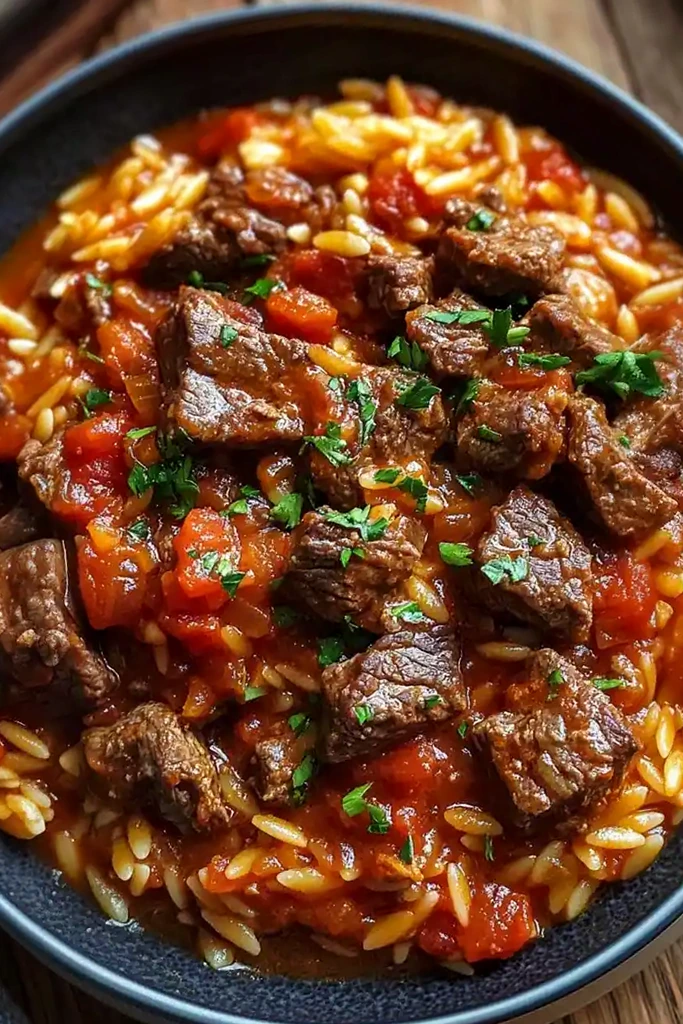
List of ingredients
- 2 lbs (900 g) beef chuck or stew meat, cut into cubes – well-marbled cuts provide the best tenderness.
- 2 tbsp olive oil – used for searing the beef to develop flavor.
- 1 large onion, finely chopped – forms the aromatic base of the sauce.
- 3 garlic cloves, minced – adds essential pungent depth.
- 1 can (14 oz) crushed tomatoes – provides the bulk of the rich sauce.
- 2 tbsp tomato paste – thickens the sauce and intensifies the tomato flavor.
- 1 cup beef broth – used for the initial slow-cooking stage.
- 1 cinnamon stick – imparts a warm, traditional Greek aroma.
- 2 bay leaves – adds a subtle herbal complexity.
- 1 tsp ground allspice – a key spice for authentic Mediterranean flavor.
- Salt and pepper, to taste – basic seasoning for the meat and sauce.
- 1 tsp sugar (optional) – used to balance the natural acidity of the tomatoes.
- 1 1/2 cups orzo pasta – small, rice-shaped pasta that absorbs the sauce.
- 2 cups hot water or beef broth (as needed) – ensures the pasta cooks through without drying out.
- Grated Kefalotyri cheese (or Parmesan) – adds a salty, sharp finish.
- Fresh parsley for garnish – provides a bright, fresh contrast to the rich stew.
step-by-step instructions
- Sear the Beef: Heat olive oil in a large Dutch oven or heavy pot over medium-high heat. Season the beef cubes with salt and pepper, then sear them in batches until browned on all sides. Remove the browned beef and set it aside on a plate.
- Prepare the Sauce: In the same pot, sauté the finely chopped onion until it becomes softened, which takes about 3-4 minutes. Add the minced garlic and cook for another minute until fragrant. Stir in the tomato paste and cook for 1-2 minutes to deepen the flavor.
- Combine Aromatics: Add the crushed tomatoes, 1 cup of beef broth, cinnamon stick, bay leaves, allspice, and optional sugar. Mix all ingredients well to combine the spices with the tomato base.
- Simmer the Beef: Return the seared beef and any accumulated juices to the pot and bring the mixture to a gentle simmer. Cover the pot and cook on low heat for 1.5 to 2 hours, or until the beef is tender and the sauce has thickened.
- Add the Orzo: Preheat your oven to 375°F (190°C). Stir the orzo pasta into the pot, mixing it thoroughly into the beef sauce. If the liquid level looks too low, add the 2 cups of hot water or additional beef broth to ensure the pasta cooks evenly.
- Bake and Finish: Transfer the pot to the oven and bake for 20-25 minutes, stirring occasionally to prevent sticking. Remove the pot from the oven and discard the cinnamon stick and bay leaves. Sprinkle with grated Kefalotyri or Parmesan cheese and garnish with fresh parsley before serving.
Optimizing Your Meat Selection
Prioritize Chuck Roast for Tenderness
Choose beef chuck or stew meat because these cuts are rich in connective tissue and collagen. During the slow simmering process, this collagen breaks down into gelatin, which tenderizes the meat and thickens the sauce. Leaner cuts like sirloin or tenderloin will become dry and tough when cooked for two hours.
Cut Beef into Uniform Cubes
Dice the beef into consistent 1-inch cubes to ensure they all cook at the same rate. If the pieces vary significantly in size, smaller pieces may overcook and disintegrate while larger pieces remain tough. Uniformity is key to achieving a consistent texture throughout the dish.
Properly Dry the Meat Before Searing
Pat the beef cubes dry with paper towels before seasoning and searing them in the oil. Surface moisture creates steam in the pan, which prevents the meat from browning and leads to a grey, boiled appearance. Dry meat achieves a superior brown crust, known as the Maillard reaction, which adds deep savory flavor.
Mastering the Sauce and Spices
Deepen Flavor with Tomato Paste Caramelization
Sautéing the tomato paste for a few minutes before adding the liquids is a critical step. This process, called caramelization, removes the raw metallic taste of the paste and transforms it into a rich, sweet, and concentrated flavor. This adds a layer of complexity to the final sauce.
Balance Acidity with a Hint of Sugar
Canned tomatoes can sometimes have a sharp, acidic edge depending on the brand and ripeness of the fruit. Adding a small amount of sugar helps neutralize this acidity without making the dish taste sweet. This creates a smoother, more rounded flavor profile in the tomato base.
The Role of Cinnamon and Allspice
Cinnamon and allspice are traditional ingredients in Greek stews that provide a warm, aromatic quality. These spices do not make the dish taste like a dessert but instead add an earthy depth that complements the richness of the beef. Ensure the cinnamon stick is whole so it can be easily removed before serving.
Cooking the Orzo Pasta Perfectly
Preventing Sticky or Mushy Pasta
Orzo is a small pasta that releases starch quickly, which can make the dish gummy if overcooked. Stir the pasta occasionally during the oven phase to distribute the heat and liquid evenly. Avoid over-mixing, as excessive stirring can break the pasta grains and release too much starch.
Adjusting Liquid Levels During Baking
The amount of liquid the orzo absorbs can vary depending on the heat of your oven. If you notice the pasta is still hard but the sauce has thickened too much, add a small splash of hot broth. The pasta should be tender and the sauce should be creamy, not dry or watery.
Stovetop vs Oven Methods
While the oven provides a steady, surrounding heat that cooks the orzo evenly, you can finish this dish on the stovetop. If using the stovetop, keep the heat on low, cover the pot tightly, and stir more frequently. The oven method is generally preferred for achieving a slightly caramelized top layer.
Ingredient Substitutions and Variations
Using Lamb for a Traditional Twist
Substituting beef with lamb shoulder or leg is a very common and traditional variation in Greece. Lamb has a distinct, richer flavor and a higher fat content that pairs exceptionally well with cinnamon and allspice. Follow the same searing and simmering times as used for the beef.
Adapting the Recipe for Chicken
Chicken thighs are the best substitute if you prefer a lighter meat option. Because chicken cooks much faster than beef, reduce the simmering time from two hours to about 30-45 minutes. Use chicken broth instead of beef broth to maintain a cohesive flavor profile.
Vegetarian Alternatives for the Beef
For a meat-free version, replace the beef with hearty vegetables such as cubed eggplant, zucchini, or large chunks of portobello mushrooms. Use vegetable broth instead of beef broth and reduce the simmering time to 20 minutes. The mushrooms provide a similar umami depth to the beef.
Substituting Orzo with Other Grains
If orzo is unavailable, you can use Arborio rice or pearl couscous. Rice will require slightly more liquid and a longer cooking time in the oven to reach tenderness. Pearl couscous cooks faster than orzo, so monitor the liquid levels closely to avoid overcooking.
Alternative Salty Cheeses
Kefalotyri is a traditional hard Greek sheep’s milk cheese, but it can be hard to find. Parmesan or Pecorino Romano are excellent substitutes because they offer a similar salty, sharp, and aged flavor. For a milder taste, a hard goat cheese can also work well.
Serving and Pairing Suggestions
Best Breads for Dipping
Serve Beef Giouvetsi with warm, crusty sourdough or a traditional Greek pita. The thick tomato sauce is highly flavorful, and a piece of bread is perfect for soaking up the remaining liquid on the plate. Toasted baguette slices with a rub of garlic are also a great accompaniment.
Fresh Side Salad Combinations
A refreshing Horiatiki (Greek salad) is the ideal side dish to balance the richness of the beef. Combine chopped cucumbers, ripe tomatoes, red onion, Kalamata olives, and a block of feta cheese. Dress the salad with extra virgin olive oil, dried oregano, and a squeeze of lemon juice.
Temperature and Presentation
This dish should be served piping hot, ideally straight from the cooking pot to the table. The heat keeps the melted cheese gooey and the sauce fluid. Garnish with a generous amount of fresh parsley to add a pop of color and a fresh herbal note to the presentation.
Storage and Preservation Guide
Refrigerator Storage Limits
Store leftover Beef Giouvetsi in an airtight container in the refrigerator for up to three days. Because the orzo continues to absorb liquid as it cools, the dish will become much thicker and denser over time. Ensure the container is completely sealed to prevent the meat from drying out.
Freezing and Thawing Procedures
This dish freezes well for up to three months. Place the stew in a freezer-safe container, leaving a small amount of space for expansion. Thaw the dish overnight in the refrigerator before reheating to ensure the beef warms through evenly without overcooking the exterior.
Best Methods for Reheating
Reheat the dish in a pot over low heat on the stovetop rather than in the microwave. Add a splash of water or beef broth to the pan to loosen the starch and restore the creamy consistency of the sauce. Cover the pot and heat gently until steaming.
Troubleshooting Common Issues
Fixing a Sauce That Is Too Thick
If the sauce becomes too thick or pasty, it is likely due to the orzo absorbing too much liquid. Stir in a few tablespoons of hot water or broth and simmer for a minute on low heat. This will emulsify the sauce and return it to a scoopable consistency.
Addressing Underdone Beef
If the beef is still tough after two hours, it simply needs more time to break down the collagen. Return the pot to a very low simmer, keep it covered, and cook for another 30 minutes. Ensure the liquid level remains sufficient to prevent the bottom from burning.
Correcting Overcooked Orzo
If the orzo becomes too mushy, there is no way to reverse the texture, but you can improve the presentation. Stir in a bit of extra cheese or fresh parsley to distract from the softness. In the future, check the pasta 5 minutes before the timer ends.
Frequently Asked Questions
Can I use chicken instead of beef?
Yes, chicken thighs are a great alternative and will cook significantly faster. Reduce the simmering time to approximately 30-45 minutes to ensure the meat stays juicy.
What if I don’t have orzo pasta?
You can substitute orzo with rice, pearl couscous, or small pasta shapes like ditalini. Adjust the cooking time and liquid amounts based on the specific grain’s requirements.
Can I make this dish ahead of time?
Absolutely, as the flavors of the beef and spices meld together and improve overnight. You can simmer the beef and sauce a day in advance, then add the orzo and bake just before serving.
Print
Hearty Beef Giouvetsi: Traditional Greek Beef Orzo Pasta
- Total Time: 165 minutes
- Yield: 6 servings 1x
- Diet: General
Description
Beef Giouvetsi is a comforting Greek dish featuring tender beef, orzo pasta, and a spiced tomato-based sauce. This one-pot meal is slow-cooked to perfection and topped with grated cheese for a hearty and satisfying dinner.
Ingredients
- 2 lbs beef chuck or stew meat, cubed
- 2 tbsp olive oil
- 1 large onion, finely chopped
- 3 garlic cloves, minced
- 1 can (14 oz) crushed tomatoes
- 2 tbsp tomato paste
- 1 cup beef broth
- 1 cinnamon stick
- 2 bay leaves
- 1 tsp ground allspice
- Salt and pepper to taste
- 1 tsp sugar
- 1 1/2 cups orzo pasta
- 2 cups hot water or beef broth
- Grated Kefalotyri or Parmesan cheese
- Fresh parsley for garnish
Instructions
- Sear the Beef: Heat olive oil in a large Dutch oven or heavy pot over medium-high heat. Season the beef with salt and pepper, then sear in batches until browned on all sides. Remove the beef and set aside.
- Prepare the Sauce: In the same pot, sauté the onion until softened, about 3-4 minutes. Add the garlic and cook for another minute until fragrant. Stir in the tomato paste and cook for 1-2 minutes. Add the crushed tomatoes, beef broth, cinnamon stick, bay leaves, allspice, and sugar.
- Simmer the Beef: Return the seared beef to the pot and bring the mixture to a gentle simmer. Cover and cook on low heat for 1.5 to 2 hours, or until the beef is tender.
- Add the Orzo: Preheat oven to 375°F (190°C). Add the orzo to the pot, mixing it into the sauce. If needed, add hot water or additional broth to ensure the orzo cooks evenly. Bake for 20-25 minutes, stirring occasionally, until the orzo is tender.
- Serve: Remove the cinnamon stick and bay leaves. Sprinkle with grated cheese and garnish with fresh parsley.
Notes
Opt for well-marbled cuts like chuck for maximum tenderness. If the tomato sauce tastes too acidic, add a touch of sugar to balance the flavors.
- Prep Time: 15 minutes
- Cook Time: 150 minutes
- Category: Main Course
- Method: Slow cooking
- Cuisine: Greek
Nutrition
- Serving Size: 1 serving
- Calories: 450 kcal
- Sugar: 6 g
- Sodium: 820 mg
- Fat: 18 g
- Saturated Fat: 7 g
- Unsaturated Fat: 11 g
- Trans Fat: 0 g
- Carbohydrates: 32 g
- Fiber: 4 g
- Protein: 38 g
- Cholesterol: 95 mg