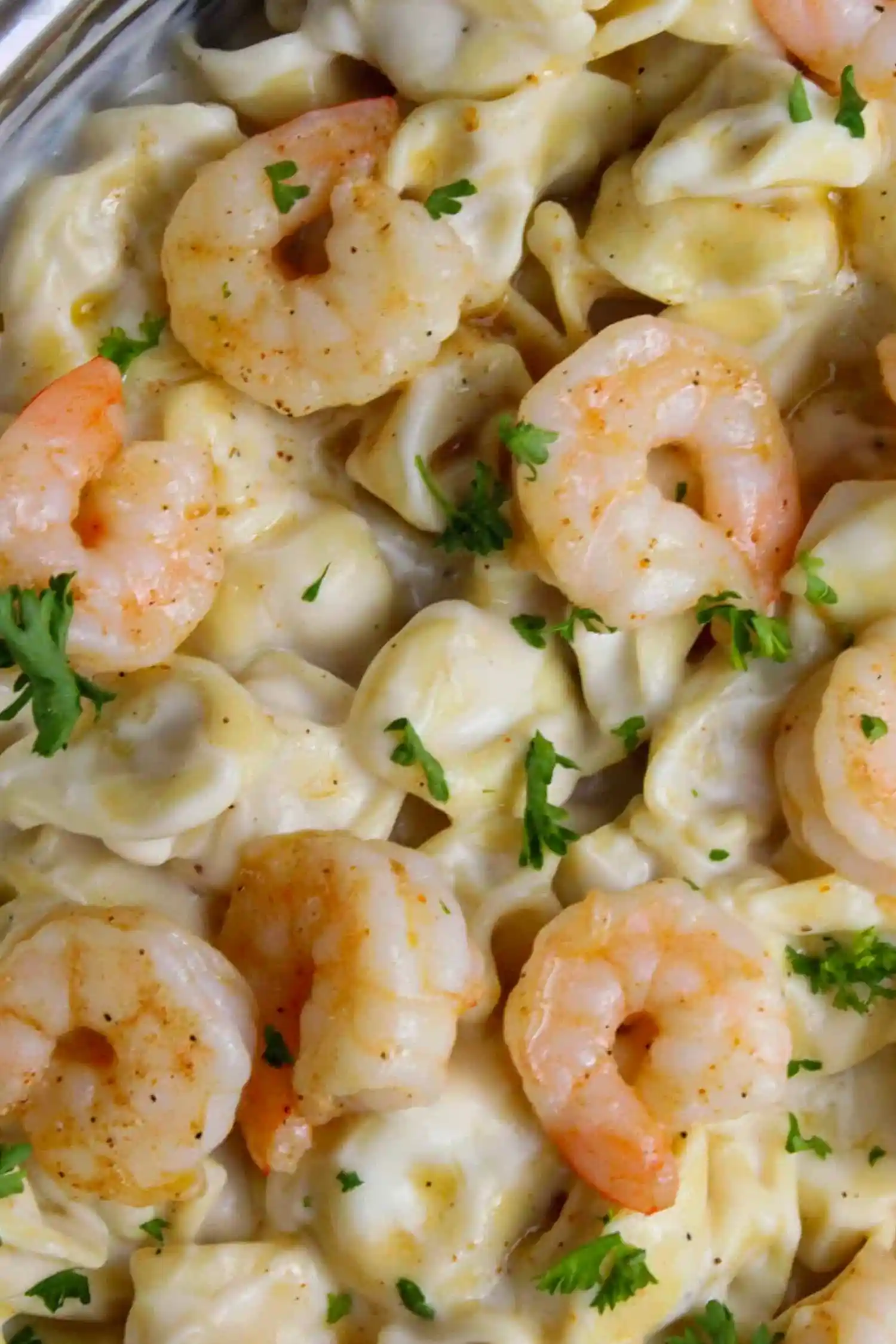
This one-pan meal combines rich alfredo sauce, cheese-filled pasta, and succulent shrimp for a satisfying dinner. It is a fast-cooking recipe that delivers gourmet flavors in under 30 minutes.
List of ingredients
- 1 pound package cheese tortellini pasta (cooked and drained) – ensure they are boiled until just tender.
- 1 pound large shrimp (peeled and deveined) – pat dry for better searing.
- 3 tbsp. salted butter – used for sautéing shrimp and thickening the sauce.
- 1 roma tomato (diced) – provides a fresh, acidic balance to the cream.
- 2 leaves basil (minced) – adds an aromatic herbal note.
- 2 garlic cloves (minced) – essential for depth of flavor.
- 1 tbsp. all purpose flour – acts as a thickening agent for the alfredo.
- 1/2 cup heavy whipping cream – creates the rich, creamy base.
- 1/4 cup shredded parmesan cheese – adds saltiness and thickness.
- salt and pepper to taste – use to season each layer of the dish.
step-by-step instructions
- Melt Butter: In a large skillet, melt butter over medium heat.
- Sear Shrimp: Add shrimp and let cook for about 2-3 minutes, until no longer translucent.
- Add Aromatics: Add in diced tomato, basil, and cloves and stir.
- Cook Flour: Saute for 1-2 minutes and stir in flour.
- Create Sauce: Once flour is completely stirred in, add heavy whipping cream and parmesan cheese.
- Combine Pasta: Stir and add in cheese tortellini. Toss to coat.
- Final Garnish: Serve with more shredded parmesan and minced basil.
Preparation and Ingredient Tips
Selecting the Best Shrimp for Searing
Large shrimp are ideal for this skillet as they maintain their texture and do not overcook as quickly as smaller shrimp. Ensure they are peeled and deveined to remove the digestive tract, which can be gritty. If using frozen shrimp, thaw them completely in the refrigerator overnight.
Preparing Tortellini for Optimal Texture
Boil your tortellini in heavily salted water to ensure the pasta is seasoned from within. Cook them for one minute less than the package directions suggest, as they will finish cooking in the hot alfredo sauce. This prevents the pasta from becoming mushy or falling apart during the tossing phase.
Properly Dicing Roma Tomatoes
Roma tomatoes are preferred for this recipe because they have thicker walls and fewer seeds, which prevents the sauce from becoming too watery. Dice them into small, uniform pieces so they soften evenly during the short sauté period. Remove excess seeds if the tomatoes are particularly juicy.
Mincing Garlic for Even Distribution
Mince the garlic cloves as finely as possible or use a garlic press to ensure the flavor is evenly distributed. Avoid using pre-minced jarred garlic, as it often has a more acidic, metallic taste. Freshly minced garlic provides a sharper, more authentic aroma.
Mastering the Alfredo Sauce
Controlling Heat for the Butter
Melt the butter over medium heat, ensuring it does not brown or burn before the shrimp are added. Browned butter can introduce a nutty flavor that may clash with the delicate taste of the shrimp. If the butter begins to foam excessively, lower the heat slightly.
Incorporating Flour to Prevent Lumps
When stirring in the flour, ensure it is fully integrated with the butter and shrimp juices to create a light roux. Cook the flour for 1-2 minutes to remove the raw flour taste before adding the cream. This step is crucial for a professional, smooth sauce consistency.
Emulsifying the Heavy Cream
Pour the heavy whipping cream in a steady stream while stirring constantly to prevent the sauce from breaking. Keep the heat at a medium level to allow the cream to simmer and thicken without boiling over. The fat in the heavy cream is what gives the sauce its signature velvety mouthfeel.
Integrating Parmesan Cheese Properly
Stir the shredded parmesan into the cream while the heat is medium-low to prevent the cheese from clumping. Using a fine shred of cheese allows it to melt faster and blend seamlessly into the sauce. Stir until the cheese is completely dissolved and the sauce is glossy.
Ingredient Substitutions and Variations
Using Alternative Pasta Shapes
While cheese tortellini is traditional, you can substitute it with cheese ravioli or even penne pasta. If using a different pasta, adjust the boiling time to ensure it remains al dente. Heartier pastas may require an extra tablespoon of cream to maintain the same sauce-to-pasta ratio.
Dairy-Free Creamy Alternatives
For a dairy-free version, replace the heavy cream with full-fat coconut milk or a cashew-based cream. Substitute the butter with a plant-based butter alternative and use nutritional yeast or a vegan parmesan substitute. Note that the flavor profile will shift slightly toward a nuttier taste.
Substituting Fresh Basil with Dried Herbs
If fresh basil is unavailable, use a small amount of dried basil or Italian seasoning. Use a ratio of one teaspoon of dried herbs for every tablespoon of fresh herbs. Add dried herbs earlier in the sauté process to allow the flavors to rehydrate in the butter.
Using Different Tomato Varieties
Cherry tomatoes can be used as a substitute for Roma tomatoes by halving them before adding to the skillet. Sun-dried tomatoes are another excellent option, providing a more concentrated, sweet-tart flavor. If using sun-dried tomatoes, soak them in warm water first to soften them.
Adjusting the Cheese Blend
While parmesan is the standard, you can mix in a small amount of Pecorino Romano for a saltier, sharper bite. A sprinkle of mozzarella can be added at the very end for a stretchier, cheesier consistency. Avoid using pre-shredded blends that contain cornstarch, as they may make the sauce grainy.
Adding Vegetable Enhancements
Incorporating Fresh Spinach
Add a handful of fresh baby spinach just before tossing in the tortellini. The residual heat from the sauce will wilt the spinach in about 30-60 seconds. Spinach adds a nutritional boost and a vibrant color contrast to the dish.
Adding Sautéed Broccoli Florets
Blanch small broccoli florets in the same water used for the tortellini during the last two minutes of boiling. Drain them and toss them into the skillet along with the pasta. This ensures the broccoli is tender but still retains a slight crunch.
Integrating Sliced Mushrooms
Sauté sliced cremini or button mushrooms in the butter before adding the shrimp. Mushrooms provide an earthy depth that complements the richness of the alfredo sauce. Cook them until they release their moisture and turn golden brown.
Using Asparagus Tips
Cut asparagus into one-inch pieces and sauté them for 3-4 minutes before adding the other aromatics. Asparagus adds a fresh, spring-like flavor and a distinct texture. Ensure they are not overcooked to maintain their bright green color.
Storage and Reheating Guide
Refrigerating Leftovers
Store any remaining pasta in an airtight glass container to prevent the sauce from absorbing odors from the fridge. Allow the dish to cool slightly before sealing the lid to avoid excessive condensation. The meal will stay fresh and safe to eat for up to 3 days.
Freezing Instructions
If you need to store the dish longer, place it in a heavy-duty freezer bag and squeeze out all the air. The shrimp and cream sauce can be frozen for up to 3 months. Note that the sauce may separate slightly upon thawing, which is normal for cream-based dishes.
Stovetop Reheating Method
The best way to reheat this dish is in a skillet over low to medium heat. Add a splash of heavy cream, whole milk, or water to loosen the sauce, which naturally thickens in the fridge. Stir gently to avoid breaking the tortellini until the dish is warmed through.
Microwave Reheating Tips
When using a microwave, heat the pasta in short 30-second intervals, stirring in between. Adding a teaspoon of water or milk before heating helps recreate the creamy texture. Use a medium power setting to prevent the shrimp from becoming rubbery.
Troubleshooting Common Issues
Preventing Rubbery Shrimp
Shrimp become rubbery when they are overcooked. Only sauté them until they turn opaque and form a C-shape; do not let them curl into a tight O-shape. Remove them from the pan if the sauce needs more time to reduce, then stir them back in at the end.
Fixing a Grainy or Broken Sauce
A grainy sauce often happens if the heat is too high or the cheese was added too quickly. To fix a broken sauce, whisk in a tablespoon of warm water or a small amount of additional cream over low heat. Constant stirring helps re-emulsify the fats and liquids.
Adjusting Sauce Thickness
If the sauce is too thick, stir in a tablespoon of pasta water or whole milk until the desired consistency is reached. If the sauce is too thin, let it simmer for an additional 2-3 minutes without the lid. You can also stir in an extra pinch of parmesan cheese to thicken it quickly.
Balancing Overly Salty Flavors
If the dish tastes too salty, add a squeeze of fresh lemon juice to brighten the flavor and cut through the sodium. Alternatively, adding a small amount of unsalted heavy cream can dilute the saltiness. Always taste the sauce before adding final seasoning.
Serving and Pairing Suggestions
Pairing with Garlic Bread
Serve the skillet alongside toasted garlic bread or a buttery baguette. The crispiness of the bread provides a textural contrast to the soft pasta and creamy sauce. Use the bread to scoop up any remaining sauce left on the plate.
Complementary Side Salads
A light arugula salad with a lemon vinaigrette balances the richness of the alfredo. The peppery notes of the arugula and the acidity of the lemon cleanse the palate between bites. A simple Caesar salad is another classic pairing that complements the parmesan.
Adding a Spicy Kick
For those who enjoy heat, garnish the finished dish with a pinch of red pepper flakes. The spice cuts through the heavy cream and enhances the sweetness of the shrimp. You can also add a dash of cayenne pepper to the flour during the roux stage.
Fresh Garnish Ideas
Beyond basil, try garnishing with freshly chopped parsley or chives for a clean, herbal finish. A wedge of fresh lemon on the side allows diners to add a burst of acidity to the shrimp. Extra freshly grated parmesan adds a final layer of salty depth.
Frequently Asked Questions
Can I use frozen shrimp?
Yes, frozen shrimp are excellent for this recipe. Just ensure they are fully thawed and patted dry with paper towels before cooking. Wet shrimp will steam instead of sear, preventing them from developing a golden-brown exterior.
How do I prevent the sauce from curdling?
Avoid boiling the sauce vigorously once the parmesan cheese has been added. Maintain a gentle simmer and stir frequently. Using heavy cream instead of milk also provides more stability, making the sauce less likely to separate.
Can I make this dish dairy-free?
Yes, by substituting the butter with olive oil or vegan butter and the cream with coconut cream or cashew cream. Use a nutritional yeast-based parmesan alternative for the cheesy flavor. The cooking method remains exactly the same.
How long should I boil the tortellini?
Boil the tortellini until they just begin to float to the surface. This usually takes 2-5 minutes depending on whether they are fresh or frozen. Drain them immediately to prevent overcooking before they enter the skillet.
What is the best pan for this recipe?
A large stainless steel or non-stick skillet is ideal. Stainless steel is better for searing the shrimp and creating a fond (browned bits) that flavors the sauce. Non-stick is more convenient for stirring the creamy sauce without sticking.
Print
Cheesy Shrimp Tortellini Alfredo Skillet
- Total Time: 20 minutes
- Yield: 3 servings 1x
- Diet: General
Description
If you love tortellini alfredo, wait until you get a bite of this! Creamy sauce, tasty tortellini, and tender shrimp, I don’t think it gets better than this.
Ingredients
- 1 pound package cheese tortellini pasta (cooked and drained)
- 1 pound large shrimp (peeled and deveined)
- 3 tbsp. salted butter
- 1 roma tomato (diced)
- 2 leaves basil (minced)
- 2 garlic cloves (minced)
- 1 tbsp. all purpose flour
- 1/2 cup heavy whipping cream
- 1/4 cup shredded parmesan cheese
- salt and pepper to taste
Instructions
- Step 1: In a large skillet, melt butter over medium heat.
- Step 2: Add shrimp and let cook for about 2-3 minutes, until not longer translucent.
- Step 3: Add in diced tomato, basil, and cloves and stir.
- Step 4: Saute for 1-2 minutes and stir in flour.
- Step 5: Once flour is completely stirred in, add heavy whipping cream and parmesan cheese.
- Step 6: Stir and add in cheese tortellini. Toss to coat.
- Step 7: Serve with more shredded parmesan and minced basil.
Notes
Store in an airtight container in the refrigerator for up to 3 days or in the freezer for up to 3 months. If the sauce thickens too much during reheating, add a splash of heavy cream, whole milk, or half and half.
- Prep Time: 15 minutes
- Cook Time: 5 minutes
- Category: Mains
- Method: Stovetop
- Cuisine: American
Nutrition
- Serving Size: 1 serving
- Calories: 371 kcal
- Sugar: 1 g
- Sodium: 885 mg
- Fat: 16 g
- Saturated Fat: 9 g
- Unsaturated Fat: 5 g
- Trans Fat: 0 g
- Carbohydrates: 34 g
- Fiber: 2 g
- Protein: 23 g
- Cholesterol: 174 mg