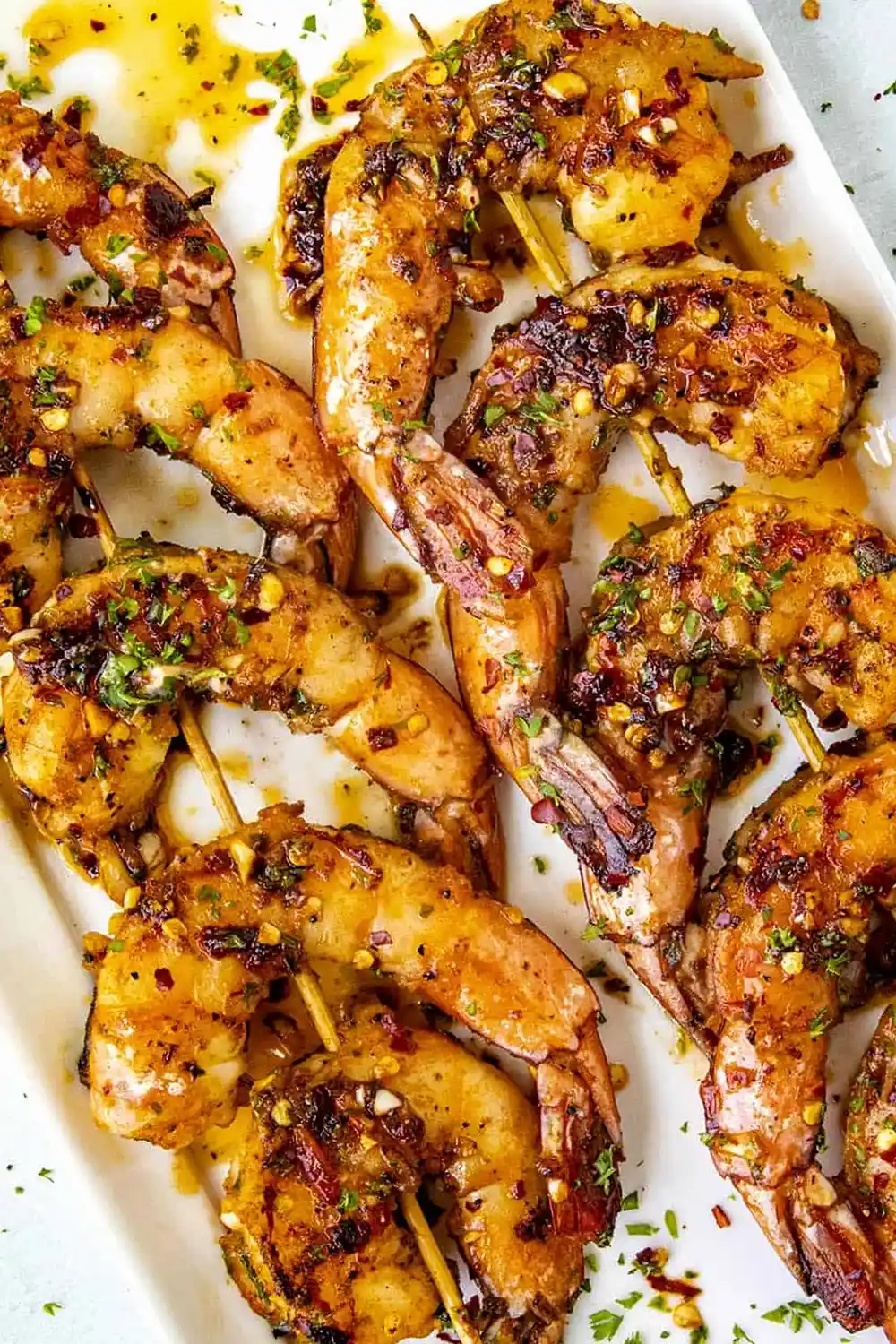
This flavorful shrimp marinade blends sweet and spicy notes to create perfectly seasoned seafood. It is an ideal choice for those who enjoy a bold flavor profile whether grilling outdoors or searing in a pan.
List of ingredients
- 1/4 cup olive oil – provides a rich base and prevents sticking.
- 1 tablespoon honey – adds a touch of sweetness; brown sugar is a great alternative.
- 2 cloves garlic, minced – adds aromatic depth and pungent flavor.
- 1 tablespoon fresh parsley, chopped – provides a fresh, herbal finish.
- 1 teaspoon smoked paprika – gives a woody, smoky undertone.
- 1 teaspoon lime zest – adds bright citrus fragrance without adding too much acid.
- 1/2 teaspoon crushed red pepper flakes – introduces a customizable heat level.
- 1/4 teaspoon salt – enhances all other flavors.
- 1/4 teaspoon black pepper – adds a mild, spicy bite.
- Hot sauce to taste – optional for an extra zing and acidity.
- 1 pound shrimp, peeled and deveined – the main protein for the marinade.
step-by-step instructions
- Prepare the marinade: Whisk together the olive oil, honey, garlic, parsley, paprika, lime zest, red pepper flakes, salt, and pepper in a small bowl. Reserve a few tablespoons of this mixture if you wish to use it as a finishing glaze later.
- Marinate the seafood: Place the peeled and deveined shrimp in a large zip-lock bag and pour the marinade over them. Seal the bag tightly and refrigerate for at least 15 to 20 minutes, or up to 1 hour for deeper flavor.
- Prepare for cooking: When you are ready to cook, remove the shrimp from the bag and drain the marinade, discarding the used liquid.
- Cook the shrimp: Grill or saute the shrimp for 2-3 minutes per side. Continue cooking until the shrimp turn pink and are cooked through. Transfer them immediately to a serving platter.
- Add final touch: Squeeze a small amount of fresh lime juice over the cooked shrimp to brighten the flavors before serving.
Mastering Shrimp Selection and Prep
Choosing the Best Shrimp Grade
Opt for jumbo or large shrimp to ensure they do not overcook too quickly on high heat. These larger sizes maintain a juicy interior while the outside develops a nice sear. Always check that the shrimp have a mild, salty scent and no ammonia smell.
Thawing Frozen Shrimp Safely
If using frozen shrimp, thaw them slowly in the refrigerator overnight to preserve the texture. For a faster method, place the sealed bag in a bowl of cold water, changing the water every 30 minutes. Avoid using warm water as it can promote bacterial growth and affect the meat.
Ensuring Proper Deveining
Deveining involves removing the digestive tract from the back of the shrimp. Use a small paring knife to make a shallow slit along the back and lift out the dark vein. This step is crucial for a clean taste and a professional presentation.
Preparing Shell-On Shrimp
While this recipe calls for peeled shrimp, you can marinate them with shells on to protect the meat from high heat. The shells will take on the marinade colors and flavors. Simply peel them after cooking for a more rustic experience.
Cooking Method Alternatives
Outdoor Grilling Techniques
Preheat your grill to medium-high heat and lightly oil the grates to prevent sticking. Thread the marinated shrimp onto wooden or metal skewers to make them easier to flip. Grill for 2-3 minutes per side until they form a tight C-shape.
Stovetop Pan Searing
Use a cast-iron skillet or a heavy stainless steel pan for the best sear. Heat the pan until the oil begins to shimmer, then add the shrimp in a single layer. Avoid overcrowding the pan, as this will cause the shrimp to steam rather than brown.
High-Heat Oven Broiling
Place the shrimp on a foil-lined baking sheet and set your oven to the broil setting. Position the rack about 6 inches away from the heat source. Broil for 3-5 minutes per side, watching closely to prevent the honey from burning.
Using a Grill Pan Indoors
A ridged grill pan can mimic the effect of an outdoor grill by creating char marks. Heat the pan on medium-high and press the shrimp firmly into the ridges. This method provides a smoky appearance without needing an outdoor setup.
Customizing Your Marinade
Substituting Honey with Other Sweeteners
Brown sugar is an excellent substitute for honey and helps with caramelization during grilling. For a more distinct flavor, try maple syrup or agave nectar. These alternatives provide the same balance to the spicy red pepper flakes.
Choosing Alternative Cooking Oils
While olive oil is standard, avocado oil or grapeseed oil are better for very high-heat searing due to their higher smoke points. These oils are neutral in flavor and will let the garlic and paprika shine. Avoid using butter in the marinade as it can burn quickly.
Swapping Citrus Zest
Lemon zest can be used instead of lime zest for a sharper, more traditional Mediterranean flavor. Orange zest adds a sweeter, floral note that pairs well with the smoked paprika. Always zest the fruit before juicing it for maximum efficiency.
Integrating Different Fresh Herbs
Cilantro is a fantastic replacement for parsley if you want a more Latin-inspired flavor profile. Fresh basil also works well, especially if you are serving the shrimp with pasta. Ensure the herbs are finely chopped so they adhere to the shrimp.
Adjusting Heat and Flavor Profiles
Creating a Mild Version
To reduce the heat, omit the crushed red pepper flakes and the hot sauce entirely. The smoked paprika will still provide a rich flavor without the spicy kick. This version is ideal for children or those with sensitive palates.
Achieving Medium Heat Balance
Stick to the recipe measurements of 1/2 teaspoon of red pepper flakes. This provides a gentle warmth that enhances the shrimp without overpowering the sweetness of the honey. The addition of a mild hot sauce can add depth without excessive heat.
Developing High Heat Intensity
Increase the red pepper flakes to a full tablespoon for a significant spicy punch. You can also add a pinch of cayenne pepper to the mixture for a sharper, more immediate heat. This level of spice pairs well with cooling side dishes like cucumber salad.
Using Ghost Pepper Powder
For extreme heat lovers, add a tiny pinch of ghost pepper powder to the whisked marinade. This powder is incredibly potent, so start with a very small amount. Be careful when handling this ingredient to avoid contact with eyes or skin.
Perfecting Texture and Timing
Managing the Marination Window
Shrimp are delicate and can be ‘cooked’ by acids if left too long in a marinade. Aim for 15 to 60 minutes in the refrigerator. Marinating for several hours or overnight can result in a mushy, rubbery texture.
The Importance of Using Zest Over Juice
Using zest instead of juice in the initial marinade prevents the citric acid from breaking down the proteins too quickly. This allows the shrimp to absorb the flavor without losing their firm structure. Save the fresh juice for the final garnish.
Identifying the Perfect Doneness
Shrimp are done when they change from translucent gray to an opaque pinkish-white. Look for a C-shape; if the shrimp curl into a tight ‘O’ shape, they are likely overcooked. Overcooked shrimp become tough and lose their sweetness.
Preventing Rubbery Results
Rubbery shrimp are usually the result of overcooking or over-marinating. Use a meat thermometer to ensure they reach an internal temperature of 145 degrees Fahrenheit. Remove them from the heat immediately once they reach this temperature.
Serving and Pairing Ideas
Complementary Side Dishes
Serve the grilled shrimp alongside a bed of fluffy quinoa or garlic-infused basmati rice. Grilled asparagus or sautéed zucchini provide a healthy, vegetable-forward balance to the meal. A simple corn on the cob with butter also pairs perfectly.
Fresh Salad Pairings
Toss the warm shrimp over a crisp arugula salad with a light lemon vinaigrette. A mango salsa with red onion and cilantro adds a sweet and tangy contrast to the spicy marinade. This makes the dish an excellent light lunch.
Creating an Appetizer Platter
Thread the shrimp onto small skewers and serve them on a platter with a side of garlic aioli. Arrange lime wedges and fresh parsley around the edges for a professional look. This presentation is ideal for party starters and cocktail hours.
Main Course Plating Suggestions
For a full meal, place the shrimp over a bed of linguine tossed in olive oil and garlic. Garnish the plate with extra chopped parsley and a sprinkle of parmesan cheese. Serve with a side of crusty toasted baguette to soak up the juices.
Storage and Preservation
Storing the Raw Marinade
You can prepare the marinade in advance and keep it in a sealed glass jar in the refrigerator for up to 5 days. This is a great way to meal prep during a busy week. Simply pour the chilled marinade over your shrimp right before cooking.
Storing Cooked Shrimp
Place leftover grilled shrimp in an airtight container and store them in the refrigerator for up to 3 days. Ensure they are completely cooled before sealing the lid to prevent moisture buildup. Avoid freezing cooked shrimp as it can degrade the texture.
Guidelines for Reheating
To reheat, place the shrimp in a non-stick pan over low to medium heat with a small pat of butter. Heat them gently for 1-2 minutes just until warmed through. Avoid using a microwave, as it often makes the shrimp rubbery.
Freezing Marinated Shrimp
You can freeze raw shrimp in the marinade for up to a month. Place them in a heavy-duty freezer bag, squeezing out as much air as possible. Thaw them in the refrigerator before cooking to ensure the texture remains intact.
Troubleshooting Common Issues
Preventing Shrimp from Sticking
Ensure your pan or grill is properly preheated before adding the seafood. A thin layer of oil on the cooking surface creates a barrier that prevents the honey in the marinade from sticking. Use a flexible spatula to flip them gently.
Fixing Over-Salted Marinade
If the marinade tastes too salty, add an extra tablespoon of honey or a squeeze of lime juice. The sweetness and acidity will help neutralize the excess salt. You can also add a bit more olive oil to dilute the concentration.
Addressing Lack of Color
If your shrimp aren’t browning, your pan temperature is likely too low. Increase the heat to medium-high and avoid adding too many shrimp at once. The sugars in the honey need high heat to caramelize and create a golden crust.
Handling Burst Shrimp
Shrimp that burst or split during cooking are often frozen shrimp that were thawed too quickly or cooked at an excessively high temperature. Maintain a steady medium-high heat and ensure they are patted dry before they hit the pan.
Frequently Asked Questions
Can I use frozen shrimp for this recipe?
Yes, frozen shrimp work perfectly as long as they are fully thawed and patted dry before marinating. This ensures the marinade adheres to the meat rather than being diluted by melting ice crystals.
Can I reuse the marinade after soaking the shrimp?
No, you should always discard the marinade that has touched raw shrimp. To use the marinade as a sauce, reserve a portion of it in a separate bowl before adding the raw seafood.
How long can I leave shrimp in the marinade?
The ideal time is between 15 and 60 minutes. Leaving them longer than two hours can lead to a mushy texture because the acid and salt begin to break down the muscle fibers.
What is the best way to peel shrimp quickly?
Use a shrimp deveiner tool or a small knife to cut the shell along the back. Gently pull the shell away from the head toward the tail. If the shrimp are large, you can use your fingers to peel them in one motion.
Print
Zesty and Spicy Shrimp Marinade
- Total Time: 20 minutes
- Yield: 4 servings 1x
- Diet: General
Description
This is the best shrimp marinade for seared or grilled shrimp, with a hugely flavorful combination of sweet and spicy for perfect shrimp every time.
Ingredients
- 1/4 cup olive oil
- 1 tablespoon honey
- 2 cloves garlic, minced
- 1 tablespoon fresh parsley, chopped
- 1 teaspoon smoked paprika
- 1 teaspoon lime zest
- 1/2 teaspoon crushed red pepper flakes
- 1/4 teaspoon salt
- 1/4 teaspoon black pepper
- Hot sauce to taste
- 1 pound shrimp, peeled and deveined
Instructions
- Step 1: Whisk together the olive oil, honey, garlic, parsley, paprika, lime zest, red pepper flakes and salt and pepper in a small bowl. Reserve a few tablespoons now if you’d like to use some as a finishing sauce.
- Step 2: Place the shrimp in a large zip-lock bag and pour the marinade over them. Seal the bag and refrigerate at least 15 to 20 minutes, or for 1 hour before cooking.
- Step 3: When ready to cook, drain the marinade and discard it.
- Step 4: Grill or saute the shrimp for 2-3 minutes per side, or until pink and cooked through. Transfer to a serving platter.
- Step 5: Squeeze on a bit of fresh lime juice to finish.
Notes
Reserve a couple tablespoons of your marinade before marinating the shrimp to use as a glaze or finishing sauce. Use lime zest instead of lime juice to prevent the acid from breaking down the shrimp during longer marination.
- Prep Time: 15 minutes
- Cook Time: 5 minutes
- Category: Main Course
- Method: Grilling
- Cuisine: American
Nutrition
- Serving Size: 1 serving
- Calories: 254 kcal
- Sugar: 4 g
- Sodium: 887 mg
- Fat: 15 g
- Saturated Fat: 2 g
- Unsaturated Fat: 13 g
- Trans Fat: 0 g
- Carbohydrates: 5 g
- Fiber: 1 g
- Protein: 23 g
- Cholesterol: 286 mg