This Pasta Primavera combines a variety of fresh, colorful vegetables with a light and zesty lemon cream sauce. It is a nutrient-dense meal that is perfect for spring and summer dining. This recipe is highly customizable and easy to prepare for a family dinner.
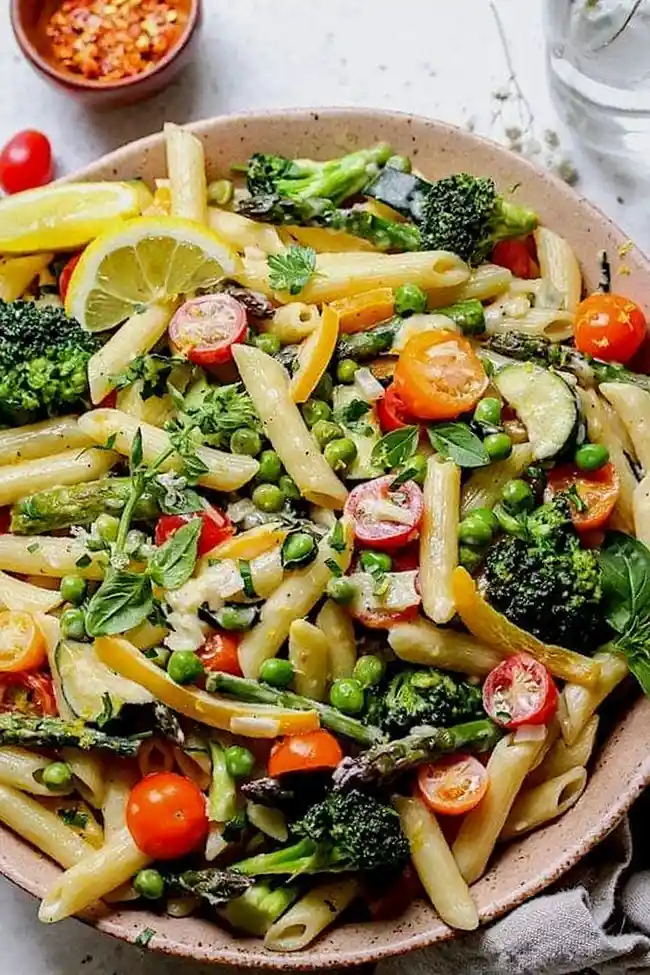
List of ingredients
- 16 oz penne pasta – provides a hearty base that holds the sauce.
- 1 tablespoon olive oil – used for sautéing the fresh vegetables.
- 8 oz asparagus, cut into 1 ½-inch pieces – adds a fresh, earthy flavor.
- 1 yellow bell pepper, cut into 1 ½-inch pieces – adds color and sweetness.
- 2 cups small broccoli florets – contributes a nice crunch and texture.
- 1 small zucchini, chopped – a classic spring vegetable for this dish.
- Salt and black pepper to taste – for basic seasoning.
- 2 tablespoons unsalted butter – used to sauté aromatics and thicken the sauce.
- 1 shallot, minced – provides a mild, sweet onion flavor.
- 4 garlic cloves, minced – adds aromatic depth to the cream sauce.
- Zest of 1 lemon – provides a bright, citrusy fragrance.
- Dash crushed red pepper flakes – adds a subtle hint of heat.
- 1 cup vegetable broth – creates the savory base for the sauce.
- ½ cup heavy cream – gives the sauce a rich, velvety consistency.
- 3 tablespoon lemon juice, divided – balances the richness of the cream.
- 1 cup frozen peas – adds pops of green and sweetness.
- ½ cup shredded Parmesan cheese – adds saltiness and thickness.
- 1 ½ cups halved grape tomatoes – provides juicy, acidic bursts.
- ¼ cup chopped basil – brings a fresh, herbal finish.
- 2 tablespoons Italian parsley, for garnish – adds a clean, green look.
- Extra parmesan cheese, for garnish – for additional saltiness.
- Crushed red pepper flakes, for garnish – for a touch of spice.
step-by-step instructions
- Cook the pasta: Bring a large pot of water to a boil. Add salt and the penne pasta to the boiling water. Cook for 11 minutes, stirring occasionally to prevent sticking. Drain the pasta well and pour it back into the pot.
- Sauté the primary vegetables: Heat olive oil in a large skillet over medium-high heat. Add the asparagus, yellow bell peppers, and broccoli florets. Sauté for 2 to 3 minutes, stirring occasionally.
- Finish the vegetables: Add the chopped zucchini to the skillet. Cook for another 1 to 2 minutes until all vegetables are tender but still crisp. Season with salt and pepper to taste. Transfer the sautéed vegetables to a large plate or bowl and set aside.
- Create the sauce base: Place the skillet back on the stove over medium heat. Melt the unsalted butter. Add the minced shallot and garlic, cooking for about 2 minutes until fragrant.
- Simmer and reduce: Stir in the lemon zest and vegetable broth. Let the mixture simmer for 4 to 5 minutes, or until the broth has reduced by half.
- Finish the cream sauce: Stir in the heavy cream and 2 tablespoons of the lemon juice. Mix well until the sauce is smooth and slightly thickened.
- Combine pasta and ingredients: Stir the frozen peas into the pot with the cooked pasta. Stir in the previously sautéed vegetables. Pour the lemon cream sauce over the mixture and stir until well combined.
- Add final flavors: Stir in the shredded Parmesan cheese and the remaining 1 tablespoon of fresh lemon juice. Gently fold in the halved grape tomatoes and chopped basil. Season with additional salt and black pepper as needed.
- Garnish and serve: Transfer the pasta primavera into a large serving bowl. Garnish with fresh Italian parsley, extra Parmesan cheese, and a sprinkle of crushed red pepper flakes. Serve while warm.
Customizing Your Vegetable Mix
Incorporate Earthy Mushrooms
Cremini or shiitake mushrooms add a savory, umami depth to the dish. Sauté them separately in a small amount of oil before adding them to the final mix. This prevents them from releasing too much moisture into the cream sauce.
Add Sweet Diced Carrots
Carrots add a lovely orange hue and natural sweetness to the pasta. Since they take longer to cook, dice them very small and sauté them first. This ensures they are tender by the time the other vegetables are ready.
Use Fresh Baby Spinach or Kale
Leafy greens like spinach or kale provide additional nutrients and color. Stir these in at the very end of the cooking process. The residual heat from the pasta and sauce is enough to wilt them perfectly.
Try Yellow Summer Squash
Yellow squash is a great companion to zucchini and maintains a similar texture. Cut them into uniform half-moons for a professional look. Add them at the same time as the zucchini for consistent cooking.
Add Marinated Artichoke Hearts
Canned or jarred artichoke hearts add a tangy, sophisticated flavor. Drain them well and pat them dry before adding. Stir them in along with the grape tomatoes to avoid overcooking them.
Guide to Selecting Pasta Shapes
Choose Farfalle for a Decorative Look
Bow-tie pasta, or farfalle, is a great choice for primavera because its shape catches the sauce. The folds in the pasta hold onto small pieces of herbs and cheese. It also mirrors the spring theme of the dish.
Use Rigatoni for Hearty Texture
Rigatoni features large ridges and a wide hollow center. This allows the cream sauce and small peas to get trapped inside each tube. It creates a more substantial bite compared to smoother pastas.
Opt for Orecchiette to Scoop Vegetables
Orecchiette, meaning little ears, acts like small scoops. This shape is ideal for capturing the halved grape tomatoes and small broccoli florets. It ensures every forkful has a balanced mix of pasta and veg.
Try Fusilli for Maximum Sauce Coating
The spirals of fusilli pasta provide a large surface area for the lemon cream sauce. The sauce clings to the twists, ensuring that no pasta remains dry. This is one of the best options for cream-based recipes.
Use Linguine for a Lighter Feel
If you prefer a long pasta, linguine is a sophisticated choice. It provides a sleek look that complements the long pieces of asparagus. Be sure to toss it thoroughly so the sauce coats the strands evenly.
Ways to Boost Protein Content
Add Grilled Chicken Breast
Sliced grilled chicken breast is a classic addition that makes the meal more filling. Season the chicken with salt, pepper, and a hint of lemon before grilling. Fold the slices into the pasta just before serving.
Stir in Sautéed Shrimp
Shrimp pairs naturally with lemon and garlic flavors. Sauté the shrimp in the skillet before starting the sauce. Keep them separate and stir them in at the end to prevent them from becoming rubbery.
Incorporate Canned White Beans
Cannellini or Great Northern beans provide a creamy, plant-based protein. Rinse and drain the beans thoroughly before adding them. They blend seamlessly into the sauce and add a hearty texture.
Use Chickpeas for Nutty Flavor
Chickpeas offer a firm texture and a slight nuttiness. Roast them in the oven beforehand for an added crunch, or stir them in raw for a softer feel. They are an excellent option for vegetarian diets.
Add Cubed Firm Tofu
Firm tofu can be pressed, cubed, and browned in the skillet. Use a bit of soy sauce or lemon juice to season the tofu before adding it. It absorbs the flavors of the cream sauce beautifully.
Proper Storage and Reheating Methods
Storing in Airtight Containers
Place leftover pasta in a sealed glass or plastic container. Store it in the refrigerator for up to five days. Ensure the pasta is completely cooled before sealing to prevent excess condensation.
Reheating on the Stovetop
For the best texture, reheat the pasta in a skillet over low heat. Add a splash of water or vegetable broth to loosen the sauce. Stir gently to avoid breaking the vegetables.
Microwave Reheating Tips
Place the pasta in a microwave-safe dish and cover it with a damp paper towel. Heat in 30-second intervals, stirring in between. This helps distribute the heat and prevents the cream from separating.
Refreshing the Sauce Texture
Cream sauces often thicken significantly when chilled. Adding a tablespoon of heavy cream or lemon juice during reheating restores the silky consistency. This brings back the original vibrancy of the dish.
Pro Tips for Texture and Flavor
Preventing Mushy Vegetables
Sauté vegetables over medium-high heat to achieve a sear. Avoid overcrowding the pan, as this causes the vegetables to steam rather than brown. This keeps them crisp-tender and colorful.
Achieving the Right Sauce Consistency
Do not boil the sauce aggressively after adding the heavy cream. Keep it at a gentle simmer to prevent the emulsion from breaking. If the sauce is too thick, thin it with a bit of pasta water.
Properly Salting the Pasta Water
Salt the boiling water generously before adding the pasta. This is the only opportunity to season the pasta itself. It enhances the overall flavor of the final dish significantly.
Zesting Lemons Correctly
Use a fine microplane to zest only the yellow part of the peel. Avoid the white pith, as it is bitter and can ruin the sauce. Fresh zest provides a much more potent aroma than bottled juice.
Common Questions About Pasta Primavera
Can I make this gluten-free?
Yes, you can simply replace the penne with your favorite gluten-free pasta alternative. Brown rice or chickpea pasta work well in this recipe. Follow the package instructions for the best cooking time.
How do I prevent the cream sauce from separating?
Avoid adding the lemon juice while the sauce is boiling rapidly. Stir the acid in at the end or on low heat. Using heavy cream instead of milk also provides more stability to the sauce.
What can I use instead of heavy cream?
You can substitute heavy cream with full-fat coconut milk for a dairy-free version. Alternatively, use a mixture of Greek yogurt and a bit of pasta water. Be sure to stir these in over low heat to prevent curdling.
Can I use frozen mixed vegetables?
You can use frozen vegetables, but the texture will be softer than fresh. Thaw and pat them dry before sautéing to avoid adding too much water to the pan. Sauté them quickly to maintain some bite.
How do I keep the vegetable colors vibrant?
Do not overcook the vegetables in the skillet. Remove them as soon as they are tender-crisp. Adding a final squeeze of fresh lemon juice at the end also helps maintain the bright colors.
Print
Vibrant Vegetable Pasta Primavera
- Total Time: 35 minutes
- Yield: 8 servings 1x
- Diet: Vegetarian
Description
Enjoy the vibrant flavors of Pasta Primavera! This fresh pasta dish features seasonal spring vegetables and a light and refreshing lemon cream sauce. It’s the perfect pasta dish for spring, summer, or anytime!
Ingredients
- 16 oz penne pasta
- 1 tablespoon olive oil
- 8 oz asparagus, cut into 1 ½-inch pieces
- 1 yellow bell pepper, cut into 1 ½-inch pieces
- 2 cups small broccoli florets
- 1 small zucchini, chopped
- Salt and black pepper, to taste
- 2 tablespoons unsalted butter
- 1 shallot, minced
- 4 garlic cloves, minced
- Zest of 1 lemon
- Dash crushed red pepper flakes
- 1 cup vegetable broth
- ½ cup heavy cream
- 3 tablespoon lemon juice, divided
- 1 cup frozen peas
- ½ cup shredded Parmesan cheese (microbial rennet)
- 1 ½ cups halved grape tomatoes
- ¼ cup chopped basil
- 2 tablespoons Italian parsley, for garnish
- Extra parmesan cheese (microbial rennet), for garnish
- Crushed red pepper flakes, for garnish
Instructions
- Boil Pasta: Bring a large pot of water to a boil. Add salt and pasta to boiling water. Cook for 11 minutes, stirring occasionally. Drain well. Pour the pasta back into the pot.
- Sauté Vegetables: In a large skillet, heat the olive oil over medium high heat. Add the asparagus, peppers, and broccoli. Sauté for 2 to 3 minutes, stirring occasionally. Add in the zucchini and cook for 1 to 2 minutes or until vegetables are tender, but still crisp. Season vegetables with salt and pepper, to taste. Transfer the vegetables to a large plate or bowl.
- Prepare Sauce: Place the skillet back on the stove. Melt the butter over medium heat. Add the shallot and garlic and cook for 2 minutes. Stir in the lemon zest and vegetable broth. Simmer until the broth reduces by half, about 4 to 5 minutes. Stir in the heavy cream and 2 tablespoons of lemon juice.
- Combine: Stir the peas into the pot with the pasta. Stir in the cooked vegetables. Pour the lemon cream sauce over the pasta and vegetables and stir until well combined. Stir in the Parmesan cheese and remaining tablespoon of fresh lemon juice. Gently stir in the tomatoes and basil. Season with salt and black pepper, to taste.
- Garnish and Serve: Pour the pasta primavera into a large serving bowl or dish. Garnish with parsley, extra Parmesan cheese, and crushed red pepper flakes. Serve warm.
Notes
Veggie Variations: Feel free to mix up the veggies with mushrooms, yellow squash, artichoke hearts, carrots, spinach, and kale. Pasta: Use your favorite pasta shape; gluten-free pasta can be used. Protein: You can add chicken, shrimp, beans, or tofu for a boost of protein. Storing: Store leftovers in an airtight container in the fridge for up to 5 days.
- Prep Time: 20 minutes
- Cook Time: 15 minutes
- Category: Main Course
- Method: Sautéing
- Cuisine: Italian
Nutrition
- Serving Size: 1 serving
- Calories: 375 kcal
- Sugar: 5 g
- Sodium: 240 mg
- Fat: 12 g
- Saturated Fat: 6 g
- Unsaturated Fat: 6 g
- Trans Fat: 0 g
- Carbohydrates: 52 g
- Fiber: 4 g
- Protein: 13 g
- Cholesterol: 32 mg