This Thai-inspired salmon coconut curry features pan-seared fillets in a creamy red curry sauce. It is a nutrient-dense, flavorful meal that can be prepared in under 40 minutes.
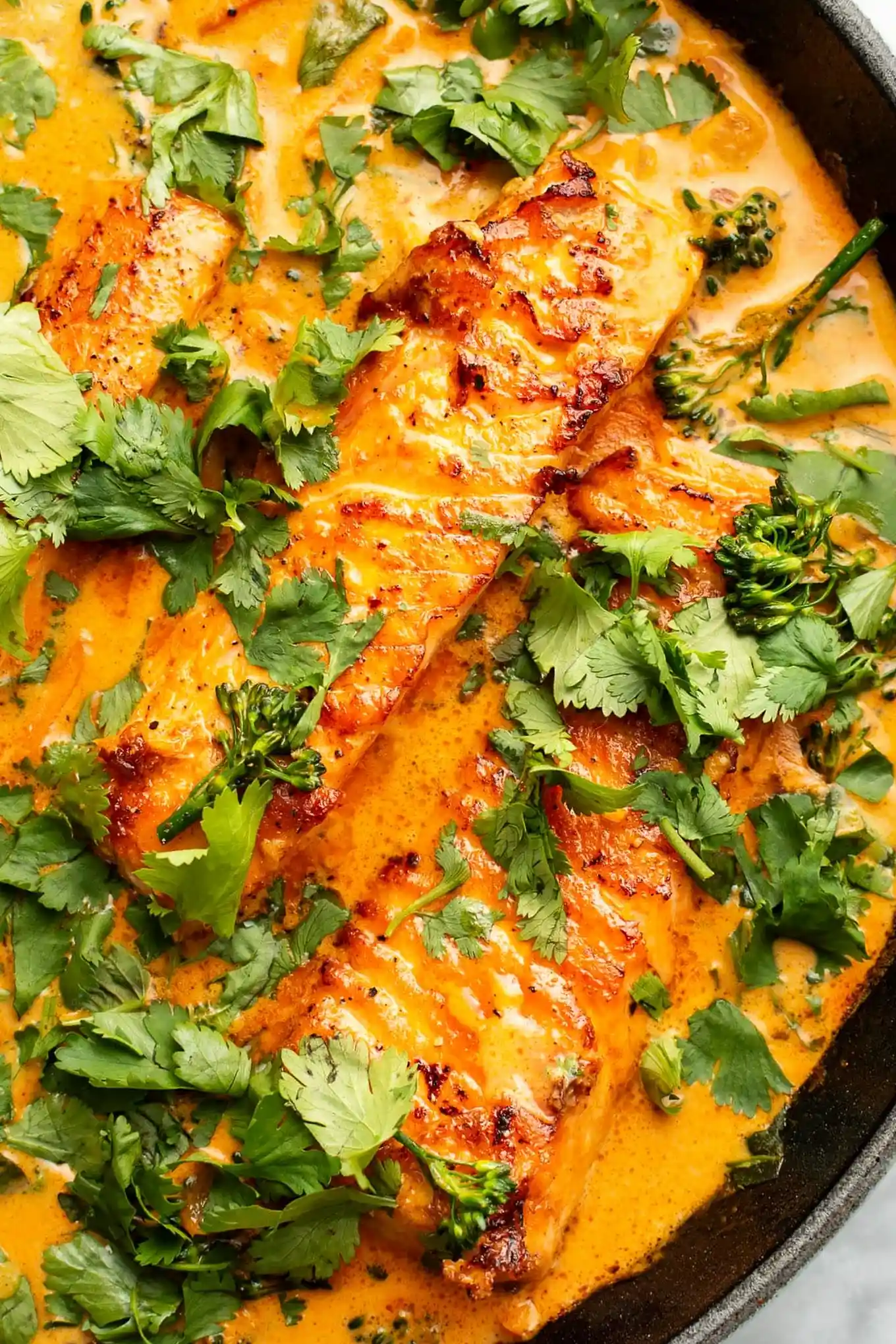
List of ingredients
- 1 pound fresh salmon – cut into 4 equal portions.
- Salt & pepper – for seasoning to taste.
- 1 tablespoon olive oil – for searing.
- 1 tablespoon butter – adds richness to the sear.
- 1/2 medium onion – chopped finely.
- 2 cloves garlic – minced.
- 2 heaping tablespoons Thai red curry paste – adjust based on preferred heat.
- 1/2 teaspoon fish sauce – optional, adds depth of flavor.
- 1 (13.5 ounce) can full-fat coconut milk – ensures a creamy sauce.
- 1/2 teaspoon brown sugar – balances the spicy and salty notes.
- 1/2 cup matchstick cut carrots – for texture and color.
- 1 heaping cup chopped broccolini – cut into small pieces.
- 1 teaspoon lime juice – provides essential acidity.
- 2 tablespoons torn/chopped fresh basil – for a fragrant finish.
- 2 tablespoons chopped fresh cilantro – for a fresh herbal note.
step-by-step instructions
- Prepare the fish: Cut the salmon into 4 equal pieces. Pat both sides dry with paper towels and season with salt and pepper.
- Heat the pan: Add the olive oil and butter to a skillet over medium-high heat. Let the pan heat up for a few minutes before adding the fish.
- Sear the salmon: Cook the salmon skin-side down for 5 minutes. Flip and cook for another 2-3 minutes until almost done. Let the fish release naturally from the pan if it sticks.
- Rest the salmon: Remove the salmon from the pan and transfer it to a plate. If you prefer not to eat the skin, slide it off now.
- Manage the oil: Spoon out excess oil from the skillet, leaving approximately one tablespoon in the pan.
- Sauté aromatics: Add the chopped onion and sauté for about 3 minutes until lightly browned. Stir in the minced garlic and red curry paste, cooking for an additional minute.
- Simmer the sauce: Pour in the fish sauce, coconut milk, brown sugar, carrots, and broccolini. Let the mixture gently bubble for about 5 minutes until vegetables are tender-crisp.
- Finish and serve: Stir in the lime juice, then return the salmon fillets to the pan. Warm through for a couple of minutes, season with extra salt and pepper if needed, and garnish with fresh basil and cilantro.
Professional Searing Methods
Patting Salmon Dry for a Better Crust
Removing surface moisture is essential for achieving a golden-brown sear. If the fish is damp, it will steam instead of sear, resulting in a pale color and softer texture.
Achieving the Correct Pan Temperature
Wait until the oil and butter are shimmering before adding the salmon. A hot pan prevents the fish from sticking and ensures the proteins brown quickly.
Allowing Salmon to Release Naturally
Do not force the fish off the pan with a spatula if it feels stuck. The salmon will naturally release from the surface once a proper crust has formed.
The Importance of Room Temperature Fish
Let the salmon sit at room temperature for about 15 minutes before cooking. This ensures the fish cooks evenly throughout and avoids a raw center.
Using Cast Iron for Heat Retention
A cast iron skillet is ideal for this recipe because it holds heat consistently. This prevents the pan temperature from dropping when the cold fish is added.
The Role of Butter in Searing
Combining olive oil with butter allows for a higher smoke point than butter alone. The butter adds a nutty flavor and aids in browning the fish fillets.
Ingredient Substitutions and Modifications
Replacing Fish Sauce with Soy Sauce
If you do not have fish sauce, soy sauce is a practical alternative. While it lacks the same fermented depth, it provides the necessary saltiness for the curry.
Using Different Vegetable Mixes
You can swap carrots and broccolini for red bell peppers, snap peas, or sliced asparagus. Ensure all vegetables are cut into small, uniform pieces for quick cooking.
Adjusting the Spice Level of Curry Paste
Different brands of red curry paste vary in heat. If the sauce is too mild, add a pinch of red pepper flakes or chopped fresh Thai chilis.
Substituting Brown Sugar with Honey
Honey or maple syrup can be used in place of brown sugar. These alternatives provide a similar sweetness to balance the heat of the red curry paste.
Using Lite Coconut Milk
Lite coconut milk can be used for a lower-calorie version. However, the sauce will be thinner and less velvety than the version made with full-fat milk.
Adding Fresh Ginger for Extra Zest
Adding one teaspoon of freshly grated ginger along with the garlic enhances the aromatic profile. This adds a warm, spicy note that complements the coconut milk.
Suggested Side Dishes
Serving with Fragrant Jasmine Rice
Jasmine rice is the traditional pairing for Thai curries. Its floral aroma and slightly sticky texture are perfect for soaking up the creamy coconut sauce.
Using Basmati Rice for a Nutty Flavor
Basmati rice is a great alternative if you prefer a longer, fluffier grain. It provides a subtle nuttiness that pairs well with the richness of the salmon.
Pairing with Naan or Roti Bread
Warm naan or roti is excellent for scooping up the sauce and vegetables. Toast the bread with a bit of butter or garlic for added flavor.
Creating Low-Carb Lettuce Cups
For a lower-carb option, serve the curry inside large romaine or butter lettuce leaves. This adds a fresh crunch that contrasts with the warm curry sauce.
Combining with a Thai Quinoa Salad
A cold quinoa salad with lime, cilantro, and cucumber can balance the richness of the curry. This provides an additional source of protein and fiber to the meal.
Preservation and Reheating Tips
Proper Refrigeration Methods
Store any leftover curry in an airtight glass container in the refrigerator. The dish will remain fresh and safe to eat for 2 to 3 days.
Reheating for Optimal Texture
Reheat the curry slowly in a saucepan over low heat. Avoid using a microwave, as it can overcook the salmon and make the sauce separate.
Why Freezing is Not Recommended
Freezing is not advised for this recipe because the textures of the salmon and vegetables will degrade. The coconut milk sauce may also break or become grainy upon thawing.
Troubleshooting Common Issues
Preventing the Curry Paste from Burning
Keep the heat at a medium level when sautéing the curry paste. Because the paste contains sugars and spices, it can burn quickly if the pan is too hot.
Avoiding Overcooked Salmon
Remove the salmon from the pan when it is nearly done, as it will continue to cook while resting. Return it to the sauce only at the very end to avoid a dry texture.
Fixing a Thin Sauce
If the sauce is too watery, let it simmer for a few extra minutes without a lid. This allows the coconut milk to reduce and thicken naturally.
Preventing Vegetable Mushiness
Add vegetables based on their density, ensuring they only bubble for 5-7 minutes. This keeps them tender-crisp rather than soft and mushy.
Correcting an Overly Salty Sauce
If the sauce is too salty due to the fish sauce, add a small amount of extra coconut milk. A squeeze of additional lime juice can also help balance the saltiness.
Managing Oil Splatter
Ensure the salmon is very dry before it hits the oil to reduce splattering. Use a splatter screen if you are working with a high-heat burner.
Frequently Asked Questions
Can I use frozen salmon for this recipe?
Yes, but you must thaw it completely in the refrigerator and pat it very dry. Frozen salmon often releases more moisture, which can hinder the searing process.
How do I make the curry less spicy?
Reduce the amount of red curry paste or increase the amount of coconut milk. Adding a bit more brown sugar can also help neutralize the heat.
Which coconut milk is best for thickness?
Full-fat canned coconut milk provides the best thickness and creaminess. Avoid using the coconut milk sold in cartons for drinking, as it is too thin for sauces.
Can I substitute the broccolini with regular broccoli?
Yes, regular broccoli works perfectly. Just make sure to cut the florets into small, bite-sized pieces so they cook in the same timeframe as the carrots.
Is it necessary to remove the salmon skin?
Removing the skin is a matter of personal preference. The skin provides a great sear, but sliding it off before returning the fish to the sauce makes the dish easier to eat.
Print
Thai-Style Salmon Coconut Curry
- Total Time: 35 minutes
- Yield: 4 servings 1x
- Diet: General
Description
This easy Thai-inspired salmon coconut curry has tender pan-seared salmon in a creamy red curry coconut milk sauce. It’s super flavorful and comforting!
Ingredients
- 1 pound fresh salmon
- Salt & pepper to taste
- 1 tablespoon olive oil
- 1 tablespoon butter
- 1/2 medium onion, chopped
- 2 cloves garlic, minced
- 2 heaping tablespoons Thai red curry paste
- 1/2 teaspoon fish sauce
- 1 (13.5 ounce) can full-fat coconut milk
- 1/2 teaspoon brown sugar
- 1/2 cup matchstick cut carrots
- 1 heaping cup chopped broccolini
- 1 teaspoon lime juice
- 2 tablespoons torn/chopped fresh basil
- 2 tablespoons chopped fresh cilantro
Instructions
- Step: Cut the salmon into 4 equal pieces. Pat both sides dry with paper towel and season with salt & pepper.
- Step: Add the oil and butter to a skillet over medium-high heat. Let the pan heat up for a few minutes.
- Step: Cook the salmon, skin-side down, for 5 minutes. Flip it and cook for another 2-3 minutes.
- Step: Take the salmon out of the pan and transfer it to a plate.
- Step: Spoon some of the oil out of the skillet so you have about a tablespoon of it left in there.
- Step: Add the onion to the skillet and sauté for about 3 minutes, then stir in the garlic and curry paste and cook for 1 minute.
- Step: Add in the fish sauce, coconut milk, sugar, carrots, and broccolini. Let it gently bubble for about 5 minutes or so.
- Step: Stir in the lime juice, then add the fish back to the pan. Let it warm through for a couple of minutes. Season with more salt & pepper as needed. Sprinkle with the basil and cilantro and serve immediately.
Notes
For the best results, use a thick and creamy full-fat coconut milk. If you do not have fish sauce, soy sauce can be used as a substitute. Carrots may be julienned by hand, and regular broccoli can be used in place of broccolini.
- Prep Time: 15 minutes
- Cook Time: 20 minutes
- Category: Main Course
- Method: Pan-searing
- Cuisine: Thai American
Nutrition
- Serving Size: 1 serving
- Calories: 458 kcal
- Sugar: 4 g
- Sodium: 176 mg
- Fat: 35 g
- Saturated Fat: 22 g
- Unsaturated Fat: 13 g
- Trans Fat: 0 g
- Carbohydrates: 12 g
- Fiber: 2 g
- Protein: 27 g
- Cholesterol: 70 mg