Prepare a flavor-packed dinner with these easy baked Korean chicken thighs. The combination of fermented gochujang and brown sugar creates a sticky, savory glaze that is perfect for family meals.
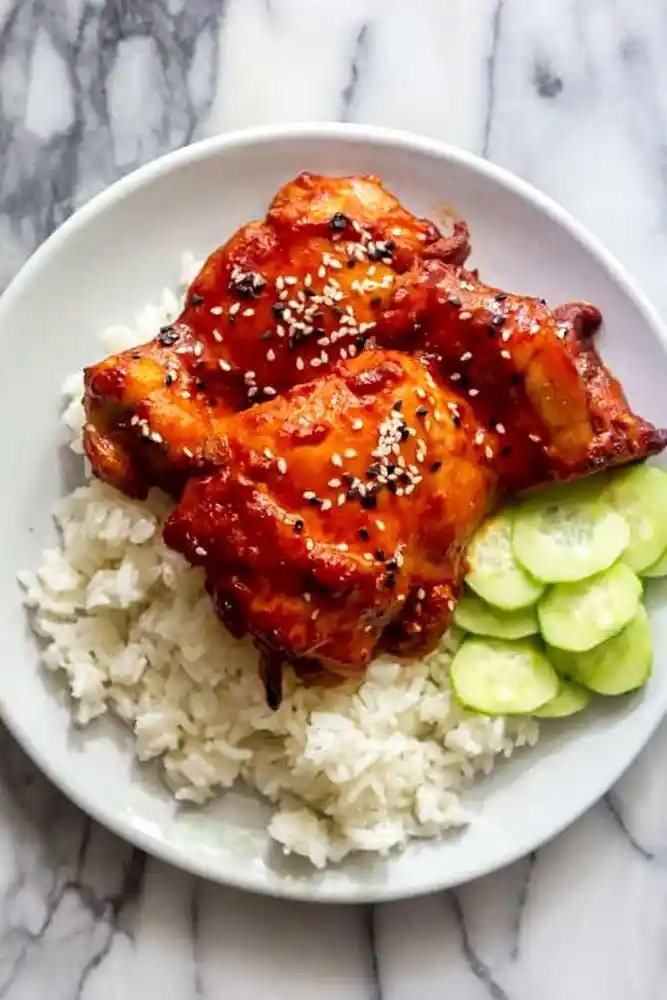
List of ingredients
- 1 lb boneless, skinless chicken thighs – trimmed of excess fat for a cleaner cook.
- 1.5 tbsp rice vinegar – adds a necessary acidic balance to the sweetness.
- 1/4 cup brown sugar – provides sweetness and aids in caramelization.
- 1/2 cup low sodium soy sauce – provides a deep, salty umami base.
- 3 tbsp gochujang – a Korean fermented chili paste for heat and depth.
- 1 tbsp ginger (grated) – adds a bright, zesty aromatic quality.
- 4 garlic cloves (minced) – essential for a pungent, savory flavor profile.
- 1 tbsp rice vinegar – used in the glaze to cut through the richness.
- 1 tbsp low sodium soy sauce – maintains salt balance in the final coating.
- 1 tbsp gochujang – ensures the spicy kick remains in the finished glaze.
- 1/4 cup brown sugar – thickens the glaze into a sticky consistency.
step-by-step instructions
- Prepare the marinade: Whisk together the rice vinegar, brown sugar, soy sauce, gochujang, ginger, and garlic in a bowl. Add the chicken thighs and turn them until completely coated, then marinate in the refrigerator for at least 30 minutes or up to overnight.
- Set up the oven: Preheat your oven to 375 degrees F. Line a large baking sheet with aluminum foil to prevent the sugar from sticking and to simplify the cleaning process.
- Bake the chicken: Arrange the chicken thighs on the prepared baking sheet and discard any leftover marinade. Bake for 20-25 minutes, or until the chicken is cooked through and reaches a safe internal temperature.
- Reduce the glaze: While the chicken is in the oven, combine the glaze ingredients in a small saucepan over medium heat. Whisk occasionally for about 5 minutes until the sauce has thickened, making sure the liquid does not reach a boil.
- Apply the finishing touch: During the last few minutes of baking, brush a layer of the thickened glaze onto the chicken. Remove the chicken from the oven and apply one more coat of glaze before serving.
Essential Guide to Korean Chili Paste
Understanding the Flavor Profile of Gochujang
Gochujang is a savory, sweet, and spicy fermented condiment made from chili powder, glutinous rice, fermented soybeans, and salt. Unlike standard hot sauces, it has a thick, paste-like consistency and a complex depth due to the fermentation process. This gives the chicken a rich, earthy undertone that complements the sugar in the glaze.
Selecting the Right Heat Level
Different brands of gochujang vary in spiciness, ranging from mild to very hot. If you prefer a milder dish, look for brands labeled as mild or increase the amount of brown sugar in the recipe. For those who enjoy more heat, you can choose a spicy variety or add a pinch of red pepper flakes to the marinade.
Storing Gochujang for Long-Term Use
Once opened, gochujang should be stored in an airtight container in the refrigerator to maintain its quality. Because of its high salt content and fermentation, it has a very long shelf life. Always use a clean spoon to scoop the paste to avoid introducing contaminants into the jar.
Identifying Authentic Gochujang
When shopping, check the ingredient list for fermented soybeans and glutinous rice to ensure authenticity. Avoid versions that rely solely on corn syrup or artificial thickeners, as these will not provide the same fermented depth. Authentic paste should be a deep, dark red color with a glossy sheen.
Techniques for Optimal Baking
Using a Digital Meat Thermometer
To ensure the chicken is cooked perfectly without becoming dry, use a digital meat thermometer. Insert the probe into the thickest part of the thigh, avoiding the bone. Remove the chicken from the oven as soon as it reaches 165 degrees F to maintain juiciness.
Preventing the Sugar from Burning
Since the marinade contains brown sugar, it can caramelize quickly and potentially burn on the pan. Using aluminum foil or parchment paper is essential for preventing sticking. If you notice the edges darkening too quickly, you can loosely cover the pan with foil to modulate the heat.
Optimizing Airflow on the Baking Sheet
Avoid overcrowding the chicken thighs on the baking sheet. Leaving a small gap between each piece allows the hot air to circulate evenly around the meat. This ensures the chicken bakes consistently and the edges develop a slight sear rather than steaming.
The Importance of Proper Preheating
Ensure the oven is fully preheated to 375 degrees F before sliding the baking sheet inside. Placing chicken in a cold oven can lead to uneven cooking and may cause the meat to release more moisture. A fully preheated oven creates an immediate sear that helps lock in flavor.
Alternative Ingredient Options
Replacing Gochujang with Sriracha
If gochujang is unavailable, sriracha can be used as a substitute, although the flavor will be more acidic and less earthy. Since sriracha is thinner than paste, you may need to simmer the glaze longer to achieve a sticky consistency. You might also add a small amount of miso paste to mimic the fermented depth of the original.
Using Honey Instead of Brown Sugar
Honey can replace brown sugar for a different type of sweetness and a glossier finish. Honey is a liquid, so it may make the marinade and glaze slightly thinner. Be mindful that honey burns faster than brown sugar, so monitor the oven closely during the final stages of baking.
Substituting Coconut Aminos for Soy Sauce
For a soy-free alternative, coconut aminos provide a similar salty and savory profile. Coconut aminos are naturally sweeter and lower in sodium than soy sauce, so you may want to slightly reduce the amount of brown sugar used. This substitution maintains the umami character of the dish.
Using Ground Ginger Instead of Fresh
If fresh ginger is not available, ground ginger powder can be used in a smaller quantity. Generally, one-quarter teaspoon of ground ginger replaces one tablespoon of fresh grated ginger. While the flavor is less bright, it still provides the necessary warm notes to the marinade.
Apple Cider Vinegar as a Rice Vinegar Substitute
Apple cider vinegar is a suitable replacement for rice vinegar if you need a tangy acid. It has a slightly stronger, fruitier taste than rice vinegar but performs the same function of balancing the sugars. Use it in a one-to-one ratio for the best results.
Recommended Side Dishes and Pairings
Steamed Jasmine or Short-Grain Rice
Serving the chicken over a bed of steamed jasmine or Korean short-grain rice is the traditional choice. The neutral flavor and absorbent nature of the rice make it perfect for soaking up the extra spicy glaze. For added nutrition, you can cook the rice in vegetable broth.
Quick Pickled Cucumbers
A side of thinly sliced cucumbers pickled in rice vinegar, sugar, and salt provides a refreshing contrast to the rich chicken. The acidity and crunch of the cucumbers cleanse the palate between bites of the sweet and spicy meat. This is a classic Korean pairing known as Oi Muchim.
Steamed Bok Choy or Broccoli
Lightly steamed bok choy or broccoli adds a fresh, green element to the meal. Toss the vegetables in a small amount of sesame oil and salt after steaming. The bitterness of the greens balances the intensity of the gochujang glaze.
Garnishing with Toasted Sesame Seeds
Sprinkling toasted sesame seeds over the finished chicken adds a subtle nuttiness and a professional visual touch. To toast them, place the seeds in a dry pan over medium heat for a few minutes until they turn golden. This adds a layer of texture to the sticky glaze.
Adding Sliced Green Onions
Freshly sliced green onions provide a sharp, crisp contrast to the cooked chicken. Use both the white and green parts of the onion for a variety of flavors. Sprinkle them over the dish immediately before serving to maintain their brightness.
Preservation and Warming Methods
Refrigeration Guidelines
Store leftover chicken in an airtight container in the refrigerator for up to four days. Ensure the chicken is completely cooled before sealing the container to prevent excess moisture from building up. Keep the extra glaze in a separate small jar for reheating.
Freezing Instructions
Cooked Korean chicken thighs can be frozen for up to three months. Wrap each piece individually in foil or parchment paper before placing them in a heavy-duty freezer bag. This prevents freezer burn and keeps the glaze from sticking to other pieces.
Best Reheating Methods
To maintain the texture of the glaze, reheat the chicken in the oven or an air fryer at 350 degrees F for about 10 minutes. Avoid the microwave if possible, as it can make the chicken rubbery and cause the glaze to separate. If using a microwave, cover the dish with a damp paper towel.
Refreshing the Glaze After Storage
When reheating, the glaze may thicken or become tacky. Brush a small amount of fresh water or additional rice vinegar over the chicken before warming. This re-hydrates the sugars and restores the glossy appearance of the sauce.
Preparation and Planning Strategies
Marinating Overnight for Maximum Flavor
While 30 minutes is sufficient, marinating the chicken overnight allows the flavors to penetrate deeper into the meat. Use a sealed zip-top bag to ensure the marinade makes full contact with all surfaces of the chicken. Keep the chicken in the coldest part of the refrigerator during this time.
Pre-preparing the Glaze
The glaze can be made up to a week in advance and stored in the refrigerator. When you are ready to use it, simply warm it in a saucepan over low heat to loosen the consistency. This saves time during the actual baking process.
Batch Cooking for Meal Prep
This recipe is ideal for batch cooking as chicken thighs hold up well over several days. You can bake a larger quantity of chicken and portion them out with rice and vegetables into containers. This makes for a high-protein, flavor-filled lunch throughout the work week.
Using Vacuum Sealing for Marinating
If you have a vacuum sealer, use it to marinate the chicken. The vacuum process opens up the fibers of the meat, allowing the soy sauce and gochujang to infuse much faster. This can reduce the required marinating time to just 15-20 minutes.
Common Cooking Challenges
Correcting a Glaze That Is Too Thin
If the glaze has not thickened enough after five minutes, continue to simmer it over medium-low heat. Avoid increasing the temperature too high, as the sugar can burn quickly. Stir constantly until the sauce is thick enough to coat the back of a spoon.
Managing Burnt Sugar Residue
If the sugars in the marinade burn onto the pan, do not scrub them immediately. Soak the pan in warm, soapy water for 30 minutes to loosen the carbonized sugar. This prevents damage to your baking sheets and makes the cleanup much easier.
Adjusting Excessive Heat
If the final dish is too spicy for your preference, you can balance the heat with a drizzle of honey or a squeeze of lime juice. Serving the chicken with a side of plain Greek yogurt or sour cream can also neutralize the capsaicin from the gochujang.
Addressing Dry Chicken Thighs
Dryness usually occurs from overcooking. If the chicken seems dry, reduce the oven time by 2-3 minutes next time or increase the marinade time. Ensure you are using boneless thighs, as they cook more evenly than breasts.
Frequently Asked Questions
Can I use chicken breasts instead of thighs?
Yes, you can use breasts, but be aware that they cook faster and are more prone to drying out. Reduce the baking time to 15-20 minutes and check the internal temperature frequently to avoid overcooking.
Is this recipe gluten-free?
This recipe is not gluten-free because soy sauce and gochujang typically contain wheat. To make it gluten-free, substitute the soy sauce with tamari and look for a certified gluten-free brand of gochujang.
Can I make this in an air fryer?
Yes, you can cook the chicken in an air fryer at 375 degrees F for about 12-15 minutes. Turn the chicken halfway through and apply the glaze during the final 3 minutes of cooking.
How do I store leftover glaze?
Store any unused glaze in a glass jar in the refrigerator for up to two weeks. Reheat it gently in a pan or microwave before using it as a dip or sauce for other proteins.
Print
Sweet and Spicy Baked Korean Chicken Thighs
- Total Time: 65 minutes
- Yield: 4 servings 1x
- Diet: General
Description
Sweet and spicy baked Korean Chicken Thighs using gochujang chili paste for a bold flavor.
Ingredients
- 1 lb boneless, skinless chicken thighs
- 1.5 tbsp rice vinegar
- ¼ cup brown sugar
- ½ cup low sodium soy sauce
- 3 tbsp gochujang
- 1 tbsp ginger, grated
- 4 garlic cloves, minced
- 1 tbsp rice vinegar (for glaze)
- 1 tbsp low sodium soy sauce (for glaze)
- 1 tbsp gochujang (for glaze)
- 1/4 cup brown sugar (for glaze)
Instructions
- Step: Whisk together the marinade ingredients.
- Step: Add chicken to marinade and turn until all the chicken is completely coated in the sauce.
- Step: Marinate in the fridge for at least 30 minutes, up to overnight.
- Step: Preheat oven to 375 degrees F and line a baking sheet with foil.
- Step: Arrange chicken on baking sheet, discard excess marinade, and bake for 20-25 minutes, or until cooked through.
- Step: While chicken is baking, whisk glaze ingredients in a small sauce pan over medium heat for 5 minutes until thickened, without allowing it to boil.
- Step: Brush with glaze in the last few minutes of cooking and again after removing from the oven before serving.
Notes
Gochujang can be substituted with sriracha or Thai chili paste if unavailable.
- Prep Time: 10 minutes
- Cook Time: 25 minutes
- Category: Dinner
- Method: Baking
- Cuisine: Korean
Nutrition
- Serving Size: 1 serving
- Calories: 283 kcal
- Sugar: 29 g
- Sodium: 1308 mg
- Fat: 5 g
- Saturated Fat: 1 g
- Unsaturated Fat: 4 g
- Trans Fat: 0 g
- Carbohydrates: 36 g
- Fiber: 1 g
- Protein: 24 g
- Cholesterol: 108 mg