These spicy salmon roll bowls offer a high-protein alternative to traditional sushi without the effort of rolling. They combine marinated baked salmon with seasoned rice and fresh vegetables for a balanced meal.
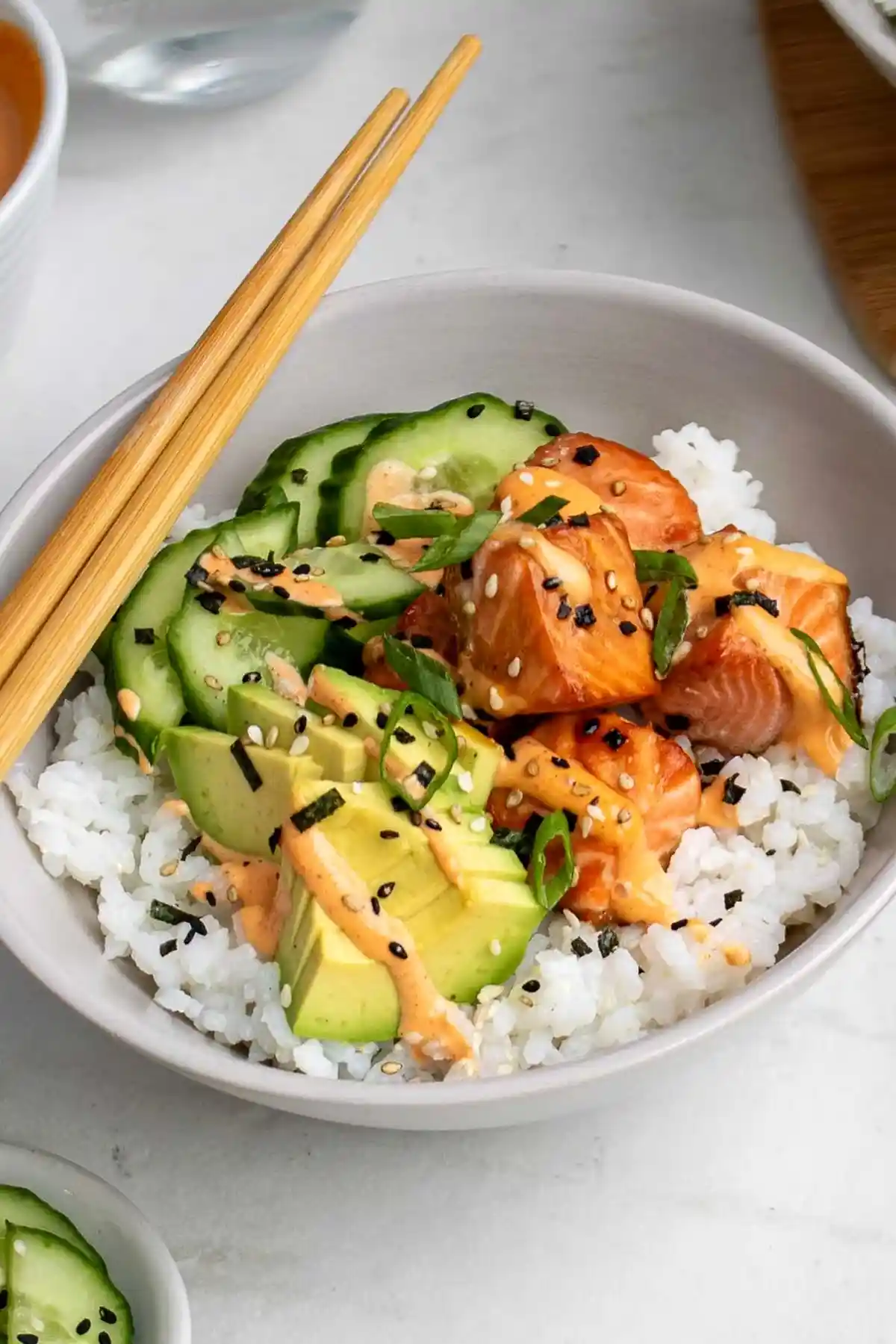
List of ingredients
- 1 pound salmon fillet, cut into bite-size chunks – ensures even cooking and easy eating.
- 1/4 cup soy sauce – provides a savory, salty base for the marinade.
- 1 teaspoon sesame oil – adds a distinct nutty aroma to the fish.
- 1 1/2 cup sushi rice, or other short-grain white rice – creates the sticky base essential for sushi bowls.
- 2 tablespoons rice vinegar – seasons the rice for an authentic sushi flavor.
- 1 cup cucumber, thinly sliced – adds a refreshing crunch and coolness.
- 1 avocado, peeled and sliced – provides creamy texture and healthy fats.
- Sesame seeds, to serve – adds a slight crunch and visual appeal.
- Green onions, thinly sliced, to serve – brings a fresh, mild onion bite.
- 1/4 cup mayonnaise – the base for the creamy spicy sauce.
- 1 tablespoon sriracha – provides the heat and signature tang for the mayo.
step-by-step instructions
- Prepare the oven: Preheat your oven to 450°F and line a baking sheet with parchment paper to prevent sticking and ease cleanup.
- Cook the rice: Combine the rice with 3 cups of water and a pinch of salt in a pot. Bring to a boil, then reduce to a simmer and cook covered for 20 minutes, or as per package directions, until fluffy. Once cooked, drizzle with rice vinegar and toss gently to combine.
- Marinate the salmon: In a medium bowl, whisk together the soy sauce and sesame oil. Add the salmon cubes and toss until every piece is evenly coated. If you have more time, let the salmon marinate for 10 minutes up to 24 hours in the fridge for deeper flavor.
- Bake the fish: Transfer the marinated salmon to the parchment-lined baking sheet. Bake for 8-10 minutes or until the salmon is cooked to your preferred doneness.
- Prepare the spicy mayo: In a small bowl or jar, stir together the mayonnaise and sriracha until well blended. Adjust the heat by adding more sriracha or adding salt and pepper to taste.
- Assemble the bowls: Create a base layer of sushi rice in each bowl. Top with the cooked salmon, sliced cucumber, and sliced avocado. Finish with a drizzle of spicy mayo, a sprinkle of sesame seeds, and sliced green onions.
Customizing Your Ingredients
Use Tamari for Gluten-Free Salmon
To make this recipe gluten-free, replace the soy sauce with tamari or coconut aminos. These alternatives provide a similar savory profile and saltiness without containing wheat. Ensure the brand you choose is certified gluten-free if you have a strict allergy.
Replace Rice with Cauliflower Rice for Low-Carb
If you prefer a lower carbohydrate option, swap the sushi rice for steamed cauliflower rice. Sauté the cauliflower rice briefly with a small amount of rice vinegar and salt to mimic the flavor of seasoned sushi rice. This maintains the bowl structure while significantly reducing the calorie count.
Substitute Sriracha with Other Hot Sauces
If sriracha is unavailable or too spicy, you can use any hot sauce you enjoy. Gochujang provides a fermented, thicker heat, while a mild chili garlic sauce offers a savory kick. Adjust the ratio of mayo to hot sauce to control the final spice level.
Canned Salmon as a Budget Alternative
You can use high-quality canned salmon instead of fresh fillets for a faster and more affordable meal. Drain the canned salmon well and mix it with the marinade components before assembling the bowl. Since canned salmon is pre-cooked, you can skip the oven step entirely.
Professional Cooking Techniques
Utilizing a Rice Cooker for Consistency
For the most reliable results, use a rice cooker instead of the stovetop. Rice cookers automatically regulate temperature and timing, ensuring the grains are perfectly fluffy and sticky without burning. This removes the guesswork from achieving the correct sushi rice texture.
Marinating Salmon for Deeper Flavor
Allowing the salmon to sit in the soy and sesame marinade for a few hours significantly enhances the taste. The salt in the soy sauce helps penetrate the fish, seasoning it throughout rather than just on the surface. Store the marinating fish in an airtight container in the refrigerator.
Air-Frying Salmon for a Crispier Texture
For a different texture, you can cook the salmon in an air fryer at 400°F. Spray the basket with oil and cook the marinated cubes for 6 to 8 minutes, shaking the basket halfway through. This results in lightly browned edges while keeping the center moist.
Preparing the Rice Ahead of Time
To save time during dinner assembly, cook the sushi rice a day in advance. Store the seasoned rice in an airtight container in the fridge. When ready to eat, you can serve it cold or gently reheat it with a splash of water to restore the moisture.
Expanding Your Bowl Toppings
Incorporate Shredded Carrots and Cabbage
To increase the fiber and nutrient density, add shredded carrots or purple cabbage to your bowls. These vegetables provide a vibrant color and a crisp texture that complements the soft salmon. Toss them in a bit of rice vinegar first for extra zest.
Add Furikake or Pickled Seaweed
For a more authentic sushi experience, sprinkle furikake seasoning over the rice. Alternatively, add small pieces of pickled seaweed or torn nori sheets on top of the assembly. These additions provide the characteristic oceanic flavor found in traditional rolls.
Squeeze Fresh Lime Juice for Acidity
A squeeze of fresh lime juice over the avocado and salmon cuts through the richness of the spicy mayo. The acidity brightens the overall flavor profile and prevents the avocado from oxidizing quickly. Use a wedge of lime just before serving.
Include Nori Strips for Authentic Taste
Cutting dried nori sheets into thin strips adds a professional touch and concentrated sea flavor. You can either place the strips at the bottom of the bowl or use them as scoops for the rice and salmon. This makes the deconstructed bowl feel more like a traditional sushi roll.
Storage and Meal Prep Guidelines
Separating Components for Freshness
When prepping these bowls for the week, store the salmon, rice, and spicy mayo in separate containers. Keeping the wet ingredients away from the rice prevents the grains from becoming mushy. This ensures every component retains its intended texture until the moment of assembly.
Freezing Salmon and Rice
Cooked salmon and rice can be frozen in airtight containers for up to three months. Avoid freezing the avocado or cucumber, as their texture degrades significantly upon thawing. Thaw the salmon and rice in the refrigerator overnight before reheating.
Proper Reheating Methods to Maintain Texture
Reheat the salmon and rice together in a microwave-safe bowl for 1-2 minutes. Adding a teaspoon of water before heating creates steam, which keeps the rice from drying out. Always add the cold toppings like avocado and cucumber after the base has been warmed.
Storing the Spicy Mayonnaise Sauce
The spicy mayo can be made in a large batch and stored in a glass jar in the refrigerator for up to one week. Shake the jar well before using to recombine any separated ingredients. Keep the jar tightly sealed to prevent the sauce from absorbing other fridge odors.
Troubleshooting Common Issues
Fixing Overcooked Salmon
If the salmon is slightly overcooked and dry, add an extra drizzle of spicy mayo or a splash of soy sauce to add moisture. You can also pair it with more avocado to compensate for the lack of fattiness in the fish. To avoid this, use a meat thermometer to hit an internal temperature of 145°F.
Correcting Mushy Sushi Rice
Mushy rice usually occurs from using too much water or overstirring. If this happens, let the rice sit uncovered for 10 minutes to allow some steam to escape and the grains to firm up. In the future, ensure you use a precise measuring cup for the water ratio.
Balancing the Heat in Spicy Mayo
If the sauce is too spicy, whisk in an additional tablespoon of mayonnaise to dilute the heat. If the sauce tastes flat, add a pinch of salt or a drop of rice vinegar to brighten the flavor. Always taste the sauce before drizzling it over the entire bowl.
Preventing Avocado Browning
To keep the avocado slices green, toss them in a small amount of lemon or lime juice immediately after slicing. Store sliced avocado in a container with a damp paper towel pressed firmly against the surface. This limits the avocado’s exposure to oxygen, slowing down the browning process.
Frequently Asked Questions
Do I need sushi-grade salmon?
No, sushi-grade salmon is only necessary for raw preparations. Because this recipe involves baking the salmon at a high temperature, any standard fresh salmon fillet from the grocery store is safe and appropriate to use.
Can I use brown rice?
Yes, brown rice is a healthy alternative, though it has a firmer texture and a nuttier taste than sushi rice. Be sure to increase the cooking time and water amount according to the brown rice package instructions to ensure it is fully tender.
How long can I marinade the salmon?
The salmon can be marinated for as little as 10 minutes for a quick flavor boost, or up to 24 hours for maximum penetration. If marinating for the full 24 hours, ensure the fish is kept in a sealed container in the coldest part of the fridge.
Can these be eaten cold?
Yes, these bowls can be enjoyed cold, similar to a poke bowl. Simply cook the rice and salmon, let them cool completely in the refrigerator, and assemble with the fresh vegetables and sauce for a refreshing chilled meal.
Print
Spicy Salmon Roll Bowls
- Total Time: 30 minutes
- Yield: 4 bowls 1x
- Diet: Dairy-Free
Description
Ready in 30 minutes with over 30 grams of protein, these salmon sushi bowls are perfect for a quick, easy, and healthy lunch or dinner.
Ingredients
- 1 pound salmon fillet, cut into bite-size chunks
- 1/4 cup soy sauce
- 1 teaspoon sesame oil
- 1 1/2 cup sushi rice, or other short-grain white rice
- 2 tablespoons rice vinegar
- 1 cup cucumber, thinly sliced
- 1 avocado, peeled and sliced
- Sesame seeds, to serve
- Green onions, thinly sliced, to serve
- 1/4 cup mayonnaise
- 1 tablespoon sriracha
Instructions
- Preheat: Preheat the oven to 450°F and line the baking sheet with parchment paper.
- Cook Rice: In a pot, combine the rice with 3 cups of water and a pinch of salt. Bring to a boil, then reduce to a simmer, and allow to cook covered for 20 minutes, or as per package directions, until it can be fluffed with a fork. Once cooked, drizzle the rice with rice vinegar and toss to combine.
- Marinade: In a medium bowl, combine the soy sauce and sesame oil, and whisk until well combined. Add the salmon cubes to the bowl and toss until evenly coated in the marinade.
- Bake: Transfer the marinated salmon to the baking sheet lined with parchment paper, and then place in the oven to bake for 8-10 minutes or until the salmon is cooked to your liking.
- Sauce: In a small bowl or jar, add the mayonnaise and sriracha and stir until well combined.
- Assemble: Once the salmon and rice are cooked, assemble the bowls with a base layer of sushi rice and then top with cooked salmon, sliced cucumber, sliced avocado, a drizzle of spicy mayo sauce, and a sprinkle of sesame seeds and green onion.
Notes
Any leftovers of the salmon, rice, and sauce can be stored in separate airtight containers in the fridge for 3 to 4 days.
- Prep Time: 10 minutes
- Cook Time: 20 minutes
- Category: Dinner
- Method: Baked
- Cuisine: Japanese-inspired
Nutrition
- Serving Size: 1 bowl
- Calories: 597 kcal
- Sugar: 2 g
- Sodium: 980 mg
- Fat: 23 g
- Saturated Fat: 4 g
- Unsaturated Fat: 19 g
- Trans Fat: 0 g
- Carbohydrates: 66 g
- Fiber: 3 g
- Protein: 32 g
- Cholesterol: 75 mg