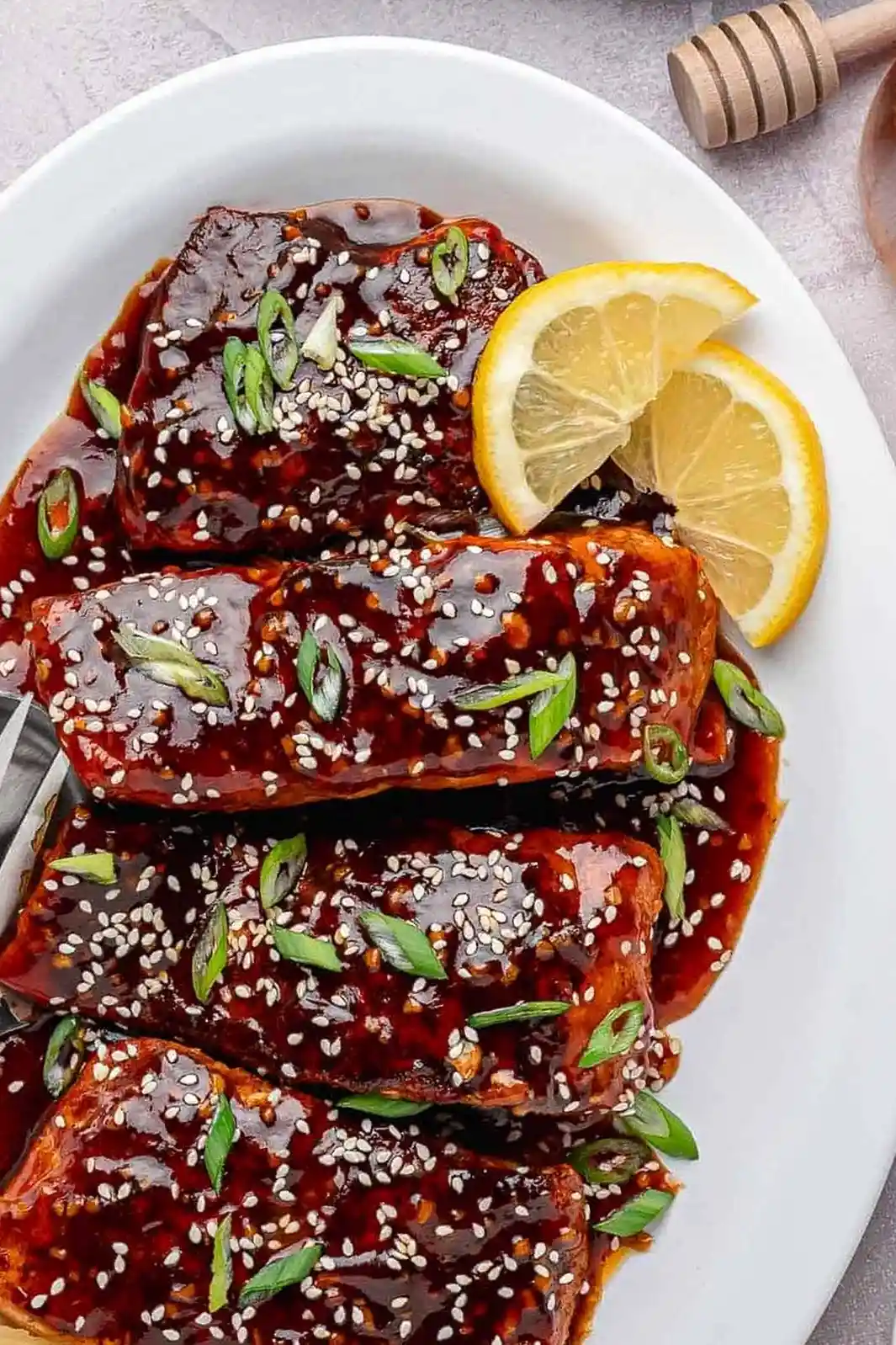
Prepare this high-protein, one-pan meal in just 22 minutes. These pan-seared fillets are coated in a sticky, sweet, and savory glaze that mimics restaurant-style takeout.
List of ingredients
- 4 8 oz salmon fillets, center cuts – skin removed and patted dry
- 1 tbsp olive oil, light tasting – for searing
- 1 tsp smoked paprika – provides a smoky depth
- 1 tsp garlic powder – for an aromatic base
- ¾ tsp fresh ground black pepper – adjusted to taste
- ½ tsp cayenne pepper – adds a spicy kick
- 3 tbsps honey – creates a sticky sweetness
- 4 cloves garlic, minced or chopped – for pungent flavor
- 1 tbsp rice vinegar – adds a touch of acidity
- 1 tsp onion powder – adds savory complexity
- ⅓ cup water or broth – thins the sauce for simmering
- ⅓ cup soy sauce, low-sodium – provides salt and umami
- ½ tsp chili flakes – for additional heat
- 1 tbsp sesame oil – adds a nutty aroma
- 2 tsps corn starch – thickens the glaze into a lacquer
- 1 tsp ginger powder – adds a zesty, warm note
- Green onion, optional – for fresh garnish
- Toasted sesame seeds, optional – for texture and color
- Lemon wedges, optional – to brighten the final flavor
step-by-step instructions
- Prepare the fish: Remove the skin from the salmon fillets. Slice them into 8 oz pieces and pat them completely dry with paper towels.
- Apply the seasoning: In a small bowl, whisk together the smoked paprika, garlic powder, black pepper, and cayenne. Season both sides of the salmon fillets thoroughly with the spice mixture.
- Mix the glaze: In a separate bowl, whisk together the honey, minced garlic, rice vinegar, onion powder, water or broth, soy sauce, chili flakes, sesame oil, corn starch, and ginger powder. Set this aside for later.
- Sear the salmon: Heat the olive oil in a large skillet over medium heat. Place the salmon in the pan and sear for 4 minutes without moving them. Flip the fillets and cook for another 4 minutes to develop a golden crust.
- Glaze and reduce: Pour the prepared sauce into the skillet. Simmer for 2 to 3 minutes, frequently spooning the sauce over the salmon as the liquid reduces into a thick, glossy glaze.
- Garnish and serve: Remove the pan from the heat. Garnish with toasted sesame seeds, chopped green onions, and fresh lemon wedges before serving.
Expert Searing Techniques
The Importance of Patting Dry
Removing surface moisture from the salmon is critical for achieving a proper sear. Excess water creates steam in the pan, which prevents the Maillard reaction from occurring and results in boiled fish rather than browned fish.
Maintaining Pan Temperature
Use medium heat to ensure the oil is shimmering but not smoking. If the pan is too hot, the honey in the sauce will burn quickly; if it is too cool, the fish will stick and lose its juices.
The No-Touch Method
Avoid moving the salmon during the first four minutes of cooking. The proteins need time to bond and release naturally from the pan surface, which ensures a consistent golden-brown crust.
Checking for Doneness
The USDA recommends an internal temperature of 145°F for salmon. Alternatively, use a fork to gently press the thickest part of the fillet; it should flake easily along the natural lines of the meat.
Ingredient Substitutions and Adjustments
Soy-Free Alternatives
To make this recipe soy-free, replace the low-sodium soy sauce with an equal amount of coconut aminos. This maintains the savory umami flavor while reducing the sodium content and removing soy allergens.
Honey Replacements
Maple syrup or brown rice syrup can be used as a substitute for honey. Maple syrup provides a distinct autumnal sweetness, while brown rice syrup offers a similar viscosity to honey.
Rice Vinegar Swaps
If rice vinegar is unavailable, apple cider vinegar or white wine vinegar are suitable alternatives. These provide the necessary acidity to balance the sweetness of the honey and the richness of the salmon.
Fresh Ginger vs. Powdered
You can substitute the ginger powder with one tablespoon of freshly grated ginger. Fresh ginger provides a sharper, more pungent zing compared to the mellow warmth of the dried version.
Flavor Variations
Increasing the Heat Level
For those who prefer a spicier dish, double the amount of cayenne pepper in the dry rub. You can also add a teaspoon of Sriracha or Gochujang to the sauce mixture for a deeper, fermented heat.
Adding Citrus Notes
Incorporate one tablespoon of fresh orange juice into the sauce for a citrusy twist. This pairs exceptionally well with the honey and ginger, creating a bright, tropical flavor profile.
Sweet and Smoky Shift
Increase the smoked paprika to two teaspoons and add a pinch of cinnamon to the rub. This creates a more complex, woody flavor that complements the natural oils of the salmon.
Reducing the Sugar
To lower the sugar content, reduce the honey to two tablespoons and add a teaspoon of grated apple. The natural pectin and sweetness of the apple help maintain the sauce’s thickness.
Serving and Pairing Ideas
Classic Grain Pairings
Serve the salmon over a bed of steamed jasmine rice or short-grain brown rice. The grains absorb the excess honey garlic glaze, ensuring none of the sauce goes to waste.
Steamed Vegetable Sides
Pair this dish with steamed broccoli, sautéed bok choy, or roasted asparagus. The bitterness of green vegetables balances the sweetness of the sticky glaze.
Fresh Salad Accompaniments
A chilled cucumber salad with rice vinegar and sesame seeds provides a refreshing contrast. The acidity of the salad cuts through the richness of the pan-seared salmon.
Low-Carb Options
For a ketogenic or low-carb meal, serve the fillets over cauliflower rice or sautéed spinach. These options maintain the protein focus while reducing the glycemic load of the meal.
Storage and Reheating Guide
Refrigeration Basics
Store leftover salmon in an airtight container once it has cooled to room temperature. It will remain fresh and safe to eat for up to three days in the refrigerator.
The Skillet Reheating Method
Place the salmon in a pan over low heat with a splash of water or vegetable broth. Cover the pan with a lid to create steam, which warms the fish without drying out the glaze.
Microwave Reheating Tips
Heat the salmon on medium power in short intervals of 30 seconds. Cover the dish with a damp paper towel to trap moisture and prevent the salmon from becoming rubbery.
Freezing Considerations
While cooked salmon can be frozen, the texture of the glaze may change. Thaw completely in the refrigerator before reheating in a skillet to restore the glossy consistency.
Troubleshooting Common Issues
Dealing with Sticking Fish
If the salmon sticks to the pan, it is likely because the pan wasn’t hot enough or the fish was flipped too soon. Allow the crust to fully form, and it will release naturally from the surface.
Fixing a Thin Sauce
If the sauce does not thicken into a lacquer, simmer it for an additional minute or two. Ensure the cornstarch was fully whisked into the cold liquid before adding it to the pan to avoid lumps.
Preventing Burnt Glaze
Honey burns quickly at high temperatures. If the sauce begins to darken too rapidly, lower the heat immediately and add a tablespoon of water to stabilize the temperature.
Correcting Overcooked Salmon
Overcooked salmon becomes dry and chalky. To mitigate this, serve it with an extra drizzle of the reduced sauce and a squeeze of fresh lemon to add moisture back into the meat.
Frequently Asked Questions
How do I remove the skin easily?
Use a sharp fillet knife. Hold the tail end of the fillet and slide the knife between the skin and the meat, keeping the blade flat against the skin while moving toward the head.
Can this recipe be baked instead of pan-seared?
Yes, bake the seasoned fillets at 400°F for 10 minutes. Pour the cooked glaze over the fish for the final 3 minutes of cooking, then let them rest for a few minutes before serving.
Is cornstarch necessary for the sauce?
Cornstarch is essential for achieving the sticky, lacquer-like consistency. Without it, the sauce will remain a thin liquid and will not cling to the salmon fillets.
What is the best type of salmon for this dish?
Center-cut fillets are best because they provide a uniform thickness, ensuring that all pieces cook evenly. Atlantic salmon is widely available and has a high fat content that stands up well to searing.
Print
Spicy Honey Garlic Salmon
- Total Time: 22 minutes
- Yield: 4 servings 1x
- Diet: Dairy-Free
Description
This Spicy Honey Garlic Salmon features pan-seared fillets glazed in a sticky, sweet, and savory sauce. Ready in just 22 minutes, it’s a high-protein, one-pan meal perfect for busy weeknights.
Ingredients
- 4 8 oz salmon fillets, center cuts
- 1 tbsp olive oil, light tasting
- 1 tsp smoked paprika
- 1 tsp garlic powder
- ¾ tsp fresh ground black pepper
- ½ tsp cayenne pepper
- 3 tbsps honey
- 4 cloves garlic, minced or chopped
- 1 tbsp rice vinegar
- 1 tsp onion powder
- ⅓ cup water or broth
- ⅓ cup low-sodium soy sauce
- ½ tsp chili flakes
- 1 tbsp sesame oil
- 2 tsps corn starch
- 1 tsp ginger powder
- Green onion, optional
- Toasted sesame seeds, optional
- Lemon wedges, optional
Instructions
- Step 1: Remove the skin from the salmon, slice them into 8 oz. pieces and pat them dry.
- Step 2: In a bowl, whisk the paprika, garlic powder, pepper, and cayenne; season both sides of the fillets thoroughly.
- Step 3: In a separate bowl, whisk all the sauce ingredients and set aside.
- Step 4: Heat olive oil in a large skillet over medium heat, place salmon in the pan and sear for 4 minutes undisturbed, then flip and cook for an additional 4 minutes.
- Step 5: Pour in the prepared sauce and simmer for 2–3 minutes, basting the salmon frequently as the liquid reduces into a thick lacquer.
- Step 6: Remove from heat and garnish with sesame seeds, chopped green onion, and lemon wedges before serving.
Notes
Pat the fillets completely dry with a paper towel to ensure a perfect crispy exterior. When searing, leave the salmon undisturbed for the full 4 minutes before flipping to prevent the fish from sticking or tearing.
- Prep Time: 7 minutes
- Cook Time: 15 minutes
- Category: Main Dish
- Method: Pan-searing
- Cuisine: Asian
Nutrition
- Serving Size: 1 fillet
- Calories: 462 kcal
- Sugar: 10 g
- Sodium: 1194 mg
- Fat: 22 g
- Saturated Fat: 3 g
- Unsaturated Fat: 19 g
- Trans Fat: 0 g
- Carbohydrates: 17 g
- Fiber: 2 g
- Protein: 48 g
- Cholesterol: 125 mg