This nutrient-dense bowl combines flaky broiled salmon with a zesty chipotle crema and fresh mango salsa. It is a quick, high-protein meal perfect for a healthy lunch or dinner.
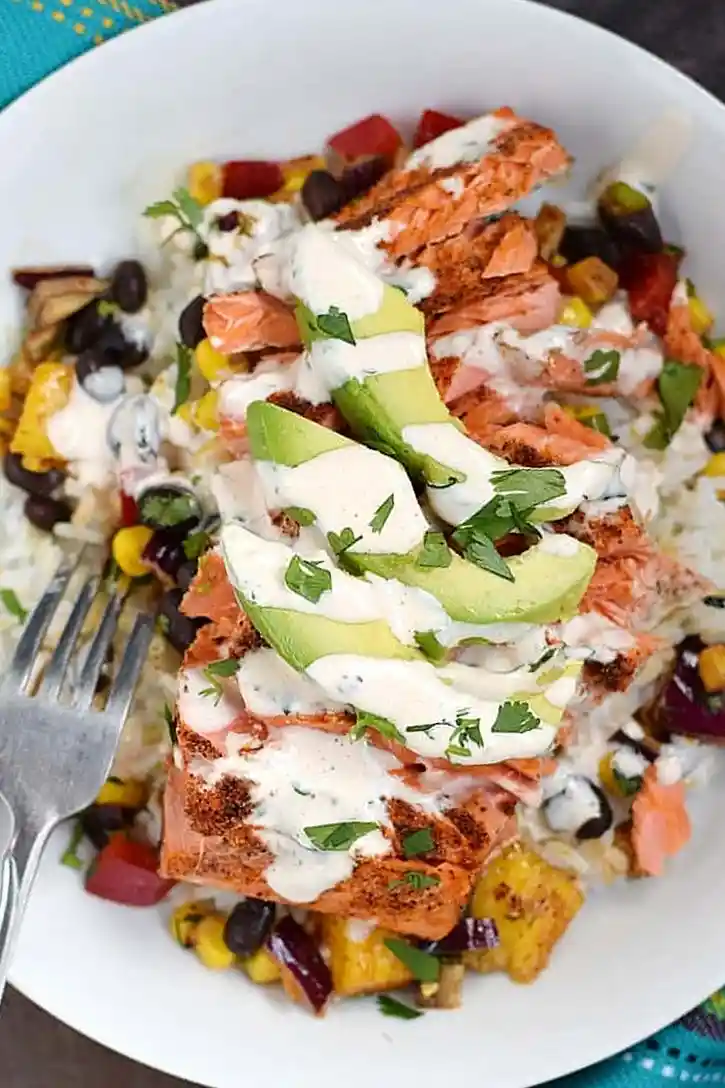
List of ingredients
- 4 to 5 ounce Sockeye salmon fillet – wild-caught preferred for flavor and Omega-3s.
- 1 Tablespoon Southwest Seasoning – ensure an even coating on all sides.
- 1 Tablespoon olive oil – used for searing and moisture.
- 1/2 cup cooked rice – can be white, brown, or cauliflower rice.
- 1/2 cup Black Bean Salsa (made with mangoes) – adds sweetness and texture.
- Avocado slices – adds creamy healthy fats.
- 1/2 cup mayonnaise – the base for the chipotle crema.
- 1/4 cup heavy cream (or coconut milk) – for a smooth, rich sauce.
- 1 large clove garlic (pressed or finely minced) – adds pungent depth.
- 1 Tablespoon chopped cilantro – provides a fresh herbal finish.
- 1 teaspoon adobo sauce (the sauce in a can of chipotle peppers) – adds smoky heat.
step-by-step instructions
- Prepare the oven: Preheat oven to BROIL and line a baking sheet with parchment paper to prevent sticking.
- Season the fish: Place salmon on the baking sheet and sprinkle each fillet with 2 to 3 teaspoons of Southwest Seasoning, covering the top and sides.
- Broil the salmon: Drizzle the seasoned fish with olive oil and place under the broiler for 5 to 7 minutes, adjusting for the thickness of your fillet.
- Rest the salmon: Remove the fillet from the oven and set it aside to let the juices redistribute.
- Build the base: Place a scoop of cooked rice in a serving bowl and top it with a generous portion of black bean salsa.
- Add protein: Slice the salmon and place it directly on top of the salsa in the bowl.
- Final touches: Arrange avocado slices around the fish and drizzle the prepared chipotle crema over the top.
Optimizing Your Salmon Selection
Choose Wild-Caught Sockeye Salmon
Wild-caught Sockeye salmon offers a deeper red color and a more robust flavor compared to farmed varieties. It is naturally higher in Omega-3 fatty acids and lacks the artificial dyes often found in farm-raised fish. Always check the label to ensure you are getting a sustainable, wild-caught fillet.
Evaluate Fillet Thickness for Timing
The cook time of 5 to 7 minutes is an estimate based on a standard 4 to 5 ounce fillet. Thicker cuts will require more time under the broiler, while thinner pieces can overcook in seconds. Use a meat thermometer to check for an internal temperature of 145 degrees Fahrenheit.
Handling Salmon Skin
If your fillet has skin, you can leave it on during the broiling process to protect the flesh from direct heat. After cooking, the skin should slide off easily with a sharp knife. Removing the skin before placing the fish in the bowl creates a cleaner presentation.
Rice Base Variations
Using Steamed White Rice
White rice provides a neutral base that lets the boldness of the Southwest seasoning and chipotle crema shine. For the best texture, rinse the rice thoroughly before cooking to remove excess starch. This prevents the rice from becoming gummy in the bowl.
Integrating Brown Rice for Fiber
Brown rice increases the fiber content of the meal and provides a nuttier flavor profile. Because it takes significantly longer to cook than white rice, prepare it several hours in advance or use a pre-cooked frozen variety. Ensure it is fluffy and well-seasoned with a pinch of salt.
Low-Carb Cauliflower Rice
For a grain-free or Paleo-friendly option, sautéed cauliflower rice is an excellent substitute. Pulse raw cauliflower florets in a food processor until they reach a rice-like consistency. Sauté them in a pan with a small amount of olive oil for 3 to 5 minutes until tender.
Customizing the Chipotle Crema
Adjusting Heat Levels
The provided amount of adobo sauce offers a mild to medium heat. For those who prefer a spicier kick, finely chop a whole chipotle pepper from the can and whisk it into the mayonnaise. For a very mild version, reduce the adobo sauce to a half teaspoon.
Dairy-Free Cream Alternatives
If you avoid dairy, replace the heavy cream with full-fat canned coconut milk for a similar richness. Unsweetened cashew milk also works well, though it produces a thinner consistency. Ensure any plant-based alternative used is unsweetened to avoid clashing with the savory flavors.
Enhancing the Garlic Profile
Using a garlic press releases more oils and creates a stronger flavor than chopping by hand. If you prefer a subtler taste, you can use garlic powder, though fresh pressed garlic is recommended for this specific crema. Let the crema sit for 10 minutes before serving to allow the garlic to infuse.
Black Bean Salsa Tips
Selecting Ripe Mangoes
The sweetness of the mango is essential to balance the heat of the chipotle and Southwest seasoning. Choose mangoes that give slightly when pressed and have a fragrant aroma at the stem. Dice the mango into small, uniform cubes to ensure a bit of fruit in every bite.
Preparing the Black Beans
If using canned black beans, rinse them thoroughly under cold water to remove excess sodium and canning liquids. This prevents the salsa from becoming cloudy or overly salty. Pat the beans dry before mixing them with the mango and other salsa ingredients.
Balancing Acidity in Salsa
To brighten the flavors of the salsa, add a squeeze of fresh lime juice. The acid cuts through the richness of the salmon and the creamy texture of the avocado. A pinch of salt and a dash of cumin can further enhance the Southwest profile.
Advanced Broiling Techniques
Positioning the Oven Rack
For a proper sear, place your oven rack about 5 to 6 inches away from the broiler element. If the rack is too close, the seasoning may burn before the center of the salmon is cooked. If it is too far, the fish will steam rather than broil, losing the charred exterior.
Using Parchment Paper Effectively
Parchment paper is superior to aluminum foil for this recipe because it prevents the salmon from sticking without requiring excessive oil. It also makes cleanup effortless. Ensure the paper does not touch the broiler element to avoid smoking or fire hazards.
Preventing Overcooking
Salmon continues to cook for a few minutes after being removed from the heat due to carryover cooking. Pull the salmon from the oven when it is just barely opaque in the center. This ensures the fish remains moist and flaky rather than dry and chalky.
Avocado Preparation and Freshness
Choosing the Right Avocado
Look for avocados that are dark green to nearly black in color. Gently press the top near the stem; if it yields to pressure, it is ready to eat. Avoid avocados with soft spots or bruised skin, as these will have an off-flavor.
Preventing Oxidation
Avocado slices brown quickly once exposed to air due to enzymatic browning. To keep them vibrant green, toss the slices in a small amount of lime or lemon juice immediately after slicing. This is especially important if you are prepping the bowls for later in the day.
Slicing for Presentation
Cut the avocado in half and remove the pit before slicing the flesh into thin crescents. Fan the slices out along the side of the salmon to create a professional, restaurant-style look. Use a non-serrated knife for the cleanest cuts.
Meal Prep and Storage
Storing Components Separately
If preparing this meal in advance, store the cooked rice, black bean salsa, and chipotle crema in separate airtight containers. Keeping the wet ingredients away from the rice prevents the base from becoming soggy. Store the salmon in its own container to maintain its texture.
Refrigeration Lifespan
Cooked salmon and prepared crema can be kept in the refrigerator for up to three days. Ensure the containers are sealed tightly to prevent the fish from absorbing other odors in the fridge. The fresh mango salsa is best consumed within two days for maximum freshness.
Freezing Considerations
While the cooked rice can be frozen, the salmon and avocado do not freeze well once prepared. Avocado will turn brown and lose its texture, and broiled salmon can become rubbery upon thawing. It is highly recommended to keep this recipe fresh.
Reheating Guidelines
The Oven Method
To reheat the salmon without drying it out, place it in a 300 degree Fahrenheit oven for 5 to 8 minutes. This gentle heat warms the fish through without overcooking the center. Avoid using the broiler for reheating as it will burn the exterior quickly.
Microwave Precautions
If using a microwave, heat the rice and salmon on a medium power setting in 30-second intervals. Use a damp paper towel to cover the fish, which creates steam and helps retain moisture. Be careful not to overheat, as salmon can turn tough very quickly in the microwave.
Handling the Crema and Salsa
Never heat the chipotle crema or the mango salsa. These components are intended to be cool and refreshing to contrast with the warm salmon and rice. Add them to the bowl only after the other components have been reheated.
Common Troubleshooting
Salmon Sticking to the Pan
If your salmon sticks despite using parchment paper, ensure you are drizzling enough olive oil on the fillet. You can also lightly brush the parchment paper with oil before placing the fish down. Always let the fish sear for a minute before attempting to move it.
Separated Chipotle Crema
If the crema looks curdled or separated, it is likely due to a temperature difference between the mayonnaise and the heavy cream. Whisk the mixture vigorously by hand or use a small immersion blender to emulsify the fats. Ensuring all ingredients are at room temperature can prevent this.
Bland Tasting Salmon
If the salmon tastes under-seasoned, you may not have used enough Southwest seasoning on the sides of the fillet. Ensure you press the seasoning into the flesh firmly. A final sprinkle of flaky sea salt after broiling can also enhance the existing flavors.
Frequently Asked Questions
Can I use a different type of salmon?
Yes, Atlantic or King salmon work well. King salmon is fattier and more forgiving if you accidentally overcook it, while Atlantic salmon is milder in flavor.
What can I use instead of mayonnaise in the crema?
Greek yogurt or sour cream are excellent substitutes. They provide a similar tang and thickness while reducing some of the fat content of the sauce.
Is this recipe suitable for a gluten-free diet?
Yes, this recipe is naturally gluten-free as long as your Southwest seasoning blend does not contain wheat-based anti-caking agents. Always check the ingredient label on your spice mix.
How do I know when the salmon is perfectly done?
The salmon should flake easily with a fork and have an internal temperature of 145 degrees Fahrenheit. It should look opaque on the outside but still be slightly translucent in the very center.
Can I make this in an air fryer?
Yes, you can air fry the salmon at 400 degrees Fahrenheit for about 7 to 10 minutes. Flip the fillet halfway through to ensure even coloring on both sides.
Print
Southwest Salmon Bowl
- Total Time: 27 minutes
- Yield: 1 serving 1x
- Diet: General
Description
This Southwest Salmon Bowl is loaded with flavor and super simple to prepare!
Ingredients
- 4 to 5 ounce Sockeye salmon fillet
- 1 Tablespoon Southwest Seasoning
- 1 Tablespoon olive oil
- 1/2 cup cooked rice
- 1/2 cup Black Bean Salsa (made with mangoes)
- avocado slices
- 1/2 cup mayonnaise
- 1/4 cup heavy cream (or coconut milk)
- 1 large clove garlic (pressed or finely minced)
- 1 Tablespoon chopped cilantro
- 1 teaspoon adobo sauce (the sauce in a can of chipotle peppers)
Instructions
- Step 1: Preheat oven to BROIL. Line a baking sheet with parchment paper.
- Step 2: Place salmon on baking sheet, sprinkle each filet with 2 to 3 teaspoons of Southwest Seasoning {including the sides}.
- Step 3: Drizzle with olive oil and place under the broiler for 5 to 7 minutes depending on the thickness of your filet.
- Step 4: Remove from oven and set aside.
- Step 5: Place a scoop of rice in a serving bowl. Top with black bean salsa.
- Step 6: Slice salmon place on top of salsa in the bowl.
- Step 7: Add avocado slices and drizzle with chipotle crema.
Notes
Make your Chipotle Crema as spicy as you would like it. Do not overcook your salmon. For thick chipotle cream, use heavy cream or coconut milk in a can. Use wild-caught salmon for higher Omega-3s.
- Prep Time: 20 minutes
- Cook Time: 7 minutes
- Category: Main Course
- Method: Broiling
- Cuisine: American
Nutrition
- Serving Size: 1 serving
- Calories: 1460 kcal
- Sugar: 2 g
- Sodium: 1974 mg
- Fat: 128 g
- Saturated Fat: 30 g
- Unsaturated Fat: 98 g
- Trans Fat: 0 g
- Carbohydrates: 42 g
- Fiber: 6 g
- Protein: 32 g
- Cholesterol: 190 mg