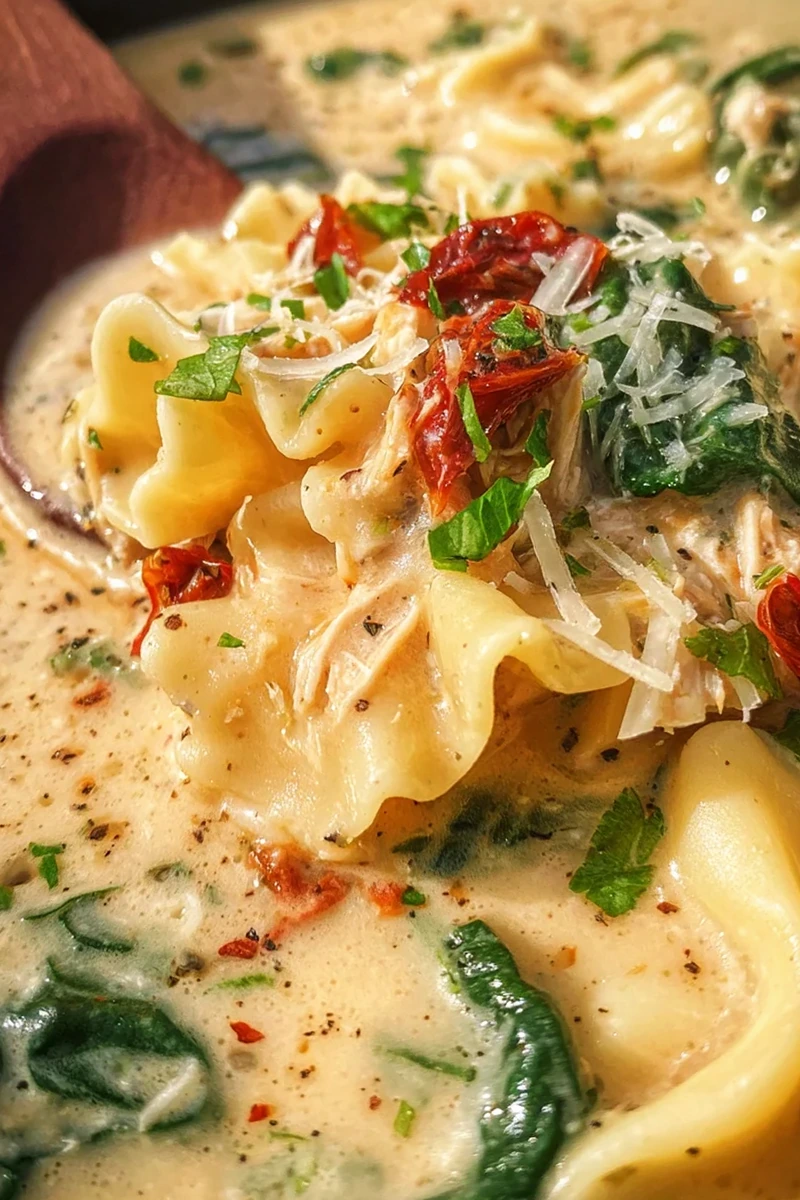
This slow cooker white lasagna soup is the ultimate comfort meal, blending the familiar flavors of a classic layered casserole into a velvety, spoonable format. By utilizing the slow cooker, you allow the aromatics and chicken to meld into a rich broth, creating a deeply satisfying texture that warms you from the inside out. It is a fantastic, stress-free dinner option for busy weeknights when you want something substantial yet easy to prepare.
List of ingredients
- 1 white onion, diced
- 4 cloves garlic, minced
- 2 tsp Italian seasoning
- 1 tsp salt
- 1/2 tsp black pepper
- 1/4 tsp crushed red pepper flakes
- 6 cups chicken stock
- 1 pound boneless skinless chicken breasts
- 1/2 cup sundried tomatoes, chopped
- 1 cup heavy cream
- 2 tbsp cornstarch
- 4 cups fresh spinach
- 8 oz lasagna noodles, broken into pieces and cooked separately
step-by-step instructions
- Step: In a slow cooker, combine diced onion, minced garlic, Italian seasoning, salt, black pepper, and crushed red pepper flakes.
- Step: Pour in the chicken stock and stir well.
- Step: Add boneless chicken breasts on top and sprinkle with chopped sundried tomatoes.
- Step: Cover and cook on low for 6-8 hours or high for 3-4 hours until the chicken is tender.
- Step: Remove the chicken, shred with two forks, and return to the slow cooker.
- Step: In a mixing bowl, whisk together heavy cream and cornstarch until smooth; add to the slow cooker and stir gently.
- Step: Cook on high for an additional 30 minutes to thicken.
- Step: Stir in fresh spinach until wilted.
- Step: Gently mix in cooked lasagna noodles just before serving.
Refining Your Soup Consistency
Achieving the Perfect Creamy Base
To ensure your soup remains velvety and avoids any curdling, always whisk your cornstarch and heavy cream together thoroughly before adding them to the warm broth. This slurry method prevents lumps and creates a seamless, professional-grade texture that coats every spoonful of chicken and noodles. If you find the soup is still too thin after the final 30 minutes, you can stir in a small additional mixture of one tablespoon of cornstarch mixed with two tablespoons of cold water to thicken it further.
Managing Noodle Texture
Cooking your lasagna noodles separately is the most effective way to ensure they do not turn into a mushy consistency inside the slow cooker. By boiling them until just al dente and adding them at the very last moment, you preserve the structural integrity of the pasta. If you anticipate having leftovers, store the noodles in a separate container from the soup base; this prevents the starch from absorbing all the liquid overnight, keeping your soup ready to heat up perfectly the next day.
Preparation and Ingredient Adjustments
Selecting the Best Protein
While boneless skinless chicken breasts are recommended for their lean profile and ability to shred perfectly, you can also use chicken thighs for a slightly more tender and flavorful result. If you prefer to change the texture, you could swap the chicken for shredded turkey or even a high-quality plant-based protein crumble. Regardless of your choice, ensure the meat is fully submerged in the stock during the slow cooking process to prevent it from drying out.
Enhancing the Flavor Profile
If you enjoy a more intense savory experience, try adding a splash of fresh lemon juice or a teaspoon of white miso paste during the final stages of cooking. These additions brighten the heavy cream base and balance the richness with a hint of acidity or umami. Additionally, using a high-quality, organic chicken stock rather than a generic variety can significantly improve the depth of the finished dish without needing extra seasoning.
Selecting the Right Greens
While fresh spinach is the standard for this recipe, you can experiment with other sturdy greens like chopped kale or Swiss chard. If using kale, be sure to remove the tough stems first and add it slightly earlier than the spinach to ensure it has enough time to soften. These hearty greens hold their shape well, even when reheated, making them excellent candidates for meal-prepped lunches throughout the work week.
Serving Suggestions for Any Occasion
Complementing with Warm Breads
The creamy nature of this dish makes it a perfect companion for crusty bread, which is ideal for cleaning the bowl after the soup is finished. Consider serving this alongside a warm baguette topped with roasted garlic butter or rustic sourdough bread lightly toasted in the oven. The crunch of the bread provides a beautiful sensory contrast to the smooth, creamy consistency of the lasagna soup.
Adding Fresh Garnishes
To elevate the presentation, finish each bowl with a sprinkle of freshly grated Parmesan cheese or a dollop of ricotta to highlight the lasagna theme. A light dusting of chopped fresh parsley or torn basil leaves adds a pop of color and a fresh, herbal note that cuts through the creaminess. For those who enjoy extra texture, a handful of toasted pine nuts or crispy fried shallots makes a wonderful, sophisticated topping.
Handling Storage and Reheating
Proper Refrigeration Techniques
To store your leftovers effectively, let the soup cool to room temperature before transferring it to a large, airtight glass or plastic container. Keeping the soup sealed prevents it from absorbing odors from other items in your refrigerator and helps maintain the integrity of the cream base. Properly stored in the coldest part of your fridge, the soup will remain fresh and delicious for up to four days, making it a reliable option for advance meal planning.
Reheating for Best Texture
When reheating, use a stovetop method over low heat to prevent the cream from separating or scorching at the bottom of the pot. Stir gently and consistently while warming the soup, and if it appears too thick after cooling, add a tiny splash of chicken stock or water to loosen the consistency. Avoid boiling the soup during the reheating process; maintaining a gentle simmer ensures the chicken remains tender and the texture stays uniform.
Freezing Recommendations
While creamy soups can sometimes be tricky to freeze, this recipe holds up well if handled carefully. Portion the soup into individual, freezer-safe airtight containers, leaving about an inch of space at the top for expansion. When you are ready to enjoy it, thaw the container overnight in the refrigerator before reheating it slowly on the stove. If you notice any separation upon thawing, a quick, vigorous stir or a brief pulse with a whisk is usually enough to bring the emulsion back together.
Frequently Asked Questions
Can I make this recipe on the stovetop instead of the slow cooker?
Yes, you can easily adapt this by simmering the aromatics, stock, and chicken in a large pot for about 30-40 minutes until the chicken is cooked through. Once the chicken is shredded and returned, add the cream mixture and finish by adding the spinach and cooked noodles as directed.
Is it possible to use different types of pasta?
Certainly, you can substitute the lasagna noodles for shorter pasta shapes like penne, fusilli, or farfalle if you prefer. These shapes are often easier to scoop and provide a similar pasta-to-soup ratio that captures the essence of a traditional lasagna.
What is the best way to keep the noodles from getting soggy?
The key is to cook the noodles separately on the stovetop and store them separately from the soup if you are not planning to serve the entire batch immediately. By keeping the pasta and broth apart until you are ready to eat, you ensure that every serving features perfectly textured noodles that haven’t absorbed excess moisture.
How can I make the broth even thicker?
If you prefer a thicker, almost stew-like consistency, you can slightly increase the amount of cornstarch in your slurry mixture. Alternatively, you could blend a small portion of the white onion and stock base once the aromatics are cooked, then return it to the pot before adding the chicken and cream.
Should I use fresh or dried herbs?
While the recipe calls for Italian seasoning, which is a dried blend, you can supplement it with fresh herbs like basil or thyme towards the very end of the cooking process. Adding fresh herbs right before serving preserves their volatile oils and provides a more vibrant, aromatic profile that dried herbs alone cannot achieve.
Print
Slow Cooker White Lasagna Soup
- Total Time: PT7H15M
- Yield: 6 servings 1x
- Diet: High Protein
Description
Indulge in a warm bowl of Slow Cooker White Lasagna Soup, a delightful reimagining of traditional lasagna that’s both creamy and comforting. This simple yet flavorful dish combines tender chicken, fresh spinach, and rich parmesan cheese in a velvety broth.
Ingredients
- 1 white onion, diced
- 4 cloves garlic, minced
- 2 tsp Italian seasoning
- 1 tsp salt
- 1/2 tsp black pepper
- 1/4 tsp crushed red pepper flakes
- 6 cups chicken stock
- 1 pound boneless skinless chicken breasts
- 1/2 cup sundried tomatoes, chopped
- 1 cup heavy cream
- 2 tbsp cornstarch
- 4 cups fresh spinach
- 8 oz lasagna noodles, broken into pieces and cooked separately
Instructions
- Step: In a slow cooker, combine diced onion, minced garlic, Italian seasoning, salt, black pepper, and crushed red pepper flakes.
- Step: Pour in the chicken stock and stir well.
- Step: Add boneless chicken breasts on top and sprinkle with chopped sundried tomatoes.
- Step: Cover and cook on low for 6-8 hours or high for 3-4 hours until the chicken is tender.
- Step: Remove the chicken, shred with two forks, and return to the slow cooker.
- Step: In a mixing bowl, whisk together heavy cream and cornstarch until smooth; add to the slow cooker and stir gently.
- Step: Cook on high for an additional 30 minutes to thicken.
- Step: Stir in fresh spinach until wilted.
- Step: Gently mix in cooked lasagna noodles just before serving.
Notes
Ensure you cook the noodles separately to maintain the best soup consistency. You can store leftovers in an airtight container in the refrigerator for up to 3-4 days.
- Prep Time: PT15M
- Cook Time: PT7H
- Category: Dinner
- Method: Slow Cooker
- Cuisine: Italian
Nutrition
- Serving Size: 1 serving
- Calories: 520 kcal
- Sugar: 3 g
- Sodium: 890 mg
- Fat: 28 g
- Saturated Fat: 15 g
- Unsaturated Fat: 10 g
- Trans Fat: 0 g
- Carbohydrates: 35 g
- Fiber: 3 g
- Protein: 33 g
- Cholesterol: 90 mg