This efficient one-pan meal combines succulent salmon fillets and crisp asparagus coated in a rich herb butter. It is a quick dinner option that minimizes cleanup while delivering high-protein nutrition. The high-heat roasting method ensures the fish stays juicy and the vegetables remain tender.
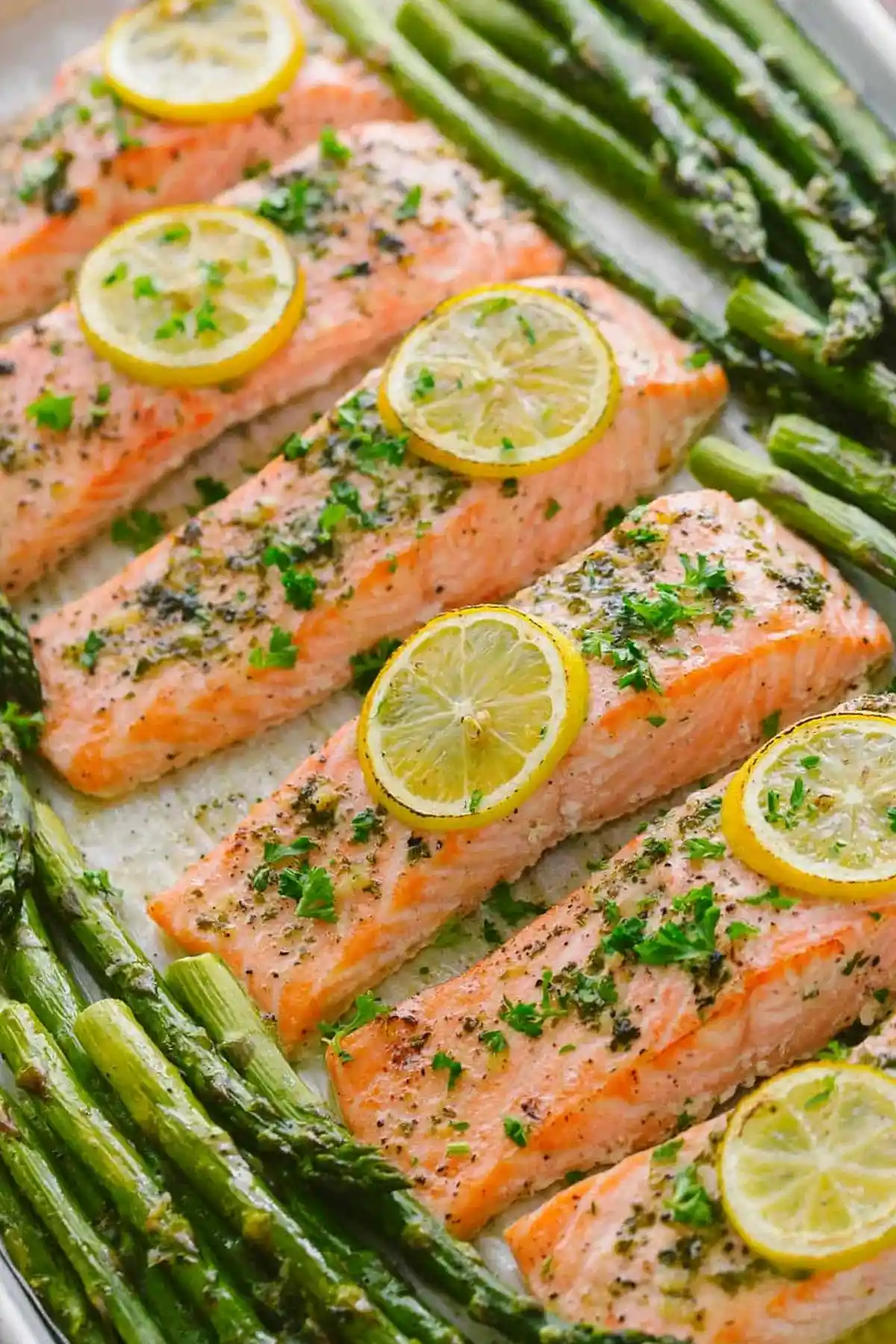
List of ingredients
- 2 lbs salmon filet – cut into six 6 oz portions.
- 2 lbs asparagus – fibrous ends removed.
- Salt and black pepper – added to taste.
- 1 Tbsp olive oil – for coating vegetables.
- 1 small lemon – sliced into rings for garnish.
- 6 Tbsp unsalted butter – softened for easy mixing.
- 2 Tbsp fresh lemon juice – extracted from one small lemon.
- 2 garlic cloves – pressed or minced finely.
- 2 Tbsp fresh parsley – finely chopped.
- 1 tsp salt – sea salt is recommended.
- 1/4 tsp black pepper – for the butter mixture.
step-by-step instructions
- Prepare the oven and pan: Preheat oven to 450°F with the oven rack positioned in the top third. Line a large rimmed baking sheet with parchment paper, trimming the paper so it does not extend over the edges of the pan to prevent charring under the broiler.
- Arrange the ingredients: Place salmon filets in a row down the center of the lined baking pan. Arrange the trimmed asparagus on the sides of the salmon. Drizzle the asparagus lightly with olive oil and roll them to ensure an even coat. Sprinkle both the salmon and asparagus with salt and pepper.
- Create the flavored butter: In a medium bowl, use a fork to mash together the softened butter, lemon juice, minced garlic, chopped parsley, salt, and black pepper. Continue mashing for a few minutes until fully incorporated, or use a food processor for faster results. Spoon 3/4 of this butter over the salmon fillets and spread evenly, then dab the remaining butter over the asparagus.
- Bake and finish: Top each salmon filet with a lemon slice and bake uncovered at 450°F for 10-12 minutes. Thinner fillets require 10 minutes, while larger fillets need 12 minutes. Switch the oven to BROIL and bake for another 2-3 minutes until the salmon has a golden glow and is flaky. Ensure the internal temperature reaches 145°F on an instant-read thermometer.
Expert Tips for Perfect Salmon and Asparagus
Selection of High Quality Salmon Fillets
Choose salmon with a vibrant, consistent color and a firm texture that springs back when touched. Ensure the fish has a mild, fresh scent rather than a strong fishy odor. Avoid fillets with any gaps or bruising in the meat.
Proper Trimming of Asparagus Stems
Remove the woody, fibrous ends by snapping the stem where it naturally bends or by slicing off the bottom inch. This ensures that every piece of asparagus has a consistent, tender texture. Discard the tough ends as they do not soften during quick roasting.
Mastering the Butter Mash Technique
Ensure your butter is truly softened to room temperature before mixing to avoid lumps. Use a fork to press the lemon juice and garlic into the fat until the mixture is a smooth paste. A food processor is a great alternative if you want a perfectly emulsified herb butter.
Optimizing Oven Rack Positioning
Placing the oven rack in the top third of the oven is critical for achieving a golden exterior. This position puts the food closer to the top heating element and the broiler. It allows the butter to caramelize and the salmon to brown without overcooking the center.
Preventing Parchment Paper Charring
Trim your parchment paper precisely to the dimensions of the baking sheet. Paper that hangs over the edges can catch fire or char when the broiler is turned on. This simple step ensures safety and prevents burnt paper smells from affecting the food.
Ingredient Substitutions and Variations
Using Alternative White Fish
If you prefer a milder taste, you can replace salmon with thick fillets of cod, halibut, or sea bass. Since these fish have different densities, adjust the baking time based on the thickness of the fillet. Use a thermometer to ensure they reach the recommended safe internal temperature.
Swapping Asparagus for Other Green Vegetables
Broccoli florets, trimmed green beans, or sliced zucchini can be used as a substitute for asparagus. Broccoli and green beans may require an extra 3-5 minutes of roasting time. Cut all vegetables to a similar size to ensure they cook at the same rate as the fish.
Dairy-Free Butter Options
Replace unsalted butter with a high-quality plant-based butter stick to make this recipe dairy-free. Ensure the plant-based butter is softened to room temperature for easy mixing. The flavor profile remains similar, as the lemon and garlic provide the primary taste.
Substituting Fresh Parsley with Other Herbs
Fresh dill or cilantro can be used instead of parsley for a different flavor profile. Dill pairs exceptionally well with salmon and lemon, providing a classic seafood taste. Use the same 2 tablespoon measurement for any herb substitution.
Using Garlic Powder instead of Fresh Cloves
If fresh garlic is unavailable, use 1/2 teaspoon of garlic powder in the butter mixture. Garlic powder provides a more uniform distribution of flavor. However, fresh garlic offers a sharper, more pungent taste that complements the lemon.
Adding Extra Citrus Zest for Brightness
Grate the zest of the lemon into the butter mixture before adding the juice. This adds a concentrated citrus aroma and a deeper lemon flavor to the crust. Zesting adds an aromatic quality that juice alone cannot provide.
Recommended Side Dish Pairings
Pairing with Fluffy White Rice
Cooked basmati or jasmine rice serves as a neutral base that absorbs the extra lemon garlic butter. The softness of the rice contrasts well with the snap of the roasted asparagus. Spoon the pan juices over the rice for added flavor.
Serving with Roasted Potatoes
Air fryer roasted potatoes or oven-baked potato wedges provide a hearty carbohydrate component. Season them with salt, pepper, and a touch of paprika to complement the fish. Start the potatoes earlier since they take longer to cook than the salmon.
Complementing with Garlic Mashed Potatoes
Creamy mashed potatoes with garlic and butter provide a rich accompaniment to the light lemon flavors. The texture of the mash pairs well with the flakiness of the salmon. Use a splash of milk or cream for extra smoothness.
Creating a Light Arugula Salad
A simple salad of baby arugula tossed with olive oil and lemon juice adds a peppery freshness to the plate. This light side helps balance the richness of the herb butter. Add a few shaved parmesan curls for extra saltiness.
Preparing a Creamy Parmesan Risotto
For a more formal meal, serve the salmon and asparagus over a bed of Parmesan risotto. The creaminess of the Arborio rice enhances the savory notes of the garlic butter. Stir in the cheese at the very end to maintain a smooth consistency.
Pairing with Simple Boiled Potatoes
Small new potatoes boiled with salt and tossed in fresh parsley are a traditional and light pairing. This option keeps the meal healthy and emphasizes the fresh taste of the seafood. Serve them warm alongside the roasted components.
Storage and Reheating Instructions
Proper Cooling Techniques for Leftovers
Allow the salmon and asparagus to cool to room temperature before transferring them to storage. Cooling too slowly can lead to moisture buildup in the container. This prevents the fish from becoming overly mushy during storage.
Airtight Container Storage Methods
Place the leftovers in a shallow, airtight glass container to preserve the flavor and texture. Separate the salmon from the asparagus if you plan to reheat them at different speeds. Ensure the lid is sealed tightly to prevent the fish from absorbing other fridge odors.
Oven Reheating to Maintain Texture
Reheat the leftovers in a preheated oven at 275°F for about 10-15 minutes. This gentle heat warms the fish through without overcooking it or drying it out. Avoid high heat, which can make salmon rubbery.
Avoiding Microwaving Salmon
Microwaving salmon often leads to uneven heating and a strong fishy smell. It can also cause the fish to toughen and the asparagus to become limp. If a microwave is the only option, use the lowest power setting in short bursts.
Maximum Safe Refrigeration Time
Store the cooked salmon and asparagus in the refrigerator for no more than three days. Seafood degrades faster than other proteins, so consume it promptly. If you notice a change in smell or color, discard it immediately.
Make-Ahead Preparation Advice
Pre-mixing the Herb Butter
You can prepare the lemon garlic herb butter up to two days in advance. Store the mixed butter in a small airtight container or roll it into a log using parchment paper. Let it soften back to room temperature before spreading it on the fish.
Preparing Asparagus in Advance
Trim the fibrous ends of the asparagus and store them in a breathable bag with a damp paper towel. This keeps the stalks crisp and prevents them from wilting. Do not add oil or salt until you are ready to bake.
Portioning and Freezing Salmon
Cut the salmon into 6 oz portions and freeze them individually wrapped in plastic wrap and foil. Thaw the portions in the refrigerator overnight before cooking. This allows for quick meal prep during the week.
Pre-slicing Lemons for Garnish
Slice the lemon into rings a few hours before cooking and store them in a sealed container. This saves time during the assembly process. Ensure the slices are thin to avoid blocking the heat from reaching the fish.
Troubleshooting Common Cooking Issues
Preventing Dry or Overcooked Salmon
The most common mistake is cooking salmon for too long. Use an instant-read thermometer to pull the fish out exactly at 145°F. Remember that the fish continues to cook slightly after being removed from the oven.
Managing Different Asparagus Thicknesses
Very thin asparagus cooks much faster than thick stalks and may burn. If using thin asparagus, add them to the pan halfway through the salmon’s cooking time. Alternatively, place them on a separate tray to remove them early.
Fixing Separated Herb Butter
If the lemon juice causes the butter to separate, whisk it vigorously or use a small blender. Ensuring the butter is truly soft, rather than melted, helps the emulsion hold. Room temperature ingredients are key for a smooth paste.
Stopping Fish from Sticking to the Pan
Use a high-quality parchment paper or a silicone baking mat to ensure the salmon releases easily. Avoid using aluminum foil without oil, as the fish skin can stick to the metal. Trimming the paper prevents edges from curling and trapping food.
Adjusting for Oven Temperature Fluctuations
Some ovens run hotter or cooler than the dial indicates. Use an oven thermometer to verify the temperature is exactly 450°F. Adjust the baking time by 1-2 minutes based on how the salmon looks and feels.
Frequently Asked Questions
Can I use frozen salmon?
Yes, but you must thaw the salmon completely in the refrigerator before cooking. Baking frozen fillets directly will lead to uneven cooking and an excess of water on the pan. Pat the thawed fillets dry with paper towels for better browning.
How do I know the salmon is perfectly cooked?
The salmon should be opaque and flake easily with a fork at the thickest part. The internal temperature should read 145°F for safety and optimal texture. It should feel firm but still moist.
What is the best way to snap asparagus ends?
Hold a stalk of asparagus with both hands and bend it gently until it snaps. It will naturally break at the point where the woody part ends and the tender part begins. This is the most accurate way to trim them.
Can I omit the broiler step?
Yes, you can skip the broiler if you prefer a softer top. However, the broiler adds a professional golden-brown finish and concentrates the butter flavors. If skipping, you may need to bake for an extra 2 minutes.
Is this recipe suitable for low-carb diets?
This recipe is naturally low in carbohydrates and keto-friendly. It focuses on healthy fats from the salmon and butter and fiber from the asparagus. Avoid serving it with rice or potatoes to keep it low-carb.
How do I prevent the lemon slices from burning?
Place the lemon slices on the salmon only for the final 10-12 minutes of baking. If the broiler is used, keep a close eye on the slices to ensure they do not turn dark brown. Thinner slices are less likely to burn quickly.
Print
Sheet Pan Salmon and Asparagus with Lemon Garlic Butter
- Total Time: 20 minutes
- Yield: 6 servings 1x
- Diet: Gluten Free, Keto
Description
A one-pan easy salmon dinner idea. The lemon-garlic-herb butter is GOLD!! It melts into the salmon and asparagus as it bakes and every bite is so flavorful.
Ingredients
- 2 lbs salmon filet (cut into six – 6 oz portions)
- 2 lbs asparagus (fibrous ends removed)
- Salt and black pepper (to taste)
- 1 Tbsp olive oil
- 1 small lemon (sliced into rings for garnish)
- 6 Tbsp unsalted butter (softened)
- 2 Tbsp fresh lemon juice (from 1 small lemon)
- 2 garlic cloves (pressed or minced)
- 2 Tbsp fresh parsley (finely chopped)
- 1 tsp salt
- 1/4 tsp black pepper
Instructions
- Prep: Preheat oven to 450˚F with oven rack in top third. Line large rimmed baking sheet with parchment paper, trimming the paper to just fit so it doesn’t go over edges of pan.
- Arrange: Place salmon filets in a row down the center of your lined baking pan. Arrange trimmed asparagus on the sides of the salmon. Drizzle asparagus lightly with olive oil and roll to coat. Sprinkle both asparagus and salmon with salt and pepper.
- Make Flavored Butter: In a medium bowl, mash together all ingredients for flavored butter. Spoon 3/4 of your flavored butter over the salmon and spread evenly. Dab remaining butter mix over the asparagus.
- Bake: Top each salmon filet with a slice of lemon and bake uncovered at 450˚F for 10-12 minutes. Set the oven to BROIL and bake another 2-3 minutes. Bake until salmon is flaky and cooked through with an internal temperature of 145˚F.
Notes
For thin asparagus, add to the sheet pan halfway through baking. To speed-soften butter, place wrapped stick of butter in an airtight ziploc bag and submerge in warm (100˚F) water for 10-15 minutes.
- Prep Time: 5 minutes
- Cook Time: 15 minutes
- Category: Main Course
- Method: Baking
- Cuisine: American
Nutrition
- Serving Size: 1 serving
- Calories: 374 kcal
- Sugar: 3 g
- Sodium: 460 mg
- Fat: 24 g
- Saturated Fat: 9 g
- Unsaturated Fat: 13 g
- Trans Fat: 0.5 g
- Carbohydrates: 8 g
- Fiber: 4 g
- Protein: 34 g
- Cholesterol: 113 mg