This sheet pan dinner provides a fast and nutrient-dense meal using fresh Mediterranean ingredients. It requires minimal cleanup and comes together in under 20 minutes.
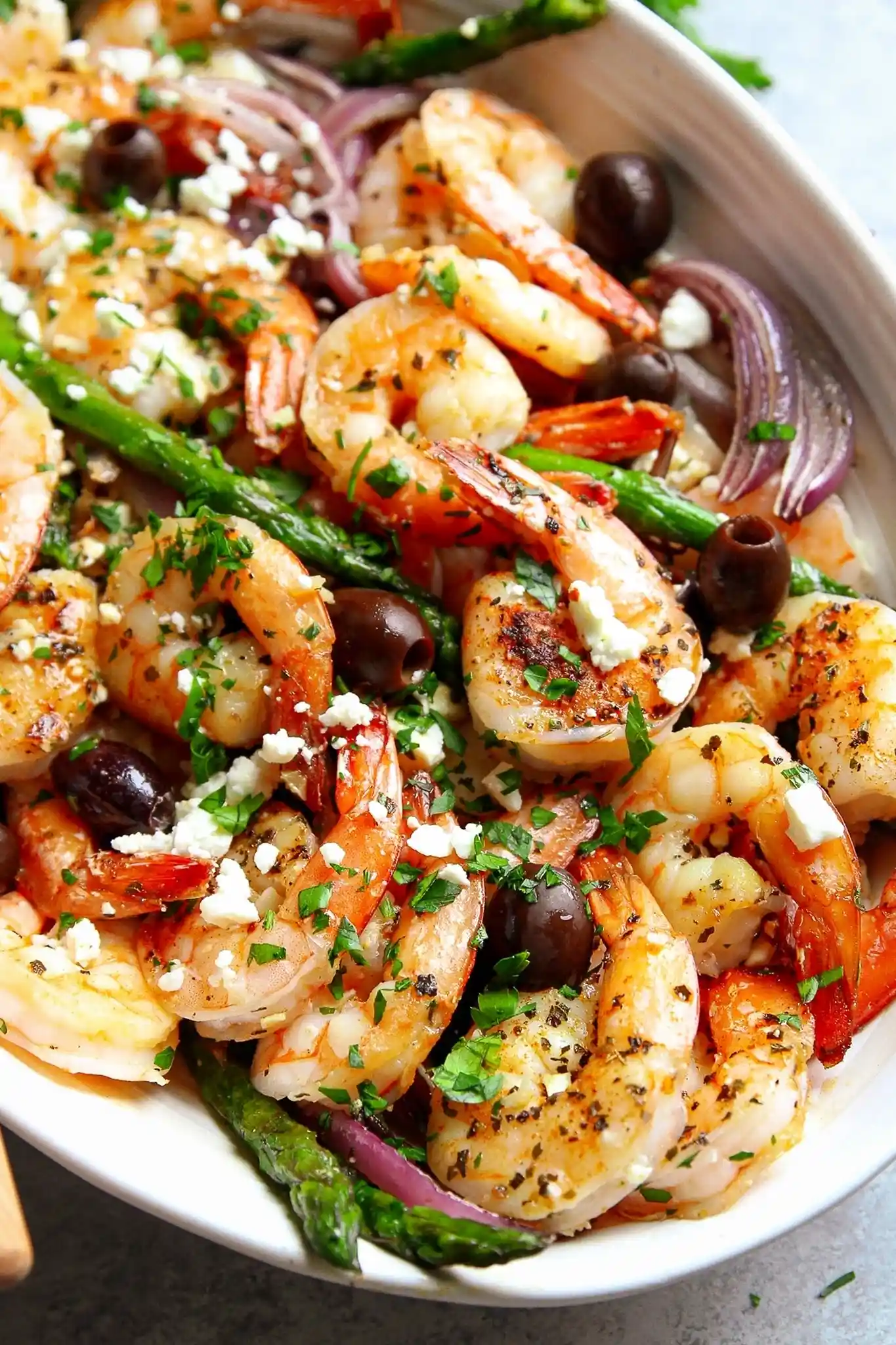
List of ingredients
- 1 1/2 lb large shrimp, peeled – ensure they are deveined for best quality.
- 1 bunch fresh asparagus – look for firm, bright green spears.
- 4 tbsp olive oil, divided – used for seasoning and finishing.
- 5 cloves garlic, minced – adds a pungent, aromatic base.
- 1 whole red onion, sliced – provides a sweet, roasted flavor.
- 1/2 tbsp oregano – provides earthy, herbal notes.
- 1/2 tbsp smoked paprika – adds a subtle wood-fired taste.
- 1 tsp sea salt – enhances all other flavors.
- 1 tsp ground black pepper, to taste – adds a mild spicy heat.
- 1 whole lemon, juiced – adds brightness and acidity.
- 1 cup black olives, pitted – adds salty, briny depth.
- 1 cup feta cheese – provides a creamy, salty finish.
- 1/3 cup fresh cilantro or parsley – adds a burst of freshness.
step-by-step instructions
- Preheat Oven: Heat your oven to 450F to ensure a high roasting temperature.
- Season Shrimp: In a large bowl, combine shrimp with 2 tbsp olive oil, minced garlic, salt, black pepper, paprika, oregano, and lemon juice. Toss until evenly coated.
- Prepare Asparagus: Trim the woody ends from the asparagus and wash them thoroughly. Lay the spears flat on a baking sheet and season with 1 tbsp olive oil.
- Assemble Pan: Arrange the seasoned shrimp on top of the asparagus bed. Layer the sliced red onions over the shrimp.
- Roast: Bake on the middle rack for 10 minutes. The shrimp are finished when the edges turn golden brown and the flesh is opaque.
- Final Touch: Remove from the oven and top with feta cheese, pitted black olives, and chopped cilantro or parsley. Drizzle with the remaining 1 tbsp olive oil and serve.
Pro Roasting Techniques for Best Results
Use a Large Sheet Pan to Prevent Steaming
Utilize the largest baking sheet available in your kitchen. When ingredients are crowded, they release excess moisture and steam instead of roasting, which prevents the vegetables from caramelizing properly.
Dry the Shrimp Before Seasoning
Pat the shrimp dry with paper towels before adding oil and spices. Removing surface moisture helps the seasoning adhere better and prevents the shrimp from boiling in their own juices on the pan.
Maintain Consistent Vegetable Sizes
Cut the red onion and trim the asparagus so they have similar cooking times. Consistent sizing ensures that the vegetables are tender at the exact moment the shrimp finish cooking.
Monitor Shrimp Doneness Carefully
Shrimp cook very quickly at 450F and can turn rubbery if left even a few minutes too long. Remove them from the oven as soon as they turn pink and opaque throughout.
Apply Feta Cheese After Baking
Adding the feta after the pan leaves the oven preserves its creamy texture. Baking the cheese can cause it to brown or dry out, losing the fresh contrast it provides to the roasted vegetables.
Brighten the Dish with Final Lemon Juice
While the marinade contains lemon, a final squeeze of fresh juice before serving enhances the acidity. This cuts through the richness of the olive oil and feta cheese.
Vegetable Alternatives and Substitutions
Substitute Asparagus with Zucchini
If asparagus is unavailable, use sliced zucchini rounds or half-moons. Zucchini roasts quickly and pairs well with the Mediterranean flavor profile of this dish.
Incorporate Bell Peppers for Color
Adding sliced red, yellow, or orange bell peppers increases the vitamin content and visual appeal. Toss them in olive oil and place them on the pan alongside the asparagus.
Use Broccoli Florets for Extra Texture
Small broccoli florets are an excellent alternative to asparagus. Because they are denser, ensure they are cut into small pieces so they roast within the 10-minute window.
Replace Olives with Capers
For those who dislike olives, capers provide a similar salty, briny punch. Use about 2 tablespoons of drained capers as a direct substitute for the cup of olives.
Experiment with Different Olive Varieties
Kalamata olives offer a more intense, vinegary flavor compared to standard black olives. Green olives provide a milder, saltier taste that also complements the shrimp.
Swap Cilantro for Fresh Parsley
Flat-leaf parsley is a traditional choice for Mediterranean dishes and offers a clean, peppery taste. Cilantro provides a more citrusy, bold flavor depending on your preference.
Serving and Pairing Recommendations
Pair with Crusty Artisan Bread
Serve the shrimp and vegetables with warm, toasted baguette or sourdough. The bread is perfect for soaking up the lemon-garlic olive oil left on the pan.
Serve Over Quinoa or Brown Rice
For a more filling meal, spoon the shrimp and vegetables over a bed of cooked quinoa or brown rice. This adds complex carbohydrates and makes the dish a complete one-bowl meal.
Combine with a Fresh Arugula Salad
The heat of the roasted shrimp pairs well with a cold, peppery arugula salad. Drizzle the salad with a simple balsamic vinaigrette to complement the feta cheese.
Toss with Pasta Noodles
Turn this recipe into a pasta dish by mixing the roasted ingredients with linguine or penne. Add an extra drizzle of olive oil and a splash of pasta water to create a light sauce.
Add Hummus or Tzatziki on the Side
A dollop of creamy hummus or cool tzatziki adds another layer of Mediterranean flavor. These dips provide a cooling contrast to the roasted garlic and smoked paprika.
Storage and Freshness Guide
Refrigeration Time and Containers
Store any leftovers in an airtight glass container in the refrigerator for up to three days. Ensure the dish is cooled slightly before sealing to prevent excess condensation.
Best Way to Reheat in a Skillet
To maintain the best texture, reheat the shrimp and vegetables in a skillet over medium-low heat. Add a teaspoon of water or olive oil to keep the ingredients moist.
Using the Microwave for Quick Heating
If using a microwave, heat the food in 30-second intervals. This prevents the shrimp from overcooking and becoming tough, which happens quickly with microwave heat.
Serving the Dish Cold
This recipe is equally delicious served cold as a composed salad. Simply toss the chilled leftovers with extra fresh herbs and a squeeze of lemon.
Avoid Freezing the Finished Dish
Freezing is not recommended for this recipe. The high water content in the asparagus and shrimp leads to a mushy texture and separation of the oil upon thawing.
Meal Prep and Repurposing Ideas
Create Mediterranean Grain Bowls
Use leftover shrimp and vegetables as a protein topper for grain bowls. Add fresh cucumber, cherry tomatoes, and chickpeas over farro or couscous for a healthy lunch.
Make Shrimp and Veggie Pita Wraps
Stuff the roasted ingredients into warm pita bread. Spread a layer of hummus or garlic sauce on the pita first to create a satisfying and portable wrap.
Prepare a Protein-Packed Lunch Salad
Place the cold shrimp and vegetables over a bed of mixed greens or spinach. Add sliced avocado and a lemon-tahini dressing for a nutrient-dense midday meal.
Double the Vegetables for Extra Portions
If you are planning for the week, double the amount of asparagus and onions. The vegetables hold up well in the fridge and can be added to various other meals.
Turn Leftovers into a Flatbread Topping
Place the leftover shrimp and vegetables on a piece of flatbread with extra feta. Broil for 2-3 minutes until the cheese is bubbly and the bread is crisp.
Cooking Troubleshooting
Preventing Watery Vegetables
If your vegetables are steaming rather than roasting, you likely crowded the pan. Use two baking sheets instead of one to ensure there is enough airflow around the ingredients.
Fixing Rubbery Shrimp
Rubbery shrimp are a result of overcooking. If this happens, avoid reheating them further; instead, serve them cold in a salad where the texture is less noticeable.
Managing Burnt Garlic
Garlic can burn quickly at 450F. To prevent this, ensure the garlic is well-distributed among the shrimp rather than clustered in one spot on the pan.
Adjusting for Bland Flavor
If the dish lacks punch, increase the acidity. A fresh squeeze of lemon juice or a drizzle of red wine vinegar can wake up the salty notes of the feta and olives.
Dealing with Tough Asparagus
Tough asparagus is usually caused by failing to trim the woody ends. Always snap the bottom inch of the spear where it naturally bends to ensure tenderness.
Frequently Asked Questions
Can I use frozen shrimp for this recipe?
Yes, but they must be completely thawed and patted dry. Frozen shrimp release more water, so drying them is critical to prevent the vegetables from steaming.
How do I know when the shrimp are perfectly cooked?
The shrimp are done when they change from translucent gray to an opaque pink color and form a ‘C’ shape. Avoid letting them curl into a tight ‘O’ shape, as that indicates overcooking.
Which type of feta cheese works best?
Block feta provides a creamier texture and a more consistent saltiness. Crumbled feta is more convenient and melts slightly more during the final assembly.
Can I use an oil other than olive oil?
Avocado oil is a great substitute because it has a high smoke point, making it safe for 450F. Avoid using butter, as it may burn at this high temperature.
Is this sheet pan shrimp recipe gluten-free?
Yes, this recipe is naturally gluten-free. All the primary ingredients are whole foods, making it safe for those with gluten sensitivities.
Can I use a convection oven for this dish?
If using a convection oven, reduce the temperature to 425F. The fan circulates heat more efficiently, which can lead to faster browning and potential burning if the temperature is too high.
What can I use if I don’t have a baking sheet?
A cast-iron skillet or a ceramic roasting pan can work. Ensure the vessel is oven-safe and provide as much surface area as possible to mimic the sheet pan effect.
Can I add other seasonings to the shrimp?
You can add a pinch of crushed red pepper flakes for heat or a dash of dried basil. Keep the salt balanced, as the feta and olives already contribute significant sodium.
Print
Sheet Pan Mediterranean Shrimp and Vegetables
- Total Time: 18 minutes
- Yield: 4 servings 1x
- Diet: Gluten-free
Description
Sheet Pan Mediterranean Shrimp is an easy one-pan dinner packed with shrimp, colorful vegetables, olives, feta, and fresh Mediterranean flavors. Ready in under 20 minutes.
Ingredients
- 1 1/2 lb large shrimp, peeled
- 1 bunch fresh asparagus
- 4 tbsp olive oil, divided
- 5 cloves garlic, minced
- 1 whole red onion, sliced
- 1/2 tbsp oregano
- 1/2 tbsp smoked paprika
- 1 tsp sea salt, to taste
- 1 tsp ground black pepper, to taste
- 1 whole lemon, juiced
- 1 cup black olives, pitted
- 1 cup feta cheese
- 1/3 cup fresh cilantro or parsley
Instructions
- Pre-heat: Pre-heat oven to 450F degrees.
- Season: In a large bowl season the shrimp with 2 tbsp olive oil, garlic, salt, black pepper, paprika, oregano and juice from lemon.
- Bake: Trim and wash the asparagus, then lay them flat on the baking sheet. Season with 1 tbsp olive oil. Place seasoned shrimp on top of asparagus and top with sliced red onions. Bake for 10 minutes in the middle rack. Shrimp is cooked when the edges start to turn golden brown.
- Finish: Remove shrimp from oven and top with feta, olives and fresh cilantro or parsley, drizzle with remaining olive oil and serve.
Notes
Store leftover shrimp and vegetables in an airtight container in the refrigerator for up to 3 days. Reheat gently in a skillet over medium-low heat. Do not freeze as shrimp and vegetables can become watery.
- Prep Time: 8 minutes
- Cook Time: 10 minutes
- Category: Dinner
- Method: Baking
- Cuisine: Mediterranean
Nutrition
- Serving Size: 1 serving
- Calories: 423 kcal
- Sugar: 2 g
- Sodium: 2502 mg
- Fat: 29 g
- Saturated Fat: 8 g
- Unsaturated Fat: 18 g
- Trans Fat: 0.01 g
- Carbohydrates: 10 g
- Fiber: 4 g
- Protein: 32 g
- Cholesterol: 248 mg