This one-pan meal combines a sweet and tangy balsamic reduction with tender salmon and roasted vegetables. It is an efficient way to prepare a nutrient-dense dinner in under 30 minutes with minimal cleanup.
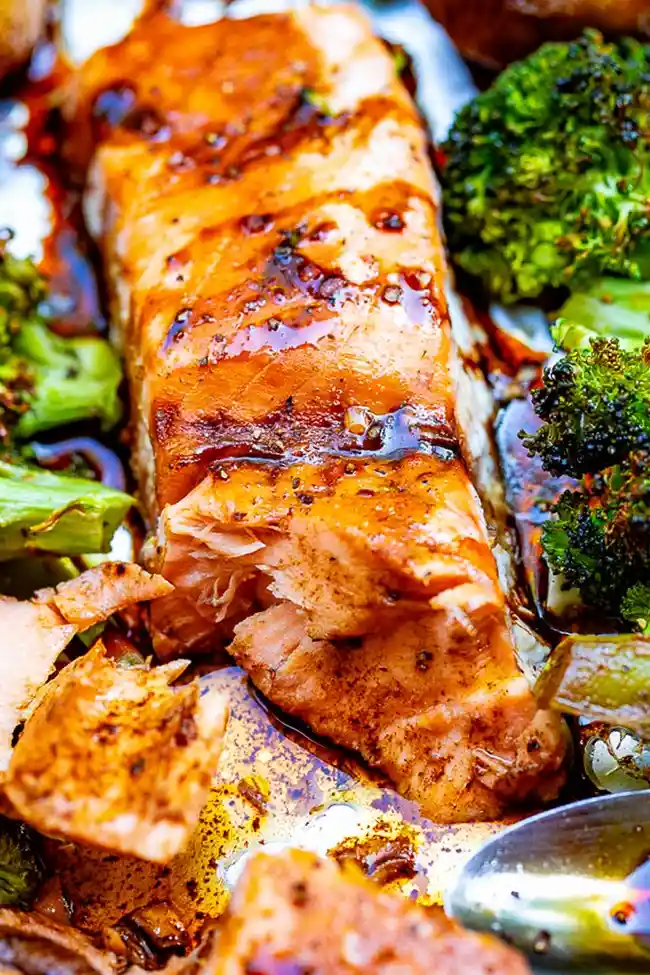
List of ingredients
- 500 milliliters balsamic vinegar – used for the base of the reduction.
- 1 cup granulated sugar, divided – used to sweeten and thicken the glaze.
- 1.50 pounds skin-on salmon filets – can be used as individual pieces or one large side.
- 3 cups broccoli florets – provides a crisp-tender contrast.
- 10 baby portobello mushrooms, kept whole – acts as a sponge for the glaze.
- 3 tablespoons olive oil – prevents sticking and aids in roasting.
- 1 teaspoon kosher salt – for essential seasoning.
- 1 teaspoon freshly ground black pepper – for seasoning.
step-by-step instructions
- Prepare the glaze: In a high-sided medium or large kettle, combine 500 ml balsamic vinegar and 1/2 cup sugar. Heat over medium to medium-high until the mixture reaches a fast rolling boil.
- Reduce the liquid: Boil for 15 to 20 minutes, stirring intermittently, until the volume is reduced by about 80% and the texture is syrupy. Taste the sauce and add part or all of the remaining sugar if it is too bitter.
- Preheat and prep: Preheat the oven to 375°F, using the convection setting if available. Line a large baking sheet with aluminum foil and apply cooking spray for easy removal.
- Arrange components: Place the salmon filets skin-side down on the sheet. Nestle the broccoli florets and baby portobello mushrooms directly around the fish, ensuring they are evenly spaced.
- Oil and glaze: Drizzle olive oil evenly over the salmon and all vegetables. Using a small spoon, apply 1/4 cup of the balsamic glaze to the salmon and 1/4 cup to the vegetables.
- Season: Evenly sprinkle the entire tray with kosher salt and freshly ground black pepper to taste.
- Bake: Cook for 8 to 12 minutes for individual filets, or 12 to 15 minutes for one large filet. Ensure the salmon reaches an internal temperature of 145°F and flakes easily with a fork.
- Finish and serve: Remove from the oven. For extra flavor, drizzle additional balsamic glaze over the salmon before serving immediately.
Vegetable Customization Options
Using Cauliflower Instead of Broccoli
Cauliflower is an excellent substitute for broccoli and cooks at a similar rate. Cut the florets into uniform sizes to ensure they roast evenly without burning the edges before the stems are tender.
Integrating Bell Peppers
Bell peppers add a bright color and sweetness to the pan. Slice them into thick strips so they do not shrivel too quickly during the 10-15 minute baking window.
Incorporating Carrots or Parsnips
Root vegetables like carrots or parsnips require more time to soften than salmon. If using these, slice them very thinly or roast them for 10 minutes before adding the salmon and other vegetables to the pan.
Adding Asparagus Spears
Asparagus is a great pairing for balsamic glaze and salmon. Since asparagus cooks quickly, add it to the pan at the same time as the broccoli to maintain a slight snap.
Salmon Selection and Preparation
Choosing the Right Salmon Cut
Center-cut filets provide a consistent thickness, which ensures even cooking across the piece. Skin-on filets are recommended as the skin protects the flesh from the direct heat of the pan, keeping the fish moist.
Handling Skin-On Salmon
Pat the salmon dry with paper towels before adding oil and glaze. Removing surface moisture allows the oil to adhere better and helps the glaze caramelize rather than steam.
Ensuring Even Cooking
Allow the salmon to sit at room temperature for about 10 to 15 minutes before baking. This prevents the exterior from overcooking before the center reaches the safe internal temperature of 145°F.
Avoiding Overcooked Fish
Salmon continues to cook for a few minutes after being removed from the oven due to carryover heat. Pull the fish from the oven when it is just barely opaque in the center to avoid a dry texture.
Balsamic Glaze Techniques
Achieving a Syrupy Consistency
The key to a professional glaze is the reduction process. Ensure the liquid reaches a full boil; if it only simmers, it will take much longer to thicken and may not achieve the desired syrupy coating.
Using Store-Bought Balsamic Glaze
If you prefer to skip the reduction step, use a high-quality store-bought balsamic glaze. Ensure the glaze is a thick consistency and not a thin balsamic vinegar, as vinegar will not cling to the fish.
Storing Excess Homemade Glaze
Since this recipe makes a large batch of glaze, store the remainder in an airtight glass jar in the refrigerator. It will keep for several weeks and can be used for salads, roasted meats, or drizzled over goat cheese.
Balancing the Flavor Profile
Balsamic vinegar varies in acidity by brand. If the glaze tastes too sharp, whisk in a small amount of honey or additional sugar while the sauce is still warm to mellow the acidity.
Cooking Equipment Advice
The Role of Convection Settings
Using a convection oven circulates hot air more efficiently, which helps the vegetables brown and the glaze caramelize. If using convection, monitor the salmon closely as it may cook 1-2 minutes faster than in a standard oven.
Using Aluminum Foil for Cleanup
Balsamic glaze contains high amounts of sugar, which can burn and stick to baking sheets. Lining the pan with heavy-duty aluminum foil allows you to discard the residue easily after the meal.
Selecting the Best Baking Sheet
Use a rimmed baking sheet to prevent olive oil and balsamic runoff from leaking into the oven. Ensure the pan is large enough that the ingredients are not crowded, as crowding leads to steaming instead of roasting.
Utilizing a Digital Meat Thermometer
The most accurate way to check salmon doneness is with an instant-read thermometer. Insert the probe into the thickest part of the filet to confirm it has reached 145°F.
Serving and Pairing Ideas
Pairing with Complex Grains
Serve the salmon and vegetables over a bed of quinoa, wild rice, or farro. The grains will absorb the extra balsamic glaze from the pan, adding flavor to the entire plate.
Adding Fresh Herbal Garnishes
Freshly chopped parsley or basil added after cooking provides a fresh contrast to the rich glaze. A sprinkle of chives can also complement the earthiness of the portobello mushrooms.
Creating a Complete Balanced Meal
To make this a fuller meal, add a side of steamed spinach or a small portion of roasted fingerling potatoes. This adds a variety of textures and nutritional profiles to the dinner.
Serving with a Fresh Side Salad
A light arugula salad with a lemon vinaigrette cuts through the sweetness of the balsamic glaze. The peppery notes of arugula balance the richness of the salmon filets.
Storage and Reheating Instructions
Proper Refrigeration Methods
Store leftovers in an airtight container, keeping the salmon and vegetables together. Ensure the food is cooled slightly before sealing the lid to prevent excess condensation from making the vegetables soggy.
Reheating Salmon Without Drying
Avoid the microwave if possible, as it often overcooks fish. Instead, place the salmon in a 275°F oven for 5-8 minutes, lightly covering with foil to retain moisture.
Storage Duration for Roasted Vegetables
Roasted broccoli and mushrooms generally stay fresh in the fridge for up to 4 days. Note that the texture of the broccoli will soften significantly during refrigeration.
Freezing Considerations
While the salmon can be frozen, the roasted vegetables do not freeze well and will become mushy. It is recommended to eat this meal fresh or refrigerated rather than frozen.
Troubleshooting Common Issues
Fixing a Too-Thin Glaze
If your glaze is too watery, return it to the heat and continue boiling for another 5 minutes. Be careful not to let it reduce too far, as it will thicken considerably as it cools.
Preventing Burnt Vegetables
If the broccoli tips start to brown too quickly, move them further away from the edges of the pan. You can also add a small splash of water to the pan to create a bit of steam.
Managing Salmon Sticking
If the salmon sticks to the foil, ensure you have used enough cooking spray or olive oil. Use a thin metal spatula to gently lift the filets by the skin side.
Adjusting Over-Salted Dishes
If you accidentally over-salt the dish, a squeeze of fresh lemon juice over the finished salmon can help neutralize the saltiness and brighten the overall flavor.
Frequently Asked Questions
Can I use frozen salmon?
Yes, but you must thaw the salmon completely in the refrigerator and pat it dry before cooking. Cooking frozen salmon from start to finish will result in uneven cooking and a watery glaze.
What is the best balsamic vinegar for this?
A balsamic vinegar of Modena is recommended for its balanced sweetness and acidity. For a thicker natural result, look for a vinegar that specifies it is aged.
How do I know the salmon is done?
The salmon is done when the flesh changes from translucent to opaque and flakes easily when pressed with a fork. A thermometer reading of 145°F is the FDA recommended standard.
Can I make this in an air fryer?
Yes, you can cook the salmon and vegetables in an air fryer at 375°F for about 8-10 minutes. Arrange the ingredients in a single layer and shake the vegetable basket halfway through.
Print
Sheet Pan Balsamic Glazed Salmon and Vegetables
- Total Time: 30 minutes
- Yield: 4 servings 1x
- Diet: General
Description
Sheet pan balsamic glazed salmon and veggies is an EASY recipe that has so much flavor from the balsamic glaze! IMPRESS your family and friends with this restaurant-quality tasting baked salmon!
Ingredients
- 500 milliliters balsamic vinegar
- 1 cup granulated sugar, divided
- 1.50 pounds skin-on salmon filets
- 3 cups broccoli florets
- 10 baby portobello mushrooms, kept whole
- 3 tablespoons olive oil
- 1 teaspoon kosher salt
- 1 teaspoon freshly ground black pepper
Instructions
- Balsamic glaze: To a high-sided medium/large kettle, add the 500 ml vinegar, 1/2 cup sugar, and heat over medium to medium-high until mixture boils and can sustain a fast rolling boil.
- Reduce: Boil for about 15 to 20 minutes, or until reduced by about 80% and has thickened and is syrupy; stir intermittently.
- Adjust: When the sauce looks like it’s about halfway done, taste the sauce, and if it’s too vinegary and bitter for you, add part of or all of the remaining sugar.
- Prepare: While making the glaze, preheat oven to 375F, line a baking sheet with aluminum foil, and spray with cooking spray.
- Arrange: Place the salmon skin-side down on the baking sheet, and nestle the broccoli and portobellos directly around it, evenly spaced, and evenly drizzle with olive oil.
- Glaze: Evenly drizzle the salmon with about 1/4 cup balsamic glaze using a small spoon, and drizzle the vegetables with an additional 1/4 cup, or to taste.
- Season: Evenly sprinkle with salt and pepper, to taste.
- Bake: Bake for about 8 to 12 minutes if using 3 to 4 individual salmon filets, or about 12 to 15 minutes if using 1 large salmon filet, or until the salmon is done to your liking.
- Finish: If desired, after cooking, evenly drizzle with additional glaze, to taste, and serve immediately.
Notes
Instead of making your own, you may also use 1/2 cup store bought balsamic glaze. Recipe is best fresh but will keep airtight in the fridge for up to 4 days.
- Prep Time: 5 minutes
- Cook Time: 10 minutes
- Category: Seafood
- Method: Baking
- Cuisine: Mediterranean
Nutrition
- Serving Size: 1 serving
- Calories: 580 kcal
- Sugar: 22 g
- Sodium: 450 mg
- Fat: 32 g
- Saturated Fat: 6 g
- Unsaturated Fat: 26 g
- Trans Fat: 0 g
- Carbohydrates: 35 g
- Fiber: 7 g
- Protein: 38 g
- Cholesterol: 100 mg