This fast-paced stir fry combines succulent shrimp with crunchy vegetables in a bold, zesty sauce. It is a healthier alternative to restaurant takeout that can be prepared in under 30 minutes. Perfect for a weeknight dinner, this dish delivers a balanced mix of savory, sweet, and spicy flavors.
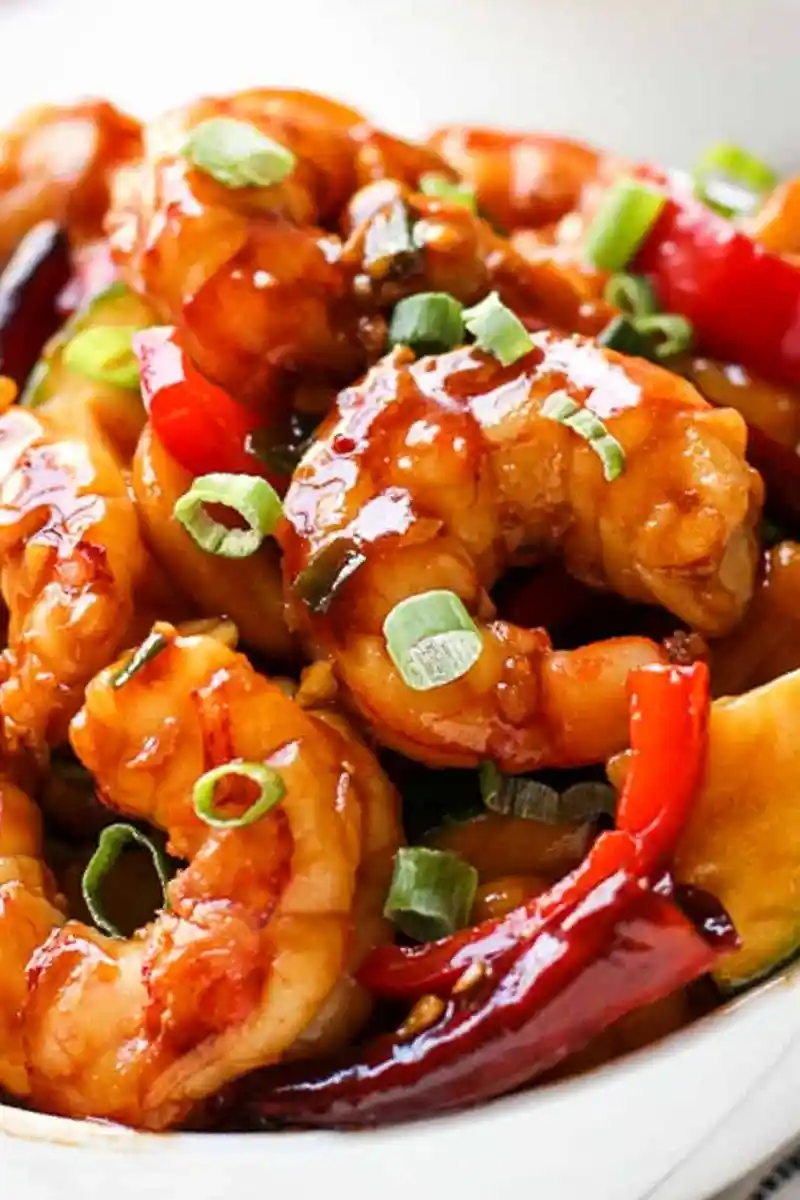
List of ingredients
- 3/4 lbs shrimp – fresh or defrosted and patted dry.
- 1/2 cup zucchini – cut into small cubes.
- 1/3 cup red bell peppers – thinly sliced.
- 1/3 cup canned water chestnuts – drained.
- 1/3 cup peanuts – roasted and unsalted.
- 10-14 dried red chiles – seeds removed for adjustable heat.
- 1/4 cup green onions – chopped.
- 8-12 slices ginger – or replace with 1/4 tsp ginger powder.
- 1 1/2 tbsp minced garlic – fresh for best aroma.
- 1 1/2 tbsp vegetable oil – use more if using a non-nonstick pan.
- 2 tbsp soy sauce or light soy sauce – provides the primary salty base.
- 2 tsp dark soy sauce – used mainly for a deep mahogany color.
- 3 tbsp sugar – balances the acidity and salt.
- 4 tsp rice vinegar – adds a tangy, bright finish.
- 2 tbsp water – helps thin the sauce for better mixing.
- 2 tsp corn starch – the thickening agent for the glaze.
- 1/2 tsp sesame oil – added for a nutty toasted aroma.
step-by-step instructions
- Prepare ingredients: Pat defrosted shrimp dry with paper towels. Cube the zucchinis, mince the garlic, and slice the red bell peppers. Slice the green onions and ginger, and drain the canned water chestnuts.
- Mix the sauce: Combine the soy sauce, dark soy sauce, sugar, rice vinegar, water, corn starch, and sesame oil in a small bowl. Whisk until the sugar and cornstarch are fully dissolved, then set aside.
- Prep the chiles: Carefully remove the seeds from the dried red chiles to control the spiciness.
- Heat the pan: Organize all prepped ingredients next to your stove. Add vegetable oil to a wok or skillet and heat over high heat until the oil begins to shimmer.
- Sear the shrimp: Add the shrimp to the hot pan and cook for about one minute. Do not cook them completely at this stage to avoid toughness later.
- Add aromatics and sauce: Stir in the dried red chiles, minced garlic, sliced ginger, and the prepared stir fry sauce. Cook briefly for 30 to 60 seconds.
- Cook vegetables: Incorporate the zucchini and red bell peppers. Stir fry for about one minute until the vegetables begin to soften but still retain their crunch.
- Final additions: Add the water chestnuts, peanuts, and green onions. Stir fry for another 30 seconds to combine all flavors.
- Serve: Remove the pan from the heat promptly to prevent overcooking. Serve immediately over a bed of steamed white or brown rice.
Optimizing Your Stir Fry Process
Using a Wok for Maximum Heat
A traditional wok is designed with a rounded bottom that allows heat to concentrate at the base while dispersing as it moves up the sides. This creates a temperature gradient that is ideal for searing meat quickly while keeping vegetables crisp. If you use a wok, keep the ingredients moving constantly to prevent burning.
Managing High Temperature Cooking
Stir frying requires high heat to achieve the ‘wok hei’ or breath of the wok, which gives the dish a charred flavor. Ensure your oil reaches the smoking point before adding the shrimp. If the pan cools down too much, the shrimp will release moisture and steam rather than sear, leading to a rubbery texture.
The Importance of Mise en Place
Because the actual cooking process takes only about 10 minutes, you must have every ingredient chopped and measured before turning on the stove. Once the oil is hot, there is no time to slice ginger or mince garlic without risking the burning of ingredients already in the pan.
Choosing the Right Ingredients
Selecting Fresh or Frozen Shrimp
Fresh raw shrimp from the seafood counter often provide the best snap and sweetness. If using frozen shrimp, ensure they are completely thawed in the refrigerator and patted dry with paper towels. Excess water on the shrimp will drop the pan temperature and prevent the sauce from adhering properly.
Using Dark Soy Sauce for Color
Dark soy sauce is thicker and less salty than light soy sauce, and it is primarily used to give the dish its characteristic rich brown color. If you cannot find it at a local store, you can omit it, though the final dish will be lighter in color. Alternatively, adding a tiny pinch of brown sugar can mimic some of the depth.
Adjusting the Heat with Dried Chiles
Dried red chiles provide a smoky heat that is different from fresh peppers. Removing the seeds reduces the intensity of the spice. If you prefer no heat at all, you can omit the chiles entirely or replace them with a small amount of paprika for color without the burn.
Adding Extra Crunchy Vegetables
While zucchini and bell peppers are standard, you can introduce other hardy vegetables to increase the nutritional value. Baby corn, sliced carrots, broccoli florets, or snap peas work well in this recipe. Always add the densest vegetables first so they have enough time to soften.
Customizing the Flavor Profile
Lowering the Sugar Content
The sugar in this recipe balances the salt of the soy sauce and the acidity of the vinegar. To reduce the sugar, you can use a small amount of honey or maple syrup, which provides a different aromatic profile. For a sugar-free version, a small amount of stevia or monk fruit sweetener can be used.
Substituting Rice Vinegar
Rice vinegar is prized for its mild, sweet acidity. If it is unavailable, apple cider vinegar is the closest substitute in terms of flavor. White distilled vinegar can be used as well, but you may need to add a pinch more sugar to offset its sharper acidity.
Using Ginger Powder Instead of Fresh
Fresh ginger provides a bright, zingy heat that defines Sichuan-style cooking. Ginger powder is a convenient alternative, though it has a more concentrated, earthy flavor. When substituting, use 1/4 teaspoon of powder for every tablespoon of freshly sliced ginger.
Serving and Presentation
Best Rice Pairings
Steamed jasmine rice is the traditional choice because its floral aroma and fluffy texture complement the bold sauce. Brown rice offers a nuttier taste and more fiber, which balances the richness of the peanuts. For a lower-carb option, cauliflower rice works well when sautéed separately.
Garnishing for a Professional Look
Adding a sprinkle of toasted sesame seeds or a few extra slices of fresh green onion on top enhances the visual appeal. Placing a few whole roasted peanuts on top of the dish adds a final layer of crunch and color. Serve the dish in a wide bowl to allow the sauce to pool slightly at the bottom.
Suggested Side Dishes
To make this a full meal, serve the shrimp alongside a simple steamed bok choy or sautéed spinach. A side of chilled cucumber salad with rice vinegar and sesame oil provides a refreshing contrast to the spicy heat of the Kung Pao sauce.
Storing and Reheating Leftovers
Air-Tight Storage Methods
Store any remaining stir fry in a glass airtight container in the refrigerator for up to three days. Keep the rice in a separate container to prevent it from absorbing all the sauce. Glass containers are preferred over plastic to avoid staining from the dark soy sauce.
Preventing Rubber Shrimp During Reheating
Shrimp overcook very easily, especially when reheated. Instead of using a high-power microwave setting, use a medium power setting and heat in 30-second intervals. Alternatively, gently warm the dish in a skillet over medium-low heat with a tablespoon of water to loosen the sauce.
Refreshing the Sauce
Over time, the cornstarch in the sauce may cause it to thicken or gel in the fridge. Adding a teaspoon of water or a drop of sesame oil before reheating will bring back the glossy, fluid consistency of the original glaze.
Common Stir Fry Troubleshooting
Avoiding Watery Sauce
Watery sauce usually happens when the pan is overcrowded or the shrimp were not dried properly. When too many ingredients are added at once, the temperature drops and the vegetables release their juices. Cook the shrimp in batches if your pan is small to ensure they sear rather than steam.
Preventing Overcooked Shrimp
The most common mistake is cooking the shrimp fully in the first step. Shrimp only need to be partially opaque before you add the sauce and vegetables. They will finish cooking during the final few minutes of stir frying, ensuring they remain tender and juicy.
Dealing with Burnt Garlic
Garlic burns quickly at high temperatures, which creates a bitter taste. To prevent this, ensure the garlic is minced uniformly and added just before the sauce. The liquid in the sauce immediately drops the temperature of the garlic, preventing it from scorching.
Frequently Asked Questions
Can I use chicken instead of shrimp?
Yes, you can use diced chicken breast or thigh. However, chicken takes longer to cook than shrimp, so you should sear the chicken fully before adding the vegetables and sauce.
Can I make this recipe nut-free?
Absolutely. Simply omit the peanuts or replace them with toasted sunflower seeds or pumpkin seeds for a similar crunch without the allergens.
How do I make the sauce thicker?
If you prefer a thicker glaze, increase the cornstarch by an additional half teaspoon. Be sure to whisk it thoroughly into the cold sauce before adding it to the pan to avoid clumps.
What is the best way to peel shrimp quickly?
Use a small pair of kitchen shears to cut along the back of the shrimp shell. This allows you to remove the vein and peel the shell away efficiently without damaging the meat.
Print
Savory Kung Pao Shrimp Stir Fry
- Total Time: 30 minutes
- Yield: 3 servings 1x
- Diet: General
Description
Delicious shrimp stir fry dish tossed in a homemade Kung Pao sauce, combined with yummy veggies. Sooo much yummier AND healthier than Chinese takeout!
Ingredients
- 3/4 lbs shrimp
- 1/2 cup zucchini (cubed)
- 1/3 cup red bell peppers (sliced)
- 1/3 cup canned water chestnuts
- 1/3 cup peanuts
- 10–14 dried red chiles
- 1/4 cup green onions (chopped)
- 8–12 slices ginger
- 1 1/2 tbsp minced garlic
- 1 1/2 tbsp vegetable oil
- 2 tbsp soy sauce
- 2 tsp dark soy sauce
- 3 tbsp sugar
- 4 tsp rice vinegar
- 2 tbsp water
- 2 tsp corn starch
- 1/2 tsp sesame oil
Instructions
- Step: Pat dry defrosted shrimp. Cube zucchinis, mince garlic, cut up red bell peppers. Slice green onions and ginger. Drain water from canned water chesnuts.
- Step: Create stir fry sauce by combining all the stir fry sauce ingredients. Mix well and set aside.
- Step: Remove seeds from dried red chiles.
- Step: Place all the ingredients needed for the stir fry next to wok/skillet; add vegetable oil to wok/skillet and heat up under high heat.
- Step: Once wok/skillet is heated up, add shrimp and cook for a minute or so.
- Step: Add dried red chiles, minced garlic, sliced ginger and stir fry sauce. Cook very briefly, for 30-60 seconds.
- Step: Add zucchini and red bell peppers, and cook for another minute or so to soften veggies.
- Step: Add water chestnuts, peanuts and green onions. Cook for ~30 seconds or so.
- Step: Remove promptly. Serve with white or brown rice.
Notes
Stir frying process goes very quickly! Avoid overcooking shrimp or veggies.
- Prep Time: 20 minutes
- Cook Time: 10 minutes
- Category: Main Course
- Method: Stir Fry
- Cuisine: Chinese
Nutrition
- Serving Size: 1 serving
- Calories: 429 kcal
- Sugar: 22 g
- Sodium: 1800 mg
- Fat: 18 g
- Saturated Fat: 7 g
- Unsaturated Fat: 11 g
- Trans Fat: 0 g
- Carbohydrates: 38 g
- Fiber: 6 g
- Protein: 33 g
- Cholesterol: 286 mg