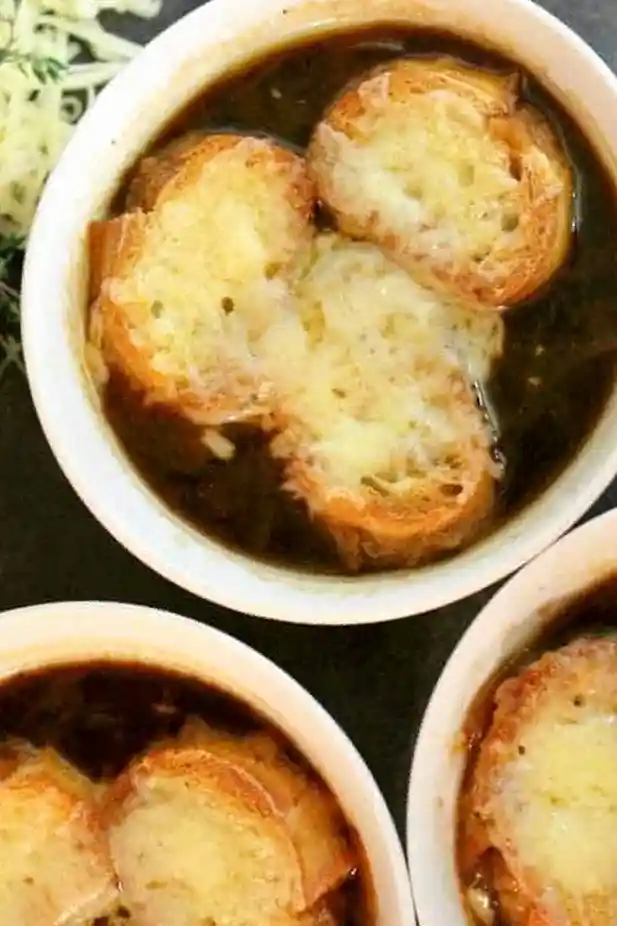
This rich and hearty French Onion Soup is built on a foundation of deeply caramelized yellow onions. By using a combination of oven-roasting and stovetop deglazing, you can achieve a professional-grade broth without using flour.
List of ingredients
- 3 Tablespoons unsalted butter, cut into 6 pieces – used for sautéing and browning
- 6 large yellow onions – sliced pole to pole into 1/4-inch thick slices
- 1 teaspoon salt – to help draw moisture from the onions
- 1/2 cup alcohol-free white wine alternative – replaces dry sherry for acidity
- 3 cups low-sodium chicken broth – provides a lighter base
- 3 cups beef broth – adds depth and richness
- 2 cups water, plus extra for deglazing – used for the base and cleaning the pot
- 4-6 sprigs fresh thyme, tied with kitchen twine – essential for earthy aroma
- 1 bay leaf – adds a subtle herbal note
- 1/2 teaspoon sea salt – for final seasoning
- Ground black pepper – to taste
- 1 small baguette – sliced into 1/2-inch rounds for croutons
- 8 ounces shredded Gruyère cheese, about 1 cup – can be substituted with mozzarella
step-by-step instructions
- Initial Oven Roast: Adjust oven rack to lower middle position and heat oven to 400 degrees. Generously spray inside of heavy-bottomed large (at least 5-quart) Dutch oven with nonstick cooking spray. Place 3 Tablespoons butter in pot and add 6 cut onions and 1 teaspoon salt. Cook, covered, 1 hour.
- Slow Caramelization: Remove pot from oven and stir onions, scraping bottom and sides of pot. Return pot to oven with lid slightly ajar (only about 1/2-inch open) and continue to cook until onions are very soft and golden brown, 1 1/2 to 1 3/4 hours longer, stirring onions and scraping bottom and sides of pot after 1 hour.
- Stovetop Reduction: Carefully remove pot from oven and place over medium-high heat. Using oven mitts to handle the pot, cook onions, stirring frequently and scraping bottom and sides of pot, until liquid evaporates and onions brown, 15 to 20 minutes, reducing heat to medium if onions are browning too quickly.
- Developing the Fond: Continue to cook, stirring frequently, until pot bottom is coated with dark crust, 6 to 8 minutes, adjusting heat as necessary. Scrape any fond that collects on spoon back into onions.
- Deglazing Process: Stir in 1/4 cup water, scraping pot bottom to loosen crust, and cook until water evaporates and pot bottom has formed another dark crust, another 6 to 8 minutes. Repeat process of deglazing with water 2 or 3 more times, until onions are very dark brown.
- Adding Acidity: Stir in 1/2 cup alcohol-free white wine alternative and cook, stirring frequently, until liquid evaporates, about 5 minutes.
- Simmering the Broth: Stir in 3 cups chicken broth, 3 cups beef broth, 2 cups water, 4-6 sprigs of thyme, 1 bay leaf, and 1/2 teaspoon salt, scraping up any final bits of browned crust on bottom and sides of pot. Increase heat to high and barely bring to boil, then reduce heat to low, cover, and simmer 30 minutes.
- Final Seasoning: Remove and discard herbs, then season with salt and pepper.
- Preparing Croutons: While soup simmers, arrange baguette slices in single layer on baking sheet and bake in 400-degree oven until bread is dry, crisp, and golden at edges, about 10 minutes. Set aside.
- Broiling and Serving: Adjust oven rack 6 inches from broiler element and heat broiler. Set individual broiler- and oven-safe bowls on a baking sheet and fill each with about 1 3/4 cups soup. Top each bowl with 1 or 2 baguette slices (do not overlap slices) and sprinkle evenly with 8 oz Gruyère. Broil until cheese begins to melt and is bubbly around edges, 3 to 5 minutes. Let cool 5 minutes before serving.
Onion Selection and Preparation
Why Yellow Onions are Essential
Yellow onions provide the ideal balance of sweetness and sharpness for this recipe. Unlike red onions, they maintain a consistent golden color and possess a higher sulfur content that transforms into a rich savoriness when cooked slowly.
Proper Slicing Technique
Slicing onions ‘pole to pole’ ensures that the pieces hold their shape better during the long cooking process. Aim for a generous 1/4-inch thickness to prevent the onions from dissolving entirely into the broth.
Managing Onion-Induced Tears
To prevent eye irritation, use sharp knives to minimize cell damage and the release of sulfuric acid. Wearing safety goggles or swimming goggles is a practical way to block these enzymes from reaching your eyes.
Ensuring Consistent Slice Thickness
Uniform slices are critical for even cooking and caramelization. If some pieces are too thin, they will burn while the thicker pieces remain raw, leading to an inconsistent flavor profile.
The Science of Caramelization
Using the Oven for Even Browning
Roasting onions in a covered Dutch oven allows them to sweat in their own juices first. This prevents early burning and ensures that the sugars break down evenly before the high-heat stovetop phase begins.
The Role of Salt in Sweating
Adding salt at the beginning helps draw water out of the onion cells through osmosis. This moisture allows the onions to simmer and soften before the evaporation phase, facilitating a deeper brown color.
Identifying the Correct Color
The onions should move from translucent to golden, and finally to a deep, dark brown. Avoid letting them turn black, as this introduces a bitter taste that can ruin the entire batch of soup.
Understanding the Fond
The ‘fond’ is the brown crust that forms on the bottom of the pot during cooking. This concentrated layer of caramelized sugars and proteins is where the majority of the soup’s complex flavor resides.
The Deglazing Sequence
Deglazing is the process of adding liquid to loosen the fond from the pot. By repeating this process with water multiple times, you force the onions to re-absorb the concentrated flavors, deepening the color.
Avoiding Burnt Onions
If the onions begin to brown too quickly on the stove, immediately reduce the heat to medium. Constant stirring during the final 20 minutes is necessary to ensure the crust doesn’t scorch.
Broth and Flavor Balance
Combining Beef and Chicken Broths
Using a mixture of chicken and beef broth prevents the soup from becoming overly heavy. The chicken broth allows the natural flavor of the caramelized onions to remain the star of the dish.
Using Alcohol-Free Flavorings
An alcohol-free white wine alternative or a splash of white grape juice with lemon juice provides the necessary acidity. This brightness cuts through the richness of the butter and beef broth.
The Purpose of Fresh Thyme
Fresh thyme adds a subtle, woody aroma that complements the sweetness of the onions. Tying the sprigs with twine makes it easy to remove the stems before serving the soup.
Balancing Salt and Pepper
Wait until the very end of the simmering process to add the final salt and pepper. Since broths reduce as they simmer, seasoning too early can result in a soup that is overly salty.
Simmering for Depth
A 30-minute low simmer allows the flavors of the herbs and broths to integrate fully. This stage transforms the liquid from separate ingredients into a cohesive, hearty broth.
The Perfect Cheese Toast
Selecting the Best Bread
A crusty French baguette is preferred because it can withstand the moisture of the soup without disintegrating immediately. Slices should be about 1/2-inch thick for maximum stability.
Preparing the Croutons
Baking the bread slices at 400 degrees until they are dry and crisp creates a barrier. This prevents the bread from becoming soggy too quickly once it is placed on top of the soup.
Why Gruyère is the Standard
Gruyère is a Swiss-style cheese known for its nutty flavor and excellent melting properties. It creates a thick, bubbly layer that provides a salty contrast to the sweet onions.
Mozzarella as an Alternative
If Gruyère is unavailable, mozzarella provides a similar stretch and melt. However, since mozzarella is milder, adding a sprinkle of Parmesan can help restore the salty depth.
Achieving the Perfect Broil
Position the oven rack 6 inches from the broiler element to ensure the cheese melts and browns quickly. Watch the bowls closely, as the cheese can go from bubbly to burnt in less than a minute.
Storage and Preservation
Cooling the Soup Safely
Allow the soup to cool to room temperature before transferring it to the refrigerator. Cooling too slowly can lead to bacterial growth, so divide the soup into smaller containers for faster cooling.
Refrigeration Guidelines
Store the soup base in an airtight container in the refrigerator for up to 4-5 days. The flavors often improve after a day of resting as the ingredients continue to meld.
Freezing the Soup Base
The onion and broth base freezes well for up to 3 months. Do not freeze the soup with the bread or cheese, as these textures will be ruined by the freezing process.
Thawing Procedures
Thaw frozen soup slowly in the refrigerator overnight. Alternatively, you can reheat it directly in a pot over medium-low heat, adding a splash of water if the broth has thickened too much.
Reheating and Serving
Stovetop Reheating Method
Gently heat the soup in a pot over medium heat until it reaches a simmer. Avoid boiling the soup vigorously, as this can cause the broth to reduce further and become too salty.
Microwave Reheating Precautions
If using a microwave, heat the soup in short intervals and stir in between. This ensures that the heat is distributed evenly and prevents hot spots from forming in the broth.
Fresh Bread for Reheated Soup
Always toast fresh baguette slices before adding them to reheated soup. Using pre-toasted bread from the freezer may result in a tougher texture after broiling.
Broiling Reheated Portions
Place the reheated soup in oven-safe bowls and top with fresh cheese and toast. Broil as directed in the original recipe to achieve a fresh, bubbly cheese crust.
Troubleshooting Common Issues
Bitter Tasting Onions
Bitterness usually occurs if the onions were burned during the stovetop phase. If this happens, you can try adding a tiny pinch of sugar to balance the flavor, though severe burning cannot be fully fixed.
Soup is Too Thin
If the broth is too thin, simmer it uncovered for an additional 15-20 minutes to reduce the liquid. This concentrates the flavors and naturally thickens the consistency without adding flour.
Cheese is Not Melting
Ensure your broiler is fully preheated before adding the bowls. If the cheese isn’t melting, the oven rack may be too far from the heating element; move it closer for more direct heat.
Broth is Too Salty
If the final soup is too salty, stir in a small amount of additional water or unsalted beef broth. This will dilute the sodium levels without significantly altering the taste.
Frequently Asked Questions
Can I use white onions?
White onions can be used, but they are generally sweeter and lack the depth of yellow onions. This can result in a soup that tastes more like a sweet preserve than a savory broth.
Is a Dutch oven required?
A heavy-bottomed Dutch oven is highly recommended because it distributes heat evenly. If you don’t have one, a heavy cast-iron pot that is oven-safe will work as a substitute.
How to make it vegetarian?
Replace the chicken and beef broths with a high-quality vegetable broth. Use a plant-based butter alternative and a microbial-rennet cheese to keep the dish vegetarian.
Can I prep this a day early?
Yes, you can caramelize the onions and simmer the broth a day in advance. Simply store the liquid in the fridge and reheat it before adding the bread and cheese.
Print
Savory French Onion Soup with Gruyère
- Total Time: 250 minutes
- Yield: 8 servings 1x
- Diet: General
Description
A delicious, hearty French Onion Soup featuring deeply caramelized onions and a rich broth, topped with toasted baguette and melted Gruyère cheese.
Ingredients
- 3 Tablespoons unsalted butter
- 6 large yellow onions, sliced
- 1 teaspoon salt
- ½ cup non-alcoholic white wine alternative
- 3 cups low-sodium chicken broth
- 3 cups beef broth
- 2 cups water
- 4–6 sprigs fresh thyme, tied
- 1 bay leaf
- ½ teaspoon sea salt
- Ground black pepper
- 1 small baguette
- 8 ounces shredded Gruyère cheese (microbial-rennet)
Instructions
- Step: Heat oven to 400 degrees and spray a large Dutch oven with nonstick spray.
- Step: Place butter, sliced onions, and 1 teaspoon salt in the pot; cook covered for 1 hour.
- Step: Stir onions and return to oven with lid slightly ajar; cook until soft and golden brown, 1 ½ to 1 ¾ hours longer, stirring after 1 hour.
- Step: Place pot over medium-high heat and cook until liquid evaporates and onions brown, 15 to 20 minutes.
- Step: Continue cooking until a dark crust forms on the bottom, 6 to 8 minutes.
- Step: Deglaze with ¼ cup water and cook until evaporated; repeat 2 or 3 more times until onions are very dark brown.
- Step: Stir in non-alcoholic white wine alternative and cook until evaporated, about 5 minutes.
- Step: Stir in chicken broth, beef broth, water, thyme, bay leaf, and sea salt; bring to a boil, then simmer covered for 30 minutes.
- Step: Remove and discard herbs, then season with salt and pepper.
- Step: Bake baguette slices at 400 degrees for 10 minutes until crisp.
- Step: Fill bowls with soup, top with baguette slices and Gruyère cheese, and broil for 3 to 5 minutes until bubbly.
Notes
Yellow onions are recommended for the best flavor profile. Use a microbial-rennet cheese to ensure dietary suitability.
- Prep Time: 10 minutes
- Cook Time: 240 minutes
- Category: Soup
- Method: Baking and Simmering
- Cuisine: French
Nutrition
- Serving Size: 1.75 cups
- Calories: 103 kcal
- Sugar: 3 g
- Sodium: 805 mg
- Fat: 5 g
- Saturated Fat: 2 g
- Unsaturated Fat: 3 g
- Trans Fat: 0 g
- Carbohydrates: 9 g
- Fiber: 1 g
- Protein: 3 g
- Cholesterol: 11 mg