Prepare a restaurant-style beef lo mein in just 30 minutes using simple pantry staples. This quick stir-fry combines tender beef and crisp vegetables in a rich, savory sauce.
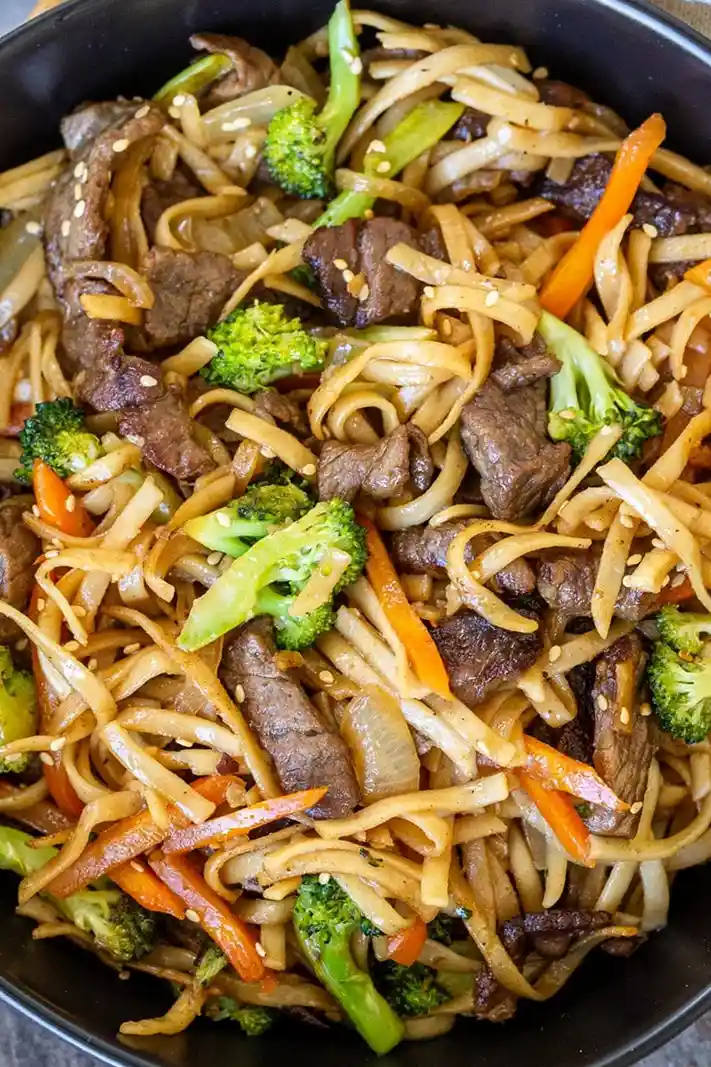
List of ingredients
- 8 oz lo mein noodles (cooked according to instructions) – The core base of the dish.
- 1 tsp sesame oil – Adds a distinctive toasted nuttiness.
- 1/4 cup hot boiled water – Used to dissolve the bouillon concentrate.
- 1 tbsp Beef Better Than Bouillon – Provides a deep and concentrated beef essence.
- 3 tbsp soy sauce – Adds necessary salt and savory depth.
- 2 tbsp brown sugar – Provides sweetness and helps thicken the sauce.
- Oil (olive or sesame) – Essential for searing the meat and frying vegetables.
- 1 lb beef – Sliced into very thin strips for fast cooking.
- 2 large carrots – Sliced into thin rounds or matchsticks.
- 2 cup broccoli – Fresh florets for texture and color.
- 1 large onion – Diced into uniform pieces.
- 4 garlic cloves – Freshly pressed for a strong aromatic base.
step-by-step instructions
- Prepare the Sauce: Into hot, boiled water add Better Than Bouillon and brown sugar; stir to dissolve. Into the mixture, add soy sauce and set aside. (Tip: Use boiling water to ensure the bouillon and sugar dissolve completely without clumps).
- Sear the Beef: Dice carrots, broccoli and onion into two-inch pieces. Pre slice beef into very thin strips. Using a hot skillet with sesame oil, cook beef until it’s golden brown, remove from the skillet and set aside. (Tip: Use high heat to get a brown sear quickly without overcooking the center).
- Sauté the Vegetables: Using the same skillet that was used to cook beef, sauté onions until golden brown with sesame oil. Remove from the skillet. In the same skillet, sauté carrots until softened, add broccoli and cook for about three minutes. Add onion back to the pan. Press garlic into the mixture. (Tip: Sautéing carrots first ensures they soften properly since they are denser than broccoli).
- Combine and Simmer: Add cooked beef into the skillet with vegetables. Pour sauce over the ingredients and let them simmer for about 2 minutes. (Tip: Stir constantly to ensure the sauce coats every piece of beef and vegetable).
- Add Noodles: Add cooked noodles and toss everything together. (Tip: Use tongs to gently lift and fold the noodles to avoid breaking them).
- Final Toss and Serve: Into a large dish, combine noodles, vegetables and beef. Toss to bring everything together and serve while it’s still hot. (Tip: Serve immediately to keep the vegetables crisp and the beef tender).
Selecting the Best Beef Cuts
Flank Steak for a Lean Result
Flank steak is a popular choice for lo mein because it is lean and takes on flavors well. To ensure it is tender, slice the meat thinly across the grain. This breaks up the tough muscle fibers for a better mouthfeel.
Sirloin for Enhanced Tenderness
Top sirloin offers a great balance between lean meat and tenderness. It is slightly more expensive than flank but requires less effort to achieve a soft texture. It sears quickly and holds its shape during the stir-fry process.
Ribeye for Richer Flavor
Ribeye is a fattier cut that provides a more decadent and juicy result. The higher fat content means the beef stays moist even under high heat. Be careful not to add too much extra oil to the pan when using this cut.
Noodle Options and Substitutes
Authentic Lo Mein Egg Noodles
Traditional lo mein noodles are made from wheat and egg, providing a soft and chewy texture. These are typically available in the Asian section of most grocery stores. If you find fresh ones, you can often skip the boiling process.
Spaghetti as a Pantry Substitute
If you cannot find authentic egg noodles, standard spaghetti works surprisingly well. The shape is similar enough to maintain the integrity of the dish. Cook the pasta al dente to ensure it doesn’t become too mushy when tossed in the sauce.
Rice Noodles for a Different Texture
Rice noodles offer a gluten-free alternative and a different, more slippery texture. They cook very quickly, often requiring only a soak in hot water. Be gentle when tossing them as they are more fragile than wheat noodles.
Expanding the Vegetable Mix
Adding Red Bell Peppers
Red bell peppers add a vibrant pop of color and a mild sweetness to the dish. Slice them into thin strips and add them along with the broccoli. They cook quickly and provide a nice crunch.
Incorporating Snap Peas
Snap peas or snow peas add a fresh, garden-like flavor and an extra layer of crispness. Add them during the last two minutes of the vegetable sauté. This prevents them from losing their bright green color.
Using Sliced Water Chestnuts
Water chestnuts provide a unique, watery crunch that contrasts well with the soft noodles. Use canned water chestnuts, sliced and drained. Toss them in right before adding the beef back to the pan.
Including Baby Corn
Baby corn adds a subtle sweetness and a distinct shape to the stir-fry. Use canned baby corn, sliced lengthwise. Like water chestnuts, these are added at the end as they do not require much cooking.
Fine-Tuning the Lo Mein Sauce
Reducing the Sweetness
If you prefer a more savory profile, reduce the brown sugar to one tablespoon. You can also replace the brown sugar with a small amount of honey. This maintains the viscosity of the sauce without the heavy sweetness.
Boosting the Umami Profile
To deepen the savory taste, you can add a teaspoon of oyster sauce or mushroom sauce. These ingredients add a complex saltiness that complements the beef. Ensure you balance the extra salt by slightly reducing the soy sauce.
Managing Salt with Low-Sodium Soy Sauce
For those monitoring their salt intake, low-sodium soy sauce is an excellent substitute. Because it is less salty, you may need to add a pinch of black pepper for extra flavor. The overall taste remains very similar to the original.
Professional Stir-Fry Techniques
Achieving a Perfect Sear
The key to great beef is a high-heat sear. Ensure the skillet is shimmering hot before adding the oil and beef. Do not overcrowd the pan; cook the beef in batches if necessary to avoid steaming the meat.
Preserving Vegetable Crispness
Avoid overcooking the vegetables to prevent them from becoming mushy. Sauté them quickly on medium-high heat and remove them if they reach the desired tenderness. The final simmering step will cook them slightly more.
Managing Garlic to Avoid Burning
Garlic burns quickly and becomes bitter if exposed to high heat for too long. Always add the garlic at the very end of the vegetable sauté process. This allows the aroma to release without scorching the cloves.
Serving and Presentation Ideas
Garnishing with Toasted Sesame Seeds
Toasted sesame seeds add a professional look and a subtle nutty flavor. Sprinkle them over the finished dish just before serving. You can toast them in a dry pan for two minutes for maximum aroma.
Adding Fresh Green Onions
Thinly sliced green onions provide a fresh, sharp contrast to the rich beef sauce. Use both the white and green parts of the stalk. Scatter them over the top of the plated lo mein for color.
Pairing with a Side Salad
Serve the beef lo mein with a crisp Asian-style side salad. A mix of cabbage, shredded carrots, and a ginger-soy vinaigrette balances the richness of the noodles. This creates a more complete and balanced meal.
Storage and Reheating Instructions
Proper Refrigeration Methods
Store leftover lo mein in an airtight container in the refrigerator. It will remain fresh and safe to eat for 3 to 5 days. The sauce often penetrates the noodles further over time, improving the flavor.
Best Ways to Reheat Noodles
For the best texture, reheat lo mein in a skillet over medium heat with a splash of water. This restores the moisture to the noodles and prevents them from drying out. Avoid the microwave if you want to maintain the vegetable crunch.
Freezing Lo Mein for Later
While not ideal for the vegetables, lo mein can be frozen for up to two months. Use a freezer-safe bag and squeeze out all the air. Thaw completely in the fridge before reheating in a pan.
Make-Ahead Strategies
Prepping Vegetables in Advance
You can chop the carrots, broccoli, and onions a day before you plan to cook. Store them in separate containers or bags in the fridge. This reduces the active prep time to just a few minutes.
Preparing the Sauce Early
The sauce can be mixed and stored in a jar for up to a week. Simply shake the jar before using it to redistribute the dissolved bouillon and sugar. This makes the cooking process even faster.
Par-Cooking the Noodles
Cook the lo mein noodles ahead of time and toss them with a small amount of sesame oil. This prevents the noodles from sticking together. Store them in the fridge until you are ready to stir-fry.
Troubleshooting Common Issues
Fixing a Sauce That Is Too Thin
If the sauce does not thicken enough during the simmer, create a cornstarch slurry. Mix one teaspoon of cornstarch with a tablespoon of cold water and stir it into the pan. Let it bubble for one minute to thicken.
Preventing Noodles from Clumping
If your noodles stick together after boiling, rinse them immediately under cold running water. This removes excess starch from the surface. Tossing them in a bit of oil also helps keep them separate.
Solving Overcooked Beef Issues
If the beef becomes tough, it is likely because it was cooked for too long or sliced with the grain. Always slice across the muscle fibers. If the beef is already overcooked, adding extra sauce can help mask the dryness.
Frequently Asked Questions
Can I use chicken instead of beef?
Yes, you can substitute boneless chicken breasts for beef. Slice the chicken into two-inch pieces and sauté until fully cooked. Follow the same sauce and vegetable steps for a great chicken lo mein.
What is the difference between lo mein and chow mein?
Lo mein features soft noodles tossed in a thick sauce. Chow mein involves frying the noodles for a longer period to achieve a crispy texture. Both use similar flavors but differ in the final noodle consistency.
How do I store leftovers safely?
Place the cooked dish in a sealed container and refrigerate within two hours of cooking. Ensure the container is airtight to prevent the noodles from absorbing refrigerator odors.
Which oil is best for stir-frying?
Sesame oil provides the best flavor, but it has a lower smoke point. For very high heat, use a neutral oil like vegetable or canola oil, then add a touch of sesame oil at the end for taste.
Print
Savory Beef Lo Mein Recipe
- Total Time: 30 minutes
- Yield: 6 servings 1x
- Diet: General
Description
Beef lo mein might already be one of your go-tos when ordering Chinese takeout. Skip spending money and make this dish at home in only 30 minutes!
Ingredients
- 8 oz lo mein noodles (cooked according to instructions)
- 1 tsp sesame oil
- 1/4 cup hot boiled water
- 1 tbsp Beef Better Than Bouillon
- 3 tbsp soy sauce
- 2 tbsp brown sugar
- oil (olive or sesame) for frying
- 1 lb beef
- 2 large carrots
- 2 cup broccoli
- 1 large onion
- 4 garlic cloves
Instructions
- Prepare Sauce: Into hot, boiled water add Better Than Bullion and brown sugar; stir to dissolve. Into the mixture, add soy sauce and set aside.
- Cook Beef: Dice carrots, broccoli and onion into two-inch pieces. Pre slice beef into very thin strips. Using a hot skillet with sesame oil, cook beef until it’s golden brown, remove from the skillet and set aside.
- Sauté Vegetables: Using the same skillet that was used to cook beef, sauté onions until golden brown with sesame oil. Remove from the skillet. In the same skillet, sauté carrots until softened, add broccoli and cook for about three minutes. Add onion back to the pan. Press garlic into the mixture.
- Simmer: Add cooked beef into the skillet with vegetables. Pour sauce over the ingredietns and let them simmer for about 2 minutes.
- Mix: Add cooked noodles and toss everything together.
- Serve: Into a large dish, combine noodles, vegetables and beef. Toss to bring everything together and serve while it’s still hot.
Notes
Store in an airtight container in the fridge for 3-5 days. Spaghetti noodles can be used as a substitute for lo mein noodles if unavailable.
- Prep Time: 10 minutes
- Cook Time: 20 minutes
- Category: Main Course
- Method: Stir-frying
- Cuisine: Chinese
Nutrition
- Serving Size: 1 serving
- Calories: 381 kcal
- Sugar: 7 g
- Sodium: 586 mg
- Fat: 17 g
- Saturated Fat: 6 g
- Unsaturated Fat: 11 g
- Trans Fat: 0 g
- Carbohydrates: 37 g
- Fiber: 3 g
- Protein: 20 g
- Cholesterol: 54 mg