This recipe uses a balanced marinade of honey and Dijon mustard to infuse chicken thighs with savory and sweet notes. Roasting the meat on a bed of aromatic vegetables creates a natural pan sauce and ensures tender results.
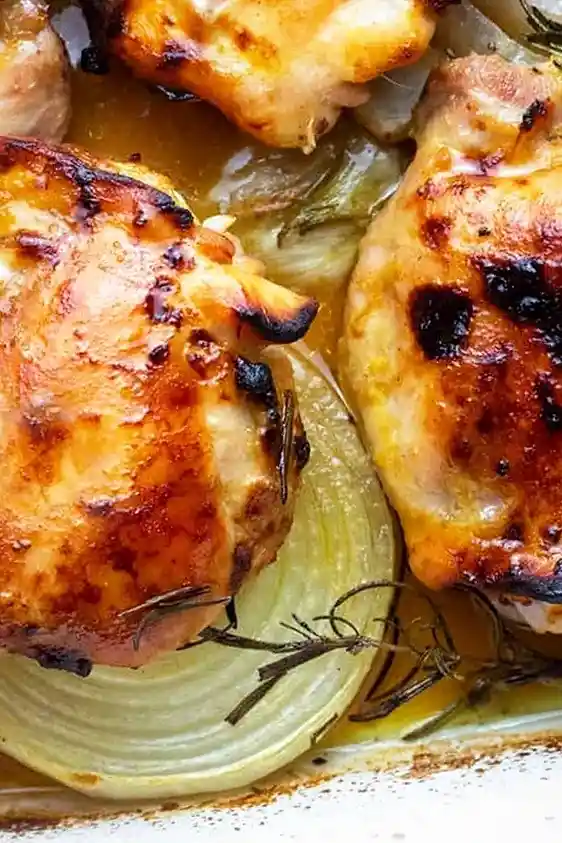
List of ingredients
- 3 tablespoons honey – provides sweetness and caramelization.
- 1 teaspoon lemon zest – adds bright citrus aroma from one lemon.
- 2 tablespoons freshly squeezed lemon juice – provides acidity from half a lemon.
- 2 tablespoons Dijon mustard – adds a sharp, tangy base.
- 1/2 teaspoon garlic powder – provides a consistent savory depth.
- 1 1/2 teaspoon kosher salt – divided for the marinade and the vegetables.
- 6 skinless bone-in chicken thighs – ensures juicy meat during roasting.
- 3 sprigs rosemary – provides an earthy, woody fragrance.
- 1 large fennel – halved and sliced for a sweet, anise-like base.
- 1/2 onion – sliced to add savory sweetness.
- 1 tablespoon olive oil – used to coat the vegetables and prevent sticking.
step-by-step instructions
- Prepare the marinade: In a large resealable bag, combine the honey, lemon zest, lemon juice, Dijon mustard, garlic powder, and 1 teaspoon of salt.
- Marinate the chicken: Add the chicken thighs to the bag, seal it tightly, and massage the marinade into the meat to ensure full coverage. Let it sit at room temperature for 30 minutes or in the refrigerator for up to 4 hours.
- Preheat and temper: Preheat your oven to 425 degrees F. Remove the marinated chicken from the refrigerator 30 minutes before cooking to bring it closer to room temperature for even roasting.
- Prepare the vegetable bed: Place the rosemary, sliced fennel, and sliced onion in the bottom of a 9×13 inch baking dish. Drizzle with olive oil and season with the remaining salt, tossing them well to coat.
- Arrange the pan: Spread the vegetables evenly across the bottom of the dish. Place the chicken thighs on top of the vegetables, allowing excess marinade to drip off before setting them down.
- Roast and baste: Bake for 50 minutes. Every 10 minutes for the first 20 minutes of cooking, baste the chicken with any remaining marinade from the bag.
- Check for doneness: Ensure the chicken is golden brown and has reached an internal temperature of 165 degrees F.
- Rest and serve: Remove the pan from the oven and let the chicken rest for 10 minutes. Serve the thighs topped with the softened roasted vegetables.
Practical Roasting Tips
Select Bone-In Thighs for Better Moisture
Using bone-in chicken thighs is critical because the bone acts as an insulator, slowing down the cooking process near the center. This prevents the meat from drying out under the high heat of 425 degrees F. Bone-in cuts also release marrow during roasting, which enhances the richness of the pan sauce.
Control Marination Time to Prevent Texture Changes
The acidity from the lemon juice helps tenderize the meat, but excessive marinating can lead to a mealy texture. Stick to the 30-minute to 4-hour window to maintain the structural integrity of the chicken fibers. If you must marinate overnight, consider reducing the lemon juice by half and adding it back just before cooking.
Use a Meat Thermometer for Precision
Relying on visual cues like golden-brown skin can be misleading, as honey caramelizes quickly and may look done before the interior is safe. Use an instant-read thermometer to ensure the thickest part of the thigh reaches 165 degrees F. This ensures food safety while avoiding the toughness caused by overcooking.
Manage Oven Rack Position for Even Browning
Place your baking dish on the center rack of the oven to allow heat to circulate evenly around the chicken and vegetables. If the honey in the marinade begins to brown too quickly, move the pan to a lower rack. This keeps the chicken cooking through while preventing the surface from charring.
Ingredient Substitutions
Use Maple Syrup Instead of Honey
If honey is unavailable, pure maple syrup is an excellent alternative that provides a similar sugar profile for caramelization. Maple syrup offers a slightly more woody flavor that pairs well with the rosemary. Use the same 3-tablespoon measurement to maintain the consistency of the marinade.
Replace Fennel with Carrots or Celery
For those who dislike the anise flavor of fennel, sliced carrots or celery stalks are suitable replacements. Carrots provide a similar sweetness and roast well in the oven, while celery adds a salty, aromatic quality. Slice them into similar widths to ensure they cook at the same rate as the onions.
Swap Dijon for Whole Grain Mustard
Whole grain mustard can be used in place of Dijon for a more rustic texture and a slightly milder heat. The mustard seeds remain intact, adding small bursts of flavor to the chicken. The acidity remains similar, so no other adjustments to the lemon juice are necessary.
Substitute Rosemary with Fresh Thyme
Fresh thyme is a great alternative to rosemary if you prefer a more subtle, lemony herbal note. Use about four to five sprigs of thyme to match the potency of three rosemary sprigs. Thyme blends seamlessly with the garlic and lemon, creating a classic Mediterranean profile.
Serving and Pairing Ideas
Pair with Creamy Parmesan Risotto
The richness of a creamy risotto provides a stark contrast to the bright acidity of the lemon-honey glaze. The starchy rice also absorbs the pan juices from the roasted fennel and onions. Stir in a small amount of freshly grated Parmesan to complement the saltiness of the Dijon.
Serve with Braised White Beans
For a protein-rich side, serve the chicken over a bed of cannellini beans simmered with garlic and olive oil. This creates a Tuscan-inspired meal that feels hearty and balanced. The creamy texture of the beans pairs well with the roasted vegetables.
Add a Side of Sautéed Spinach
To introduce a fresh, bitter element to the plate, serve the dish with quickly sautéed spinach or kale. Flash-fry the greens with a touch of garlic and lemon juice to echo the flavors in the chicken. This adds a necessary pop of color and nutritional balance to the meal.
Serve Over Quinoa or Farro
Nutty grains like quinoa or farro are excellent for soaking up the remaining marinade and vegetable juices. These grains provide a chewy texture that contrasts with the tender chicken. Cook the grains in vegetable broth instead of water for added depth.
Storage and Reheating Guidelines
Store in Airtight Containers
Place the cooked chicken and vegetables in a shallow, airtight container and allow them to cool slightly before sealing. Store the dish in the refrigerator for up to three to four days. Keep the chicken thighs on top of the vegetables to prevent the meat from becoming soggy.
Freeze Cooked Chicken for Long-Term Use
This dish freezes well if the chicken is cooled completely and wrapped tightly in foil or placed in a freezer-safe bag. It can be stored for up to three months without significant loss of quality. Thaw the chicken in the refrigerator overnight before reheating to maintain the meat’s texture.
Reheat in the Oven to Preserve Texture
Avoid the microwave if possible, as it can make the chicken rubbery and the vegetables mushy. Instead, place the chicken and vegetables in an oven-safe dish and cover with foil. Heat at 325 degrees F for 15-20 minutes until warmed through, which preserves the roasted exterior.
Make-Ahead Preparation
Prepare the Marinade in Advance
The honey-mustard marinade can be whisked together and stored in a jar in the refrigerator for up to one week. This simplifies the process on the day of cooking, as you only need to add the chicken to the bag. Always shake the jar before use to reintegrate the honey and mustard.
Chop Vegetables Early
Slice the fennel and onions a day in advance and store them in a sealed container or bag. This reduces the active prep time and allows you to assemble the baking dish quickly. Ensure the vegetables are kept dry until they are tossed with oil and salt.
Plan the Room Temperature Tempering
Timing the removal of chicken from the fridge is key for an even cook. Set a timer for 30 minutes before you intend to put the chicken in the oven. This prevents the outside of the meat from overcooking while the center remains cold.
Troubleshooting Common Issues
Fix Dry Chicken Meat
If the chicken feels dry, it is likely due to overcooking or lack of resting. Always ensure the meat rests for 10 minutes to allow the juices to redistribute throughout the thigh. If the meat is already overcooked, serve it with a dollop of extra honey-mustard sauce to add moisture.
Balance Overpowering Acidity
If the lemon flavor is too dominant, you can balance it by adding a small amount of melted butter or extra honey to the final plating. The fats and sugars neutralize the sharp citric acid. A pinch of brown sugar added to the pan juices can also mellow the flavor.
Prevent Vegetables from Burning
Because the chicken takes 50 minutes to cook, the vegetables can sometimes brown too quickly. If the onions and fennel are charring, add a tablespoon of water or vegetable broth to the bottom of the pan. This creates steam that protects the vegetables from direct heat.
Frequently Asked Questions
Can I use boneless chicken thighs?
Yes, you can use boneless thighs, but you must reduce the cooking time. Boneless meat cooks faster, so check the internal temperature after 25 to 35 minutes. Be careful not to overcook them, as they lack the bone to protect the meat from drying out.
Is this recipe naturally dairy-free?
Yes, this recipe contains no butter, cream, or cheese, making it naturally dairy-free. The creamy consistency of the marinade comes from the honey and Dijon mustard. Ensure your mustard brand does not contain any dairy-based additives.
Can this be made in a slow cooker?
While the roast method is preferred for browning, you can adapt this for a slow cooker. Place the vegetables at the bottom and the chicken on top, cooking on low for 6-7 hours. To get the golden color, finish the chicken under a broiler for 5 minutes after slow cooking.
Which type of honey works best?
A mild honey, such as clover or wildflower honey, is recommended to avoid overpowering the lemon and mustard. Avoid very strong honeys like buckwheat, which may introduce a bitter or overly earthy taste. Any liquid honey will work as long as it is not crystallized.
Print
Roasted Lemon Honey Dijon Chicken with Fennel
- Total Time: 1 hour
- Yield: 4 servings 1x
- Diet: Dairy-free, Gluten-free, Nut-free
Description
This chicken gets tons of flavor from a lemon honey Dijon marinade, and gets further delicious when it roasts in the oven with fennel, onion and rosemary.
Ingredients
- 3 tablespoons honey
- 1 teaspoon lemon zest (from 1 lemon)
- 2 tablespoons freshly squeezed lemon juice (from ½ a lemon)
- 2 tablespoons Dijon mustard
- 1/2 teaspoon garlic powder
- 1 1/2 teaspoon kosher salt (divided)
- 6 skinless (bone-in chicken thighs)
- 3 sprigs rosemary
- 1 large fennel (halved and sliced)
- 1/2 onion (sliced)
- 1 tablespoon olive oil
Instructions
- Marinate: In a large resealable bag, combine the honey, lemon zest, lemon juice, Dijon mustard, garlic powder and 1 teaspoon salt. Add the chicken thighs to the marinade. Seal the bag and massage the chicken with the marinade to coat well. Marinate at room temperature for 30 minutes or up to 4 hours in the refrigerator.
- Prepare: Preheat the oven to 425 degrees F. Remove the chicken from the refrigerator 30 minutes before cooking.
- Roast: Add the rosemary, fennel and onion in the bottom of a 9×13 baking dish. Drizzle with the oil and season with the remaining salt. Toss well to coat. Spread the vegetables evenly over the bottom of the pan. Place the chicken pieces on top of the vegetables allowing the marinade to drip off before adding to the pan. Bake for 50 minutes, basting with any remaining marinade every 10 minutes for the first 20 minutes. The chicken should be golden brown and cooked to 165 degrees F. Remove from the oven and allow to rest for 10 minutes before serving topped with the softened vegetables.
Notes
Serve this dish with risotto or white beans for a Tuscan spin.
- Prep Time: 15 minutes
- Cook Time: 45 minutes
- Category: Main Course
- Method: Roasting
- Cuisine: American Italian
Nutrition
- Serving Size: 1.5 chicken thighs
- Calories: 380 kcal
- Sugar: 15 g
- Sodium: 650 mg
- Fat: 18 g
- Saturated Fat: 5 g
- Unsaturated Fat: 13 g
- Trans Fat: 0 g
- Carbohydrates: 22 g
- Fiber: 4 g
- Protein: 35 g
- Cholesterol: 110 mg