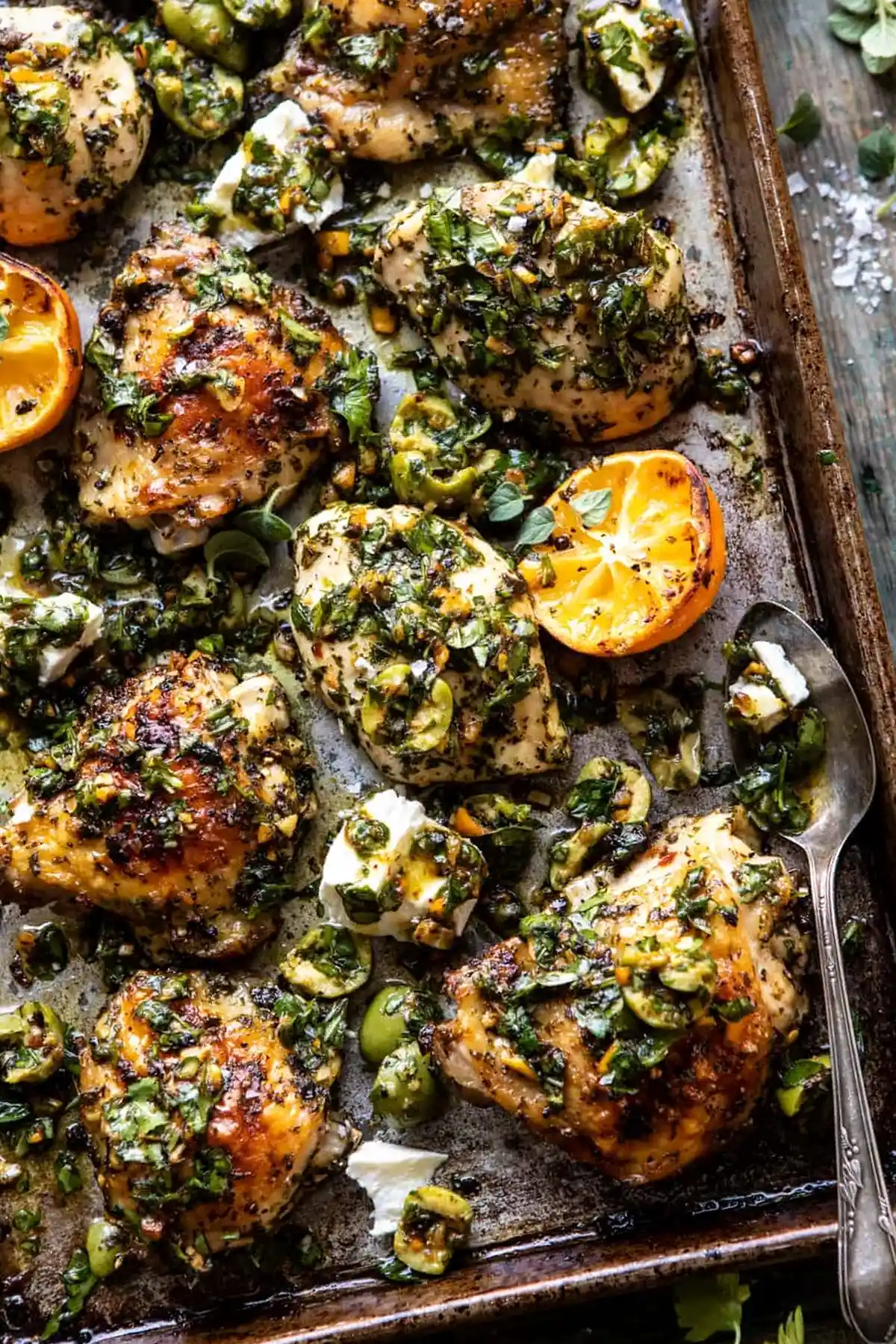
This sheet pan meal combines savory garlic butter chicken with a bright, zesty olive dressing. It is a streamlined dinner option that delivers complex flavors with minimal cleanup. Perfect for both quick weeknight meals and hosting guests.
List of ingredients
- 6 boneless chicken thighs and or breasts, skin on or off (choose similar sizes for even cooking) – ensure pieces are uniform for consistent roasting.
- 1/3 cup + 2 tablespoons extra virgin olive oil – divided between the roasting pan and the dressing.
- 6 cloves garlic, 2 finely chopped + 4 whole cloves – chopped for flavor infusion and whole for roasting.
- 1 cup fresh parsley, chopped – used in both the chicken seasoning and the final dressing.
- 1/4 cup fresh oregano, chopped – provides an earthy, aromatic base.
- kosher salt and black pepper – to taste for seasoning the protein.
- 2 lemons, 1 halved and 1 sliced – roasted to remove bitterness and add sweetness.
- 4 tablespoons salted butter, sliced into 6 pieces – creates a rich, golden crust.
- 1 cup fresh basil, chopped – adds a fresh, sweet herbal note to the dressing.
- 1/2 cup green olives, roughly chopped – adds a salty, briny contrast.
- 2 tablespoons apple cider vinegar (or white wine vinegar) – provides the necessary acidity.
- 1 tablespoon fish sauce (optional) – adds deep umami flavor.
- 1/2-1 teaspoon crushed red pepper flakes – adds a mild heat to the dressing.
- 4 ounces goat cheese broken into chunks – adds a creamy, tangy finish.
step-by-step instructions
- Prepare the oven: Preheat your oven to 425 degrees F. Ensure your oven rack is in the center position for optimal airflow.
- Season the chicken: On a rimmed baking sheet, combine the chicken, 2 tablespoons olive oil, 2 finely chopped garlic cloves, 1/4 cup chopped parsley, 2 tablespoons chopped oregano, and a large pinch each of salt and pepper. Toss well to evenly coat the chicken.
- Arrange the pan: Arrange the halved and sliced lemons and the smashed whole garlic cloves around the chicken pieces. Place one slice of butter on top of each piece of chicken.
- Roast: Transfer the sheet pan to the oven and roast for 35-45 minutes. Cook until the chicken is cooked through and the lemons are charred. Monitor the lemon slices and garlic cloves toward the end to prevent burning.
- Prepare the dressing base: In a separate bowl, combine the remaining 1/3 cup olive oil, 3/4 cup parsley, 2 tablespoons oregano, the chopped basil, chopped olives, vinegar, and fish sauce if using.
- Incorporate roasted elements: Remove the charred lemon slices and roasted garlic cloves from the baking sheet. Finely chop the lemon slices, including the rind, while discarding any seeds. Add half of the chopped lemon to the dressing.
- Finish the dressing: Mash the roasted garlic cloves into a fine paste and stir this into the dressing. Season the mixture with crushed red pepper and salt. Taste and add more chopped lemon as needed.
- Assemble and serve: Place the warm chicken on plates or leave on the pan. Add chunks of goat cheese to each piece of chicken and spoon the lemon olive dressing generously over the top.
Professional Roasting Techniques
Selecting the Right Chicken Cut
Using a mix of boneless thighs and breasts provides a balance of juiciness and lean protein. Thighs are more forgiving at high temperatures, while breasts cook faster. Always choose pieces of similar thickness to ensure no part of the meal is undercooked or dry.
Optimizing Oven Heat
A high temperature of 425 degrees F is essential for achieving the charred exterior on the lemons and the golden sear on the butter. If your oven runs hot, rotate the pan halfway through the cooking time. This ensures the edges of the pan do not burn while the center stays cooked.
Managing Butter Placement
Placing a pat of butter directly on each piece of chicken creates a localized basting effect. As the butter melts, it carries the garlic and herb flavors deeper into the meat. This prevents the chicken from drying out during the high-heat roasting process.
Mastering the Lemon Olive Dressing
Utilizing the Roasted Lemon Rind
Roasting the lemon slices transforms the flavor from sharp and acidic to sweet and mellow. By chopping the rind into the dressing, you capture the essential oils that provide a deeper citrus aroma. Ensure you remove the seeds to avoid any unexpected bitterness.
Creating a Garlic Paste
Roasted garlic is much softer and sweeter than raw garlic. Mashing the cloves into a paste allows the flavor to emulsify more effectively into the olive oil. This prevents large chunks of garlic from dominating a single bite of the dressing.
Balancing Umami and Salt
Fish sauce and green olives both contribute significant saltiness and umami. If you are sensitive to salt, taste the dressing before adding additional kosher salt. You can substitute fish sauce with a teaspoon of soy sauce or simply omit it if you prefer a brighter flavor.
Maintaining Herb Freshness
Using a combination of parsley, oregano, and basil creates a complex herbal profile. Chop the herbs just before mixing them into the oil to keep the flavors vibrant. Avoid over-mixing, which can bruise the herbs and cause them to darken.
Serving and Pairing Recommendations
Complementary Grain Bases
Serve this chicken over a bed of fluffy basmati rice or creamy orzo pasta to soak up the extra dressing. Quinoa or farro also work well for those seeking a nuttier, whole-grain alternative. The starch helps balance the acidity of the lemon and vinegar.
Adding Roasted Vegetables
To make this a full sheet pan meal, add asparagus, baby carrots, or halved Brussels sprouts to the pan during the last 15 minutes of roasting. These vegetables pair perfectly with the garlic butter and the olive dressing. Ensure they are spread in a single layer to avoid steaming.
Choosing the Right Goat Cheese
A soft, fresh chèvre is best for this recipe as it melts slightly upon contact with the warm chicken. For a bolder flavor, try a ripened goat cheese or a feta crumble. The creaminess of the cheese cuts through the brine of the olives and the acidity of the lemon.
Storage and Meal Prep Advice
Safe Refrigeration Practices
Store leftover chicken and dressing in separate airtight containers in the refrigerator. The chicken will stay fresh for 3-4 days, while the oil-based dressing can last up to a week. Keep the goat cheese in its original packaging until ready to serve to maintain its texture.
Best Reheating Methods
To avoid overcooking the chicken, reheat it in the oven at 300 degrees F until warmed through. Alternatively, use a microwave on medium power in short intervals. Always add fresh goat cheese and a drizzle of fresh dressing after reheating to restore the flavor profile.
Preparing the Dressing in Advance
The dressing can be made a day ahead of time to allow the flavors to meld. If preparing in advance, omit the fresh basil and add it just before serving to prevent it from wilting. Store the dressing in a glass jar to avoid flavor transfer from plastic.
Common Cooking Troubleshooting
Preventing Burnt Garlic
Small garlic cloves can burn quickly at 425 degrees F. If the cloves are very small, tuck them under the chicken pieces or wrap them in a small piece of foil. This protects them from direct heat while they soften and sweeten.
Fixing Overcooked Chicken Breasts
If the chicken breasts cook faster than the thighs, remove them from the pan early. Keep them covered with foil to retain heat while the thighs finish. This prevents the leaner meat from becoming tough or dry.
Adjusting Too Much Acidity
If the dressing feels too sharp or acidic, stir in a small amount of honey or maple syrup. A pinch of sugar neutralizes the vinegar and lemon juice. You can also add an extra tablespoon of olive oil to mellow the flavor.
Frequently Asked Questions
Can I use dried herbs instead of fresh?
Dried herbs are more concentrated than fresh, so use one-third of the amount listed. However, the fresh basil and parsley provide a brightness that dried herbs cannot replicate. For the best result, use fresh herbs for the dressing.
Is goat cheese necessary for this recipe?
While goat cheese adds a creamy contrast, you can substitute it with feta or a dollop of Greek yogurt. If you prefer no cheese, avocado slices provide a similar creamy texture. The dressing is flavorful enough to stand on its own.
Can I make this in a slow cooker?
This recipe relies on roasting for the charred lemons and seared butter, which a slow cooker cannot replicate. For a similar flavor, you could slow cook the chicken and then broil it in the oven for 5 minutes. The dressing should always remain raw and fresh.
What is the best alternative for fish sauce?
If you do not have fish sauce, a small amount of Worcestershire sauce or a pinch of salt and a drop of soy sauce works. These alternatives provide the same salty, fermented depth. You can also simply omit it without ruining the dish.
How do I know when the chicken is fully cooked?
The safest way to check is by using a meat thermometer to ensure the internal temperature reaches 165 degrees F. The juices should run clear when the thickest part of the meat is pierced. Avoid overcooking the breasts to maintain tenderness.
Print
Roasted Garlic Butter Chicken with Lemon Olive Dressing
- Total Time: 60 minutes
- Yield: 6 servings 1x
- Diet: General
Description
A flavorful update to the classic roasted chicken. Plus an easy weeknight meal that’s also great for guests!
Ingredients
- 6 boneless chicken thighs and or breasts, skin on or off
- 1/3 cup + 2 tablespoons extra virgin olive oil
- 6 cloves garlic, 2 finely chopped + 4 whole cloves
- 1 cup fresh parsley, chopped
- 1/4 cup fresh oregano, chopped
- Kosher salt and black pepper
- 2 lemons, 1 halved and 1 sliced
- 4 tablespoons salted butter, sliced into 6 pieces
- 1 cup fresh basil, chopped
- 1/2 cup green olives, roughly chopped
- 2 tablespoons apple cider vinegar or white wine vinegar
- 1 tablespoon fish sauce
- 1/2–1 teaspoon crushed red pepper flakes
- 4 ounces goat cheese, broken into chunks
Instructions
- Step 1: Preheat the oven to 425 degrees F.
- Step 2: On a rimmed baking sheet, combine the chicken, 2 tablespoons olive oil, 2 finely chopped garlic cloves, 1/4 cup chopped parsley, 2 tablespoons chopped oregano, and a large pinch each of salt and pepper; toss to evenly coat.
- Step 3: Arrange the lemons and smashed garlic cloves around the chicken and add 1 slice of butter to each piece of chicken.
- Step 4: Roast for 35-45 minutes until the chicken is cooked through and the lemons are charred.
- Step 5: Combine the remaining 1/3 cup olive oil, 3/4 cup parsley, 2 tablespoons oregano, basil, olives, vinegar, and fish sauce to make the dressing.
- Step 6: Remove charred lemons and garlic from the pan, finely chop the lemon slices (rind and all), and add half to the dressing.
- Step 7: Mash the roasted garlic into a paste, stir into the dressing, and season with crushed red pepper and salt.
- Step 8: Serve each piece of chicken with goat cheese and the dressing spooned over top.
Notes
Bone-in chicken will need 10-15 minutes additional cooking time, depending on the size of the chicken.
- Prep Time: 15 minutes
- Cook Time: 45 minutes
- Category: Main Course
- Method: Roasting
- Cuisine: Mediterranean
Nutrition
- Serving Size: 1 serving
- Calories: 460 kcal
- Sugar: 6 g
- Sodium: 850 mg
- Fat: 32 g
- Saturated Fat: 12 g
- Unsaturated Fat: 20 g
- Trans Fat: 0 g
- Carbohydrates: 12 g
- Fiber: 3 g
- Protein: 35 g
- Cholesterol: 140 mg