This sheet pan salmon dinner is a fast and healthy option for busy weeknights. It combines citrusy brightness with a rich garlic butter glaze for a restaurant-quality meal in 30 minutes.
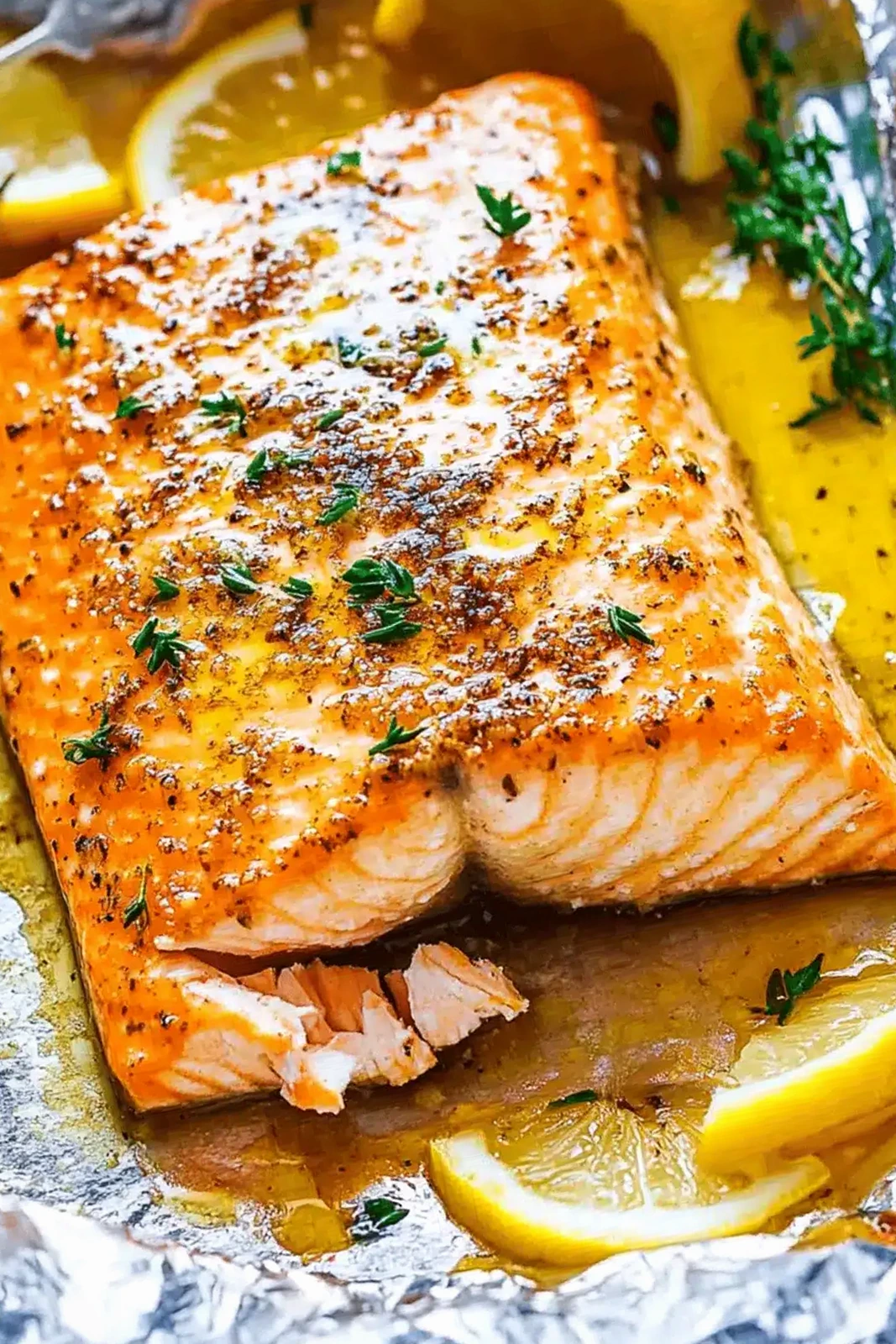
List of ingredients
- 4 Salmon fillets – select skin-on fillets for flavor and moisture.
- Kosher Salt – to taste, elevates salmon’s natural flavors.
- Black Pepper – to taste, freshly ground is ideal.
- 1/2 cup Unsalted Butter – serves as the base for the glaze.
- 1/4 cup Lemon Juice – freshly squeezed amplifies citrus flavor.
- 2 tablespoons Honey – adds sweetness balancing flavors.
- 4 cloves Garlic – finely minced or pressed.
- 1/4 cup Fresh Parsley – optional for garnishing.
- 2 Lemon Slices – fresh lemon placed beneath the salmon.
- 1 teaspoon Extra Lemon Zest – sprinkle on top before serving.
step-by-step instructions
- Prepare Oven: Preheat your oven to 375°F (190°C) to ensure even cooking and a tender texture.
- Set Up Pan: Place a large sheet of foil on a baking sheet and lay the salmon fillets skin side down. Raise the foil edges slightly to contain the buttery drippings.
- Add Citrus Base: Nestle fresh lemon slices directly beneath the salmon fillets to infuse the fish with citrus essence.
- Create Glaze: Melt the unsalted butter in a small saucepan, then stir in the lemon juice, honey, and minced garlic. Drizzle three-quarters of this mixture over the salmon and reserve the remaining portion.
- Season: Generously apply kosher salt and black pepper to each fillet.
- Seal and Marinate: Fold the foil tightly around the salmon to create a packet. If time permits, let the fish marinate for 10-15 minutes for deeper flavor.
- Bake: Place the foil pack in the oven and bake for approximately 17 minutes until the salmon flakes easily with a fork.
- Broil: Remove the top foil and switch the oven to broil. Spoon the reserved butter mixture over the fillets and broil for 5-10 minutes until edges are golden brown.
- Garnish: Sprinkle with freshly chopped parsley and a bit of lemon zest before serving.
Pro Cooking Techniques for Better Salmon
Monitor the Broiler Closely
The high heat of the broiler can cause the honey in the glaze to caramelize rapidly. Keep a constant eye on the fish to prevent the edges from burning, as it can go from golden to charred in seconds.
Allow a Short Marinating Period
Letting the salmon sit in the butter mixture for 10-15 minutes before baking helps the salt and aromatics penetrate the flesh. This results in a more consistent flavor profile throughout the fillet.
Select High-Quality Skin-On Fillets
Skin-on fillets act as a protective barrier during the baking process. This prevents the bottom of the fish from overcooking and helps the meat retain its natural moisture.
Use Kosher Salt for Better Distribution
Kosher salt has larger grains than table salt, making it easier to distribute evenly by hand. This ensures that no single part of the fillet is overly salty while enhancing the fish’s natural taste.
Flavor Adjustments and Substitutions
Use Fresh Dill or Thyme
Fresh dill provides a grassy, lemony flavor that complements the richness of the butter. Thyme offers a more earthy, floral note that works well if you prefer a less bright taste.
Swap Lemon for Orange Zest
Replacing lemon zest with orange zest adds a sweeter, more aromatic complexity to the dish. This variation pairs particularly well with the honey in the glaze for a citrus-sweet balance.
Incorporate Red Pepper Flakes
Add a pinch of crushed red pepper flakes to the melted butter mixture for a mild heat. This provides a spicy contrast to the sweetness of the honey and the richness of the butter.
Replace Honey with Maple Syrup
Maple syrup can be used as a direct substitute for honey to create a woodsy, deeper sweetness. This changes the flavor profile slightly but maintains the same glaze consistency.
Add a Balsamic Glaze Finish
Drizzle a small amount of balsamic reduction over the salmon immediately after broiling. The tangy acidity of the balsamic vinegar cuts through the butter for a sophisticated flavor contrast.
Use a Cauliflower Rice Base
Instead of using foil, place the salmon on a bed of cauliflower rice. The rice will absorb the lemon garlic butter as the fish bakes, creating a built-in side dish.
Add Crushed Almonds or Pecans
Press crushed nuts onto the top of the fillets before the broiling step. This adds a nutty crunch and healthy fats that contrast with the tender texture of the cooked salmon.
Ideal Side Dish Pairings
Serve with Roasted Asparagus
Asparagus can be roasted on the same sheet pan if there is enough space. The earthy flavor and crisp texture of the asparagus complement the buttery richness of the salmon.
Pair with a Nutty Quinoa Salad
A cold quinoa salad tossed with lemon vinaigrette and fresh herbs provides a refreshing balance. The nuttiness of the quinoa offsets the fatty acids in the fish.
Combine with Garlic Mashed Potatoes
Creamy mashed potatoes provide a comforting, starchy base that pairs well with the lemon sauce. The garlic in the potatoes echoes the garlic used in the salmon glaze.
Add Grilled Zucchini Slices
Zucchini slices grilled or sautéed with a touch of olive oil add a mild, smoky element. This vegetable keeps the meal light and nutrient-dense.
Serve with Cucumber Mint Salad
A chilled salad of sliced cucumbers, fresh mint, and rice vinegar offers a cooling contrast. The mint adds a fragrant lift that cleanses the palate between bites of rich salmon.
Pair with a Sparkling Citrus Drink
A sparkling lemon-lime spritzer made with club soda and fresh citrus juice complements the acidity of the dish. It provides a refreshing, bubbly accompaniment without overpowering the fish.
Finish with Lemon Sorbet
Lemon sorbet is an ideal dessert choice as it mirrors the citrus notes of the main course. Its tartness and cold temperature provide a clean finish to the meal.
Storage and Preservation Methods
Refrigerate in Airtight Containers
Place leftover salmon in a glass airtight container once it has cooled to room temperature. It can be stored in the refrigerator for up to 3 days while maintaining its flavor.
Freeze Individual Portions
Wrap individual fillets tightly in foil or plastic wrap before placing them in a freezer-safe bag. Cooked salmon can be frozen for up to 3 months without significant quality loss.
Use Oven-Based Reheating
Reheat the salmon in the oven at 350°F (175°C) for 10-15 minutes. Avoid using a microwave, as the rapid heating can make the fish rubbery and dry.
Thaw Slowly in the Fridge
When using frozen salmon, move it to the refrigerator overnight to thaw. This slow process preserves the cellular structure of the fish and prevents it from becoming mushy.
Advanced Meal Prep Strategies
Prepare the Butter Glaze in Advance
The lemon garlic butter mixture can be made and stored in a small jar for up to 3 days. Simply whisk the ingredients together and keep them chilled until you are ready to cook.
Marinate the Salmon Overnight
For maximum flavor, you can marinate the salmon fillets in the butter mixture for up to 24 hours. Store the fish in a sealed container in the refrigerator to keep it fresh.
Pre-cut Lemons and Garlic
Slicing the lemons and mincing the garlic 3 days in advance reduces active prep time. Store these prepped aromatics in airtight containers to keep them from drying out.
Frequently Asked Questions
How do I choose the right salmon for this recipe?
Look for fillets with a vibrant, consistent color and a firm texture that springs back when pressed. Avoid fish with dark spots, brown edges, or a strong, unpleasant fishy odor.
What is the best way to store leftover salmon?
Store the salmon in a sealed container in the fridge for no more than 3 days. Let it cool completely before sealing the lid to prevent condensation from making the fish soggy.
Can I freeze the salmon after cooking it?
Yes, cooked salmon can be frozen for up to 3 months. Wrap each portion individually in foil and place them in a freezer bag to prevent freezer burn.
What should I do if my salmon is overcooked or too dry?
If the fish is too dry, serve it with an extra drizzle of olive oil or a fresh squeeze of lemon juice. In the future, use a meat thermometer to remove the fish at an internal temperature of 145°F.
Is this recipe suitable for special dietary needs?
This recipe is naturally gluten-free. For a vegan-friendly version, substitute the butter with a plant-based butter alternative and use agave syrup instead of honey.
How can I enhance the flavors in this recipe?
Marinating the fish for 15 minutes before baking is the most effective way to deepen the flavor. You can also experiment by adding a pinch of paprika for a smoky undertone.
Print
Quick Sheet Pan Lemon Garlic Butter Salmon
- Total Time: 30 minutes
- Yield: 4 servings 1x
- Diet: Gluten-free
Description
Enjoy this Sheet Pan Lemon Garlic Butter Salmon, a gourmet meal that’s ready in just 30 minutes.
Ingredients
- 4 fillets Salmon, skin-on
- Kosher Salt to taste
- Black Pepper to taste
- 1/2 cup Unsalted Butter
- 1/4 cup Lemon Juice
- 2 tablespoons Honey
- 4 cloves Garlic, minced
- 1/4 cup Fresh Parsley
- 2 slices Lemon
- 1 teaspoon Lemon Zest
Instructions
- Preheat: Preheat the oven to 375°F (190°C).
- Prepare: Place the salmon fillets skin side down on a sheet of foil and nestle fresh lemon slices beneath the salmon.
- Glaze: Melt the unsalted butter, mix in lemon juice, honey, and minced garlic, and drizzle three-quarters of the mixture over the salmon.
- Season: Season the salmon generously with kosher salt and black pepper.
- Seal: Seal the foil tightly around the salmon to create a packet.
- Bake: Bake the foil pack on a baking sheet for approximately 17 minutes.
- Broil: Remove the top foil, switch the oven to broil, spoon the reserved buttery mixture over the salmon, and broil for 5-10 minutes.
- Garnish: Garnish with freshly chopped parsley before serving.
Notes
Serve with a squeeze of fresh lemon juice for extra flavor. Store leftovers in an airtight container in the fridge for up to 3 days.
- Prep Time: 15 minutes
- Cook Time: 30 minutes
- Category: Dinner
- Method: Baking
- Cuisine: American
Nutrition
- Serving Size: 1 fillet
- Calories: 300 kcal
- Sugar: 7 g
- Sodium: 200 mg
- Fat: 20 g
- Saturated Fat: 10 g
- Unsaturated Fat: 9 g
- Trans Fat: 0 g
- Carbohydrates: 10 g
- Fiber: 1 g
- Protein: 25 g
- Cholesterol: 70 mg