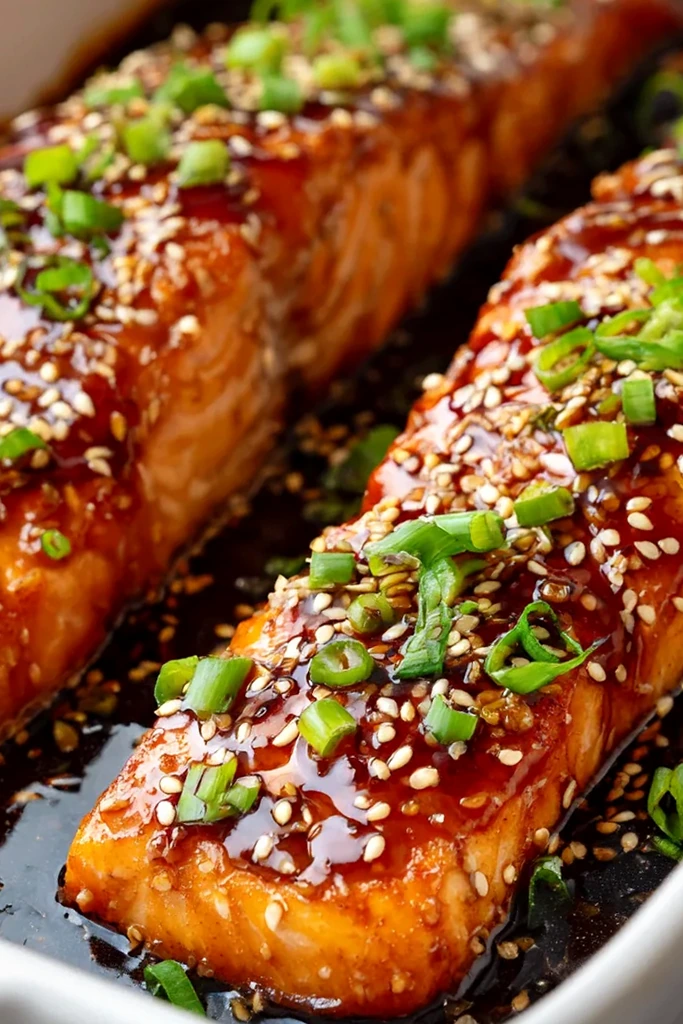
This baked teriyaki salmon is a fast, nutrient-dense meal perfect for busy weeknights. It combines savory and sweet flavors to produce a restaurant-style result in under 30 minutes. The process requires minimal cleanup and simple pantry staples.
List of ingredients
- 4 salmon fillets – use fresh or fully thawed fillets for even cooking.
- 1/2 cup teriyaki sauce – serves as the primary flavor and glazing base.
- 2 tablespoons honey – adds natural sweetness and helps the glaze thicken.
- 1 tablespoon olive oil – maintains moisture and prevents the fish from sticking.
- 1 teaspoon garlic, minced – provides a sharp, aromatic depth.
- 1 teaspoon ginger, minced – adds a zesty, warm note to the sauce.
- Sesame seeds – used for a toasted crunch as a garnish.
- Chopped green onions – adds a fresh, mild onion flavor and color.
step-by-step instructions
- Heat the oven: Preheat your oven to 400°F (200°C) to ensure the fish starts cooking immediately upon entry.
- Create the glaze: In a medium mixing bowl, whisk together the teriyaki sauce, honey, olive oil, minced garlic, and minced ginger until the mixture is smooth.
- Prepare the fish: Place the salmon fillets in a baking dish, spacing them evenly, and pour the teriyaki mixture over each piece, coating them thoroughly.
- Bake: Cook in the oven for 15-20 minutes, or until the salmon flakes easily with a fork and reaches an internal temperature of 145°F (63°C).
- Final touch: Sprinkle the baked fillets with sesame seeds and chopped green onions before serving hot.
Optimization Techniques for Perfect Results
Use a Digital Meat Thermometer
To avoid the common mistake of overcooking, use an instant-read digital thermometer. Insert the probe into the thickest part of the fillet. Remove the fish from the oven exactly when it hits 145°F (63°C) to maintain a moist texture.
Assess Doneness via Flaking
If you do not have a thermometer, use a fork to gently press the top of the fillet. The salmon is done when the flesh separates easily along the natural white lines. If the center is still translucent, it needs a few more minutes.
Selecting the Right Baking Dish
A glass or ceramic baking dish is ideal for distributing heat evenly. For the easiest cleanup, you can use a disposable foil pan. Ensure the dish is large enough that the fillets are not touching, which allows air to circulate and cook them uniformly.
Preventing Skin Adhesion
Line your baking dish with parchment paper or silicone mats to prevent the salmon skin from sticking to the bottom. This makes removal easier and keeps the fillets intact. If using a ceramic dish, ensure it is well-greased with olive oil.
Managing Oven Hot Spots
Every oven has areas that are hotter than others, which can lead to unevenly cooked fish. Rotate your baking dish 180 degrees halfway through the cooking process. This ensures that all fillets receive equal heat exposure.
Alternative Flavor Profiles
Integrating Sriracha for Heat
To create a spicy version of this dish, whisk one teaspoon of sriracha or a pinch of red pepper flakes into the glaze. This adds a sharp heat that cuts through the sweetness of the honey. Adjust the amount based on your heat tolerance.
Substituting Honey with Maple Syrup
For a different kind of sweetness, replace the two tablespoons of honey with pure maple syrup. Maple syrup provides a deeper, more woody flavor profile. This substitution works well with the ginger and garlic base.
Adding a Tangy Mustard Element
You can swap half of the teriyaki sauce for a honey-mustard blend to introduce more acidity. This creates a tangier glaze that complements the richness of the salmon. Use a mild Dijon mustard for the best results.
Incorporating Fresh Cilantro
Stir finely chopped fresh cilantro into the glaze before baking for an aromatic twist. The herbal notes brighten the savory teriyaki flavors. You can also use fresh basil as a substitute for a more peppery taste.
Enhancing Acidity with Lime Juice
Squeeze the juice of half a lime over the fillets immediately after they come out of the oven. The citric acid balances the sugar in the teriyaki sauce. This adds a bright, fresh finish to the overall flavor profile.
Creating a Complete One-Pan Meal
Incorporating Broccoli Florets
Place small broccoli florets around the salmon fillets in the baking dish. Toss them in a bit of the teriyaki glaze before baking. They will roast in the same 15-20 minute window as the fish.
Adding Sliced Red Bell Peppers
Cut red bell peppers into thin strips and arrange them beneath the salmon. The peppers soften and caramelize in the oven heat. They provide a sweet contrast and a pop of color to the plate.
Including Fresh Snap Peas
Add snap peas to the dish during the last 10 minutes of cooking. This prevents them from becoming too mushy while still heating them through. They maintain a crisp texture that complements the tender fish.
Adding Thin Asparagus Spears
Trim the woody ends off asparagus and lay them alongside the fillets. Drizzle them with a small amount of olive oil and salt. Asparagus cooks quickly and matches the baking time of the salmon perfectly.
Using Sliced Carrots for Sweetness
Thinly slice carrots diagonally to ensure they cook through quickly. Place them in the baking dish and coat them with the honey-teriyaki mixture. They will roast into sweet, tender additions to the meal.
Complementary Side Dish Preparations
Cooking Fluffy Jasmine Rice
Rinse jasmine rice under cold water until the water runs clear to remove excess starch. Use a ratio of one part rice to one and a half parts water. Simmer on low heat until the water is absorbed and the grains are tender.
Preparing Protein-Rich Quinoa
Quinoa serves as a nutritious, gluten-free alternative to rice. Rinse the quinoa and boil it in water or vegetable broth. Cook for about 15 minutes until the quinoa is fluffy and the germ has separated.
Making a Chilled Cucumber Salad
Slice cucumbers thinly and toss them with rice vinegar, a pinch of sugar, and salt. Let the salad sit in the fridge for 30 minutes before serving. This cold, crisp side balances the warm, glazed salmon.
Sautéing Garlic Green Beans
Blanch green beans in boiling water for two minutes, then shock them in ice water. Sauté them in a pan with minced garlic and a splash of soy sauce. This provides a savory, green accompaniment to the dish.
Steaming Baby Bok Choy
Cut baby bok choy in half lengthwise and steam them for 5-7 minutes. Drizzle with a tiny amount of sesame oil and salt. The mild flavor of the bok choy pairs excellently with teriyaki glaze.
Preservation and Reheating Guide
Refrigeration and Container Choice
Store leftover salmon in an airtight glass container to keep the glaze from drying out. Ensure the fish is completely cooled before sealing the lid. This prevents condensation from making the salmon soggy.
Safe Storage Timeframes
Cooked salmon remains safe to eat for up to three days when stored in the refrigerator. Keep the temperature at or below 40°F (4°C). If the fish develops a strong odor or sticky texture, discard it.
Oven Reheating Method
To maintain the best texture, reheat the salmon in the oven at 275°F (135°C). Place the fillets on a baking sheet and cover them loosely with foil. Heat for 10-12 minutes until warmed through without overcooking.
Microwave Reheating Technique
If using a microwave, use a low power setting to avoid toughening the fish. Heat in short 30-second bursts, checking for temperature each time. Adding a teaspoon of water to the dish can help create steam.
Avoiding Overcooking During Reheat
The goal of reheating is to warm the fish, not to cook it again. Overheating will cause the salmon to become dry and rubbery. Remove the fish as soon as it is lukewarm throughout.
Advanced Meal Prep Strategies
Batch Preparing the Teriyaki Glaze
You can mix the teriyaki sauce, honey, garlic, and ginger in a large batch. Store the mixture in a mason jar in the refrigerator for up to one week. Simply whisk it again before pouring it over fresh fillets.
Pre-cutting and Portioning Salmon
Buy a large salmon side and cut it into four equal fillets yourself. Store the portions in individual freezer bags with a layer of parchment paper between them. This allows you to thaw only what you need for one meal.
Storing Marinated Fish
You can marinate the salmon in the glaze for up to 24 hours before baking. Store the fillets in a sealed container in the fridge. This allows the flavors to penetrate deeper into the meat for a richer taste.
Planning Weekly Side Dish Rotations
To keep the meal interesting, rotate your side dishes throughout the week. Use rice on Monday, quinoa on Wednesday, and a fresh salad on Friday. This prevents flavor fatigue while keeping the main protein consistent.
Solving Common Cooking Problems
Fixing a Sauce That’s Too Thin
If the glaze is too runny, simmer the remaining sauce in a small saucepan over medium heat. Let it reduce for 3-5 minutes until it thickens into a syrup. Pour this concentrated glaze over the fish before serving.
Preventing the Glaze from Burning
Since honey has a high sugar content, it can burn if the oven is too hot. If you notice the edges darkening too quickly, lower the heat to 375°F. You can also cover the dish loosely with foil to shield the surface.
Resolving Dry Salmon Texture
Dry salmon is usually the result of overcooking. If this happens, serve the fish with an extra dollop of the teriyaki glaze or a squeeze of lemon. Next time, reduce the baking time by two minutes.
Handling Fillets of Different Sizes
If your fillets vary in thickness, they will cook at different rates. Place the thickest pieces in the center of the pan and the thinner ones toward the edges. Check the thinner pieces earlier to remove them first.
Reducing Excessive Saltiness
If the store-bought teriyaki sauce is too salty, add an extra tablespoon of honey or a splash of water. You can also serve the salmon with unsalted steamed vegetables. This helps balance the sodium levels on the palate.
Frequently Asked Questions
Can I use frozen salmon for this recipe?
Yes, frozen salmon works well. Ensure you thaw the fillets completely in the refrigerator overnight before baking. Pat them dry with a paper towel so the glaze adheres properly to the surface.
How can I make this dish spicier?
Add one teaspoon of sriracha, red pepper flakes, or a pinch of cayenne pepper to the sauce mixture. For a more complex heat, use a small amount of chili garlic sauce instead of plain minced garlic.
What are the best sides to serve with this?
The best accompaniments are steamed jasmine rice, quinoa, or sautéed vegetables like broccoli and snap peas. A fresh cucumber salad or steamed bok choy also adds a refreshing balance to the sweet glaze.
Can the teriyaki sauce be made in advance?
Yes, the glaze can be prepared ahead of time and stored in the refrigerator for up to seven days. Stir the sauce well before use, as the honey and oil may separate during storage.
Is this recipe suitable for meal prep?
Absolutely. This salmon stores well for up to three days in an airtight container. It is an excellent high-protein option for weekday lunches when reheated gently in a microwave or oven.
Print
Quick Oven-Baked Teriyaki Salmon Guide
- Total Time: 30 minutes
- Yield: 4 servings 1x
- Diet: Gluten Free
Description
A simple and quick recipe for baked teriyaki salmon that is both delicious and healthy.
Ingredients
- 4 salmon fillets
- 1/2 cup teriyaki sauce
- 2 tablespoons honey
- 1 tablespoon olive oil
- 1 teaspoon garlic, minced
- 1 teaspoon ginger, minced
- Sesame seeds for garnish
- Chopped green onions for garnish
Instructions
- Step 1: Preheat the oven to 400°F (200°C).
- Step 2: In a bowl, mix teriyaki sauce, honey, olive oil, garlic, and ginger.
- Step 3: Place the salmon fillets in a baking dish and pour the teriyaki mixture over them.
- Step 4: Bake for 15-20 minutes or until the salmon is cooked through.
- Step 5: Garnish with sesame seeds and chopped green onions before serving.
Notes
For best results, marinate the salmon for 30 minutes before baking. Serve with steamed rice or vegetables for a complete meal. Adjust the sweetness by adding more or less honey according to your taste.
- Prep Time: 10 minutes
- Cook Time: 20 minutes
- Category: Main Dish
- Method: Baking
- Cuisine: Japanese
Nutrition
- Serving Size: 1 fillet
- Calories: 250 kcal
- Sugar: 8 g
- Sodium: 600 mg
- Fat: 10 g
- Saturated Fat: 2 g
- Unsaturated Fat: 8 g
- Trans Fat: 0 g
- Carbohydrates: 10 g
- Fiber: 0 g
- Protein: 30 g
- Cholesterol: 70 mg