This efficient garlic chicken recipe delivers a high-impact dinner in under 30 minutes. It combines tender chicken breast with a rich butter-garlic sauce and a smooth pan gravy.
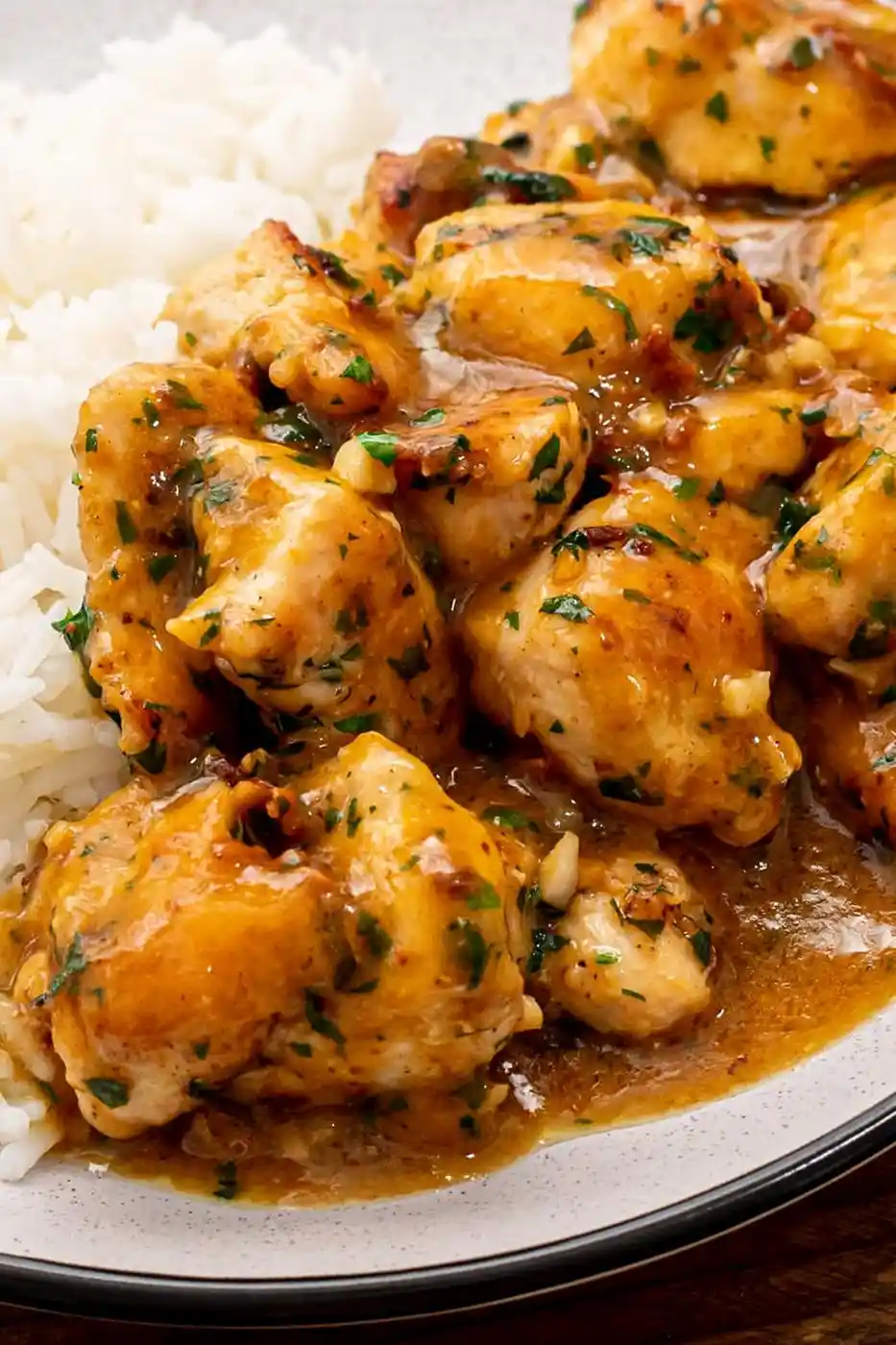
List of ingredients
- 21 ounces boneless skinless chicken breast halves (about 3 large breasts, cut into 1- to 1-1/2 inch cubes) – ensures even cooking.
- 1 tablespoon flour – used for dredging the chicken.
- 1/2 teaspoon salt – basic seasoning.
- 1/2 teaspoon freshly ground black pepper – adds mild heat.
- 2 tablespoons good olive oil – for high-heat searing.
- 1 tablespoon chopped garlic – provides the primary aromatic base.
- 3 tablespoons chopped fresh parsley – adds a fresh, clean finish.
- 2 tablespoons unsalted butter – for sautéing the garlic and parsley.
- 1 medium lemon (quartered, optional) – serve on the side for acidity.
- 1 tablespoon unsalted butter (for gravy) – used to create the roux.
- 1 tablespoon flour (heaping, for gravy) – thickens the sauce.
- 1 cup chicken broth – the liquid base for the gravy.
step-by-step instructions
- Prepare the Chicken: Dry the chicken cubes with paper towels and toss them with the flour, salt, and pepper in a bowl. Avoid adding extra flour to maintain a light crust.
- Sear the Meat: Heat the oil in a 12-inch skillet over high heat until very hot but not smoking. Add the cubed chicken in one layer and cook for 4-5 minutes to develop a brown crust.
- Brown the Other Side: Turn the pieces of chicken and continue cooking for an additional 3-5 minutes.
- Sauté Aromatics: While the chicken cooks, combine the garlic and parsley in a small bowl. Add the butter and the parsley mixture to the skillet and sauté for 1 minute, shaking the pan to coat the meat.
- Remove Chicken: Use a spoon to transfer the chicken to a plate. Keep the brown bits, extra parsley, and garlic in the pan for the sauce.
- Begin the Gravy: If there is excessive oil in the pan, remove all but about one tablespoon. Melt the butter over medium heat.
- Create the Roux: Add the flour to the melted butter and mix together. Cook for about one minute while stirring continuously.
- Finish the Sauce: Slowly pour in the chicken broth, whisking constantly to combine. Cook over medium-high heat, stirring until the gravy thickens.
- Serve: Pour the thickened gravy over the chicken and serve immediately.
Cooking Enhancements for Better Texture
Dry the Chicken Thoroughly
Always use paper towels to remove surface moisture from the chicken cubes before dredging. Excess water creates steam in the pan, which prevents the meat from browning and results in a boiled texture. Dry meat allows the oil to sear the edges instantly for a golden crust.
Avoid Overcrowding the Skillet
Use a wide 12-inch skillet to ensure the chicken pieces are spread in a single layer. If the pan is too full, the temperature drops rapidly and the chicken releases juices that simmer the meat. Cooking in batches is better than overcrowding if you have more meat than the pan can hold.
Monitor Oil Temperature
Wait until the olive oil is shimmering but not yet smoking before adding the chicken. If the oil is too cold, the flour coating will absorb the fat and become greasy. High heat ensures the flour seals quickly and creates the desired crust.
Use the Right Skillet Material
A stainless steel or cast iron skillet is ideal for this recipe because it holds heat well and allows for the creation of fond. Fond consists of the brown bits stuck to the bottom of the pan, which provide the deepest flavor for the subsequent gravy.
Ingredient Substitutions and Modifications
Make the Recipe Gluten-Free
Replace the flour used for dredging the chicken with one tablespoon of cornstarch. For the gravy, melt the butter and add the chicken broth, then whisk in a teaspoon of cornstarch or 1/8 teaspoon of xanthan gum. This provides a similar thickness without using wheat flour.
Substitute Chicken Breast with Thighs
Boneless, skinless chicken thighs can be used for a juicier result and more flavor. Because thighs have a higher fat content, you may need to reduce the amount of olive oil used for searing. Adjust the cooking time slightly as thighs may require a few extra minutes to cook through.
Use Dried Herbs Instead of Fresh
If fresh parsley is unavailable, you can use dried parsley, but reduce the quantity to one tablespoon. Dried herbs are more concentrated than fresh ones. Stir them into the butter at the same stage as the garlic.
Alternative Fat Options
Ghee or clarified butter can be used instead of olive oil for a richer taste and a higher smoke point. If avoiding butter entirely, use a neutral oil like avocado oil for the roux, though the flavor will be less creamy.
Flavor Variations to Try
Incorporate Fresh Rosemary
Swap the parsley for finely chopped fresh rosemary for a more woody, pine-like aroma. Rosemary pairs exceptionally well with garlic and chicken. Be careful not to use too much, as rosemary can become overpowering if overused.
Add Sage for Earthy Tones
Fresh sage leaves, finely minced, provide a savory, earthy flavor profile. This variation is particularly good when serving the chicken during autumn or winter. Combine the sage with a small amount of parsley to maintain a balance of brightness.
Use Thyme for a Classic Profile
Fresh thyme is a standard pairing for garlic chicken and adds a subtle, lemony note. Strip the leaves from the stems and add them to the garlic mixture. This creates a more traditional French-style flavor profile.
Increase the Garlic Intensity
For a stronger garlic punch, use roasted garlic cloves mashed into a paste instead of raw chopped garlic. Roasted garlic provides a sweeter, mellower flavor while still offering a potent garlic presence. Add the paste during the final minute of sautéing.
Recommended Serving Suggestions
Pair with Steamed Basmati Rice
The fluffy texture of basmati rice is perfect for absorbing the savory chicken gravy. Steam the rice with a pinch of salt to complement the flavors. Serve the chicken and gravy directly on top of a bed of rice.
Serve Alongside Sautéed Spinach
Fresh spinach sautéed with a touch of lemon juice provides a healthy, vibrant contrast to the rich butter sauce. The bitterness of the greens cuts through the heaviness of the roux. Cook the spinach quickly over medium heat until just wilted.
Use Creamy Mashed Potatoes
Mashed potatoes serve as an excellent base for the garlic chicken and its gravy. The starchiness of the potatoes pairs well with the savory notes of the garlic and butter. Ensure the potatoes are smooth and well-seasoned with salt and pepper.
Add a Side of Roasted Asparagus
Oven-roasted asparagus spears provide a crisp texture and a natural sweetness. Toss the asparagus in olive oil and salt, then roast at 400 degrees F for 10-12 minutes. This side dish adds visual appeal and nutritional balance to the meal.
Comprehensive Storage and Freezing Guide
Cooling Before Refrigeration
Allow the chicken and gravy to cool to room temperature before placing them in the refrigerator. Putting hot food directly into the fridge can raise the internal temperature of the appliance and risk spoilage. Use a shallow container to speed up the cooling process.
Airtight Container Selection
Store the leftovers in a glass airtight container to prevent the chicken from absorbing other smells in the fridge. Keep the gravy and chicken together to ensure the meat stays moist. This dish typically remains fresh for 3 to 4 days.
Freezing Chicken in Gravy
To freeze this recipe, make a slightly larger batch of gravy to fully submerge the chicken. Place the mixture in a heavy-duty freezer bag and squeeze out all the air to prevent freezer burn. The gravy acts as a protective layer for the meat.
Safe Thawing Methods
Thaw the frozen chicken by removing it from the freezer and immediately taking it out of the plastic packaging. Place the food on a plate and let it thaw at room temperature or in the refrigerator overnight. This prevents the chicken from sticking to the plastic during the thawing process.
Reheating Instructions for Best Results
Stovetop Reheating Method
The best way to reheat this dish is in a skillet over medium-low heat. Add a small splash of chicken broth or water to loosen the gravy. Stir occasionally to heat the chicken through without overcooking it.
Managing Gravy Thickness During Reheating
Gravy often thickens significantly after being refrigerated. If the sauce becomes too thick or gelatinous, whisk in a tablespoon of water or broth while heating. This restores the original consistency and shine of the sauce.
Avoiding the Microwave for Texture
Microwaving chicken can often make the meat rubbery and cause the butter in the sauce to separate. If you must use a microwave, use a low power setting and heat in short 30-second intervals. Cover the dish with a damp paper towel to retain moisture.
Refreshing the Garnish
Reheated parsley can lose its bright color and fresh taste. For the best presentation, sprinkle a small amount of freshly chopped parsley over the dish after reheating. This adds a pop of color and a fresh aromatic hit.
Common Troubleshooting Solutions
Fix a Lumpy Gravy
If the gravy develops lumps, it is usually because the flour was not fully incorporated or the broth was added too quickly. Use a whisk to vigorously stir the sauce over medium heat. If lumps persist, you can pass the gravy through a fine-mesh strainer.
Prevent the Garlic from Burning
Garlic burns quickly at high temperatures, becoming bitter. Always add the garlic and butter at the end of the searing process rather than at the beginning. Sauté for only 60 seconds to release the aroma without scorching.
Correct Overcooked Chicken
If the chicken breast becomes too dry, avoid continuing to cook it during the reheating process. Increase the amount of gravy used to coat the meat, as the moisture from the sauce will help mask the dryness. Using chicken thighs in the future can prevent this issue.
Balance Excess Saltiness
If the gravy tastes too salty, add a squeeze of fresh lemon juice or a small pinch of sugar. The acidity of the lemon neutralizes the salt perception. You can also stir in a tablespoon of heavy cream to mellow out the flavors.
Frequently Asked Questions
Can I use a different type of broth?
Yes, you can use vegetable broth for a lighter taste or beef broth for a deeper, richer flavor. Ensure the broth is unsalted or low-sodium to maintain control over the overall seasoning of the dish.
How do I know when the chicken is done?
The chicken is cooked when it reaches an internal temperature of 165 degrees F. If you do not have a thermometer, ensure the thickest piece of chicken is opaque throughout and the juices run clear.
Can I prepare this in an oven?
This recipe is designed for the stovetop to achieve a sear. However, you can sear the chicken in an oven-safe skillet and then transfer it to the oven at 375 degrees F for a few minutes to finish cooking before making the gravy on the stove.
Is the flour necessary for the chicken?
The flour helps create a golden-brown crust and provides a surface for the gravy to cling to. While you can skip it, the chicken will not have the same texture and the gravy may not adhere as well to the meat.
Print
Quick Garlic Chicken with Savory Gravy
- Total Time: 30 minutes
- Yield: 5 servings 1x
- Diet: General
Description
This garlic chicken will be the newest addition to your weekly recipe rotation! It’s easy enough to cook in less than 30 minutes and is always a crowd pleaser!
Ingredients
- 21 ounces boneless skinless chicken breast halves, cut into 1– to 1-1/2 inch cubes
- 1 tablespoon flour
- 1/2 teaspoon salt
- 1/2 teaspoon freshly ground black pepper
- 2 tablespoons olive oil
- 1 tablespoon chopped garlic
- 3 tablespoons chopped fresh parsley
- 2 tablespoons unsalted butter
- 1 medium lemon, quartered (optional)
- 1 tablespoon unsalted butter
- 1 tablespoon flour, heaping
- 1 cup chicken broth
Instructions
- Step: Dry the chicken cubes with paper towels and toss them with the flour, salt, and pepper in a bowl.
- Step: Heat the oil in a 12-inch skillet over high heat until very hot but not smoking, add the cubed chicken, and cook in one layer, for about 4-5 minutes.
- Step: Turn pieces of chicken and continue cooking for 3-5 more minutes.
- Step: Combine the garlic and parsley in a small bowl.
- Step: Add the butter and the parsley mixture to the skillet and saute for 1 minute longer, shaking the skillet occasionally to coat the chicken.
- Step: Use a spoon to remove the chicken to a plate, leaving brown bits, extra parsley and garlic in the pan.
- Step: If there’s a lot of oil in the pan, remove all but about a tablespoon.
- Step: Add the butter and cook over medium heat to melt.
- Step: Add the flour and mix together, cook for a minute or so, stirring continuously.
- Step: Slowly add the chicken broth, whisking to combine until all broth has been added.
- Step: Cook over medium high heat, stirring constantly until gravy has cooked down a bit and thickened.
- Step: Serve over chicken.
Notes
This recipe can be made gluten-free by substituting flour with cornstarch in both the coating and the gravy.
- Prep Time: 15 minutes
- Cook Time: 15 minutes
- Category: Dinner
- Method: Stovetop
- Cuisine: American
Nutrition
- Serving Size: 1 portion
- Calories: 262 kcal
- Sugar: 1 g
- Sodium: 545 mg
- Fat: 15 g
- Saturated Fat: 5 g
- Unsaturated Fat: 10 g
- Trans Fat: 0 g
- Carbohydrates: 3 g
- Fiber: 0 g
- Protein: 26 g
- Cholesterol: 94 mg