This light and fresh pasta dish uses pantry staples like canned salmon and lemon to create a meal in under 20 minutes. It is a practical solution for busy weeknights when you need a nutritious dinner without extensive preparation.
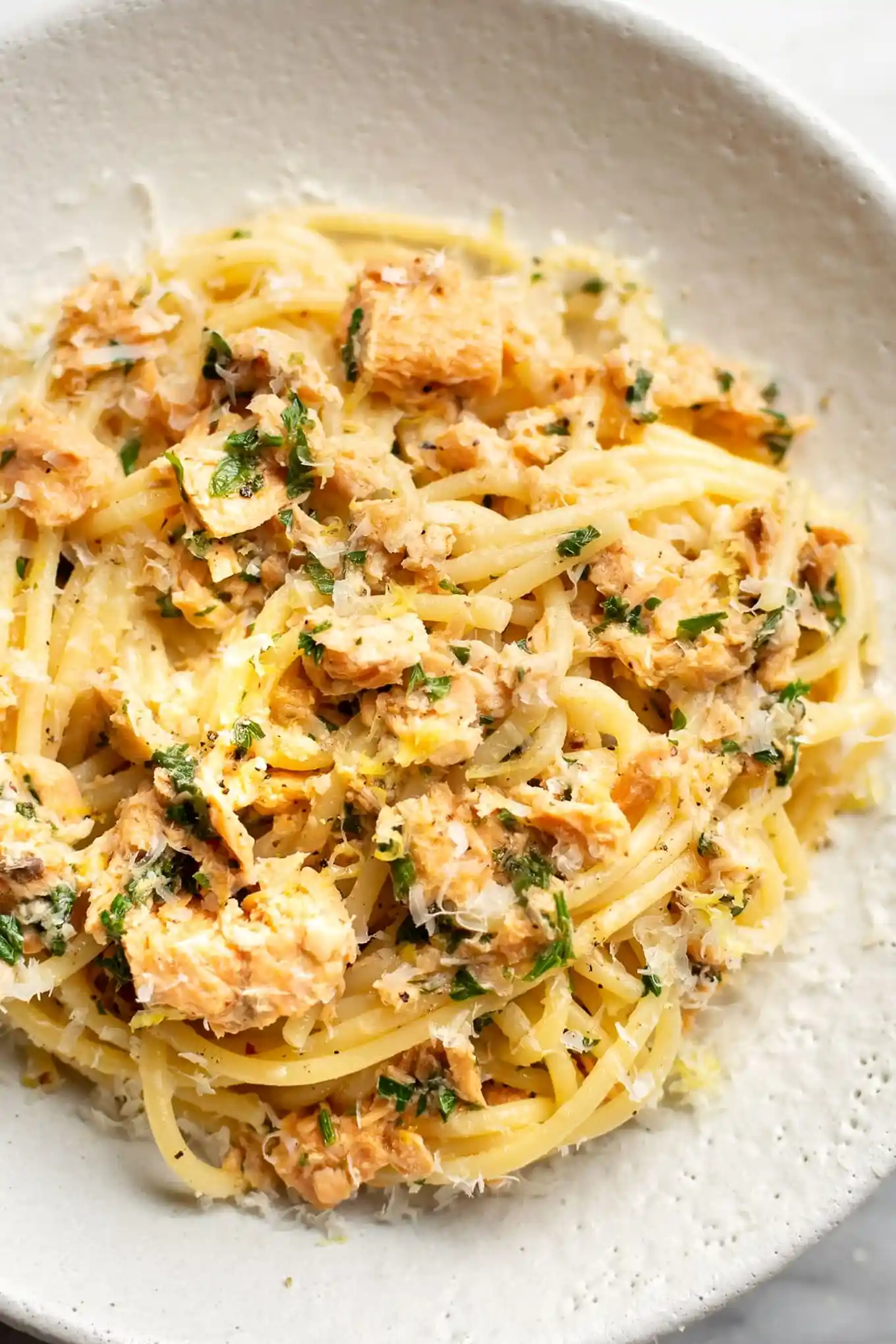
List of ingredients
- 2 tablespoons olive oil – used for sautéing the garlic and creating the sauce base.
- 2 large cloves garlic, minced – provides a pungent, aromatic foundation.
- 1 (5 ounce) can salmon (pink or sockeye, boneless/skinless) – the primary protein source.
- 1 tablespoon lemon juice + zest of 1/2 lemon – adds brightness and cuts through the richness of the fish.
- 1 tablespoon fresh parsley, chopped – adds a fresh, herbal finish.
- Salt and pepper, to taste – essential for balancing the overall flavor profile.
- 4 ounces uncooked pasta (spaghetti is recommended) – the main carbohydrate component.
step-by-step instructions
- Cook the Pasta: Boil a large pot of salted water and cook your pasta until it is al dente following the package directions. Use this time to mince your garlic and chop the parsley.
- Sauté the Garlic: While the pasta is nearly finished, heat olive oil in a small pan over medium heat. Once hot, add the minced garlic and cook for about 30 seconds until fragrant but not brown.
- Heat the Salmon: Stir in the canned salmon, using a fork to flake the fish into smaller pieces. Add the lemon juice, lemon zest, and chopped parsley, then heat the mixture through.
- Combine and Season: Reserve a few tablespoons of the starchy pasta water and stir it into the salmon sauce. Drain the pasta and toss it thoroughly with the sauce, seasoning with salt and pepper. Optional: top with freshly grated parmesan cheese.
Pasta Selection and Preparation
Spaghetti and Long Pasta Varieties
Spaghetti is an ideal choice because its long, thin strands allow the salmon flakes and oil-based sauce to coat the noodles evenly. You can also use linguine or fettuccine if you prefer a wider noodle. Ensure the pot is large enough to prevent the pasta from clumping during the boiling process.
Short Pasta Alternatives
For a different texture, consider using penne, fusilli, or farfalle. Short pastas are excellent at trapping small bits of salmon and garlic within their ridges and folds. These varieties are often easier to eat when serving the dish to children.
Achieving the Perfect Al Dente Texture
Cook the pasta for one minute less than the package suggests to achieve an al dente texture. This prevents the noodles from becoming mushy when they are tossed in the pan with the salmon sauce. The remaining cooking happens during the final tossing phase.
Salmon Selection and Handling
Differences Between Pink and Sockeye Salmon
Pink salmon has a milder flavor and a lighter color, making it suitable for those who prefer a subtle fish taste. Sockeye salmon is deeper in color and has a more robust, rich flavor. Both options work equally well in this recipe depending on your taste preference.
Working with Boneless and Skinless Canned Salmon
Boneless and skinless varieties are the most convenient and provide a consistent texture. They require minimal preparation and integrate smoothly into the pasta. Always drain the excess liquid unless you specifically want a more intense fish flavor.
Managing Bone-In Salmon Options
If using bone-in canned salmon, you can still use it as the soft bones are edible and rich in minerals. Use a fork to mash the bones into the meat before adding them to the pan. This ensures a smoother consistency in the final dish.
Using Pre-Cooked Salmon Fillets
You can substitute canned salmon with leftover baked or grilled salmon fillets. Flake the cooked fillet into bite-sized pieces using a fork. Add it to the pan during the same step as the canned salmon to heat it through.
Flavor Enhancements and Variations
Incorporating Fresh Cherry Tomatoes
Add halved cherry or grape tomatoes to the pan after the garlic has sautéed. Cook them for two to three minutes until they just begin to soften. This adds a juicy, acidic contrast to the savory salmon.
Adding Capers for Briny Depth
Stir in a tablespoon of drained capers along with the salmon for a salty, briny pop. Capers complement the lemon and salmon perfectly, giving the dish a more sophisticated flavor profile. Rinse the capers first if you are sensitive to high sodium levels.
Mixing in Leafy Greens
A handful of fresh baby spinach or kale can be added during the final minute of heating the sauce. The heat from the salmon and pasta will wilt the greens quickly without overcooking them. This is an easy way to increase the nutrient density of the meal.
Exploring Different Fresh Herbs
While parsley is standard, fresh dill is a classic pairing for salmon and adds a distinct anise-like flavor. You can also use chopped chives or fresh basil for a different herbal note. Use a 1:1 ratio to replace the parsley.
Creating a Creamy Salmon Sauce
For a richer meal, stir in a tablespoon of heavy cream, crème fraîche, or cream cheese at the end. Keep the heat low to prevent the dairy from separating. This transforms the light oil sauce into a velvety, indulgent coating.
Professional Cooking Techniques
Preventing Garlic from Burning
Garlic burns quickly over medium heat, which can lead to a bitter taste in the final dish. Keep the garlic moving in the pan and remove it from the heat as soon as it becomes fragrant. If the oil is too hot, lower the temperature immediately.
Using Starchy Pasta Water for Emulsion
Adding a small amount of pasta water creates an emulsion between the olive oil and the lemon juice. The starch in the water helps the sauce cling to the pasta rather than sliding off. Always reserve the water before draining the noodles.
Optimizing Lemon Zest and Juice
Zest the lemon before juicing it to make the process more efficient. Use a microplane grater to get only the yellow part of the peel, avoiding the bitter white pith. Adding the zest provides aromatic oils that are more potent than the juice alone.
Correctly Flaking the Salmon
Use a fork to break the salmon into varied sizes, leaving some larger chunks for texture. Avoid over-mashing the fish into a paste, as chunks of salmon provide a more satisfying mouthfeel. Flake the fish directly into the pan for maximum efficiency.
Serving and Pairing Ideas
Complementing with Crusty Breads
Serve this pasta with a toasted baguette or a slice of sourdough bread. The bread is perfect for soaking up the remaining lemon-garlic oil at the bottom of the bowl. Garlic bread is another excellent option for added flavor.
Selecting the Best Side Salads
A simple side salad of mixed greens with a light vinaigrette balances the richness of the salmon. Use ingredients like cucumber, radishes, and a splash of apple cider vinegar. This keeps the overall meal feeling light and healthy.
Choosing the Right Cheese Toppings
Freshly grated Parmesan is the traditional choice for a salty, nutty finish. You can also use Pecorino Romano for a sharper taste or Grana Padano for a milder profile. Avoid using pre-shredded cheeses, as they contain cornstarch that prevents smooth melting.
Storage and Maintenance
Safe Refrigeration Practices
Store leftover salmon pasta in an airtight container in the refrigerator. It will remain safe to eat for three to four days. Keep the container tightly sealed to prevent the seafood from absorbing other odors in the fridge.
Effective Reheating Methods
The best way to reheat this dish is in a small saucepan over low heat. Add a tablespoon of water or a small knob of butter to restore the moisture that is lost during cooling. Stir gently to avoid breaking the pasta strands.
Avoiding the Freezer for Seafood Pasta
Freezing this specific pasta is not recommended because the texture of the cooked noodles degrades. Additionally, the canned salmon can become overly soft or grainy upon thawing. It is best enjoyed fresh or from the refrigerator.
Troubleshooting Common Issues
Fixing an Overly Dry Pasta Dish
If the pasta seems dry after tossing, stir in another tablespoon of reserved pasta water or a drizzle of olive oil. This restores the silkiness of the sauce without altering the flavor. Do this immediately before serving while the dish is still hot.
Reducing Intense Fishy Aromas
If the salmon flavor is too strong for your preference, increase the amount of lemon juice. The acidity of the lemon neutralizes the fishy odors and brightens the overall taste. Adding extra fresh parsley also helps freshen the flavor profile.
Preventing Mushy Pasta Noodles
Mushy noodles usually result from overcooking in the water or over-stirring in the pan. Be precise with your timer and toss the pasta with the sauce using a gentle folding motion. Avoid boiling the pasta for too long once it is added to the sauce.
Frequently Asked Questions
Can I substitute canned salmon with canned tuna?
Yes, canned tuna can be used as a direct replacement. Follow the same measurements and steps, although you may find that tuna requires slightly more lemon juice to balance its flavor.
How should I store unused lemon zest?
Place unused zest in a small airtight container or wrap it tightly in plastic wrap. Store it in the refrigerator for up to a week. You can also freeze zest in a small freezer bag for several months.
Which olive oil is best for this recipe?
An extra-virgin olive oil is best for this recipe because it provides a fruity, peppery flavor that complements the salmon. If you prefer a more neutral taste, a light olive oil or avocado oil can be used.
Print
Quick Canned Salmon Pasta
- Total Time: 20 minutes
- Yield: 2 servings 1x
- Diet: General
Description
This canned salmon pasta recipe is fast, fresh, light, and uses a handful of everyday ingredients. It’s ready in about 20 minutes and is ridiculously simple to make!
Ingredients
- 2 tablespoons olive oil
- 2 large cloves garlic (minced)
- 1 (5 ounce) can salmon (pink or sockeye, boneless/skinless)
- 1 tablespoon lemon juice + zest of 1/2 lemon
- 1 tablespoon fresh parsley (chopped)
- Salt & pepper (to taste)
- 4 ounces uncooked pasta
Instructions
- Step 1: Boil a salted pot of water for your pasta and cook it al dente according to package directions. Prep your other ingredients while it cooks.
- Step 2: When the pasta is close to being ready, add the oil to a small pan over medium heat. Once the oil is hot, add the garlic and cook it for 30 seconds.
- Step 3: Stir in the salmon (break it up with your fork/flake it, and if you wish, add in the juices from the can for more flavor), the lemon juice + zest, and parsley. Let it heat through.
- Step 4: Once the pasta is done, add some of the pasta water (a couple tablespoons) to the sauce and then drain the pasta and toss with the sauce. Season with salt & pepper as needed. Grate some parmesan on top if you wish.
Notes
This recipe works best with skinless/boneless canned salmon. For variations, you can add chopped tomatoes, capers, or spinach. To make it creamy, add a splash of heavy cream, crème fraîche, sour cream, or cream cheese toward the end.
- Prep Time: 5 minutes
- Cook Time: 15 minutes
- Category: Main Course
- Method: Sautéing
- Cuisine: American
Nutrition
- Serving Size: 1 serving
- Calories: 438 kcal
- Sugar: 2 g
- Sodium: 275 mg
- Fat: 18 g
- Saturated Fat: 3 g
- Unsaturated Fat: 14 g
- Trans Fat: 1 g
- Carbohydrates: 44 g
- Fiber: 2 g
- Protein: 24 g
- Cholesterol: 59 mg