This easy chicken pho combines a fragrant, aromatic broth with tender chicken and chewy rice noodles for a comforting meal. It provides a fast way to enjoy the complex flavors of Vietnamese cuisine without hours of simmering.
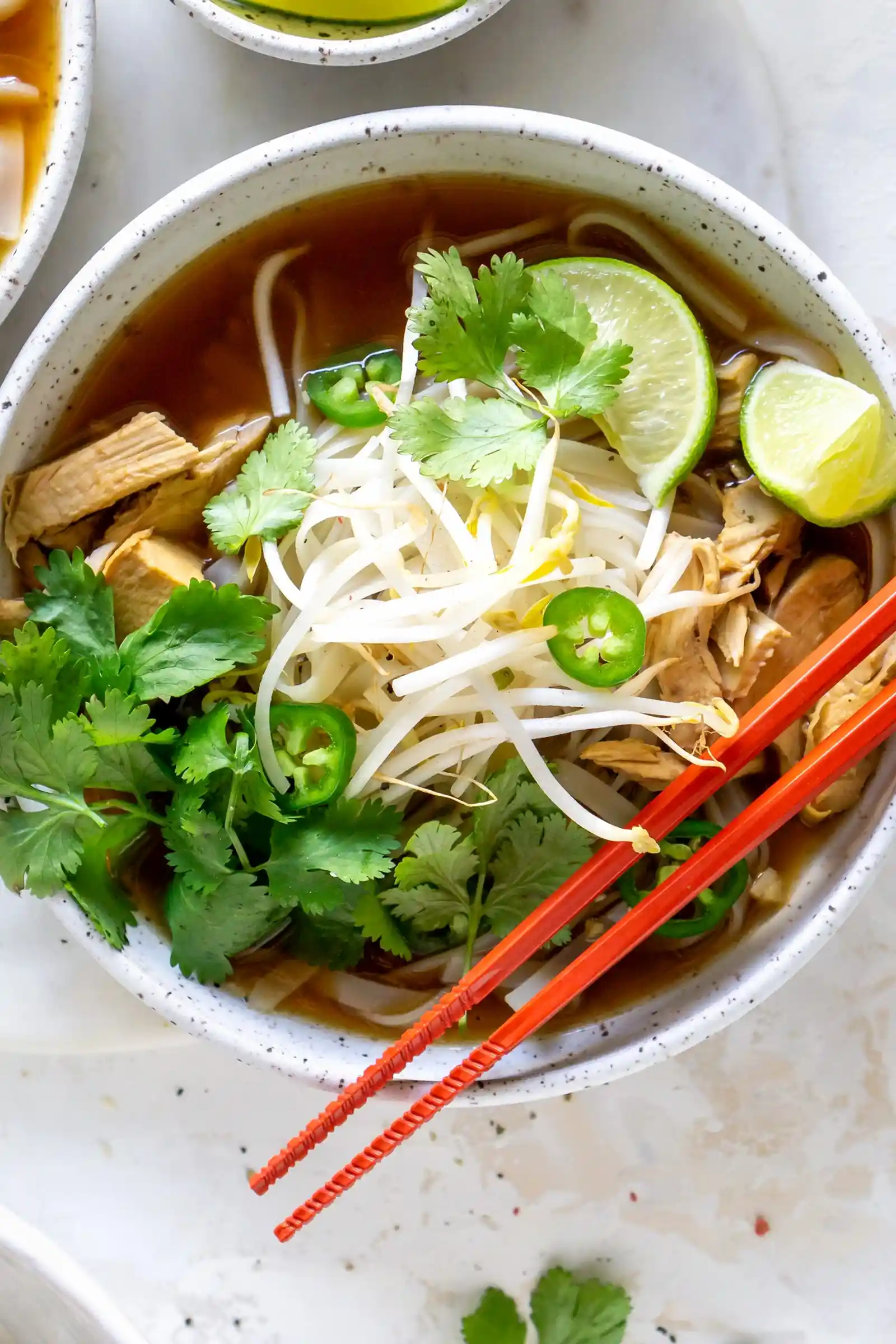
List of ingredients
- 1/2 tablespoon sesame oil – used for sautéing aromatics.
- 3 star anise – adds a distinct licorice-like aroma.
- 2 garlic cloves, minced – provides a pungent savory base.
- 1 teaspoon grated ginger or ginger paste – adds warmth and zest.
- 6 cups chicken stock – the liquid base for the soup.
- 3 tablespoons low-sodium soy sauce – adds saltiness and color.
- 2-3 tablespoons hoisin sauce – provides sweetness and thickness.
- 1 teaspoon fish sauce – contributes a deep umami flavor.
- Juice from 1 lime – adds necessary brightness and acidity.
- 1 jalapeño pepper, sliced – gives a fresh, spicy kick.
- 1 rotisserie chicken, thinly sliced or shredded – the main protein source.
- 8 ounces flat rice noodles – provides the traditional chewy texture.
- Optional toppings: lime wedges, cilantro, Thai basil, and bean sprouts – for fresh garnish.
step-by-step instructions
- Sauté Aromatics: Heat the sesame oil in a large pot over medium heat. Add the star anise, minced garlic, and ginger, stirring for 30-60 seconds until they become fragrant.
- Simmer the Broth: Pour in the chicken stock, soy sauce, hoisin sauce, fish sauce, lime juice, sliced jalapeño, and the prepared chicken. Bring the mixture to a boil, then immediately reduce heat to low and simmer uncovered for 15-20 minutes.
- Prepare the Noodles: Cook the flat rice noodles according to the specific package instructions. Drain them well to ensure they do not dilute the broth.
- Assemble the Bowls: Divide the cooked noodles evenly among four serving bowls. Ladle the hot broth and chicken over the noodles.
- Add Final Garnishes: Top each bowl with fresh lime wedges, cilantro, Thai basil, and bean sprouts as desired before serving.
Maximizing Broth Flavor
Toasting Whole Spices for Depth
Tossing the star anise in hot sesame oil before adding the liquid helps release essential oils. This process intensifies the fragrance and creates a more layered taste profile. Ensure the heat is medium to avoid burning the garlic while the spices toast.
Using Fresh Ginger versus Paste
Freshly grated ginger provides a sharper, more vibrant heat that cuts through the richness of the stock. Ginger paste is a convenient time-saver that blends seamlessly into the liquid. Both options are effective, but fresh ginger is preferred for a brighter aromatic profile.
Incorporating Additional Whole Spices
Adding a cinnamon stick or coriander seeds during the simmering process can add more complexity. Fennel seeds are another great addition that complements the star anise. Always use whole spices rather than ground versions to keep the broth clear and the flavors balanced.
Balancing Salt and Umami
The combination of fish sauce and soy sauce creates a complex salt profile. If the broth tastes too salty, add a small splash of water or more lime juice. The acidity from the lime helps neutralize excess saltiness and brightens the entire dish.
Noodle Preparation and Selection
Choosing the Right Rice Noodles
Flat rice noodles are the standard for pho because they hold onto the broth well. If flat noodles are unavailable, thin rice vermicelli can be used as a substitute. Ensure the noodles are specifically rice-based to maintain the gluten-free nature of the dish.
Preventing Noodles from Overcooking
Cook your noodles slightly under the package directions to keep them al dente. Since they will be submerged in boiling broth, they will continue to soften in the bowl. This prevents the noodles from becoming mushy or breaking apart.
Avoiding Noodle Clumping
Rinse the noodles under cold water immediately after cooking to remove excess starch. This step stops the cooking process and prevents the noodles from sticking together. For better results, toss them with a tiny amount of oil before placing them in the bowls.
Alternative Noodle Options
While rice noodles are traditional, brown rice noodles can be used for a nuttier flavor and more fiber. Zucchini noodles can be used for a low-carb alternative, though they should be added raw and let the broth soften them. Avoid using wheat noodles as they change the authentic flavor and texture.
Protein Tips and Variations
Using Rotisserie Chicken for Speed
Using a pre-cooked rotisserie chicken significantly reduces preparation time. Shred the meat while the chicken is still slightly warm for easier handling. Ensure you remove the skin if you prefer a leaner, less greasy broth.
Preparing Poached Chicken Breast
For a homemade alternative, poach chicken breasts in the stock before adding the other seasonings. This method allows the chicken to absorb the broth flavors from the inside out. Slice the breast against the grain for the most tender pieces.
Adding Tofu for Variety
Firm tofu cubes can be added alongside the chicken or as a replacement for a lighter meal. Pan-fry the tofu first to give it a golden crust that holds up better in the soup. This adds a different texture and increases the protein variety.
Integrating Sliced Beef
If you want a beef-style pho, replace the chicken with thinly sliced raw flank steak. Place the raw beef on top of the noodles and pour the boiling broth over it to cook the meat instantly. This technique ensures the beef remains tender and juicy.
Vegetable and Garnish Enhancements
Adding Baby Bok Choy
Lightly steam or sauté baby bok choy and place it in the bowl before adding the broth. The crisp texture of the stems provides a great contrast to the soft noodles. It also adds a mild, peppery flavor and nutritional value.
Using Shiitake Mushrooms for Earthiness
Sliced shiitake mushrooms can be simmered in the broth for 10 minutes to add a deep, earthy taste. They also provide a meaty texture that complements the chicken. For the best results, use fresh mushrooms rather than canned ones.
Fresh Bean Sprouts for Crunch
Raw bean sprouts add a refreshing crunch and a slight sweetness to the hot soup. Always rinse them thoroughly in cold water before adding them as a topping. They provide an essential textural contrast that defines a great bowl of pho.
Utilizing Thai Basil and Cilantro
Thai basil has a distinct anise-like flavor that mirrors the star anise in the broth. Cilantro adds a bright, citrusy note that cuts through the savory elements. Add these herbs at the very end to keep their color vibrant and their flavor fresh.
Storage and Reheating Advice
Storing Broth and Noodles Separately
Never store the noodles inside the broth, as they will absorb all the liquid and become bloated. Keep the broth in one airtight container and the noodles in another. This preserves the integrity of both components for several days.
Preventing Noodle Stickiness in the Fridge
Toss cooked noodles with a small amount of neutral oil before refrigerating. This creates a barrier that prevents them from fusing into a single mass. They can be stored safely in the refrigerator for up to 5 days.
Reheating the Pho for Quality
Heat the broth in a pot until it reaches a rolling boil before pouring it over the chilled noodles. This flash-heats the noodles without overcooking them. Avoid using a microwave for the noodles, as it can make them rubbery.
Freezing the Concentrated Broth
The broth can be frozen in portions for up to three months. When reheating, add a splash of water or fresh lime juice to revive the flavors. Do not freeze the noodles, as the texture will be ruined upon thawing.
Troubleshooting Common Issues
Fixing a Cloudy Broth
Cloudiness often occurs when the broth is boiled too vigorously for too long. Keep the heat on a low simmer to ensure the liquid stays relatively clear. If it becomes too cloudy, you can carefully skim the surface with a spoon.
Adjusting an Overly Strong Anise Flavor
If the star anise flavor is too dominant, add more chicken stock or a pinch of sugar. The sweetness helps balance the strong licorice notes of the anise. You can also add more fresh herbs to distract from the intensity.
Managing Broth Thickness
If the broth is too thick due to the hoisin sauce, thin it out with a bit of water or extra stock. The consistency should be light and soup-like, not syrupy. Stir well to ensure the hoisin is fully integrated.
Correcting Bland Flavor
If the soup tastes flat, increase the amount of fish sauce or lime juice. These ingredients provide the salt and acid necessary to wake up the other flavors. A small amount of black pepper can also add a subtle kick.
Frequently Asked Questions
Is this version of pho authentic?
This is a quick-fix version designed for home cooks and is not a traditional, slow-simmered pho. Authentic pho typically requires simmering bones for many hours to extract maximum collagen and flavor. However, this version captures the essential aromatics in a fraction of the time.
Can I use beef stock instead of chicken stock?
Yes, you can use beef stock if you prefer a richer, heavier base. If you switch to beef stock, it is recommended to use sliced beef instead of rotisserie chicken. The spices used in this recipe work well with both types of meat.
How long does the soup last in the fridge?
The broth and noodles can be stored separately for up to 5 days in airtight containers. Always ensure the broth has cooled completely before sealing it in the fridge. Reheat the broth thoroughly before serving.
Is this recipe gluten-free?
This recipe is naturally gluten-free as long as you use a gluten-free soy sauce or tamari. Rice noodles are a gluten-free alternative to wheat noodles. Check the labels on your hoisin sauce to ensure no wheat thickeners were used.
Can I make this without fish sauce?
If you cannot use fish sauce, you can substitute it with a combination of soy sauce and a pinch of salt. Alternatively, a small amount of vegan fish sauce made from seaweed can provide a similar umami depth. The fish sauce is primarily used for its savory, salty punch.
Print
Quick and Savory Chicken Pho
- Total Time: 30 minutes
- Yield: 4 servings 1x
- Diet: Dairy-Free
Description
This Chicken Pho Recipe (pho ga) is made with a savory broth, chewy rice noodles and tender slices of chicken. It’s like the Vietnamese version of chicken noodle soup!
Ingredients
- ½ tablespoon sesame oil
- 3 star anise
- 2 garlic cloves, minced
- 1 teaspoon grated ginger or ginger paste
- 6 cups chicken stock
- 3 tablespoons low-sodium soy sauce
- 2–3 tablespoons hoisin sauce
- 1 teaspoon fish sauce
- juice from 1 lime
- 1 jalapeño pepper, sliced
- 1 rotisserie chicken, thinly sliced or shredded
- 8 ounces flat rice noodles
- Optional toppings: lime wedges, cilantro, Thai basil, bean sprouts
Instructions
- Step 1: Heat the sesame oil in a large pot set over medium heat. Add the star anise, garlic, and ginger; heat until fragrant, about 30-60 seconds.
- Step 2: Pour in the stock, soy sauce, hoisin sauce, fish sauce, lime juice, jalapeño pepper, and chicken. Bring to a boil, then reduce the heat to low and simmer for 15-20 minutes uncovered.
- Step 3: Cook the noodles according to the package instructions. Divide them between 4 bowls and ladle the soup over the noodles.
- Step 4: Garnish with lime, cilantro, Thai basil, and bean sprouts as desired.
Notes
Store leftover rice noodles in a shallow airtight container in the fridge for 3-4 days. To reheat, pour boiling broth over the noodles. For extra heat, replace jalapeño with a chili pepper.
- Prep Time: 10 minutes
- Cook Time: 20 minutes
- Category: Main Course
- Method: Simmering
- Cuisine: Vietnamese
Nutrition
- Serving Size: 1 bowl
- Calories: 438 kcal
- Sugar: 5 g
- Sodium: 891 mg
- Fat: 13 g
- Saturated Fat: 3 g
- Unsaturated Fat: 10 g
- Trans Fat: 0 g
- Carbohydrates: 44 g
- Fiber: 1 g
- Protein: 36 g
- Cholesterol: 83 mg