This recipe provides a high-protein meal featuring baked salmon and fresh baby spinach. It is designed for quick preparation and maximum nutritional value, making it ideal for a healthy lunch or dinner.
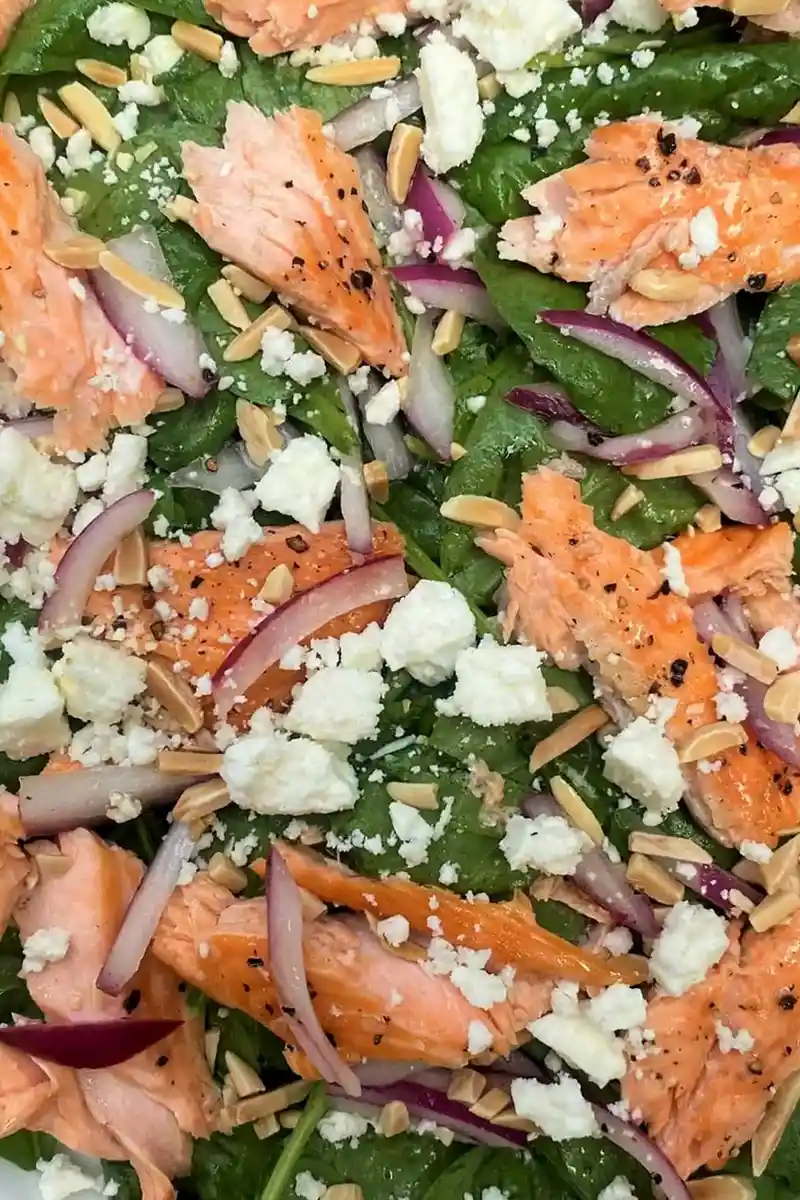
List of ingredients
- 8 ounce skinless salmon fillet – wild-caught sockeye or coho is recommended for leaner protein.
- 1 tablespoon lemon juice – used specifically for seasoning the salmon.
- Salt and pepper – used to season both the fish and the dressing.
- 2 tablespoons extra-virgin olive oil – provides a healthy base for the dressing.
- 2 teaspoons lemon juice – used to add acidity to the salad dressing.
- 3 ounces fresh organic spinach – serves as the nutrient-dense base.
- 1/4 cup red onion – thinly sliced for a sharp contrast in flavor.
- 1/4 cup crumbled feta – adds a salty, tangy element.
- 1/8 cup toasted slivered almonds – provides crunch and additional healthy fats.
step-by-step instructions
- Bake the Salmon: Preheat your oven to 400 degrees F. Line a rimmed baking sheet with parchment paper or tinfoil to prevent sticking. Place the salmon fillet on the liner, season generously with salt and pepper, and drizzle with one tablespoon of lemon juice. Bake for 10 to 15 minutes until the internal temperature reaches 145 degrees F on a meat thermometer.
- Prepare the Dressing: In a small mixing bowl, whisk together 2 tablespoons of olive oil, 2 teaspoons of lemon juice, and a light seasoning of salt and pepper. Stir until the emulsion is well combined.
- Assemble the Salad Base: In a large serving bowl, combine the fresh organic spinach, crumbled feta, thinly sliced red onions, and toasted slivered almonds. Toss gently to distribute the ingredients evenly.
- Combine and Serve: Remove the baked salmon from the oven and break it into large, flaky chunks. Spread the salmon pieces over the top of the prepared salad. Drizzle the lemon-olive oil dressing over the top and toss lightly to combine before serving immediately.
Professional Baking Tips for Salmon
Use a Digital Meat Thermometer
The most reliable way to ensure salmon is cooked perfectly is by using a digital thermometer. Aim for an internal temperature of 145 degrees F to avoid overcooking, which can make the fish dry and chalky.
Line Your Baking Sheet Properly
Using parchment paper is superior to foil because it prevents the fish skin or flesh from sticking to the pan. This allows you to remove the fillet easily without breaking the delicate flakes of the cooked salmon.
Seasoning for Maximum Flavor
Apply salt and pepper immediately before placing the salmon in the oven. This prevents the salt from drawing out too much moisture from the fish, ensuring a juicier result during the short baking process.
Optimizing Oven Rack Position
Place your baking sheet on the middle rack of the oven. This ensures that the heat is distributed evenly around the fillet, preventing the top from burning while the center remains undercooked.
Customizing Your Salad Ingredients
Replacing Spinach with Other Greens
If you prefer a different taste, replace baby spinach with arugula for a peppery flavor or kale for a heartier texture. If using kale, massage the leaves with a bit of olive oil first to soften the tough fibers.
Nut and Seed Alternatives
While slivered almonds provide a great crunch, you can substitute them with pumpkin seeds, pistachios, or walnuts. These alternatives maintain the high-protein profile of the meal while altering the flavor profile.
Swapping the Feta Cheese
For a different tangy flavor, try using crumbled goat cheese or a mild microbial-rennet cotija cheese. If you want a creamier texture, small pearls of fresh mozzarella can also work well in this combination.
Reducing the Sharpness of Red Onions
If raw red onions are too pungent for your taste, soak the thin slices in ice water for 10 minutes before adding them to the salad. Pat them dry with a paper towel to remove the harsh sulfur compounds.
Meal Preparation and Storage Strategies
The Deconstructed Prep Method
To keep the salad fresh for several days, store the components separately. Place the cooled baked salmon in one container, the dry greens and nuts in another, and the dressing in a small separate jar.
Choosing the Right Storage Container
Use airtight glass containers to keep the spinach from wilting prematurely. Glass is non-reactive and helps maintain the temperature of the cooled salmon more effectively than plastic containers.
Maintaining Freshness for Two Days
This prepared salad is best consumed within 48 hours of preparation. Keep the containers in the coldest part of your refrigerator, away from the door, to ensure the fish remains safe and fresh.
Pre-Toasting Your Nuts
Toast your almonds in a dry pan over medium heat for 3-5 minutes before storing them. Store toasted nuts in a separate dry container to ensure they remain crunchy until the moment of serving.
Serving and Presentation Ideas
Adding Fresh Vegetable Toppings
Enhance the visual appeal and nutrient density by adding halved cherry tomatoes or sliced cucumbers. These additions provide a refreshing juiciness that complements the richness of the salmon and feta.
Incorporating Extra Protein
For those requiring even more protein, add steamed edamame or a hard-boiled egg to the mix. These additions fit the Mediterranean theme of the salad while increasing the satiety of the meal.
Plating for Visual Appeal
Instead of tossing everything together, layer the spinach first, then add the feta, onions, and almonds in clusters. Place the salmon chunks on top and drizzle the dressing in a zig-zag pattern for a professional look.
Serving as a Main Course
To turn this into a heavier dinner, serve the salad alongside a side of quinoa or brown rice. The grains will soak up the lemon-olive oil dressing and provide more complex carbohydrates.
Reheating and Serving Advice
Cold Salmon Serving Method
Salmon is delicious served cold or at room temperature in salads. This method preserves the texture of the spinach and prevents the feta from melting or becoming overly soft.
Gently Warming the Salmon
If you prefer warm fish, reheat the salmon chunks in a skillet over low heat for 2-3 minutes. Add the warm salmon to the cold salad just before serving to create a temperature contrast.
Preventing Wilted Greens
Never add the dressing to the salad until you are ready to eat. The acid in the lemon juice and the oil will break down the cell walls of the spinach, causing it to wilt within minutes.
Adjusting the Dressing Temperature
For a more integrated flavor, let the dressing sit at room temperature for 10 minutes before drizzling. This prevents the olive oil from feeling too heavy or thick on the fresh greens.
Common Cooking Troubleshooting
Handling Overcooked Salmon
If the salmon becomes too dry, you can flake it into smaller pieces and mix it more thoroughly with the dressing. The extra olive oil and lemon juice will help rehydrate the fish and improve the mouthfeel.
Adjusting Dressing Balance
If the dressing tastes too tart, whisk in a tiny pinch of sugar or a drop of maple syrup to balance the acidity. If it is too bland, add a small pinch of flaky sea salt to brighten the lemon notes.
Managing Excess Moisture in Spinach
If your spinach is washed and too wet, the dressing will not adhere to the leaves. Use a salad spinner or pat the leaves thoroughly with a clean kitchen towel before assembling the salad.
Fixing Dressing Separation
Since this is a simple vinaigrette, the oil and lemon juice will naturally separate over time. Shake the dressing container vigorously for 10 seconds immediately before pouring it over the salad.
Frequently Asked Questions
How can I make this salad vegan?
Replace the salmon with firm, seasoned tofu or chickpeas, and swap the feta for a plant-based feta alternative made from coconut oil or almonds.
Can I use frozen salmon fillets?
Yes, but you must thaw them completely in the refrigerator overnight. Pat the thawed fillets dry with a paper towel before seasoning to ensure the salmon bakes rather than steams.
Is this recipe suitable for keto diets?
Yes, this recipe is very low in carbohydrates and high in healthy fats and protein, making it an excellent choice for those following a ketogenic lifestyle.
Which type of salmon is best for this salad?
Wild sockeye or coho salmon are recommended because they are leaner and have a more intense flavor. However, Atlantic salmon also works well if you prefer a buttery, richer texture.
Can I use a different oil for the dressing?
Extra-virgin olive oil is preferred for its health benefits and flavor, but avocado oil is a great substitute if you want a more neutral taste.
How do I store the leftover dressing?
Store leftover dressing in a sealed glass jar in the refrigerator for up to one week. Simply shake it well before each use to re-emulsify the oil and lemon juice.
Print
Protein-Packed Salmon and Spinach Salad with Feta
- Total Time: 20 minutes
- Yield: 1 serving 1x
- Diet: Keto, Low Carb
Description
Loaded with flaky salmon, spinach, feta, and almonds, this protein spinach salmon salad is big on flavor and is a filling lunch or dinner!
Ingredients
- 8 ounce skinless salmon fillet
- 1 tablespoon lemon juice
- Salt and pepper to season
- 2 tablespoons extra-virgin olive oil
- 2 teaspoons lemon juice
- 3 ounces fresh organic spinach
- 1/4 cup red onion, thinly sliced
- 1/4 cup crumbled feta
- 1/8 cup toasted slivered almonds
Instructions
- Bake Salmon: Preheat oven to 400 degrees F. Line a rimmed baking sheet with parchment paper with tinfoil. Place salmon on parchment paper and generously season with salt and pepper. Sprinkle one tablespoon lemon juice over the top. Bake for roughly 10 to 15 minutes, until salmon reads 145 degrees on thermometer.
- Prepare salad and dressing: In a small bowl, whisk together 2 tablespoons olive oil, two teaspoons lemon juice, and salt and pepper (lightly season). In a large serving bowl, combine spinach, feta, sliced red onions and almonds.
- Combine and serve: When done, remove salmon from oven. Break salmon into large chunks and spread on top of salad. Drizzle with dressing and toss to combine. Serve immediately.
Notes
For meal prep, bake the salmon and let it cool to room temperature. Store the salad ingredients and dressing in separate containers and combine just before serving. The salad can be stored in the refrigerator for up to 2 days.
- Prep Time: 5 minutes
- Cook Time: 15 minutes
- Category: Dinner, Lunch
- Method: Baking
- Cuisine: American, Mediterranean
Nutrition
- Serving Size: 1 serving
- Calories: 734.9 kcal
- Sugar: 2.7 g
- Sodium: 1757 mg
- Fat: 49.2 g
- Saturated Fat: 8.4 g
- Unsaturated Fat: 40.8 g
- Trans Fat: 0 g
- Carbohydrates: 12.2 g
- Fiber: 4 g
- Protein: 57.8 g
- Cholesterol: 116.4 mg