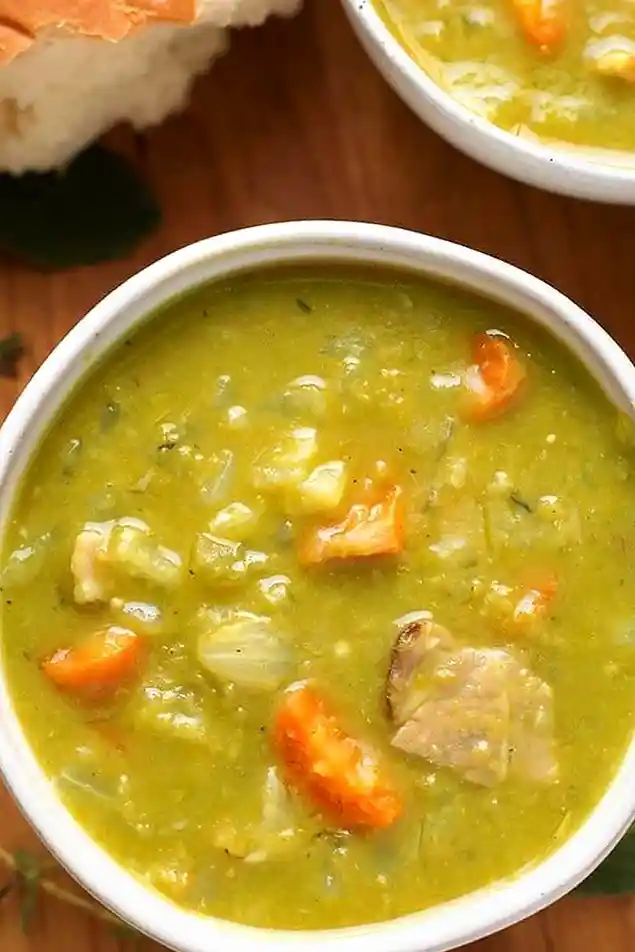
This hearty split pea soup is a classic, comforting dish that comes together quickly in your pressure cooker. By utilizing dried green split peas and aromatic vegetables, you achieve a creamy, flavorful texture that typically takes hours on a stovetop. This version is naturally delicious, deeply satisfying, and simple to customize to your dietary preferences.
List of ingredients
- 1 Tbsp Olive Oil
- 2 Tbsp Butter (or vegan butter substitute)
- 1 Onion, diced
- 3 Stalks of Celery, diced
- 2 Bay Leaves
- 1/4 tsp Thyme Leaves, dried
- 3 Carrots, chopped
- 4 cloves Garlic, pressed or finely minced
- 1/4 tsp Pepper
- 6 cups Vegetable Broth
- 1 lb Green Split Peas, rinsed and sorted (unsoaked)
- 1 tsp Liquid Smoke
- 1/2 tsp Kosher Salt
step-by-step instructions
- Step: Turn the pressure cooker on to the Sauté function. Let it warm up and add the olive oil and butter.
- Step: Add the onion, celery, bay leaves, and thyme. Cook, stirring occasionally, until onion starts to turn translucent.
- Step: Add the carrots, garlic, and pepper. Cook for a minute.
- Step: Add the broth and liquid smoke. Let come to a simmer.
- Step: Stir in the split peas.
- Step: Place the lid on the pot and lock it in place. Set the steam release knob to the Sealing position.
- Step: Cancel the sauté function and choose Pressure Cook/Manual, and use the dial to choose 18 minutes on High pressure.
- Step: When the cooking time has finished, let the pot sit undisturbed for 15 minutes to naturally release some of the pressure. Then turn the steam release knob to Venting to quick release the remaining pressure.
- Step: When the pin in the lid drops down, carefully open the lid, facing away from you. Remove the bay leaves.
- Step: Taste and add the salt as desired.
- Step: Serve hot. The soup will thicken quite a bit when it cools, that is normal.
Preparation and Texture Tips
Understanding Pea Expansion
Green split peas are legumes that absorb a significant amount of liquid as they soften and break down during the pressure cooking process. If you prefer a thinner consistency, you can easily add an extra cup of warm broth after opening the lid. Conversely, if you prefer a thicker, porridge-like texture, simply allow the soup to sit covered for a few more minutes, as it will naturally thicken as the heat dissipates.
Importance of Rinsing Legumes
Before adding the split peas to your pot, place them in a fine-mesh colander and rinse them thoroughly under cold running water. This removes any debris or excess dust from the drying process. Sorting through the dry peas also helps ensure no small stones or organic matter remain, ensuring the best texture for your finished soup.
Refining Your Flavor Profile
Balancing Sodium Levels
Since the salt content in various commercial vegetable or chicken broths can fluctuate significantly, it is best to leave the salt adjustment until the very end. The flavor profile of split pea soup intensifies as the peas release their starches, so you may find you need less salt than expected. Always taste your finished soup before adding extra seasoning to maintain full control over the saltiness.
Boosting Savory Notes Without Meat
To deepen the complexity of a vegetarian version, you can incorporate a small amount of liquid smoke to mimic a roasted depth. Another effective way to enhance the umami profile is by adding a teaspoon of soy sauce or a splash of balsamic vinegar right before serving. These additions provide a sharp, savory contrast to the naturally mild, earthy flavor of the green peas.
Serving and Storage Suggestions
Optimal Serving Temperatures
Split pea soup is best enjoyed when served at a piping hot temperature. Because of the high starch content from the peas, the texture becomes much denser as it cools down, which some people prefer. For an elevated serving experience, garnish individual bowls with fresh chopped parsley or a light drizzle of high-quality extra virgin olive oil to cut through the richness of the legumes.
Safe Storage Practices
Once cooled, this soup can be stored in airtight containers within the refrigerator for up to four days. As the soup sits in the cold, it will solidify significantly. When storing, you might consider portioning the soup into single-serving containers so you only reheat exactly what you intend to eat, which helps maintain the quality of the overall batch.
Addressing Common Cooking Inquiries
How can I make the soup faster?
The time indicated for pressure cooking is fixed to ensure the peas reach a tender, creamy texture. You can save a few minutes during the preparation phase by chopping your vegetables into smaller, more uniform pieces, which will allow them to soften faster during the initial sauté phase. However, the cooking time of 18 minutes remains standard for achieving the ideal breakdown of the legumes.
Why did the soup foam during cooking?
Split peas can occasionally foam during high-pressure cooking, which may cause a mess if the pot is filled past the maximum capacity line. Always adhere to the recommended liquid-to-solid ratios provided in the instructions to ensure there is plenty of headspace. Keeping the pea volume within the specified limits effectively prevents excess foaming from blocking the steam release vent.
Can I add root vegetables later?
If you prefer your carrots to have more bite, you could theoretically add them later, but the pressure cooking time of 18 minutes is calibrated specifically to ensure the split peas are fully dissolved into a creamy consistency. Adding root vegetables at the beginning allows them to meld their sweetness into the soup broth, which is the most reliable way to achieve a balanced, cohesive flavor profile in this recipe.
What is the benefit of natural pressure release?
Natural release is essential for this recipe because it allows the contents to finish cooking gently without an immediate drop in pressure, which helps prevent the soup from erupting through the vent. This gradual cooling also improves the final texture of the peas, ensuring they are perfectly soft and integrated into the broth rather than staying partially firm due to a rapid change in pressure.
Print
Pressure Cooker Split Pea Soup
- Total Time: 58 minutes
- Yield: 6 servings 1x
- Diet: Vegan
Description
Instant Pot Split Pea Soup has lots of flavor, and is a comforting, warm hug in a bowl! With onion, garlic, and thyme. This recipe is easily adaptable to be vegetarian or vegan.
Ingredients
- 1 Tbsp Olive Oil
- 2 Tbsp Butter (or vegan butter substitute)
- 1 Onion, diced
- 3 Stalks of Celery, diced
- 2 Bay Leaves
- 1/4 tsp Thyme Leaves, dried
- 3 Carrots, chopped
- 4 cloves Garlic, pressed or finely minced
- 1/4 tsp Pepper
- 6 cups Vegetable Broth
- 1 lb Green Split Peas, rinsed and sorted (unsoaked)
- 1 tsp Liquid Smoke
- 1/2 tsp Kosher Salt
Instructions
- Step: Turn the pressure cooker on to the Sauté function. Let it warm up and add the olive oil and butter.
- Step: Add the onion, celery, bay leaves, and thyme. Cook, stirring occasionally, until onion starts to turn translucent.
- Step: Add the carrots, garlic, and pepper. Cook for a minute.
- Step: Add the broth and liquid smoke. Let come to a simmer.
- Step: Stir in the split peas.
- Step: Place the lid on the pot and lock it in place. Set the steam release knob to the Sealing position.
- Step: Cancel the sauté function and choose Pressure Cook/Manual, and use the dial to choose 18 minutes on High pressure.
- Step: When the cooking time has finished, let the pot sit undisturbed for 15 minutes to naturally release some of the pressure. Then turn the steam release knob to Venting to quick release the remaining pressure.
- Step: When the pin in the lid drops down, carefully open the lid, facing away from you. Remove the bay leaves.
- Step: Taste and add the salt as desired.
- Step: Serve hot. The soup will thicken quite a bit when it cools, that is normal.
Notes
To make this vegan, ensure you use a plant-based butter substitute. The soup naturally thickens as it sits; if you prefer a thinner consistency, add a small amount of extra vegetable broth after pressure cooking.
- Prep Time: 15 minutes
- Cook Time: 28 minutes
- Category: Soup
- Method: Pressure Cooking
- Cuisine: American
Nutrition
- Serving Size: 1 bowl
- Calories: 325 kcal
- Sugar: 5 g
- Sodium: 650 mg
- Fat: 8 g
- Saturated Fat: 2 g
- Unsaturated Fat: 5 g
- Trans Fat: 0 g
- Carbohydrates: 48 g
- Fiber: 16 g
- Protein: 18 g
- Cholesterol: 0 mg