This vibrant pineapple shrimp fried rice brings together succulent seafood, bright tropical fruit, and savory seasonings in one efficient meal. It is a fantastic way to transform leftover grains into a restaurant-style dish that balances sweet and savory notes perfectly. The combination of caramelized pineapple and tender shrimp creates a refreshing twist on a classic comfort food that comes together in under an hour.
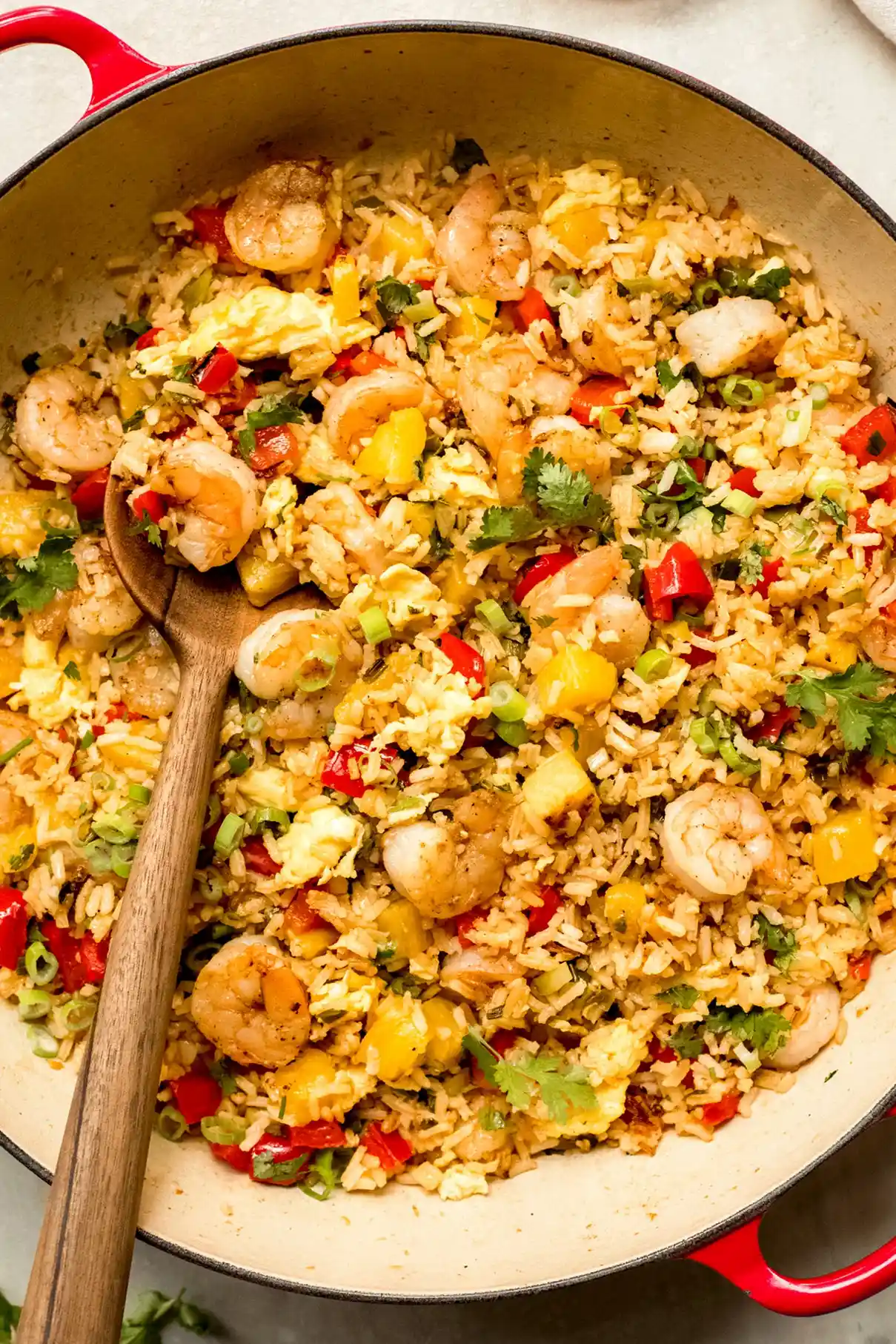
List of ingredients
- 3-4 Tbsp. avocado oil or other high-heat oil
- 3 large eggs, beaten
- 1 lb. (26-30 count) shrimp, peeled and deveined
- 2 cups chopped fresh pineapple
- 1 red bell pepper, diced
- 1 cup chopped green onions, white and green parts
- 3 garlic cloves, minced
- 4 cups chilled day-old rice
- 2-3 Tbsp. soy sauce
- 2-3 tsp. Sriracha
- 1 lime, juiced
- Chopped fresh cilantro, to taste
- Kosher salt and fresh black pepper
- Sesame oil, optional
step-by-step instructions
- Step: In a large bowl, toss the shrimp with 1/4 teaspoon salt and 1/4 tsp. black pepper. Set aside.
- Step: In a large non-stick skillet or a large wok heat 1 tablespoon of oil over medium heat. Add the whisked eggs and cook, stirring, until the eggs are scrambled and lightly set. Transfer to a plate and if necessary, wipe the skillet with a paper towel.
- Step: Increase the heat to a medium-high and add 2-3 tablespoons of oil. When the oil is hot, add the shrimp to the pan in a single layer. It should immediately sizzle on contact. Make sure not to overcrowd the shrimp. Cook for 1 minute per side. Transfer to a plate.
- Step: Add pineapple and bell peppers and cook undisturbed for 3 minutes. If necessary, add more oil to the pan. Stir the pineapple mixture and continue cooking for an additional 2 minutes. The pineapple should be caramelized and the peppers tender. Add green onions and garlic. Cook, stirring, until fragrant, about 30 seconds.
- Step: Stir in rice and cook for about 1-2 minutes until heated through, while breaking up the rice with a spoon. Add soy sauce and Sriracha. Taste and season with salt and pepper as needed.
- Step: Stir in scrambled eggs and shrimp. Squeeze 1/2 lime juice over the rice and add chopped cilantro. Taste and if necessary, add more soy sauce, Sriracha, or lime juice. Optional, add 1-2 teaspoons of sesame oil over the rice right before serving.
Refining Your Stir-Fry Technique
Managing Your Heat Sources Correctly
The secret to high-quality fried rice lies in maintaining a very hot cooking surface. If your pan temperature drops too low when you add the rice, the grains will absorb the oil rather than crisping up. Keep your burner on medium-high to high throughout the cooking process for the best results.
The Importance of Chilled Rice
Using freshly cooked, warm rice will almost always lead to a gummy or clumpy final product. Always spread your cooked rice onto a large tray or plate and refrigerate it for at least several hours or overnight. This cooling process dries out the surface of each grain, allowing them to remain separate and fluffy when tossed in the hot wok.
Developing Depth with Aromatics
Do not rush the step of adding your garlic and green onions. These ingredients provide the essential savory backdrop that balances the sweet pineapple. Cook them just long enough to release their oils—about 30 seconds—to ensure they don’t burn, which could introduce a bitter undertone to the finished dish.
Customizing Your Pineapple Shrimp Fried Rice
Adjusting Spice and Heat Levels
If you prefer a bolder flavor, consider adding finely diced bird’s eye chilies along with the garlic for a more intense heat. If you are serving individuals with lower heat tolerance, keep the Sriracha to the side as a condiment for guests to add individually. You can also experiment with different types of chili-garlic sauces to change the complexity of the heat.
Adding Extra Vegetable Volume
To increase the nutritional content and volume, you can easily incorporate additional vegetables like snow peas, shredded carrots, or baby corn. If you choose to add these, do so along with the bell peppers to ensure they have enough time to soften. Avoid using vegetables with extremely high water content, as they can cause the fried rice to steam instead of fry.
Experimenting with Tropical Flavors
To enhance the island-inspired theme, consider garnishing your finished plate with toasted coconut flakes or finely crushed macadamia nuts. These additions provide a delightful crunch and emphasize the natural sweetness of the pineapple. You can also swap the standard soy sauce for a light coconut aminos if you prefer a slightly milder, naturally sweeter salt profile.
Storage and Reheating Advice
Maintaining Texture During Storage
Store any leftovers in an airtight container in the refrigerator for up to 3 to 4 days. When placing leftovers in the fridge, ensure the rice has cooled to room temperature first to prevent condensation from gathering inside the container. Excess moisture is the enemy of leftover fried rice and will ruin the texture when you eventually go to reheat it.
Effective Reheating Methods
For the best results, reheat your leftovers in a hot skillet with a tiny splash of oil rather than using a microwave. The skillet method allows the rice to regain its individual, crisp texture and ensures the shrimp don’t become rubbery. If you must use a microwave, use a medium power setting and stir the rice halfway through to ensure even heating without drying out the grains.
Common Questions Regarding This Dish
Can I use frozen shrimp instead of fresh?
Yes, frozen shrimp works perfectly well provided it is completely thawed and patted very dry before cooking. Using wet shrimp will introduce too much moisture into your hot pan, causing the rice to steam and lose its desired texture. Be sure to thaw the shrimp in the refrigerator overnight or under cold running water.
Is it possible to make this dish entirely vegetarian?
You can certainly swap the shrimp for protein-dense options like firm tofu cubes or extra chickpeas. If using tofu, ensure you press the moisture out thoroughly and pan-fry the cubes separately until golden before adding them to the final stir-fry step. This ensures the tofu maintains a pleasant bite rather than becoming soft or mushy.
How do I stop my rice from turning mushy?
Mushy rice is usually caused by using rice that is too moist or by adding too much liquid during the seasoning stage. Stick to using day-old, refrigerated rice and be mindful of your soy sauce amount. Adding the lime juice right at the end also helps keep the flavors bright without softening the rice grains prematurely.
Can I serve this in a hollowed pineapple?
Yes, serving in a hollowed pineapple is an excellent way to elevate the presentation for gatherings or special dinners. Simply cut a fresh pineapple in half vertically, scoop out the fruit to chop for the recipe, and use the remaining shell as a serving vessel. Ensure the shell is dry before filling it with the hot rice mixture.
What is the benefit of adding lime at the very end?
Adding the lime juice after the heat has been turned off preserves the volatile aromatic compounds in the citrus. When you add acidic components too early in a high-heat cooking process, the flavor can fade or become metallic. A fresh squeeze right before serving provides that sharp, clean contrast that defines this specific Thai-inspired profile.
Print
Pineapple Shrimp Fried Rice Recipe
- Total Time: 45 minutes
- Yield: 6 servings 1x
- Diet: Dairy-Free
Description
Add some excitement to your dinner routine with Pineapple Shrimp Fried Rice! With succulent shrimp, tangy pineapple chunks, and a medley of colorful veggies, it’s a delightful mix of sweet and savory in every bite!
Ingredients
- 3–4 Tbsp. avocado oil or other high-heat oil
- 3 large eggs, beaten
- 1 lb. (26-30 count) shrimp, peeled and deveined
- 2 cups chopped fresh pineapple
- 1 red bell pepper, diced
- 1 cup chopped green onions, white and green parts
- 3 garlic cloves, minced
- 4 cups chilled day-old rice
- 2–3 Tbsp. soy sauce
- 2–3 tsp. Sriracha
- 1 lime, juiced
- Chopped fresh cilantro, to taste
- Kosher salt and fresh black pepper
- Sesame oil, optional
Instructions
- Step: In a large bowl, toss the shrimp with 1/4 teaspoon salt and 1/4 tsp. black pepper. Set aside.
- Step: In a large non-stick skillet or a large wok heat 1 tablespoon of oil over medium heat. Add the whisked eggs and cook, stirring, until the eggs are scrambled and lightly set. Transfer to a plate and if necessary, wipe the skillet with a paper towel.
- Step: Increase the heat to a medium-high and add 2-3 tablespoons of oil. When the oil is hot, add the shrimp to the pan in a single layer. It should immediately sizzle on contact. Make sure not to overcrowd the shrimp. Cook for 1 minute per side. Transfer to a plate.
- Step: Add pineapple and bell peppers and cook undisturbed for 3 minutes. If necessary, add more oil to the pan. Stir the pineapple mixture and continue cooking for an additional 2 minutes. The pineapple should be caramelized and the peppers tender. Add green onions and garlic. Cook, stirring, until fragrant, about 30 seconds.
- Step: Stir in rice and cook for about 1-2 minutes until heated through, while breaking up the rice with a spoon. Add soy sauce and Sriracha. Taste and season with salt and pepper as needed.
- Step: Stir in scrambled eggs and shrimp. Squeeze 1/2 lime juice over the rice and add chopped cilantro. Taste and if necessary, add more soy sauce, Sriracha, or lime juice. Optional, add 1-2 teaspoons of sesame oil over the rice right before serving.
Notes
Shrimp: I tested this recipe with jumbo and extra-large shrimp. If you use anything smaller, keep an eye on your shrimp so it doesn’t overcook. Pineapple: For best flavor, use fresh ripe pineapple. Rice: Leftover rice or day-old rice is best to use since it’s dried out. Fresh rice will turn out mushy or soggy due to having too much moisture. Leftovers: Refrigerate leftovers in an airtight container for up to 3-4 days.
- Prep Time: 20 minutes
- Cook Time: 25 minutes
- Category: Main
- Method: Stovetop
- Cuisine: Thai
Nutrition
- Serving Size: 1/6 of recipe
- Calories: 393 kcal
- Sugar: 7.7 g
- Sodium: 306.8 mg
- Fat: 12.6 g
- Saturated Fat: 2.1 g
- Unsaturated Fat: 8.5 g
- Trans Fat: 0 g
- Carbohydrates: 47.5 g
- Fiber: 2.2 g
- Protein: 22.6 g
- Cholesterol: 214.6 mg