This preparation method creates the ultimate salmon experience by combining baking and broiling. You will achieve a perfectly caramelized, crispy exterior while maintaining a tender and succulent interior. It is an efficient, reliable, and restaurant-quality technique for any weeknight dinner.
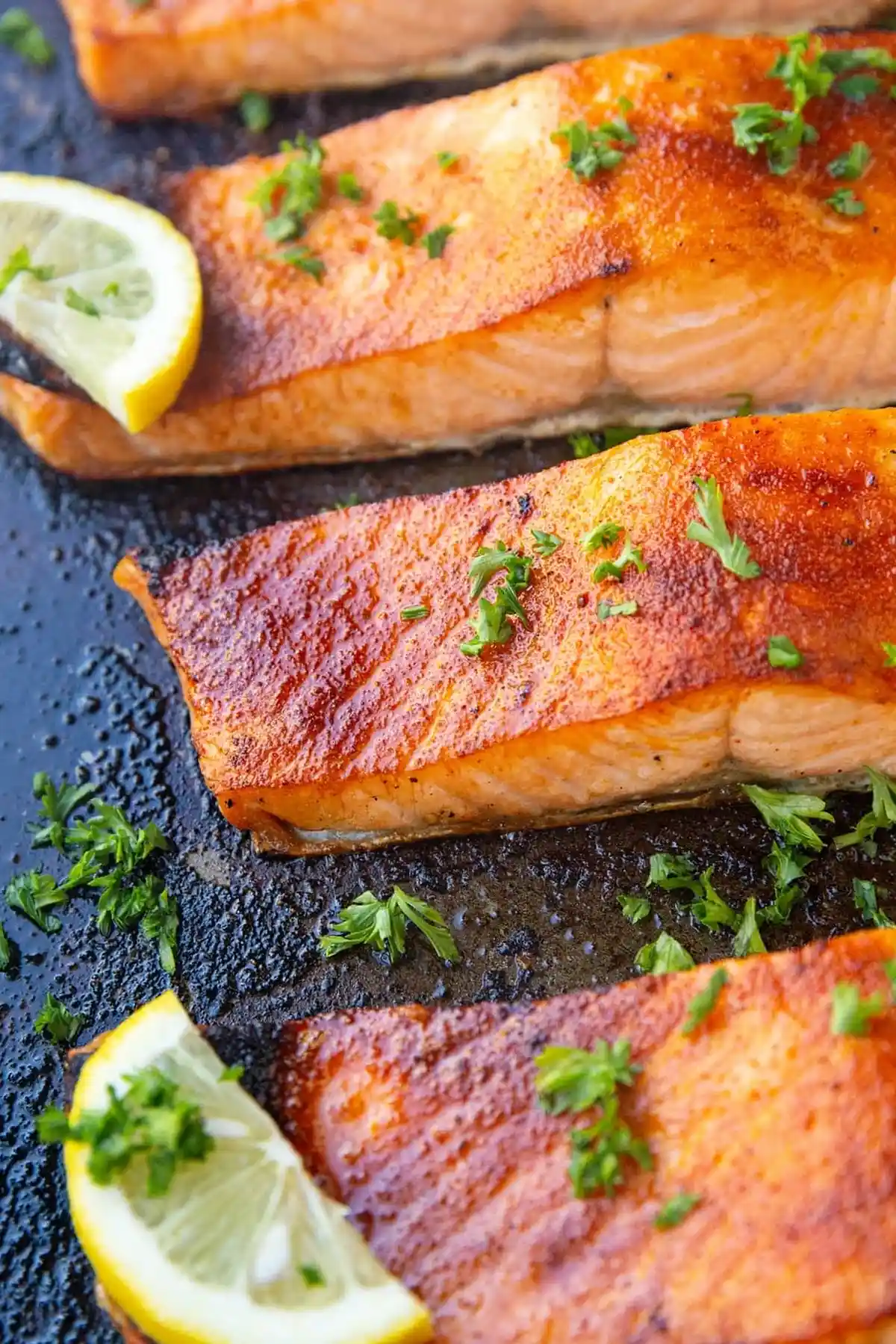
List of ingredients
- 1 to 2 pounds salmon (cut into individual filets)
- 1 Tbsp avocado oil
- 1/2 tsp sea salt
- 1 tsp garlic powder
- 1 tsp paprika
step-by-step instructions
- Step: Preheat the oven to 420 degrees Fahrenheit and move one of the oven racks to a shelf that’s near the bottom.
- Step: Coat a casserole dish or rimmed baking sheet with a thin layer of avocado oil so that the salmon doesn’t stick to it.
- Step: Place the salmon filets in the baking dish skin side down and drizzle with avocado oil. Coat all of the flesh with oil to ensure it bakes evenly and doesn’t burn.
- Step: Sprinkle the salmon with sea salt, garlic powder, and paprika.
- Step: Bake on the lower shelf of the oven for 8 to 10 minutes, or until the salmon is fully pink and the fat appears white.
- Step: Remove the salmon from the oven, change it to the High Broil setting, and move one of the oven racks to the shelf that’s either 2nd or 3rd from the top of the oven.
- Step: Place the salmon under the broiler and broil for 4 to 8 minutes, or until it has reached your desired level of crisp and doneness.
- Step: Aim for an internal temperature of 125 degrees for medium, or 145 degrees Fahrenheit for fully cooked.
- Step: Serve salmon with your choice of side dishes and fresh lemon wedges.
Refining your salmon technique
Ensuring consistent internal temperatures
Using a digital meat thermometer is the most reliable way to prevent overcooking delicate fish. Because salmon filet thickness can vary significantly, relying on time alone is less accurate than checking the internal temperature at the thickest section. Pull the salmon when it hits your target temperature, as the residual heat will carry the fish to the perfect level of doneness after you take it out of the oven.
Selecting the right cut of fish
For the best results with this broiling method, choose center-cut filets which have a consistent height from edge to edge. This consistency ensures that the thinner tail sections do not dry out while the thicker middle sections reach the desired temperature. Atlantic salmon is a reliable choice for this recipe due to its higher fat content, which keeps the fish juicy even under the intense direct heat of the broiler.
Customization options
Flavor variations for unique profiles
While the garlic and paprika blend is a classic, you can easily adapt the spice rub to suit different menus. For a Mediterranean-inspired meal, try adding dried oregano and a pinch of lemon zest to the oil coating. If you prefer a bit of heat, incorporating a dash of cayenne pepper or crushed red pepper flakes into your seasoning mix will provide a pleasant kick that balances the richness of the salmon.
Alternative fat choices
If avocado oil is unavailable, you can substitute it with other oils that handle heat well, such as refined coconut oil or light olive oil. Avoid using extra-virgin olive oil for the initial high-temperature bake if possible, as it may reach its smoke point too quickly. High-heat oils ensure the crust forms effectively without imparting an acrid or burnt flavor to the fish.
Serving and storage guidance
Pairing for a complete dinner
Salmon is exceptionally versatile and pairs beautifully with a wide range of sides. Roasted root vegetables, steamed green beans, or a crisp citrus-based kale salad complement the richness of the fish. For a lighter approach, serve the filets over a bed of quinoa or steamed jasmine rice to soak up any flavorful pan juices created during the cooking process.
Handling leftovers safely
To store leftover cooked salmon, transfer it to an airtight glass or plastic container once it has cooled to room temperature. Keep it refrigerated for no more than 5 days. For the best flavor and texture, use refrigerated salmon within the first 3 days, as the delicate structure of the fish can begin to change if left too long.
Gentle reheating techniques
To avoid drying out the salmon when reheating, use a low-and-slow approach. A toaster oven or conventional oven set to 300 degrees Fahrenheit is ideal for warming the fish gently. Place a few drops of water or a tiny bit of broth in the bottom of the dish to create a humid environment, which helps the fish retain its moisture without overcooking the edges.
Frequently asked questions
Is it necessary to remove the skin before cooking?
No, keeping the skin on is actually advantageous for this recipe. The skin acts as a protective layer between the delicate flesh and the hot baking sheet, and when rendered correctly, it becomes crispy and flavorful.
Can I prepare this recipe using frozen salmon?
Yes, but you must thaw the salmon completely before beginning the seasoning and baking process. If you cook salmon that is still partially frozen, the moisture released during the melting process will steam the fish rather than sear it, preventing the development of a crispy crust.
Why does the broiler setting require such close attention?
The broiler provides direct, intense heat that caramelizes the surface of the fish very quickly. Depending on the intensity of your specific broiler, the transition from golden brown to burnt can happen in a matter of seconds, so keeping the oven light on is a necessary habit for the final stage of cooking.
What is the benefit of the two-stage cooking method?
The initial bake allows the salmon to cook through gently at a moderate temperature, which preserves the moisture inside the muscle fibers. The final broil provides the necessary surface heat to achieve a Maillard reaction, resulting in a savory, textured crust that would not be possible with baking alone.
Are there specific side dishes to avoid?
There are no strict rules, but generally avoid pairing this crispy salmon with heavy, cream-based sauces that mask the texture of the fish. Instead, lean toward acid-forward dressings like a lemon-vinaigrette or fresh herbs to cut through the natural oils of the salmon and brighten the overall flavor profile of the plate.
Print
Perfectly Broiled Crispy Salmon
- Total Time: 20 minutes
- Yield: 4 servings 1x
- Diet: Pescatarian
Description
The absolute best baked salmon recipe! By first baking and then broiling salmon, we’re left with the most amazing crispy texture on the outside yet tender juicy salmon on the inside! Serve with your favorite side dishes for an amazing meal!
Ingredients
- 1 to 2 pounds salmon (cut into individual filets)
- 1 Tbsp avocado oil
- 1/2 tsp sea salt
- 1 tsp garlic powder
- 1 tsp paprika
Instructions
- Step: Preheat the oven to 420 degrees Fahrenheit and move one of the oven racks to a shelf that’s near the bottom.
- Step: Coat a casserole dish or rimmed baking sheet with a thin layer of avocado oil so that the salmon doesn’t stick to it.
- Step: Place the salmon filets in the baking dish skin side down and drizzle with avocado oil. Coat all of the flesh with oil to ensure it bakes evenly and doesn’t burn.
- Step: Sprinkle the salmon with sea salt, garlic powder, and paprika.
- Step: Bake on the lower shelf of the oven for 8 to 10 minutes, or until the salmon is fully pink and the fat appears white.
- Step: Remove the salmon from the oven, change it to the High Broil setting, and move one of the oven racks to the shelf that’s either 2nd or 3rd from the top of the oven.
- Step: Place the salmon under the broiler and broil for 4 to 8 minutes, or until it has reached your desired level of crisp and doneness.
- Step: Aim for an internal temperature of 125 degrees for medium, or 145 degrees Fahrenheit for fully cooked.
- Step: Serve salmon with your choice of side dishes and fresh lemon wedges.
Notes
Insert a meat thermometer into the thickest part of the fish for an accurate temperature read. Monitor thinner filets closely under the broiler to prevent burning. Store leftovers in an airtight container in the refrigerator for up to 5 days.
- Prep Time: 5 minutes
- Cook Time: 15 minutes
- Category: Seafood Main Dishes
- Method: Baking and Broiling
- Cuisine: American
Nutrition
- Serving Size: 1 filet
- Calories: 316 kcal
- Sugar: 0 g
- Sodium: 350 mg
- Fat: 14 g
- Saturated Fat: 2 g
- Unsaturated Fat: 10 g
- Trans Fat: 0 g
- Carbohydrates: 1 g
- Fiber: 0 g
- Protein: 46 g
- Cholesterol: 125 mg