This method delivers a juicy whole chicken with crispy skin, complemented by a bed of caramelized root vegetables. The pan drippings are utilized to create a rich, savory gravy that ties the entire meal together.
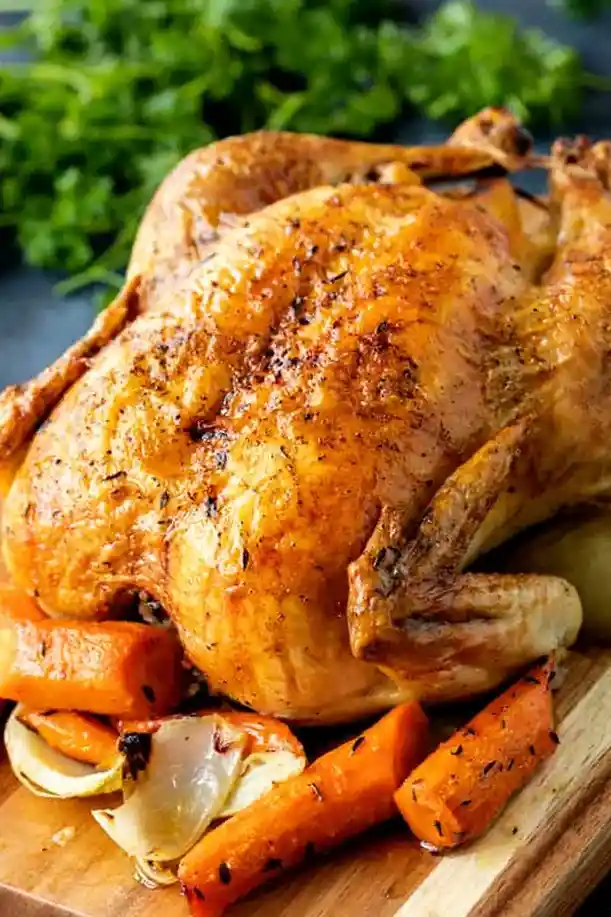
List of ingredients
- 6 lb. whole chicken – pat dry for better browning.
- Salt/Pepper – used generously for seasoning.
- 1 large bunch thyme, plus 20 sprigs – for stuffing and vegetable flavoring.
- 1 head garlic, cut in half crosswise – to infuse the cavity.
- 1 lemon, halved – for aromatic acidity inside the bird.
- 2 Tablespoons butter, melted – for brushing the skin.
- 1 large yellow onion, sliced into large chunks – for the roasting bed.
- 4 whole carrots, sliced into 4-inch chunks – for the roasting bed.
- 1 bulb of fennel, tops removed, cut into wedges – for the roasting bed.
- 2-3 Tablespoons Olive oil – to coat the vegetables.
- 2/3 cup chicken broth – for the gravy base.
- 3 tablespoons butter – for the roux.
- 3 tablespoons flour – to thicken the gravy.
step-by-step instructions
- Prepare the Bird: Unwrap the chicken and remove any giblets or the neck. Pat the skin thoroughly dry with paper towels.
- Temper the Meat: Let the chicken sit at room temperature for 30-60 minutes. This ensures more even cooking throughout the meat.
- Preheat: Set your oven to 425° F.
- Initial Seasoning: Season the entire exterior and interior of the chicken generously with salt and pepper.
- Stuff the Cavity: Place the bunch of thyme, the halved head of garlic, and the lemon halves inside the chicken.
- Coat the Skin: Brush the outside of the chicken with 2 tablespoons of melted butter. Season once more with salt and pepper.
- Secure the Bird: Use kitchen twine to tie the legs together. Tuck the wing tips underneath the body to prevent them from burning.
- Prepare the Vegetable Bed: Place sliced onions, carrots, and fennel wedges in a roasting pan. Sprinkle with salt, pepper, and 20 sprigs of thyme, then drizzle with olive oil. Toss by hand to coat evenly.
- Position for Roasting: Place the prepared chicken directly on top of the vegetables. This elevates the bird and prevents it from boiling in its own juices.
- Roast: Roast uncovered for 1½ hours.
- Baste and Rotate: Halfway through the cooking time, spoon drippings from the bottom of the pan over the chicken. Rotate the pan 180 degrees for even browning.
- Check Doneness: The chicken is ready when the internal temperature reaches 165° F in the thickest part of the thigh and juices run clear.
- Rest the Meat: Let the chicken rest uncovered for 15-20 minutes. This allows juices to reabsorb into the meat.
- Carve and Serve: Slice the chicken and serve alongside the roasted vegetables.
- Make the Gravy: Pour pan drippings into a measuring cup and add chicken broth to reach 2 cups of liquid. Melt 3 tablespoons of butter in a saucepan over medium heat, whisk in 3 tablespoons of flour for 1 minute. Slowly add half the liquid, whisking until smooth, then add the remaining liquid. Whisk for 2 more minutes until thickened and season with salt and pepper.
Optimizing the Roasting Process
Achieve Even Cooking with Room Temperature Meat
Taking the chicken out of the refrigerator 30 to 60 minutes before cooking is critical. Cold meat can cause the outside to overcook or dry out before the internal temperature reaches a safe level. This step ensures the heat penetrates the center more efficiently.
Prevent Wing Burn by Tucking
The thin skin and small amount of muscle on the wing tips cause them to burn quickly at high temperatures. Tucking the tips under the body protects them from direct heat. This keeps the wings moist and prevents charred edges on your presentation.
Use the Correct Roasting Pan Size
Choose a roasting pan that fits the chicken snugly without crowding. If the pan is too large, the drippings will spread thin and evaporate too quickly. This results in burnt vegetables and a lack of liquid for the gravy.
Determine Doneness with a Meat Thermometer
Relying on time alone can be inaccurate due to oven variations. Insert a digital thermometer into the thickest part of the thigh, avoiding the bone. The chicken is safely cooked and juicy when it hits exactly 165° F.
Rest the Meat Uncovered for Crispy Skin
Allowing the chicken to rest for 15-20 minutes is essential for juice redistribution. Do not cover the bird with foil during this time. Covering it creates steam, which will soften the skin and remove the crispiness you achieved in the oven.
Vegetable Bed Management
Cut Vegetables into Large Chunks
Vegetables like carrots and onions should be cut into 4-inch chunks or large wedges. Small pieces will overcook and turn to mush during the 90-minute roasting period. Large cuts maintain their structure and caramelize slowly.
Protect Overcooking Vegetables with Foil
Check the vegetables halfway through the roasting process. If they appear to be browning too quickly or shrinking excessively, cover them with a piece of foil. Keep the chicken exposed to ensure the skin continues to crisp.
Enhance Flavor with Aromatic Herbs
Using whole sprigs of thyme among the vegetables adds a layer of herbal depth to the pan drippings. These herbs infuse the oil and fats, which then baste the bottom of the chicken. This creates a more complex flavor profile in the final gravy.
Advanced Gravy Techniques
Balance the Ratio of Drippings to Broth
The combination of concentrated pan juices and chicken broth provides the ideal balance of salt and richness. Using only broth results in a thin taste, while using only drippings can be overly salty. A total of 2 cups of combined liquid ensures the right consistency.
Create a Smooth Roux to Avoid Lumps
Cooking the butter and flour together for one minute creates a roux, which stabilizes the sauce. Adding the liquid in two stages allows you to whisk out any clumps before the sauce thickens. This results in a professional, velvety texture.
Adjust Consistency with Extra Liquid
If the gravy becomes too thick after the final whisking, stir in a tablespoon of broth at a time. Continue stirring over low heat until the sauce coats the back of a spoon. This ensures the gravy is pourable and not paste-like.
Customization and Substitutions
Alternative Herbs for the Cavity
While thyme is traditional, rosemary or sage are excellent alternatives for the chicken cavity. These woody herbs withstand high heat and permeate the meat from the inside. You can also use a combination of all three for a more traditional roast flavor.
Different Root Vegetable Combinations
Parsnips and turnips are great substitutes for fennel or carrots. They provide a similar earthy sweetness and hold up well to long roasting times. Ensure they are cut to the same large size as the original vegetables.
Using Different Fats for Searing
If you prefer a different flavor, you can replace the melted butter with clarified butter or ghee. These fats have a higher smoke point, which can lead to even deeper browning. Olive oil can also be used, though butter provides a richer taste.
Storage and Food Safety
Safely Store Leftover Chicken
Place leftover chicken and vegetables in airtight containers and refrigerate within two hours of cooking. Store them in the coldest part of the fridge to maintain safety. The meat will stay fresh for 3 to 4 days.
Reheating Methods to Maintain Moisture
To prevent the chicken from drying out, reheat it in a covered dish with a splash of chicken broth. Use a low oven temperature or a microwave on medium power. This creates a steaming effect that restores moisture to the breast meat.
Freezing the Carcass for Future Stock
Do not discard the bones after the meal. Place the carcass and any remaining vegetable scraps in a freezer bag. You can simmer these later with water and aromatics to make a high-quality homemade chicken stock.
Troubleshooting Common Issues
Fix Pale Skin with High-Heat Blasting
If the chicken is cooked through but the skin lacks color, increase the oven heat to 500° F. Cover any already browned areas with foil to prevent burning. Roast for an additional 5 minutes while watching the bird closely.
Handle Undercooked Thighs
Because thighs are denser than breasts, they sometimes require more time. If the breast is done but the thigh is under 165° F, cover the breast with foil. Continue roasting until the thigh reaches the safe internal temperature.
Correct Over-Salted Gravy
If the pan drippings were too salty, the gravy may taste over-seasoned. Whisk in a small amount of unsalted chicken broth or a pinch of sugar to balance the salt. Avoid adding more salt until the final taste test.
Frequently Asked Questions
Can I roast a larger chicken?
Yes, you can roast a larger bird, but you must adjust the timing. Use the rule of 15 minutes per pound of chicken at 425° F. Ensure your roasting pan is sized appropriately for the larger bird to avoid evaporating the juices.
Why shouldn’t I rinse the chicken?
Rinsing raw chicken splashes bacteria across your sink, countertops, and utensils. Patting the chicken dry with paper towels is safer and more effective for achieving a crispy skin, as moisture on the surface prevents browning.
How long does the roasted chicken last in the fridge?
Fully cooked roast chicken is safe to eat for up to 4 days when stored in an airtight container. Ensure the container is sealed tightly to prevent the meat from absorbing other odors in the refrigerator.
What if I don’t have fennel?
Fennel can be replaced with an extra onion or a few pieces of celery. While you will lose the slight anise flavor, the other aromatics will still provide a savory base for the chicken and the gravy.
Print
Perfect Whole Roasted Chicken with Root Vegetables and Gravy
- Total Time: 2 hours 5 minutes
- Yield: 8 servings 1x
- Diet: General
Description
Ina Garten’s Roast Chicken is a perfect recipe for whole, oven roasted chicken and vegetables with plenty of gravy to go around! Your family will love this dinner!
Ingredients
- 6 lb. whole chicken
- Salt
- Pepper
- 1 large bunch thyme, plus 20 sprigs
- 1 head garlic, cut in half crosswise
- 1 lemon, halved
- 2 Tablespoons butter, melted
- 1 large yellow onion, sliced into large chunks
- 4 whole carrots, sliced into 4-inch chunks
- 1 bulb of fennel, tops removed, cut into wedges
- 2–3 Tablespoons Olive oil
- 2/3 cup chicken broth
- 3 tablespoons butter
- 3 tablespoons flour
Instructions
- Prepare: Unwrap the chicken and remove the giblets and/or the neck (if included). Pat the chicken dry with paper towels.
- Temper: If possible, let the chicken sit at room temperature for 30-60 minutes to allow for more even cooking.
- Preheat: Preheat the oven to 425° F.
- Season: Season the entire chicken generously with salt and pepper.
- Stuff: Stuff the chicken with the thyme, garlic, and lemon.
- Brush: Brush the outside of the chicken with the 2 TBS melted butter and season again with salt/pepper.
- Truss: Use kitchen twine to tie the legs together and tuck the wings underneath the body of the chicken.
- Prepare Bed: Place the sliced onions, carrots, and fennel bulb on the bottom of a roasting pan.
- Season Vegetables: Sprinkle the vegetables with salt, pepper, 20 sprigs of thyme, and drizzle generously with olive oil; toss to evenly coat.
- Position: Place the chicken on top of the vegetables.
- Roast: Roast uncovered for 1 ½ hours.
- Baste: Halfway through, use a spoon to drizzle the chicken with drippings from the bottom of the pan and rotate the pan 180 degrees.
- Check: The chicken is done when the juices run clear and the internal temperature reads 165° F.
- Rest: Let the chicken rest, uncovered, for 15-20 minutes before cutting.
- Serve: Slice and serve with the roasted vegetables.
- Gravy Base: Pour the chicken drippings into a large measuring cup and top off with chicken broth to make 2 cups.
- Make Roux: Melt 3 tablespoons of butter in a saucepan over medium heat, add 3 tablespoons flour, and whisk for 1 minute.
- Combine: Add half of the gravy juice/broth and whisk until there are no lumps.
- Thicken: Add remaining liquid and whisk for 2 minutes.
- Finish: Season with salt/pepper if desired.
Notes
Use a roasting pan that fits the size of your chicken for best results. Use thick cut vegetables to prevent them from cooking too quickly. Let the chicken rest uncovered to maintain crispy skin.
- Prep Time: 20 minutes
- Cook Time: 1 hour 30 minutes
- Category: Main Course
- Method: Roasting
- Cuisine: American
Nutrition
- Serving Size: 1 serving
- Calories: 641 kcal
- Sugar: 2 g
- Sodium: 236 mg
- Fat: 43 g
- Saturated Fat: 12 g
- Unsaturated Fat: 31 g
- Trans Fat: 0 g
- Carbohydrates: 8 g
- Fiber: 2 g
- Protein: 54 g
- Cholesterol: 213 mg