Pasta Primavera, meaning ‘spring pasta’ in Italian, is a dish that truly embodies the freshness and vibrancy of the season. This recipe is a delightful medley of tender pasta and crisp-tender spring vegetables, tossed in a light yet flavorful sauce. It’s a celebration of simple ingredients, expertly combined to create a satisfying and visually stunning meal. Perfect for a weeknight dinner or a light lunch, this Pasta Primavera will quickly become a new favorite. We’ll focus on maximizing flavor and texture, ensuring each bite is a burst of springtime goodness. Let’s dive into the ingredients you’ll need to create this culinary masterpiece!
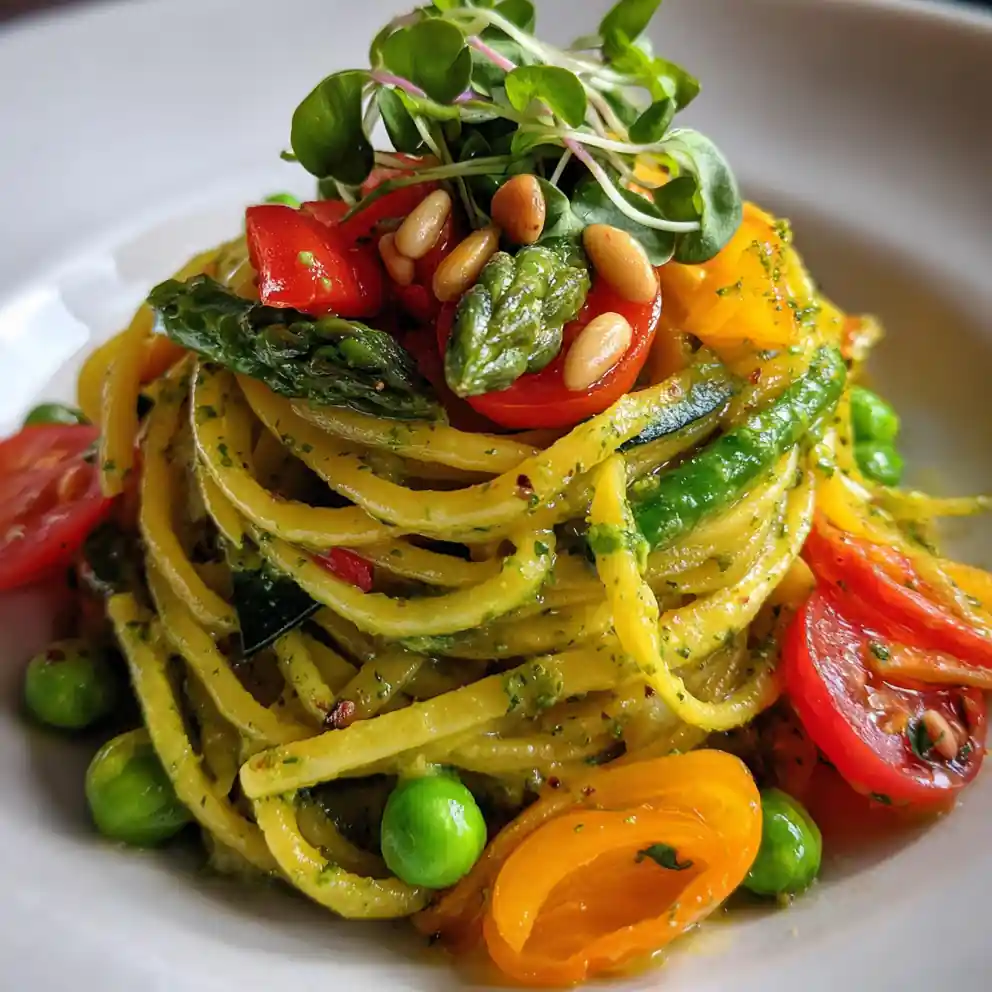
The Freshest Ingredients for the Best Pasta Primavera
- 250 g (8.8 oz) dried linguine: We recommend using bronze-cut linguine. The rough texture created by the bronze dies helps the sauce cling beautifully to the pasta, providing a more flavorful experience. Linguine’s long, flat shape is ideal for capturing all the delicious vegetables.
- 2 tbsp (30 ml) extra‑virgin olive oil: The foundation of our sauce! Extra virgin olive oil provides a fruity, robust flavor that enhances the vegetables. It’s crucial to use a good quality olive oil for the best results.
- 2 cloves garlic, minced: Garlic is an aromatic powerhouse, adding depth and complexity to the dish. Mincing it finely ensures its flavor is evenly distributed throughout the sauce.
- 150 g (5 oz) asparagus spears, trimmed and cut 2 cm (¾ in) pieces: Asparagus brings a delightful crispness and slightly grassy flavor. Trimming the tough ends ensures a tender bite.
- 100 g (3.5 oz) fresh peas (or thawed frozen peas): Peas add a touch of sweetness and a vibrant green color. Fresh peas are best, but good-quality frozen peas work well too.
- 1 medium red bell pepper, sliced into ½ cm (¼ in) strips: Red bell peppers contribute a sweet, fruity flavor and a beautiful pop of color.
- 1 medium yellow bell pepper, sliced into ½ cm (¼ in) strips: Similar to red bell peppers, yellow bell peppers offer sweetness and visual appeal. Using both colors creates a more vibrant dish.
- 1 small zucchini, halved lengthwise then sliced ½ cm thick: Zucchini provides a mild, slightly earthy flavor and a tender texture. Halving it lengthwise before slicing ensures even cooking.
- 200 g (7 oz) cherry tomatoes, halved: Cherry tomatoes burst with sweetness and acidity, adding a refreshing element to the dish.
- ½ cup (120 ml) low‑sodium vegetable broth: Vegetable broth adds a subtle savory flavor and helps create a light sauce that coats the pasta. Using low-sodium broth allows you to control the salt level.
- Zest of 1 lemon + 2 tbsp (30 ml) freshly squeezed lemon juice: Lemon zest and juice brighten the flavors and add a zesty lift to the dish. Freshly squeezed lemon juice is essential for the best flavor.
- ¼ cup (25 g) grated Parmesan cheese (halal‑certified): Parmesan cheese adds a salty, umami-rich flavor that complements the vegetables beautifully. Ensure it’s finely grated for easy melting.
- 2 tbsp (30 g) toasted pine nuts: Pine nuts provide a delightful crunch and a subtle nutty flavor. Toasting them enhances their flavor and texture.
- 2 tbsp (30 ml) chili‑infused olive oil: A finishing drizzle of chili-infused olive oil adds a subtle kick and a beautiful aroma.
- ¼ cup (15 g) fresh basil leaves, torn: Fresh basil adds a fragrant, herbaceous finish to the dish. Tearing the leaves releases their aroma.
- Salt and freshly ground black pepper to taste: Essential for seasoning and enhancing the flavors of the ingredients.
- Microgreen mix and a few nasturtium flower petals: These are for garnish, adding a touch of color, texture, and visual appeal.
Bringing It All Together: Step-by-Step Instructions
- Boil the Pasta: Bring a large pot of heavily salted water to a rolling boil. This is crucial – the water should be as salty as the sea! Add the linguine and cook according to package directions, usually 9-11 minutes, until al dente. ‘Al dente’ means ‘to the tooth’ in Italian, indicating the pasta should be firm to the bite. Before draining, reserve about ½ cup (120ml) of the pasta water. This starchy water is liquid gold; it will help create a creamy, emulsified sauce.
- Sauté the Aromatics: While the pasta is cooking, heat the extra-virgin olive oil in a wide skillet over medium heat. Add the minced garlic and sauté for just 30 seconds, until fragrant. Be very careful not to brown the garlic, as it will become bitter. The goal is to infuse the oil with the garlic’s aroma.
- Stir-Fry the Vegetables: Add the asparagus and bell pepper strips to the skillet. Stir-fry for 3 minutes, allowing them to begin to soften but still retain a crisp texture. Then, add the zucchini, peas, and cherry tomato halves. Continue to cook for another 4 minutes, until the vegetables are crisp-tender. We want the vegetables to be vibrant and slightly firm, not mushy.
- Create the Light Sauce: Pour in the low-sodium vegetable broth, lemon zest, and freshly squeezed lemon juice. Bring the mixture to a gentle simmer for 2 minutes, allowing the sauce to reduce slightly and the flavors to meld. Season generously with salt and freshly ground black pepper. A pinch of red pepper flakes can add a subtle kick if desired.
- Combine Pasta and Sauce: Transfer the drained linguine to the skillet with the vegetables. Toss to combine, ensuring the pasta is well coated. Add the reserved pasta water, a little at a time, until the sauce reaches a silky, emulsified consistency. Cook together for 1 minute, allowing the pasta to absorb the flavors. Stir in the grated Parmesan cheese until it melts and the sauce clings beautifully to the pasta.
- Finishing Touches: Remove the pan from the heat. Gently fold in the torn basil leaves and toasted pine nuts, distributing them evenly throughout the pasta. The basil adds a fresh, herbaceous note, while the pine nuts provide a delightful crunch.
- Plate and Garnish: Plate the Pasta Primavera on a wide, white ceramic plate. Twirl a generous mound of pasta in the center. Drizzle the chili-infused olive oil in a thin spiral around the base. Sprinkle with extra pine nuts, a few shavings of Parmesan cheese, and a vibrant mix of microgreens. Finally, add a handful of nasturtium petals for a pop of color and a peppery finish. Let the pasta rest for 2 minutes before serving.
The Importance of Seasonal Vegetables
Pasta Primavera, meaning ‘spring pasta’ in Italian, is all about celebrating the freshness of seasonal vegetables. While the recipe calls for asparagus, peas, bell peppers, zucchini, and cherry tomatoes, feel free to adapt it based on what’s available at your local farmers market. Broccoli florets, snap peas, spinach, or even mushrooms would be wonderful additions. The key is to use vegetables that are at their peak flavor and texture.
Why Bronze-Cut Pasta Matters
The recipe specifically calls for bronze-cut linguine. This isn’t just a preference; it makes a significant difference in the final dish. Bronze dies create pasta with a rougher surface, which allows the sauce to cling more effectively. This results in a more flavorful and satisfying bite. Compared to Teflon dies, which produce a smoother pasta, bronze-cut pasta elevates the entire experience.
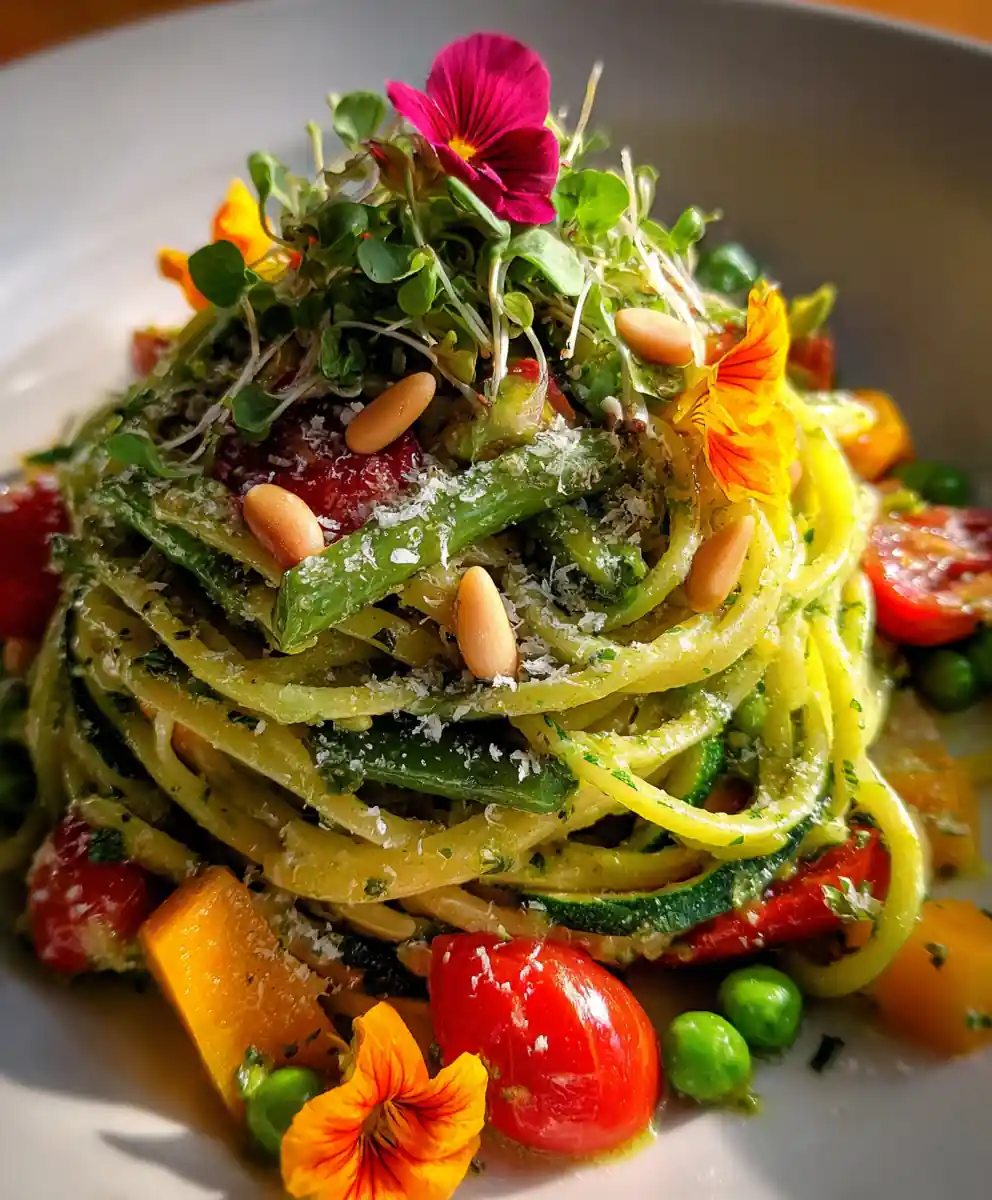
The Science of Emulsification
The technique of adding pasta water to the sauce isn’t just about thinning it out. It’s about creating an emulsion – a stable mixture of oil and water. The starch in the pasta water acts as an emulsifier, binding the olive oil and vegetable broth together, creating a creamy, cohesive sauce that coats the pasta perfectly. This is a fundamental technique in Italian cooking, and mastering it will transform your pasta dishes.
Variations and Dietary Considerations
Pasta Primavera is naturally vegetarian, but it can easily be adapted to suit other dietary needs. For a vegan version, simply omit the Parmesan cheese or substitute it with a plant-based alternative. To make it gluten-free, use gluten-free pasta. You can also adjust the level of spice by adding more or less red pepper flakes or chili-infused olive oil. Feel free to experiment and make it your own!
Frequently Asked Questions (FAQ)
- Can I use frozen vegetables? Yes, you can use frozen peas and other frozen vegetables, but fresh vegetables will always provide the best flavor and texture.
- What if I don’t have chili-infused olive oil? You can use regular olive oil and add a pinch of red pepper flakes to the sauce.
- Can I make this ahead of time? Pasta Primavera is best served immediately. However, you can prepare the vegetables ahead of time and store them in the refrigerator until ready to use.
Pasta Primavera is a celebration of spring’s bounty, a vibrant and flavorful dish that’s sure to brighten your day. Enjoy this delightful pasta, and don’t forget to save this recipe to Pinterest for later!
Print
Pasta Primavera
- Total Time: 35 minutes
- Yield: 4 servings 1x
- Diet: Vegetarian
Description
Pasta Primavera is a vibrant Italian dish featuring linguine tossed with crisp-tender spring vegetables in a light lemon-infused sauce. It’s a celebration of fresh, seasonal ingredients.
Ingredients
- 250 g (8.8 oz) dried linguine
- 2 tbsp (30 ml) extra-virgin olive oil
- 2 cloves garlic, minced
- 150 g (5 oz) asparagus spears, trimmed and cut into 2 cm pieces
- 100 g (3.5 oz) fresh peas (or thawed frozen peas)
- 1 medium red bell pepper, sliced
- 1 medium yellow bell pepper, sliced
- 1 small zucchini, sliced
- 200 g (7 oz) cherry tomatoes, halved
- ½ cup (120 ml) low-sodium vegetable broth
- Zest of 1 lemon + 2 tbsp (30 ml) lemon juice
- ¼ cup (25 g) grated Parmesan cheese
- 2 tbsp (30 g) toasted pine nuts
- 2 tbsp (30 ml) chili-infused olive oil
- ¼ cup (15 g) fresh basil leaves, torn
- Salt and pepper to taste
- Microgreen mix and nasturtium petals (for garnish)
Instructions
- Boil Pasta: Cook linguine until al dente, reserving ½ cup pasta water.
- Sauté Aromatics: Sauté garlic in olive oil until fragrant.
- Stir-Fry Vegetables: Stir-fry asparagus and bell peppers, then add zucchini, peas, and tomatoes.
- Create Sauce: Simmer broth, lemon zest, and juice; season with salt and pepper.
- Combine Pasta & Sauce: Toss pasta with vegetables and sauce, adding pasta water for creaminess.
- Finishing Touches: Fold in basil and pine nuts.
- Plate & Garnish: Plate, drizzle with chili oil, and garnish with microgreens and nasturtium.
Notes
For best results, use bronze-cut linguine and fresh, seasonal vegetables. Reserve pasta water to create a creamy emulsion.
- Prep Time: 15 minutes
- Cook Time: 20 minutes
- Category: Pasta
- Method: Stovetop
- Cuisine: Italian
Nutrition
- Serving Size: 1 cup
- Calories: 450 kcal
- Sugar: 15 g
- Sodium: 300 mg
- Fat: 18 g
- Saturated Fat: 3 g
- Unsaturated Fat: 12 g
- Trans Fat: 0 g
- Carbohydrates: 60 g
- Fiber: 5 g
- Protein: 15 g
- Cholesterol: 30 mg