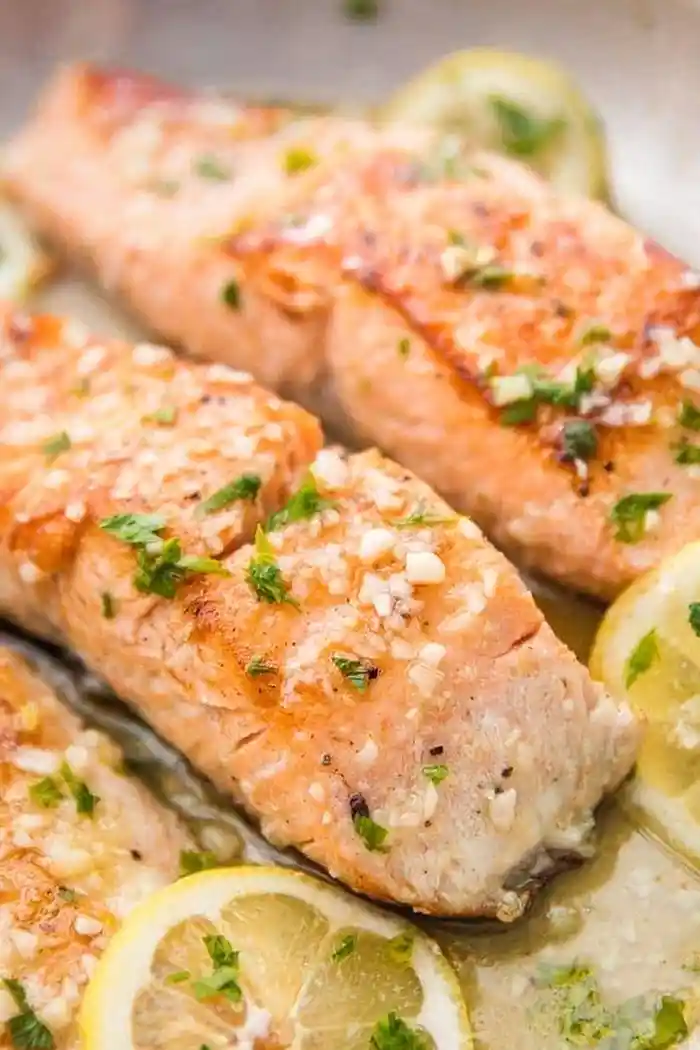
This pan-seared lemon garlic salmon is a fast, nutrient-dense meal suitable for various dietary needs. It combines fresh citrus and garlic for a restaurant-quality finish in under 30 minutes.
List of ingredients
- 1/4 cup ghee or butter (if not on Whole30) – provides a rich, buttery base for the sauce.
- 6-8 garlic cloves (minced) – adds a pungent, aromatic flavor.
- 1/4 cup chicken broth – used to deglaze and build the sauce volume.
- 1/4 cup fresh lemon juice – provides the essential acidity to balance the fat.
- Sea salt – for seasoning the fish and the sauce.
- 1 tablespoon avocado oil – high smoke point oil for searing the salmon.
- 4 salmon filets (about 6 ounces each, patted very dry) – the main protein source.
- Fresh cracked black pepper (if desired) – adds a subtle spicy heat.
- 2 Tbsp. fresh parsley (minced) – used for a fresh, herbal finish.
- Fresh lemons (thinly sliced, for garnish) – adds visual appeal and extra brightness.
step-by-step instructions
- Prepare the lemon garlic sauce: Melt ghee or butter in a small saucepan over medium heat. Add the minced garlic and sauté for 1-2 minutes until it becomes fragrant. Pour in the chicken broth, fresh lemon juice, and several generous pinches of salt. Simmer the mixture until it has reduced by 1/3 to 1/2, transforming from a thin liquid to a thicker, bubbling consistency. Remove from heat and set aside.
- Prepare the salmon: Remove the salmon filets from the refrigerator 10-20 minutes before cooking to bring them closer to room temperature. Liberally sprinkle both sides with salt and season with fresh cracked black pepper if desired.
- Sear the fish: Heat avocado oil in a large saucepan over medium-high heat until it begins to shimmer. Carefully place the salmon filets in the pan skin side up. Cook for 2-3 minutes or until the bottom is lightly browned and crispy.
- Flip and finish: Use a spatula to carefully flip the filets, ensuring the flesh does not flake. Cook for another 3-4 minutes for a medium finish, or continue cooking until the flesh easily flakes with a fork for a well-done result.
- Combine and serve: Remove the pan from the heat. Pour the prepared lemon garlic sauce over the filets. Sprinkle with minced parsley and arrange lemon slices over the top. Serve with any remaining sauce from the pan.
Guidelines for Selecting Quality Salmon
Wild-Caught versus Farmed Salmon
Wild-caught salmon generally contains more omega-3 fatty acids and fewer contaminants than farmed varieties. Sockeye and King salmon are excellent wild options known for their rich color and firm texture. Farmed Atlantic salmon is often more available and has a higher fat content, making it more forgiving during the searing process.
Choosing the Right Cut
Center-cut filets are the most consistent in thickness, ensuring that every piece cooks at the same rate. Avoid pieces with uneven edges to prevent some parts from overcooking while others remain raw. Look for filets that are vibrant in color and free of any gaping or bruising in the flesh.
Fresh versus Frozen Options
Fresh salmon is ideal, but high-quality flash-frozen filets are a practical alternative. If using frozen salmon, thaw it slowly in the refrigerator overnight to maintain the cellular structure of the meat. Avoid thawing in warm water, as this can compromise the texture and increase the risk of bacterial growth.
Mastering Salmon Temperature and Doneness
Achieving Medium-Rare Salmon
For a medium-rare finish, cook the flesh side for only 1-2 minutes before flipping. Cook the skin side for another 2-3 minutes until the internal temperature reaches approximately 125 degrees Fahrenheit. The center will remain translucent and very moist.
Perfecting Medium Salmon
Medium salmon is the most common preference, where the center is slightly opaque but still juicy. Follow the standard timing of 2-3 minutes on the flesh side and 3-4 minutes on the skin side. The flesh should feel firm to the touch but yield slightly when pressed.
Cooking Well-Done Salmon
To achieve well-done salmon, cook the flesh side for 3 minutes and the skin side for 4 minutes. The fish is ready when the flesh is completely opaque and flakes easily with a fork. Be careful not to overcook, as this can lead to a dry, chalky texture.
Essential Searing Techniques
The Importance of Drying the Fish
Moisture on the surface of the salmon creates steam, which prevents the Maillard reaction from occurring. Use paper towels to pat both sides of the filets completely dry before seasoning. This ensures a golden-brown crust and prevents the fish from sticking to the pan.
Managing Pan Temperature
Avocado oil is recommended because it has a high smoke point, allowing the pan to get hot enough for a proper sear. Wait until the oil shimmers or just begins to smoke before adding the fish. If the pan is not hot enough, the salmon will stick and the skin will not become crispy.
Avoiding the Flesh-Tear
Salmon is delicate, especially when it begins to cook. Use a thin, flexible fish spatula to flip the filets gently. Do not attempt to flip the fish too early; once a proper crust has formed, the salmon will naturally release from the pan surface.
Substituting Ingredients for Dietary Needs
Dairy-Free and Vegan Alternatives
For a dairy-free version, replace ghee or butter with olive oil or avocado oil. Vegan butter is also a suitable substitute for maintaining the creamy consistency of the sauce. These alternatives maintain the flavor profile while removing animal-derived fats.
Broth Substitutions
If chicken broth is unavailable or not desired, vegetable broth is an excellent one-to-one replacement. For a lighter sauce, you can use water combined with a pinch of salt, though you will lose some of the depth provided by the broth. A splash of white grape juice can also add a similar complexity without using broth.
Alternative Herb Profiles
While parsley is traditional, fresh dill is a classic pairing for salmon and provides a more citrusy note. Fresh chives can add a mild onion flavor that complements the garlic. A combination of dill and chives creates a sophisticated, herbaceous finish.
Strategic Side Dish Pairings
Low-Carb and Keto Options
Steamed asparagus or sautéed spinach pairs perfectly with the acidity of the lemon garlic sauce. Roasted cauliflower or garlic mashed cauliflower provides a hearty base without adding significant carbohydrates. These options keep the meal focused on healthy fats and proteins.
Whole Grain Accompaniments
For a more filling meal, serve the salmon over a bed of quinoa or brown rice. These grains absorb the excess lemon garlic butter sauce, preventing waste and adding a nutty flavor. Wild rice is another excellent choice for its chewy texture and earthy taste.
Fresh Salad Pairings
A crisp arugula salad with a light vinaigrette cuts through the richness of the butter sauce. Adding sliced cucumbers and radishes to the salad provides a refreshing contrast to the warm, seared fish. A simple mixed green salad with a squeeze of lemon is also highly effective.
Storage and Reheating Logistics
Refrigeration and Shelf Life
Store leftover salmon in an airtight container in the refrigerator for up to 3-4 days. Keep the sauce in a separate container if possible to prevent the fish from becoming overly saturated. Ensure the fish is completely cooled before sealing the container to avoid condensation.
Gentle Reheating Methods
To avoid overcooking the salmon during reheating, use a low-heat setting on the stove or an oven set to 275 degrees Fahrenheit. Add a tablespoon of water or extra butter to the pan to maintain moisture. Avoid the microwave, as it often toughens the protein and ruins the texture.
Freezing Considerations
While raw salmon freezes well, pan-seared salmon does not typically retain its texture after being frozen and thawed. The searing process changes the protein structure, making it more prone to becoming dry upon reheating from a frozen state. It is best to eat this dish fresh or within the refrigeration window.
Troubleshooting Common Issues
Fixing a Broken Sauce
If the butter sauce separates, it is usually due to excessive heat. Remove the pan from the heat and whisk in a teaspoon of cold water or a small knob of cold butter to re-emulsify the sauce. Constant stirring during the reduction phase helps prevent separation.
Preventing Salmon Sticking
Sticking usually occurs if the pan isn’t hot enough or if the fish was added too cold. Ensure the oil is shimmering and the fish has sat at room temperature for at least 10 minutes. Once the salmon is in the pan, do not move it until it has developed a crust.
Managing Overly Salty Sauce
If the sauce becomes too salty after reduction, add a small amount of additional lemon juice or a splash of water. The acidity of the lemon helps neutralize the perception of salt. In extreme cases, a tiny pinch of sugar can balance the saltiness.
Frequently Asked Questions
Can I use frozen salmon for this recipe?
Yes, you can use frozen salmon. Ensure it is completely thawed in the refrigerator and patted very dry before cooking to achieve the best sear.
Which type of skillet is best for searing salmon?
A stainless steel or cast iron skillet is best for achieving a high-heat sear and a crispy crust. Non-stick pans work but do not produce as deep of a brown crust.
How can I tell if the salmon is fresh?
Fresh salmon should have a mild, sea-like scent and no strong fishy odor. The flesh should be firm to the touch and spring back when pressed, with a vibrant color.
Can I cook the salmon in the oven instead?
While you can bake salmon, you will lose the crispy texture provided by pan-searing. For a similar result, you can sear the fish in a pan and then finish it in a 400-degree oven for a few minutes.
Is ghee better than butter for this recipe?
Ghee provides a higher smoke point than butter, making it slightly safer for high-heat searing. However, butter provides a more traditional flavor profile if you are not avoiding dairy.
Print
Pan-Seared Lemon Garlic Salmon
- Total Time: 25 minutes
- Yield: 4 servings 1x
- Diet: Whole30, Paleo, Keto, Low Carb
Description
A quick but elegant lemon garlic salmon recipe that’s perfectly flavored. Whole30, paleo, low carb, and keto friendly.
Ingredients
- 1/4 cup ghee or butter
- 6–8 garlic cloves, minced
- 1/4 cup chicken broth
- 1/4 cup fresh lemon juice
- Sea salt
- 1 tablespoon avocado oil
- 4 salmon filets (about 6 ounces each, patted very dry)
- Fresh cracked black pepper
- 2 Tbsp. fresh parsley, minced
- Fresh lemons, thinly sliced, for garnish
Instructions
- Make the sauce: In a small saucepan, melt ghee or butter over medium heat. Add the garlic and sauté 1-2 minutes or until fragrant. Add in the chicken broth, lemon juice, and a few generous pinches of salt. Simmer until reduced by 1/3 to 1/2, then remove from heat and set aside.
- Prepare salmon: Remove the salmon from the fridge 10-20 minutes before cooking. Sprinkle both sides liberally with salt and season with fresh cracked black pepper.
- Sear salmon: Heat avocado oil in a large saucepan over medium-high heat until shimmering. Carefully place salmon filets skin side up and cook until lightly browned on bottom, about 2-3 minutes or until crispy.
- Flip and finish: Use a spatula to carefully flip and cook 3-4 minutes on the second side, or until skin is crisp and flesh begins to feel firm to the touch.
- Plate: Remove pan from heat and pour lemon garlic sauce over. Sprinkle with parsley and arrange lemon slices over.
Notes
Pat salmon very dry on both sides with paper towels to promote a nice crust and prevent sticking. For medium-rare to medium, cook flesh side 1-2 minutes then skin side 2-3 minutes. For well-done, cook flesh side 3 minutes and skin side 4 minutes.
- Prep Time: 10 minutes
- Cook Time: 15 minutes
- Category: Main Course
- Method: Searing
- Cuisine: American
Nutrition
- Serving Size: 1 filet
- Calories: 384 kcal
- Sugar: 0 g
- Sodium: 133 mg
- Fat: 25 g
- Saturated Fat: 9 g
- Unsaturated Fat: 16 g
- Trans Fat: 0 g
- Carbohydrates: 3 g
- Fiber: 0 g
- Protein: 34 g
- Cholesterol: 122 mg