Prepare a healthy and flavorful dinner in just 25 minutes using a single pan. This recipe combines tender chicken with crisp asparagus in a buttery herb sauce for minimal cleanup.
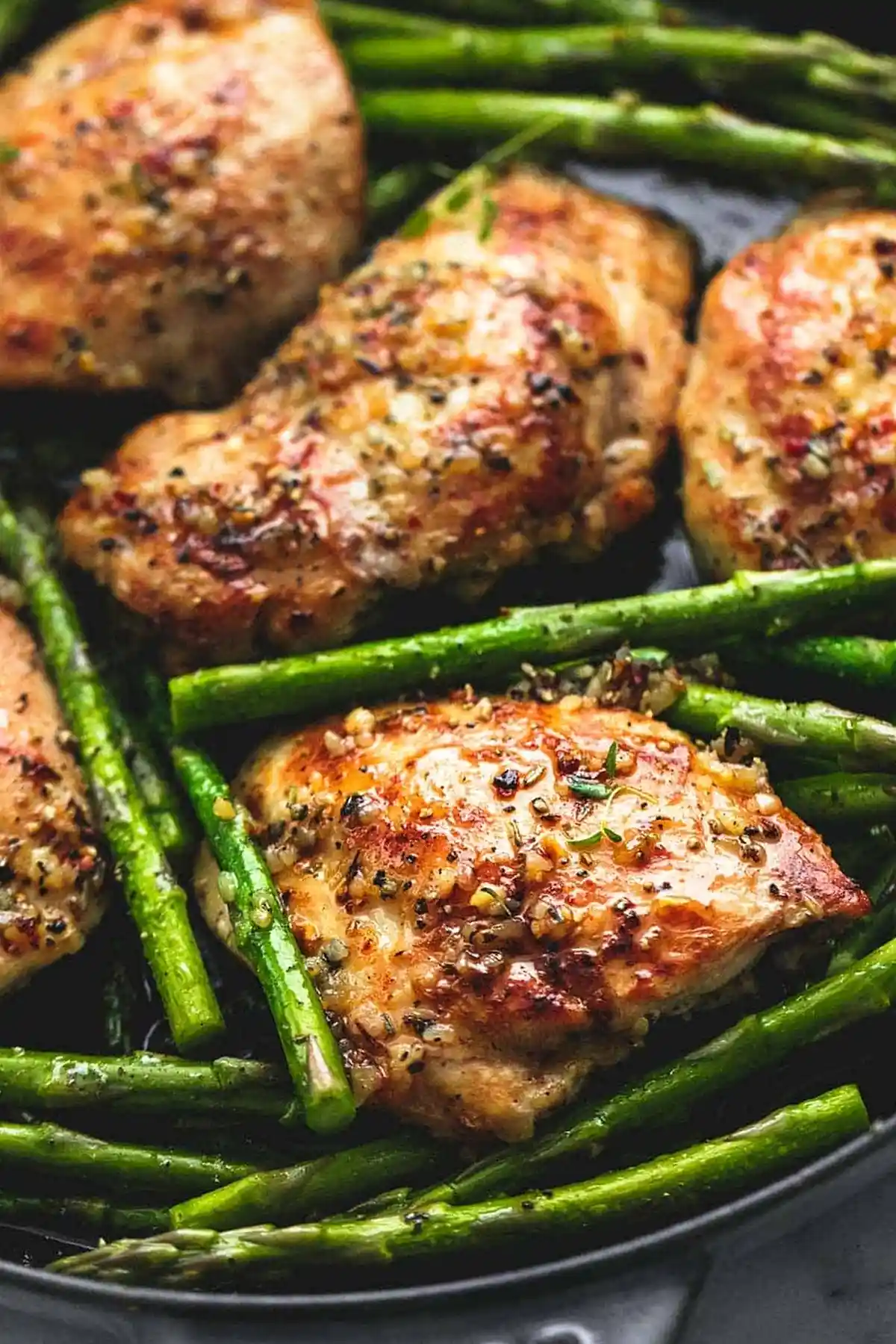
List of ingredients
- 3-6 chicken thighs (or boneless skinless chicken breasts pounded to even 1/2 inch thickness)
- salt and pepper to taste – for seasoning the protein and vegetables
- 1 pound asparagus – ends trimmed
- 3 tablespoons butter (divided) – used for searing and sautéing
- 1 tablespoon minced garlic – fresh is recommended for better flavor
- 1/2 teaspoon dried basil
- 1/2 teaspoon dried oregano
- 1/2 teaspoon dried thyme
- 1/2 teaspoon onion powder
- salt and pepper to taste – for the asparagus seasoning
- fresh herbs for garnish (optional)
step-by-step instructions
- Season the Chicken: Apply salt and pepper to both sides of the chicken pieces.
- Sauté Aromatics: Melt 2 tablespoons of butter in a large pan or skillet over medium-high heat. Stir in the minced garlic, dried basil, oregano, thyme, and onion powder, cooking for about one minute until the garlic becomes fragrant.
- Sear the Chicken: Lower the heat to medium and place the chicken in the pan. Cook for 5-7 minutes on the first side, then flip and cook for another 5-7 minutes until the chicken is nearly cooked through.
- Cook the Asparagus: Move the chicken to the sides of the skillet. Add the remaining 1 tablespoon of butter to the center. Once melted, add the trimmed asparagus and season with salt and pepper. Cook the asparagus, rotating frequently, for 4-6 minutes until tender and the chicken is fully cooked.
- Finish and Serve: Remove from heat and serve immediately. Garnish with freshly cracked black pepper and fresh herbs if desired.
Pro Cooking Tips for Success
Pound Chicken Breasts for Even Cooking
If using chicken breasts, use a meat mallet or a rolling pin to flatten them to a consistent half-inch thickness. This ensures that the thinner ends do not overcook while the center remains raw. Even thickness allows the chicken to sear and cook through at the same rate.
Selecting High-Quality Asparagus
Choose asparagus spears with tight, closed tips and firm, vibrant green stalks. Avoid any spears that look limp or have shriveled tips, as these will not have the desired snap. The diameter of the stalks should be relatively uniform so they all cook in the same amount of time.
Choose the Right Skillet Material
A cast iron skillet is the best choice for this recipe because it maintains a steady high heat for a superior sear. Stainless steel is also an excellent option as it allows you to deglaze the pan easily. Avoid non-stick pans if you want a deep brown crust on your chicken.
Managing the Pan Temperature
Start with medium-high heat to melt the butter and bloom the herbs, but immediately drop to medium once the chicken is added. If the heat is too high, the butter will burn and the garlic will turn bitter. Maintaining a steady medium heat allows the chicken to cook through without scorching the outside.
Ingredient Substitutions and Alternatives
Using Olive Oil Instead of Butter
For a dairy-free or heart-healthy version, replace the butter with a high-smoke-point oil like avocado oil or extra-virgin olive oil. Use the same measurements: 2 tablespoons for the initial sear and 1 tablespoon for the asparagus. Note that the flavor will be less rich than the buttery version.
Swapping Chicken Thighs for Breasts
Chicken thighs are more forgiving and stay juicy longer, making them a great choice for beginners. If you prefer chicken breasts, ensure you do not overcook them beyond 165 degrees Fahrenheit. Pounding them thin is essential to prevent the exterior from drying out.
Alternative Green Vegetables
If asparagus is unavailable, you can use thin green beans, broccolini, or sliced zucchini. Since these vegetables have different densities, adjust the cooking time accordingly. For example, green beans may require an extra 2 minutes of sautéing compared to asparagus.
Using a Pre-Mixed Herb Blend
If you do not have individual jars of basil, oregano, and thyme, you can use a high-quality dried Italian seasoning blend. Replace the three individual herbs with 1.5 teaspoons of the blend. Ensure the blend does not contain added salt to avoid over-seasoning the dish.
Flavor Variations and Enhancements
Adding a Fresh Citrus Finish
Squeeze half a fresh lemon over the chicken and asparagus just before serving. The acidity of the lemon cuts through the richness of the butter and brightens the herb flavors. You can also add a few lemon zest strips to the pan during the final minute of cooking.
Incorporating Spicy Elements
For those who enjoy heat, stir in 1/2 teaspoon of crushed red pepper flakes along with the garlic. The heat infuses into the butter and coats both the chicken and the vegetables. Alternatively, top the finished dish with a drizzle of sriracha or chili oil.
Adding Umami with Parmesan Cheese
Sprinkle freshly grated Parmesan cheese over the chicken and asparagus during the last 60 seconds of cooking. The cheese will melt slightly, creating a savory crust that complements the garlic and herbs. This addition adds a salty depth that pairs well with the sweetness of the asparagus.
Creating a Creamy Garlic Sauce
To turn this into a creamier dish, stir in 2 tablespoons of heavy cream or a dollop of cream cheese after the chicken and asparagus are cooked. Let the sauce simmer for one minute until it thickens and coats the ingredients. This creates a richer, restaurant-style sauce.
Serving Ideas and Pairings
Pairing with Complex Grains
Serve this meal alongside a scoop of fluffy quinoa or wild rice to absorb the leftover garlic butter from the pan. Mashed cauliflower is a great low-carb alternative that complements the herb profile. For a more traditional pairing, a side of garlic mashed potatoes works perfectly.
Complementing with a Fresh Salad
Balance the richness of the butter with a light, acidic side salad. A simple arugula salad with a lemon-vinaigrette or a classic Caesar salad provides a crisp contrast. Avoid heavy dressings that might overshadow the delicate herb flavors of the chicken.
Plating for Better Presentation
For a professional look, place a bed of asparagus in the center of the plate first. Rest the seared chicken pieces on top of the vegetables to create height. Spoon any remaining pan juices over the meat and garnish with a sprig of fresh parsley.
Storage, Reheating, and Make-Ahead Advice
Proper Refrigeration and Storage
Store leftovers in an airtight container in the refrigerator for up to 3 to 4 days. Keep the chicken and asparagus together to maintain moisture. Ensure the food has cooled slightly before sealing the lid to prevent excess condensation from making the asparagus soggy.
Best Methods for Reheating
The best way to reheat is in a skillet over medium heat with a small pat of butter or a splash of water. Heat until the chicken reaches an internal temperature of 165 degrees Fahrenheit. Avoid the microwave if possible, as it can make the chicken rubbery and the asparagus overly soft.
Freezing Guidelines
While the chicken freezes well, asparagus does not maintain its texture after being frozen and thawed. If you plan to freeze the meal, consider freezing only the chicken and adding fresh asparagus when you reheat the dish. Thaw the chicken in the refrigerator overnight before reheating.
Preparing Ingredients in Advance
You can save time by trimming the asparagus and mincing the garlic several hours before cooking. Store the minced garlic in a small container with a touch of oil to prevent it from oxidizing. Keep the chicken seasoned in the fridge for up to 2 hours to allow the flavors to penetrate.
Troubleshooting Common Issues
Preventing Overcooked Asparagus
Asparagus can turn from tender-crisp to mushy very quickly. Only add the spears to the pan during the final stage of the chicken’s cooking process. Monitor the color; as soon as the stalks turn a bright, vivid green, they are usually ready to be served.
Avoiding Burnt Garlic
Garlic has a high sugar content and burns quickly over high heat. Always melt the butter first and ensure the heat is adjusted to medium before adding the garlic. If the garlic begins to brown too quickly, add a tablespoon of water or chicken broth to lower the pan temperature.
Fixing Dry Chicken Breasts
If the chicken breasts feel dry, you may have overcooked them. To prevent this, use a digital meat thermometer to check that the thickest part has reached exactly 165 degrees Fahrenheit. Let the chicken rest for 3-5 minutes before serving to allow the juices to redistribute.
Frequently Asked Questions
How do I know when the chicken is fully cooked?
The most reliable method is using a meat thermometer to ensure the internal temperature reaches 165 degrees Fahrenheit. Alternatively, you can cut into the thickest part of the meat; the juices should run clear and the meat should no longer be pink.
Can I use frozen asparagus for this recipe?
It is not recommended to use frozen asparagus as it releases a significant amount of water when cooking. This will steam the chicken rather than sear it and will result in a mushy texture. If you must use frozen, thaw and pat them very dry first.
What is the best way to trim asparagus ends?
Hold a spear and snap it where it naturally breaks; this is usually where the woody end ends. Alternatively, use a knife to slice off the bottom inch of the stalks. Removing the tough ends ensures every bite is tender.
Can I use a different oil for searing?
Yes, you can use any neutral oil with a high smoke point, such as grapeseed or canola oil. These oils are stable at higher temperatures and will not burn. If you want more flavor, a mixture of oil and butter is a great compromise.
How do I prevent the herbs from burning?
Stir the herbs and garlic constantly during the first minute of cooking. The butter acts as a heat medium that protects the dried herbs from scorching. If you see the herbs turning dark brown, immediately add the chicken to absorb the heat.
Print
One-Skillet Garlic and Herb Chicken with Asparagus
- Total Time: 25 minutes
- Yield: 4 servings 1x
- Diet: General
Description
This 20 minute one pan garlic herb chicken and asparagus is full of rich, buttery herb flavors with both chicken and asparagus all cooked in a single pan for easy prep and cleanup.
Ingredients
- 3–6 chicken thighs (or boneless skinless chicken breasts pounded to even ½ inch thickness)
- salt and pepper to taste
- 1 pound asparagus (ends trimmed)
- 3 tablespoons butter (divided)
- 1 tablespoon minced garlic
- ½ teaspoon dried basil
- ½ teaspoon dried oregano
- ½ teaspoon dried thyme
- ½ teaspoon onion powder
- fresh herbs for garnish (optional)
Instructions
- Step 1: Season chicken with salt and pepper on both sides. Melt 2 tablespoons butter in a large pan/skillet over medium-high heat. Stir in garlic and herbs and cook another minute or so until the garlic is fragrant.
- Step 2: Reduce heat to medium, add chicken to pan, and cook for 5-7 minutes, then flip and cook another 5-7 minutes.
- Step 3: Scoot the chicken over the sides and add remaining 1 tablespoon butter to the empty portion of the pan. Once the butter is melted, add asparagus. Season asparagus with salt and pepper, to taste. Cook, rotating throughout, for 4-6 minutes until tender and chicken is completely cooked through.
- Step 4: Serve immediately garnished with freshly cracked black pepper and fresh herbs if desired.
Notes
In place of the dried basil, oregano, and thyme, you can use about 1 1/2 teaspoons dried Italian seasoning.
- Prep Time: 5 minutes
- Cook Time: 20 minutes
- Category: Main Course
- Method: Stovetop
- Cuisine: American
Nutrition
- Serving Size: 1 serving
- Calories: 220 kcal
- Sugar: 3 g
- Sodium: 80 mg
- Fat: 15 g
- Saturated Fat: 4 g
- Unsaturated Fat: 10 g
- Trans Fat: 1 g
- Carbohydrates: 6 g
- Fiber: 3 g
- Protein: 17 g
- Cholesterol: 84 mg