This efficient one-pot meal combines savory garlic butter and tender chicken thighs with fluffy rice. It is a practical dinner solution that simplifies cleanup by using a single oven-safe skillet for both stovetop and oven cooking.
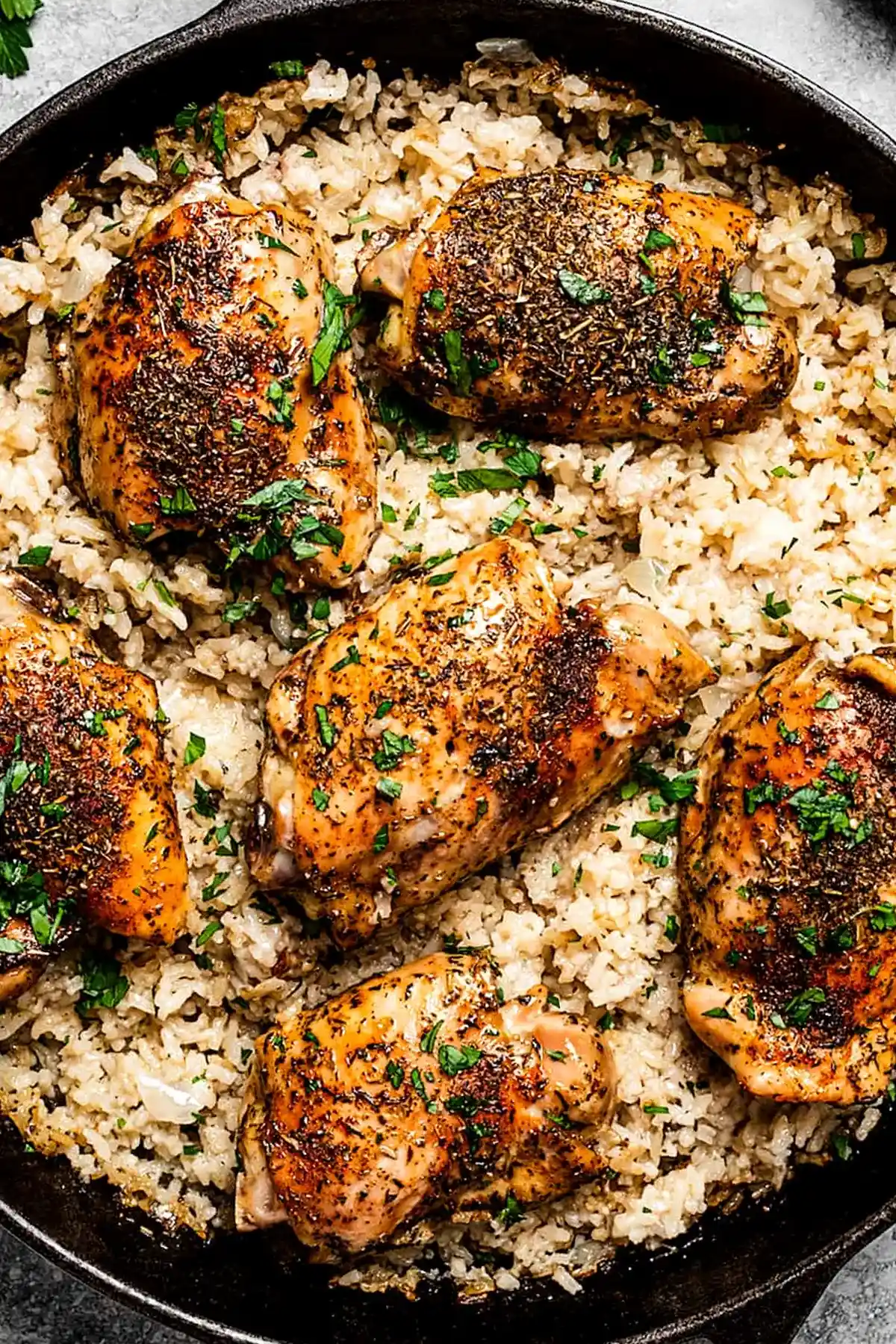
List of ingredients
- 6 skinless, bone-in chicken thighs – provides the best moisture and flavor.
- 1 teaspoon sweet or smoked paprika – adds a mild smoky depth and color.
- 1 teaspoon dried thyme – contributes an earthy, herbaceous note.
- 1/2 teaspoon garlic powder – ensures a concentrated savory base.
- Salt and freshly ground black pepper – adjusted to personal preference.
- 4 tablespoons butter – creates a rich, buttery sauce for the rice.
- 1 yellow onion, diced – provides aromatic sweetness.
- 4 large cloves garlic, minced – delivers a pungent, fresh garlic flavor.
- 1 1/2 cups long grain white rice – absorbs the chicken juices and broth.
- 1 1/2 cups low-sodium, fat free chicken broth – adds savory liquid for cooking.
- 1 1/2 cups hot water – ensures the rice is fully hydrated.
- 1/2 teaspoon dried Italian Seasoning – adds a complex herbal profile.
- 1/2 teaspoon dried oregano – provides a classic Mediterranean aromatic.
- Chopped fresh parsley – used for a fresh, colorful finish.
step-by-step instructions
- Preheat the oven: Set your oven to 350°F to ensure it is fully heated before the skillet enters.
- Season the chicken: Rub the chicken thighs with paprika, dried thyme, garlic powder, salt, and pepper, then set them aside.
- Sauté the aromatics: Melt butter in a large oven-safe skillet over medium heat, then stir in the diced onions and minced garlic for 3 to 4 minutes until the garlic is lightly browned.
- Toast the rice: Stir the long grain white rice into the butter mixture for about 30 seconds to lightly toast the grains.
- Combine ingredients: Place the seasoned chicken thighs on top of the rice, then pour in the chicken broth and hot water.
- Final seasoning: Sprinkle Italian seasoning and oregano over the top and bring the liquid to a boil on the stovetop.
- Initial bake: Cover the skillet tightly with a lid or aluminum foil and bake in the oven for 30 minutes.
- Final bake: Remove the cover and continue baking for another 15 to 20 minutes until all liquid is fully absorbed.
- Rest the dish: Take the skillet out of the oven and let it sit undisturbed for 5 to 8 minutes to allow juices to redistribute.
- Finish and serve: Remove the chicken pieces, fluff the rice with a fork, garnish with fresh parsley, and serve.
Optimal Meat Selection
Use Bone-In Thighs for Moisture
Bone-in chicken thighs are the ideal choice for this recipe because the bone acts as an insulator, preventing the meat from drying out during the long bake. This ensures the chicken remains succulent while the rice absorbs the natural drippings.
Avoid Using Chicken Breasts
Chicken breasts have a much lower fat content and a different muscle structure, which causes them to dry out quickly at 350°F. Using breasts in this one-pot method often results in a tough texture compared to the tender thighs.
Remove Skin to Prevent Greasiness
Removing the skin before cooking prevents excessive fat from rendering into the rice. If the skin is left on, the rice can become overly oily, which alters the fluffy texture of the long-grain white rice.
Using Boneless Thighs
If you prefer boneless thighs, be aware that they cook faster than bone-in versions. You may need to reduce the total baking time by 5 to 10 minutes to prevent the meat from becoming overcooked.
Rice Variety and Adjustments
Selecting Long-Grain White Rice
Long-grain white rice, such as Jasmine or Basmati, is recommended because the grains remain distinct and fluffy. These varieties do not release as much starch as short-grain rice, preventing the dish from becoming mushy.
Converting to Brown Rice
Brown rice can be used for a heartier option, but it requires a longer cooking period due to the outer bran layer. Bake the dish covered for 45 minutes and then uncovered for an additional 15 to 20 minutes.
Managing Liquid Ratios
The ratio of 3 cups of liquid to 1.5 cups of rice is specific to the oven-bake method where some evaporation occurs. If you use a very tight-fitting lid, you may find the rice slightly softer; a looser foil cover allows more steam to escape.
Flavor Enhancement and Substitutions
Adjusting the Herb Profile
If Italian seasoning is unavailable, a blend of dried basil, oregano, and rosemary works as a direct replacement. These herbs complement the garlic butter base without overpowering the natural taste of the chicken.
Substituting Fresh Garlic
If fresh garlic is unavailable, you can use an additional 2 teaspoons of garlic powder. However, fresh minced garlic provides a more pungent and complex flavor profile when sautéed in butter.
Adding a Hint of Heat
For those who prefer a spicier profile, replace the sweet paprika with smoked paprika or add a pinch of cayenne pepper. This adds a subtle warmth that cuts through the richness of the butter.
Alternative Broths
While chicken broth is standard, vegetable broth is a suitable substitute for a cleaner taste. Ensure the broth is low-sodium to maintain control over the overall salt level of the dish.
Cooking Technique Tips
Preventing Burnt Garlic
Garlic burns quickly at medium heat, which can introduce a bitter taste to the entire pot. Stir frequently during the 3 to 4 minutes of sautéing to ensure the garlic only turns lightly golden.
Choosing the Right Skillet
Use a heavy-bottomed, oven-safe skillet such as cast iron or stainless steel. These materials distribute heat evenly, preventing the rice at the bottom from scorching while the chicken cooks on top.
Importance of Resting Time
Allowing the dish to rest for 5 to 8 minutes after baking allows the remaining steam to settle. This step ensures the rice finishes absorbing any residual moisture and the chicken juices stabilize.
Bringing to a Boil First
Bringing the liquid to a boil on the stovetop before transferring the pan to the oven jumpstarts the cooking process. This ensures the rice begins hydrating immediately, leading to a more consistent texture.
Serving and Pairing Ideas
Adding Fresh Vegetable Sides
Pair this rich meal with steamed broccoli or roasted asparagus to add color and nutrients. The bitterness of green vegetables balances the buttery flavor of the rice.
Complementary Salads
A crisp garden salad with a light vinaigrette or a tomato and cucumber salad provides a refreshing contrast. The acidity in a vinegar-based dressing cleanses the palate between bites of savory chicken.
Pairing with Light Soups
Serving a small bowl of lemon-based soup or a clear vegetable broth alongside the meal adds a liquid element that complements the density of the rice and meat.
Storage and Reheating Guidelines
Refrigeration Process
Once cooled, store the leftovers in an airtight container in the refrigerator for up to 5 days. Ensure the container is sealed tightly to prevent the rice from drying out in the cold air.
Freezing for Long-Term Use
This dish can be frozen for up to 3 months. It is best to freeze the rice and chicken in individual portions to make reheating more manageable and efficient.
Oven Reheating Method
To maintain the best texture, reheat leftovers in the oven at 350°F for 15 to 20 minutes. Adding a tablespoon of water or broth to the pan before reheating helps steam the rice back to its original fluffiness.
Microwave Reheating Tips
If using a microwave, cover the plate with a damp paper towel. This creates a steam chamber that prevents the chicken from becoming rubbery and the rice from hardening.
Make-Ahead Instructions
Preparing the Base Early
You can prepare the dish up to the point of adding the liquid two days in advance. Sauté the onions, garlic, and rice, and place the seasoned chicken on top, then refrigerate the pan.
Managing Liquid Addition
Do not add the broth and water until the day you intend to bake the meal. If the liquid is added too early, the rice will soak it all up in the fridge, resulting in undercooked grains.
Troubleshooting Common Issues
What to do if the rice is too wet?
If the liquid has not been fully absorbed after the final baking stage, remove the lid and bake for an additional 5 to 10 minutes. This allows the excess moisture to evaporate more quickly.
How to fix undercooked rice?
If the rice is still hard in the center, add 1/4 cup of hot water or broth, cover tightly with foil, and return to the oven for 10 minutes. The trapped steam will help soften the grains.
Dealing with overcooked chicken
If the chicken has become too dry, it is likely due to using breast meat or baking too long. To salvage the dish, serve the chicken with an extra dollop of butter or a splash of lemon juice.
Frequently Asked Questions
Can I use a different type of rice?
Yes, but the liquid ratios and timing will change. Short-grain rice may become too sticky, and brown rice requires significantly more time and liquid to cook through.
Is it possible to make this in a Dutch oven?
Yes, a Dutch oven is an excellent alternative to a skillet. Its higher sides help retain moisture, which can result in even more tender chicken.
Can I use salted butter instead of unsalted?
You can use salted butter, but you should reduce the amount of additional salt added during the seasoning phase to prevent the dish from becoming too salty.
Do I have to use a skillet for the stovetop part?
You must use a pan that is oven-safe. If you use a non-oven-safe pan for sautéing, you will need to transfer everything to a baking dish before putting it in the oven.
Print
One-Pot Oven Baked Garlic Butter Chicken and Rice
- Total Time: 60 minutes
- Yield: 6 servings 1x
- Diet: General
Description
Packed with buttery garlic flavor and juicy bone-in chicken thighs, this one pot chicken and rice dinner will win over even the harshest critics!
Ingredients
- 6 skinless, bone-in chicken thighs
- 1 teaspoon sweet or smoked paprika
- 1 teaspoon dried thyme
- ½ teaspoon garlic powder
- salt and freshly ground black pepper, to taste
- 4 tablespoons butter
- 1 yellow onion, diced
- 4 large cloves garlic, minced
- 1½ cups long grain white rice
- 1½ cups low-sodium, fat free chicken broth
- 1½ cups hot water
- ½ teaspoon dried Italian Seasoning
- ½ teaspoon dried oregano
- chopped fresh parsley, for garnish
Instructions
- Step: Preheat the oven to 350˚F.
- Step: Season the chicken thighs with paprika, dried thyme, garlic powder, salt and pepper; set aside.
- Step: Add the butter to a large oven-safe skillet and melt over medium heat. Stir in the diced onions and garlic; cook over medium heat for 3 to 4 minutes or until the garlic is lightly browned.
- Step: Stir in the rice; stir constantly for 30 seconds. Place the seasoned chicken pieces over the rice, and add the chicken broth and water.
- Step: Season the top with Italian Seasoning and oregano, and bring to a boil.
- Step: Cover the skillet with a lid or aluminum foil and transfer to the preheated oven; bake for 30 minutes.
- Step: Remove the lid or foil and continue to bake for 15 to 20 minutes or until the liquid is absorbed.
- Step: Remove from oven and let it rest for 5 to 8 minutes.
- Step: Remove the chicken from the pan and fluff up the rice with a fork.
- Step: Garnish with parsley and serve.
Notes
Make ahead: Prepare up to step 6 and refrigerate, adding liquids only on the day of baking. For brown rice, bake covered for 45 minutes, then uncovered for 15 to 20 minutes.
- Prep Time: 10 minutes
- Cook Time: 45 minutes
- Category: Dinner
- Method: Baking
- Cuisine: American
Nutrition
- Serving Size: 1 serving
- Calories: 370 kcal
- Sugar: 0 g
- Sodium: 395 mg
- Fat: 12 g
- Saturated Fat: 5 g
- Unsaturated Fat: 7 g
- Trans Fat: 0 g
- Carbohydrates: 39 g
- Fiber: 1 g
- Protein: 23 g
- Cholesterol: 116 mg