This nutrient-dense dinner combines omega-3 rich salmon with fiber-packed chickpeas and tangy feta. The entire meal is prepared in a single skillet, ensuring a quick cleanup and a 30-minute turnaround.
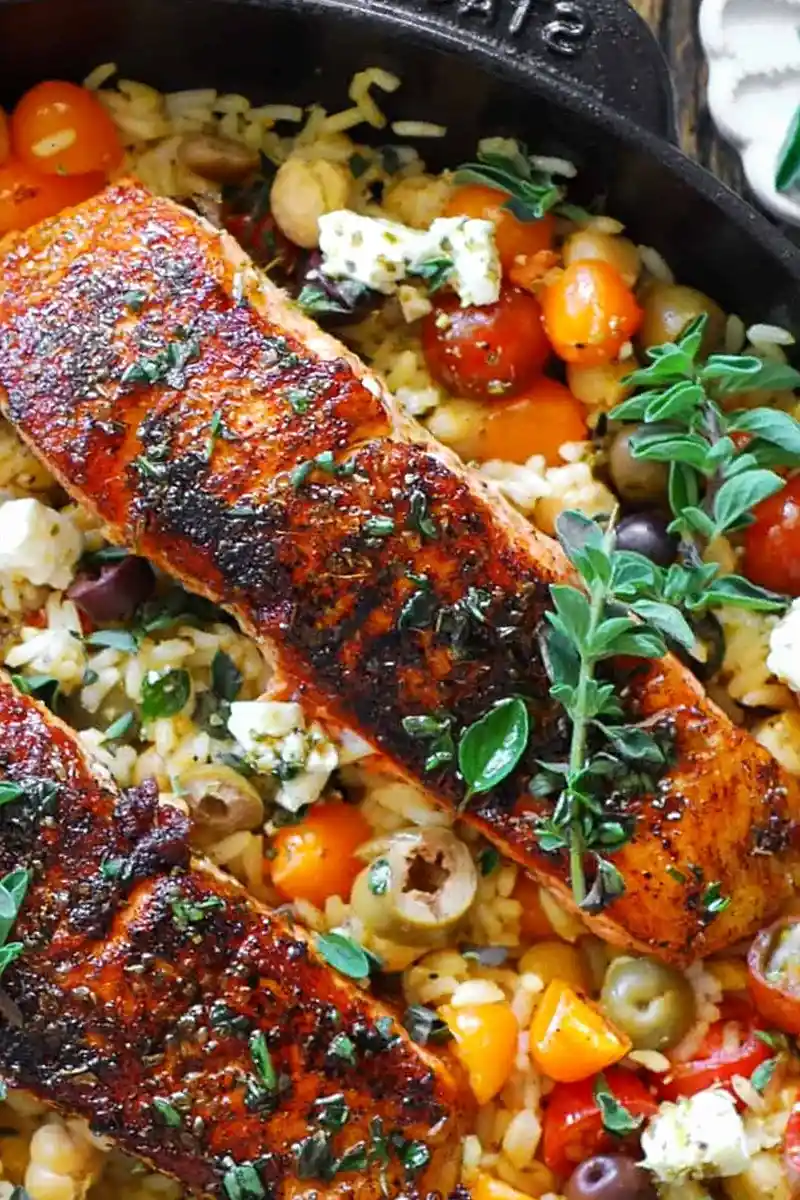
List of ingredients
- 2 lb salmon fillets – use high-quality fillets for the best texture.
- 1 teaspoon smoked paprika – adds a deep, woody flavor.
- 1/2 teaspoon dried oregano – provides a classic herbal base.
- 1/2 teaspoon dried parsley – adds subtle freshness.
- 1/4 teaspoon red chili flakes – introduces a mild spicy kick.
- 1/4 teaspoon salt – enhances all other seasonings.
- 3 tablespoons olive oil – divided for searing and mixing.
- 1.5 cups cooked jasmine rice – ensures a fragrant, soft base.
- 15 oz chickpeas – canned and drained for added plant protein.
- 6 oz cherry tomatoes – sliced in half; use two colors for visual appeal.
- 1/3 cup kalamata olives – sliced for salty, briny notes.
- 1/4 cup green olives – sliced for a different olive profile.
- 3 tablespoons freshly squeezed lemon juice – provides essential acidity.
- 6 oz feta cheese – diced into small cubes.
- 1 tablespoon olive oil – for the cheese marinade.
- 1 tablespoon freshly squeezed lemon juice – for the cheese marinade.
- 1/4 teaspoon dried oregano – for the cheese mixture.
- 2 tablespoons chopped fresh oregano – optional for extra brightness.
- Fresh oregano leaves – for final garnish.
step-by-step instructions
- Season the Salmon: Rub 1 tablespoon of olive oil onto the salmon fillets. Apply the smoked paprika, dried oregano, dried parsley, red chili flakes, and salt evenly over the top of the fish.
- Sear the Fish: Heat a large, high-sided skillet over medium heat for 4 minutes. Add 2 tablespoons of olive oil, then place salmon skin-side up and cook on medium-high for 4 minutes.
- Finish Cooking: Flip the fillets to the skin side. Reduce the heat to medium and cook for an additional 5 minutes until the fish is flaky.
- Prepare the Fillets: Remove the salmon from the heat. Use a wide spatula to separate the flesh from the skin and move the fillets to a plate.
- Clear the Pan: Discard the salmon skins and wipe the skillet clean with paper towels. This removes excess burnt bits before adding the rice.
- Combine Rice Base: Add the cooked jasmine rice, drained chickpeas, sliced cherry tomatoes, and both types of olives to the skillet.
- Heat and Season: Stir in 3 tablespoons of lemon juice and reheat over medium heat. Add 1 tablespoon of olive oil if the mixture seems too dry and season with salt and pepper.
- Prepare Feta Mixture: In a separate medium bowl, mix the cubed feta with 1 tablespoon olive oil, 1 tablespoon lemon juice, 1/4 teaspoon dried oregano, and fresh chopped oregano.
- Final Assembly: Mix half of the feta mixture into the rice in the skillet. Place the cooked salmon fillets on top and reheat everything on medium heat for a minute.
- Garnish and Serve: Top the dish with the remaining feta mixture and sprinkle with fresh oregano leaves before serving.
Optimal Pan Selection for Searing
Cast Iron Skillets for High Heat
A cast iron skillet is ideal for this recipe because it retains heat exceptionally well. This allows for a professional sear on the salmon, creating a crisp exterior while keeping the inside moist. An enameled cast iron pan is even better as it requires no seasoning.
Stainless Steel for Versatility
Stainless steel pans provide a great surface for creating a fond, which is the brown bits left after searing. While the salmon may stick more than in non-stick, the flavor development is superior. Ensure the pan is hot enough that oil shimmers before adding the fish.
Non-Stick Pans for Easy Cleanup
Non-stick pans are a great choice for those who prioritize speed and ease of cleaning. They require less oil and prevent the salmon from tearing when flipping. However, they cannot withstand the same extreme heat as cast iron, which may slightly reduce the sear quality.
Selecting the Best Salmon
Individual Fillets versus Whole Sides
Individual fillets are convenient for portion control and cook more evenly. A large whole side of salmon is better for serving crowds and can be sliced into portions after cooking. Always ensure fillets are of similar thickness to avoid uneven cooking.
Sockeye Salmon for Bold Flavor
Sockeye salmon is known for its deep red color and intense, robust flavor. It has a leaner texture compared to other varieties. This makes it a great choice for those who prefer a strong fish taste.
King Salmon for Buttery Texture
King salmon has a higher fat content, resulting in a buttery, melt-in-your-mouth texture. It is more forgiving during the cooking process and is less likely to dry out. This variety is highly recommended for those who prefer a milder flavor.
Grain and Pasta Alternatives
Substituting Jasmine with Basmati Rice
Basmati rice is a fantastic alternative if you prefer a nuttier flavor and longer, separate grains. It does not stick together as much as jasmine rice. Ensure it is fully cooked before adding it to the skillet to maintain the 30-minute timeline.
Using Couscous or Orzo
For a different texture, replace the rice with pearl couscous or orzo pasta. Orzo absorbs the lemon and olive oil mixture very effectively, creating a creamy consistency. Cook these separately and stir them in during the rice-heating step.
Low-Carb Grain Swaps
Cauliflower rice is an excellent option for those reducing carbohydrate intake. Since cauliflower rice releases more water, sauté it for a few minutes longer in the skillet before adding the olives and tomatoes. This prevents the dish from becoming soggy.
Vegetable Enhancements
Adding Leafy Greens
Fresh spinach or kale can be stirred into the rice mixture during the final reheating stage. The residual heat will wilt the greens perfectly without overcooking them. This adds a boost of iron and a pop of vibrant green color.
Integrating Bell Peppers
Diced red or yellow bell peppers add a sweetness that balances the salty olives. Sauté the peppers in the skillet for 3 minutes before adding the rice and chickpeas. This ensures they are tender and slightly caramelized.
Incorporating Artichoke Hearts
Canned or jarred artichoke hearts are a staple of Mediterranean cuisine and fit perfectly here. Quarter the hearts and add them along with the chickpeas. They provide a unique tang and a meaty texture to the rice base.
Flavor Variations and Substitutions
Alternative Cheese Options
If feta is too salty, try using crumbled goat cheese for a creamier, milder tang. Halloumi is another great option, though it should be pan-seared separately before being added to the dish. Grated Parmesan can be used for a nuttier, salty finish.
Adjusting the Spice Levels
To increase the heat, add an extra pinch of red chili flakes or a dash of cayenne pepper. For a milder version, omit the chili flakes and increase the amount of dried parsley. Smoked paprika is essential for the depth of flavor, so avoid omitting it.
Fresh Herb Swaps
If fresh oregano is unavailable, fresh basil or dill are excellent substitutes. Basil pairs beautifully with the tomatoes and feta. Dill provides a classic pairing with salmon and adds a bright, citrusy aroma.
Storage and Meal Prep Guidelines
Refrigeration and Shelf Life
Store leftover salmon and rice in an airtight container in the refrigerator for up to 3 days. Keep the fish and rice together, but ensure the container is sealed tightly to prevent the salmon from absorbing other fridge odors. This dish holds its flavor well when chilled.
Freezing for Long-Term Use
This recipe is freezer-friendly because it contains no heavy cream. For the best results, freeze the salmon and rice mixture without the fresh tomatoes. Add fresh tomatoes only after reheating to maintain their texture and acidity.
Preventing Fish Odors
To keep your refrigerator fresh, use glass containers instead of plastic for storage. Glass is non-porous and does not absorb the scent of the fish. Double-wrapping with a layer of beeswax wrap or plastic film also helps.
Effective Reheating Methods
Stovetop Reheating for Texture
The stovetop is the best way to maintain the texture of the rice and salmon. Use a medium-low heat and add a splash of olive oil or water to prevent the rice from drying out. Heat the rice first, then place the salmon on top to warm through.
Microwave Reheating for Speed
Use a deep, microwave-safe bowl to keep moisture trapped during heating. Heat for 30 seconds, stir the rice mixture, and then heat for another 30 to 60 seconds. This prevents the salmon from becoming rubbery due to uneven heating.
Oven Warming Method
Place the meal in an oven-safe dish and cover it with foil to trap steam. Warm at 300°F (150°C) for about 10-15 minutes. This is the best method for reheating larger portions without overcooking the fish.
Troubleshooting Common Issues
Preventing Salmon from Sticking
Salmon often sticks if the pan is not hot enough or if the fish is damp. Always pat the fillets dry with paper towels before seasoning. Ensure the oil is shimmering and hot before placing the fish in the pan.
Avoiding Overcooked Fish
Overcooked salmon becomes dry and chalky. Use a meat thermometer to check for an internal temperature of 145°F (63°C). Remove the fish from the heat slightly early, as it will continue to cook for a few minutes while resting.
Balancing Excessive Saltiness
Since feta and olives are both naturally salty, the dish can occasionally become over-seasoned. If this happens, add an extra squeeze of fresh lemon juice or a handful of fresh spinach. The acidity and freshness help neutralize the salt.
Frequently Asked Questions
Can I use frozen salmon fillets?
Yes, but they must be fully thawed and patted dry. Thawing in the refrigerator overnight is the safest method. If you use frozen fillets that aren’t fully thawed, they will release excess water and steam instead of searing.
Is this recipe gluten-free?
Yes, as long as you use jasmine rice or another naturally gluten-free grain. Ensure your canned chickpeas and olives do not have gluten-based additives in the brine. This makes it a safe option for those with gluten sensitivities.
What if I cannot find kalamata olives?
Any brined olive will work, such as Manzanilla or Castelvetrano olives. If you prefer no olives, you can substitute them with capers for a similar salty punch. Just be mindful of the total salt content in the dish.
Print
One-Pan Mediterranean Salmon with Zesty Rice and Feta
- Total Time: 30 minutes
- Yield: 4 servings 1x
- Diet: Pescatarian
Description
This easy one-pan Mediterranean salmon dinner comes together in just 30 minutes. The recipe features staples of Mediterranean cuisine: rice, chickpeas, tomatoes, olives, lemon, oregano, and feta cheese. It’s healthy and gluten-free.
Ingredients
- 2 lb salmon fillets
- 1 teaspoon smoked paprika
- 1/2 teaspoon dried oregano
- 1/2 teaspoon dried parsley
- 1/4 teaspoon red chili flakes
- 1/4 teaspoon salt
- 3 tablespoons olive oil (divided)
- 1.5 cups cooked jasmine rice
- 15 oz chickpeas (canned)
- 6 oz cherry tomatoes, sliced in half
- 1/3 cup kalamata olives, sliced
- 1/4 cup green olives, sliced
- 3 tablespoons freshly squeezed lemon juice
- 6 oz feta cheese (microbial-rennet), diced into small cubes
- 1 tablespoon olive oil
- 1 tablespoon freshly squeezed lemon juice
- 1/4 teaspoon dried oregano
- 2 tablespoons chopped fresh oregano (optional)
- fresh oregano for garnish
Instructions
- Step: Heat a large, high-sided skillet over medium heat for about 4 minutes.
- Step: Season the top of the salmon with smoked paprika, dried oregano, dried parsley, red chili flakes, and salt, using 1 tablespoon of olive oil to rub the spices on.
- Step: Add 2 tablespoons of olive oil to the hot skillet. Add salmon skin side up and cook on medium-high heat for 4 minutes.
- Step: Flip the salmon, reduce heat to medium, and cook for 5 more minutes. Remove from heat, separate the flesh from the skin, and place salmon on a plate. Wipe the skillet clean.
- Step: Add cooked rice, drained chickpeas, sliced cherry tomatoes, and sliced olives to the skillet. Add 3 tablespoons of lemon juice and reheat on medium heat, stirring to combine. Add 1 tablespoon of olive oil if desired, and season with salt and black pepper.
- Step: In a medium bowl, combine cubed feta cheese with 1 tablespoon of olive oil, 1 tablespoon of lemon juice, 1/4 teaspoon of dried oregano, and 2 tablespoons of chopped fresh oregano. Mix well.
- Step: Add half of the feta mixture to the skillet with rice and mix thoroughly. Add cooked salmon to the skillet and reheat on medium heat.
- Step: Top the rice with the remaining feta mixture and sprinkle with fresh oregano before serving.
Notes
This recipe is flexible; you can substitute salmon with trout, halibut, or cod, and use couscous or orzo instead of rice. For storage, keep in an air-tight container in the fridge for up to 3 days or freeze for up to 2 months (excluding fresh tomatoes).
- Prep Time: 15 minutes
- Cook Time: 15 minutes
- Category: Main Course
- Method: Pan-searing
- Cuisine: Mediterranean
Nutrition
- Serving Size: 1 serving
- Calories: 859 kcal
- Sugar: 7 g
- Sodium: 1053 mg
- Fat: 44 g
- Saturated Fat: 11 g
- Unsaturated Fat: 29 g
- Trans Fat: 0 g
- Carbohydrates: 53 g
- Fiber: 11 g
- Protein: 63 g
- Cholesterol: 163 mg