This vibrant Napa Cabbage Egg Drop Soup is a quintessential comfort meal that balances delicate, silky egg ribbons with the natural sweetness of tender cabbage. Perfect for busy weeknights, this light yet deeply savory broth comes together in under thirty minutes, providing a clean and nourishing bowl that warms the body from the inside out. By layering the cooking process, you ensure each ingredient retains its ideal texture for the best possible bowl.
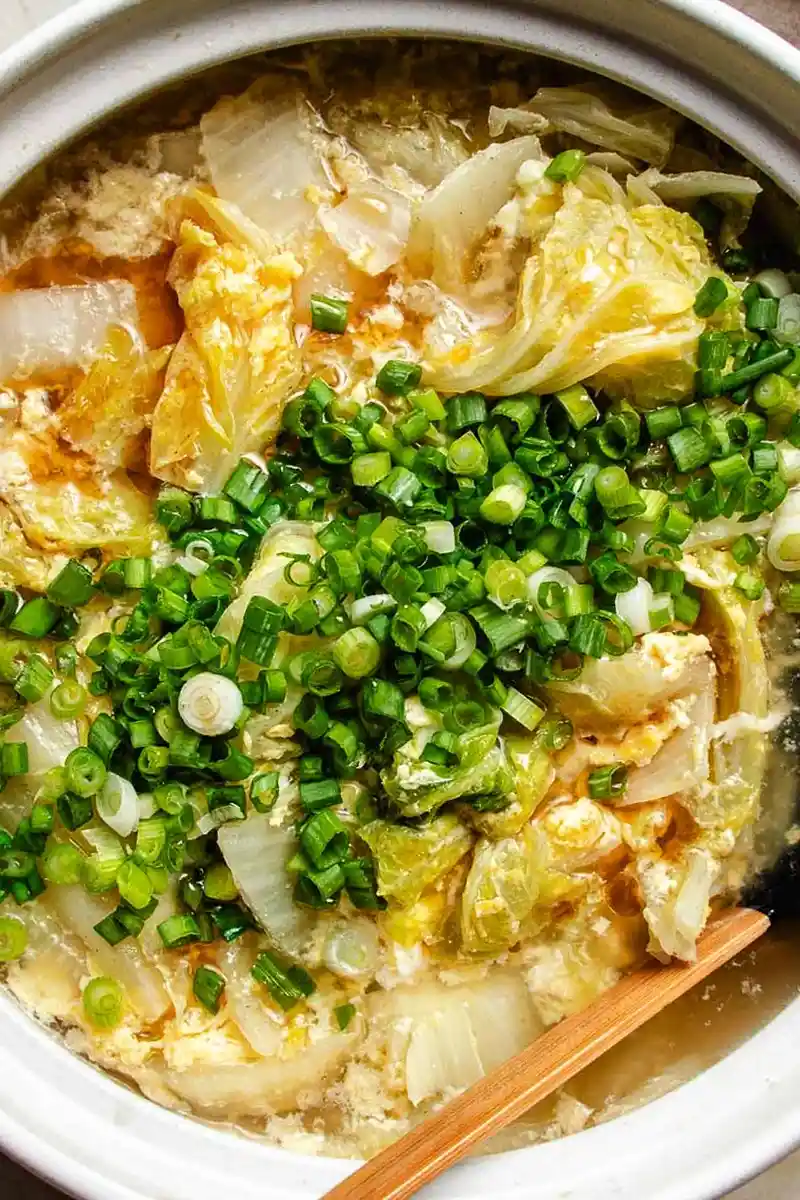
List of ingredients
- 1.6 lb Napa cabbage (1 medium)
- 0.75 oz garlic cloves (sliced, 3 large)
- 0.2 oz ginger (julienned)
- 1 tbsp avocado oil (or olive oil)
- ½ tsp coarse sea salt (or to taste)
- 3.5 cup chicken stock
- ½ tsp shiitake mushroom seasoning
- 3 large eggs (gentle whisked)
- Drizzle toasted sesame oil
- 2 whole scallions (diced, garnish)
step-by-step instructions
- Slice: Trim the bottom tip of the cabbage. Separate stems from leaves. Slice stems 1.5-inch wide crosswise and leaves 3 to 3.5-inch wide.
- Wash and drain: Rinse stems and leaves separately and drain well.
- Prepare: Have sliced garlic and julienned ginger ready.
- Saute garlic and ginger: Preheat a 4-quart pot over medium-low heat with oil. Turn to medium and saute garlic and ginger for 10 seconds until fragrant.
- Cabbage stems and broth: Add cabbage stems and saute for 1 minute. Pour in chicken stock, cover, and simmer for 12 minutes until stems are tender but still have bite.
- Cabbage leaves: Add cabbage leaves and press down into the broth. Simmer for 3-4 minutes until tender.
- Season: Taste the broth and adjust with salt and mushroom seasoning or bouillon.
- Make egg ribbons: Whisk eggs. Slowly drizzle eggs into the gently boiling soup in a swirling motion. Let set for a few seconds before stirring to break into ribbons.
- Garnish: Drizzle with sesame oil, garnish with scallions, and serve warm.
Refining Your Technique
Achieving Delicate Egg Textures
The secret to perfect egg ribbons is the speed and height of your pour. Drizzle the whisked eggs from a slightly higher position into the pot in a circular motion rather than dumping them all at once. Allow the heat to set the egg for a few seconds before stirring to prevent the broth from becoming cloudy or mushy.
Balancing Aromatics for Maximum Flavor
Never rush the initial saute of your garlic and ginger. Sautéing them until just golden and fragrant builds the flavor base that defines the entire bowl. If you accidentally let them brown too much, discard the oil and start over, as burnt garlic will introduce a bitter note that cannot be masked later.
Managing Cabbage Textures
The timing of adding your cabbage components is non-negotiable for the best result. The stems act like a vegetable base that needs time to soften, while the leaves cook almost instantly. By keeping them strictly separated during the prep stage, you avoid the trap of having overcooked, mushy leaves while waiting for stems to become tender.
Substitutions and Variations
Alternative Leafy Greens
While Napa cabbage provides a signature sweetness that is difficult to replicate, you can occasionally swap it for similar varieties. Taiwanese Wawa cabbage is the closest match in terms of tenderness and sugar content. Avoid using fibrous greens like kale or woody broccoli stalks, as they will alter the delicate profile of this soup.
Enhancing Umami Profiles
If you prefer a more intense savory profile, incorporate a teaspoon of white miso paste or a splash of liquid aminos during the seasoning step. These ingredients complement the mushroom seasoning and chicken stock, deepening the color and complexity of the broth. Always dissolve miso in a small ladle of hot liquid before stirring it into the main pot to ensure it does not clump.
Adding Protein or Hearty Elements
To turn this soup into a complete main course, consider adding thinly sliced chicken breast or tofu cubes during the simmering process. You can also toss in a handful of pre-cooked rice vermicelli noodles just before serving. These additions provide a more substantial mouthfeel while still maintaining the clean, light character of the broth.
Storage and Reheating Advice
Storing Leftover Soup
This soup stores exceptionally well if kept in an airtight container in the refrigerator for up to four days. As the cabbage sits, it may release more water, which is a natural occurrence that does not affect the safety of the dish. Store it in portions to avoid multiple rounds of reheating, which helps keep the remaining soup fresh and high quality.
Gentle Reheating Practices
To reheat, transfer the desired amount of soup into a small saucepan and place it over medium-low heat. Avoid boiling the soup vigorously during reheating, as this will overcook the cabbage and degrade the texture of the egg ribbons. Alternatively, you can use a microwave at medium power, stirring every minute to ensure the heat is distributed evenly throughout the bowl.
Frequently Asked Questions
Why does my broth turn cloudy?
Cloudiness often occurs if the eggs are stirred too vigorously while they are still raw or if the soup is boiling too violently. To maintain a clear broth, ensure the heat is turned down to a gentle simmer before adding the eggs and use a very light hand when forming the ribbons.
Can I prepare this in a slow cooker?
While this recipe is optimized for the stovetop to maintain the texture of the cabbage, you can adapt it by adding the broth and stems to a slow cooker on high for two hours. Add the leaves during the final thirty minutes of cooking and stir in the eggs right before serving to ensure they cook properly without becoming overdone.
Is this soup suitable for meal prepping?
This recipe is perfect for batch cooking. Simply follow the instructions through the simmering stage, then cool the broth and cabbage mixture rapidly before refrigerating. Add the fresh eggs and garnishes right before you eat to keep the egg ribbons fresh and vibrant rather than rubbery from repeated heating.
What is the best way to slice Napa cabbage?
Use a sharp chef’s knife to cut the cabbage crosswise. By segmenting the base into thinner pieces, you ensure that the thickest part of the stem cooks at the same rate as the thinner parts. Keep the leafy ends in larger chunks so they do not disappear into the broth while simmering.
How do I make the broth taste richer?
If you want a heavier mouthfeel, you can stir in a small amount of cornstarch slurry—a mix of one teaspoon cornstarch and one tablespoon cold water—at the very end. Add this slowly while stirring to slightly thicken the broth, creating a restaurant-style consistency that coats the cabbage and egg ribbons beautifully.
Print
Napa Cabbage Egg Drop Soup
- Total Time: 30 minutes
- Yield: 6 servings 1x
- Diet: Gluten-free
Description
Warm up with a bowl of Napa Cabbage Egg Drop Soup – an easy and flavorful recipe featuring tender cabbage and a savory broth.
Ingredients
- 1.6 lb Napa cabbage (1 medium)
- 0.75 oz garlic cloves (sliced, 3 large)
- 0.2 oz ginger (julienned)
- 1 tbsp avocado oil (or olive oil)
- ½ tsp coarse sea salt (or to taste)
- 3.5 cup chicken stock
- ½ tsp shiitake mushroom seasoning
- 3 large eggs (gentle whisked)
- Drizzle toasted sesame oil
- 2 whole scallions (diced, garnish)
Instructions
- Slice: Trim the bottom tip of the cabbage. Separate stems from leaves. Slice stems 1.5-inch wide crosswise and leaves 3 to 3.5-inch wide.
- Wash and drain: Rinse stems and leaves separately and drain well.
- Prepare: Have sliced garlic and julienned ginger ready.
- Saute garlic and ginger: Preheat a 4-quart pot over medium-low heat with oil. Turn to medium and saute garlic and ginger for 10 seconds until fragrant.
- Cabbage stems and broth: Add cabbage stems and saute for 1 minute. Pour in chicken stock, cover, and simmer for 12 minutes until stems are tender but still have bite.
- Cabbage leaves: Add cabbage leaves and press down into the broth. Simmer for 3-4 minutes until tender.
- Season: Taste the broth and adjust with salt and mushroom seasoning or bouillon.
- Make egg ribbons: Whisk eggs. Slowly drizzle eggs into the gently boiling soup in a swirling motion. Let set for a few seconds before stirring to break into ribbons.
- Garnish: Drizzle with sesame oil, garnish with scallions, and serve warm.
Notes
For a richer flavor, use shiitake mushroom seasoning, chicken bouillon, or dashi powder. You can also add a tablespoon of miso paste for extra umami. Store leftovers in an airtight container for up to 4 days.
- Prep Time: 10 minutes
- Cook Time: 20 minutes
- Category: Soup
- Method: Stovetop
- Cuisine: Chinese
Nutrition
- Serving Size: 1 serving
- Calories: 104 kcal
- Sugar: 2 g
- Sodium: 322 mg
- Fat: 6 g
- Saturated Fat: 1 g
- Unsaturated Fat: 4 g
- Trans Fat: 0 g
- Carbohydrates: 7 g
- Fiber: 2 g
- Protein: 8 g
- Cholesterol: 93 mg