This vibrant Mexican Shrimp Ceviche is a refreshing, protein-packed dish that captures the essence of coastal cuisine. By utilizing the natural acidity of fresh citrus juice to cure raw shrimp, you achieve a delicate, firm texture without ever turning on the stove. It is the perfect centerpiece for warm-weather gatherings, offering a balance of bright citrus, crunchy vegetables, and creamy avocado that satisfies both as a light lunch and a sophisticated appetizer.
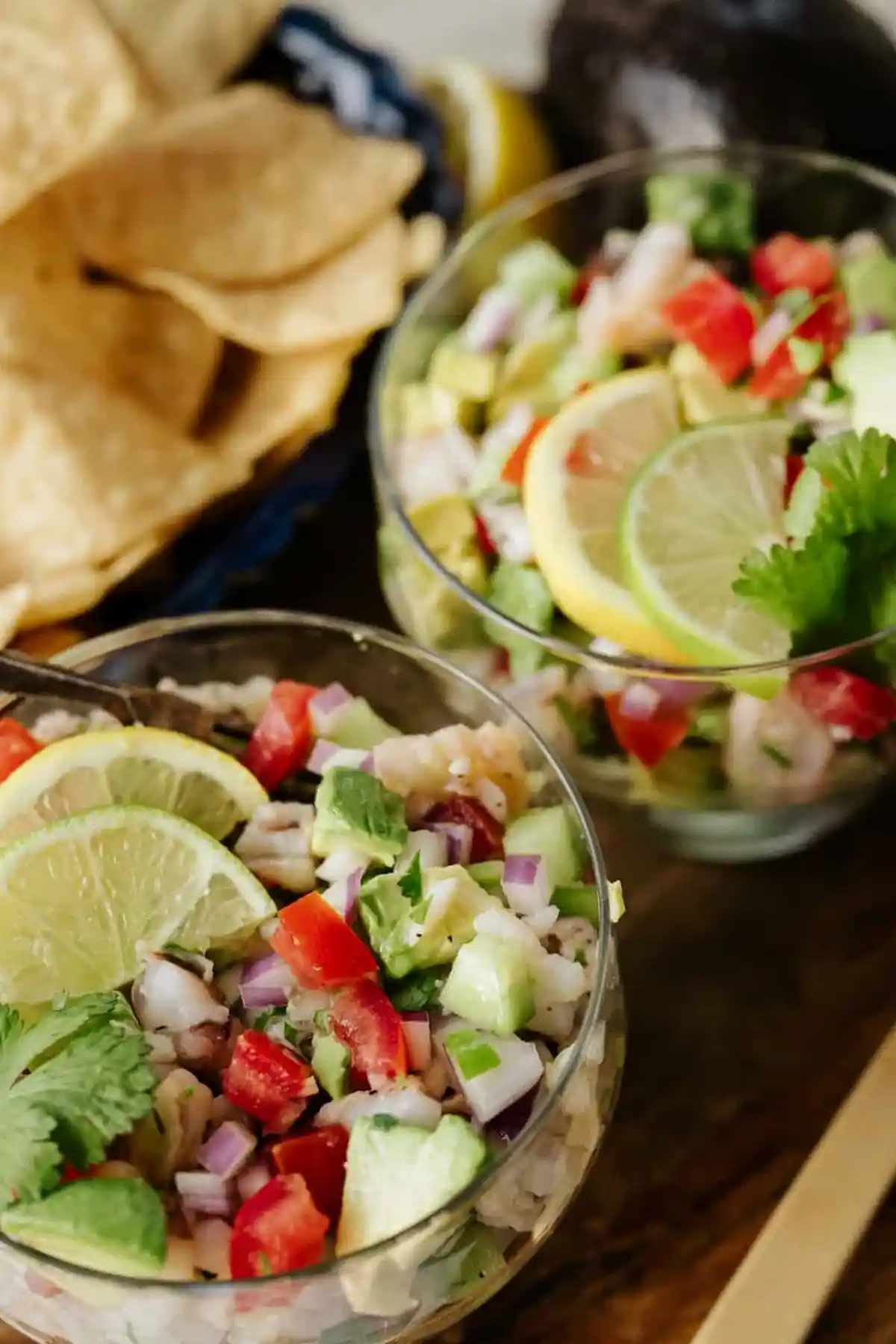
List of ingredients
- 3 pounds large raw tiger shrimp, peeled and deveined
- 4 large tomatoes, seeded and diced
- 1 small red onion, diced
- 2 serrano peppers, seeded and finely chopped
- 1 cucumber, peeled and diced
- 1 handful cilantro, chopped plus several sprigs for garnish
- 2 avocados, peeled, pitted and cubed
- 1 teaspoon olive oil
- Salt to taste
- Pepper to taste
- 6 limes, juiced
- 4 lemons, juiced
- 1 bag of tortilla chips or tostadas
step-by-step instructions
- Step: Cut shrimp into 1/4-inch pieces.
- Step: Lay out shrimp in the bottom of glass baking dish. Pour lemon and lime juice over them and refrigerate for 2 hours. The acid from the lemons and limes will “cook” the shrimp.
- Step: Toss prepared shrimp with the remaining ingredients and refrigerate for one more hour or longer.
Essential preparation techniques
Selecting and cleaning the shrimp
When purchasing shrimp for ceviche, prioritize quality and freshness above all else. Since the shrimp is cured rather than cooked with heat, it is vital to select high-quality, sustainably sourced tiger shrimp or firm white shrimp. Always ensure they are thoroughly deveined, as any remaining grit can ruin the texture of the dish. If you are using frozen shrimp, allow them to thaw completely in the refrigerator before peeling and chopping to maintain the ideal structural integrity of the meat.
The importance of non-reactive vessels
Never underestimate the chemical reaction between acidic citrus juice and metal bowls. When marinating the shrimp, always use glass, ceramic, or high-quality food-grade plastic containers to prevent a metallic taste from leaching into the food. Copper, aluminum, and cast iron are particularly reactive and should be avoided at all costs during the curing phase. This simple shift in equipment ensures the bright, zesty flavor of your lime and lemon juice remains untainted and fresh.
Perfecting the citrus ratio
The balance between lemon and lime juice is a signature aspect of this recipe. While lime provides the primary acidity for denaturing the shrimp protein, lemon adds a rounded, slightly sweeter complexity that prevents the dish from being overly astringent. If your limes are particularly tart, consider increasing the lemon portion slightly to balance the flavor. Always juice your citrus by hand or with a manual reamer just before adding it to the shrimp to ensure the oils and juices are at their peak brightness.
Practical tips for consistency
Mastering the dice
Uniformity in your vegetable prep is key to a cohesive eating experience. Aim to cut your tomatoes, cucumbers, and red onions into pieces roughly the same size as your shrimp chunks. This not only makes the dish visually appealing but also ensures that you get a variety of textures and flavors in every single bite. If the pieces are too large, the individual flavors may compete; if they are too small, the vegetables might release too much moisture and dilute the marinade.
Managing heat levels
Serrano peppers vary significantly in heat level from batch to batch. Before adding them to the final mixture, taste a small sliver of the pepper to gauge its potency. If you prefer a milder experience, remove all seeds and white membranes, as this is where the majority of the capsaicin resides. If you are serving a large crowd, consider keeping the chopped peppers on the side so guests can customize their own level of heat according to their personal preference.
Achieving the ideal texture
The texture of your shrimp should be firm, opaque, and slightly bouncy—a sign that the curing process has been effective. If the shrimp remains translucent or feels slimy, it has not cured long enough in the acid. Conversely, if you leave the shrimp in the juice for more than 24 hours, the fibers can break down too much, resulting in a mushy or mealy texture. Aim for that sweet spot of 2 to 3 hours total curing time to ensure the best possible mouthfeel.
Serving ideas and presentation
Creative vessels for serving
While standard tortilla chips are the classic companion, consider expanding your options for a more formal presentation. Serving the ceviche inside hollowed-out avocado halves provides a rich, creamy contrast to the zesty shrimp and creates a beautiful, individual-sized portion. Alternatively, spoon the mixture into endive leaves for a crisp, low-carb, and elegant appetizer that looks stunning on a serving platter. If you opt for tostadas, assemble them just before serving so the base remains perfectly crisp and does not absorb too much liquid.
Garnishing for visual appeal
A little attention to detail goes a long way in making this dish look professional. Use reserved cilantro sprigs, thin slivers of radish for an extra peppery crunch, or a sprinkle of toasted sesame seeds to add visual contrast. You could also offer a side of thinly sliced pickled red onions or extra lime wedges for guests who prefer an extra kick of acid. These simple additions elevate the humble ceviche from a casual snack to a visually striking starter for any dinner party.
Storage and make-ahead strategy
Strategic refrigeration
Ceviche is an exceptional make-ahead dish because it requires a period of resting, but it does have a limited window of peak freshness. Store the finished mixture in an airtight glass container, pressing a piece of plastic wrap directly onto the surface of the ceviche to prevent oxidation of the avocado. Keep the container in the coldest part of your refrigerator. While it will stay safe to eat for up to 24 hours, the quality of the vegetables and the texture of the shrimp will be superior if consumed within 12 to 18 hours of preparation.
Avoiding common pitfalls
Do not be tempted to freeze the leftover ceviche, as the high water content in the vegetables and the delicate structure of the shrimp will turn into an icy, unappealing mass upon thawing. If you suspect you have made too much, only combine the amount you intend to serve with the avocados and fresh herbs, and keep the cured shrimp and remaining liquid separate until you are ready to assemble the rest. This modular approach ensures that even leftovers taste as fresh as the initial batch.
Frequently asked questions
Does the acidity of the citrus actually kill bacteria?
While the citric acid changes the appearance and texture of the shrimp by denaturing the proteins, it is not a substitute for the heat-based cooking process when it comes to pathogen reduction. The curing process relies on the shrimp being of high quality and handled in a sanitary environment. If you have concerns about consuming raw seafood, it is recommended to use pre-cooked shrimp, which will still absorb the marinade and provide a delicious, albeit texturally different, experience.
How can I tell if my shrimp is properly cured?
Properly cured shrimp will transition from a translucent, greyish-pink raw state to a completely opaque, white, or pink-and-white appearance. The flesh should feel firm to the touch, similar to the texture of traditionally poached shrimp. If you find a piece that still appears glassy or translucent in the center, it needs more time in the citrus marinade. If you are unsure, you can test a small piece by pulling it apart to ensure it is opaque all the way through.
Can I use bottled lime juice in a pinch?
It is strongly discouraged to use bottled juice for this recipe. Bottled juices often contain preservatives, natural flavors, or sugars that significantly alter the bright, crisp profile essential to a good ceviche. Freshly squeezed juice contains natural oils from the zest that provide a depth of flavor that cannot be replicated by commercial alternatives. Spending a few extra minutes to juice your fruit by hand will result in a vastly superior final dish that tastes significantly more authentic and vibrant.
Print
Mexican Shrimp Ceviche (Ceviche de Camarón)
- Total Time: 135 minutes
- Yield: 10 servings 1x
- Diet: Pescatarian
Description
Bright, fresh, and bursting with flavor, this Mexican Shrimp Ceviche recipe is sure to become one of your favorite summer recipes. Made with just 11 ingredients and 15 minutes of active prep, this easy ceviche recipe is the no-cook meal of your dreams!
Ingredients
- 3 pounds large raw tiger shrimp, peeled and deveined
- 4 large tomatoes, seeded and diced
- 1 small red onion, diced
- 2 serrano peppers, seeded and finely chopped
- 1 cucumber, peeled and diced
- 1 handful cilantro, chopped plus several sprigs for garnish
- 2 avocados, peeled, pitted and cubed
- 1 teaspoon olive oil
- Salt to taste
- Pepper to taste
- 6 limes, juiced
- 4 lemons, juiced
- 1 bag of tortilla chips or tostadas
Instructions
- Step: Cut shrimp into 1/4-inch pieces.
- Step: Lay out shrimp in the bottom of glass baking dish. Pour lemon and lime juice over them and refrigerate for 2 hours. The acid from the lemons and limes will “cook” the shrimp.
- Step: Toss prepared shrimp with the remaining ingredients and refrigerate for one more hour or longer.
Notes
Ceviche does well for up to 24-30 hours in the refrigerator. Use a non-reactive bowl such as glass, plastic, melamine, or stainless steel. Always marinate for a minimum of 2 hours for the shrimp to cure properly.
- Prep Time: 15 minutes
- Cook Time: 0 minutes
- Category: Main Course
- Method: Curing
- Cuisine: Mexican
Nutrition
- Serving Size: 1 cup
- Calories: 208 kcal
- Sugar: 4 g
- Sodium: 780 mg
- Fat: 8 g
- Saturated Fat: 1 g
- Unsaturated Fat: 7 g
- Trans Fat: 0 g
- Carbohydrates: 17 g
- Fiber: 6 g
- Protein: 21 g
- Cholesterol: 171 mg