This vibrant Mexican-style shrimp ceviche relies on the acidity of fresh citrus to transform raw seafood into a firm, zesty, and refreshing dish. It serves as an ideal no-cook solution for warm weather gatherings, offering a bright explosion of flavor in every bite. With careful preparation, you can achieve a restaurant-quality appetizer that highlights the natural sweetness of shrimp paired with crisp garden vegetables.
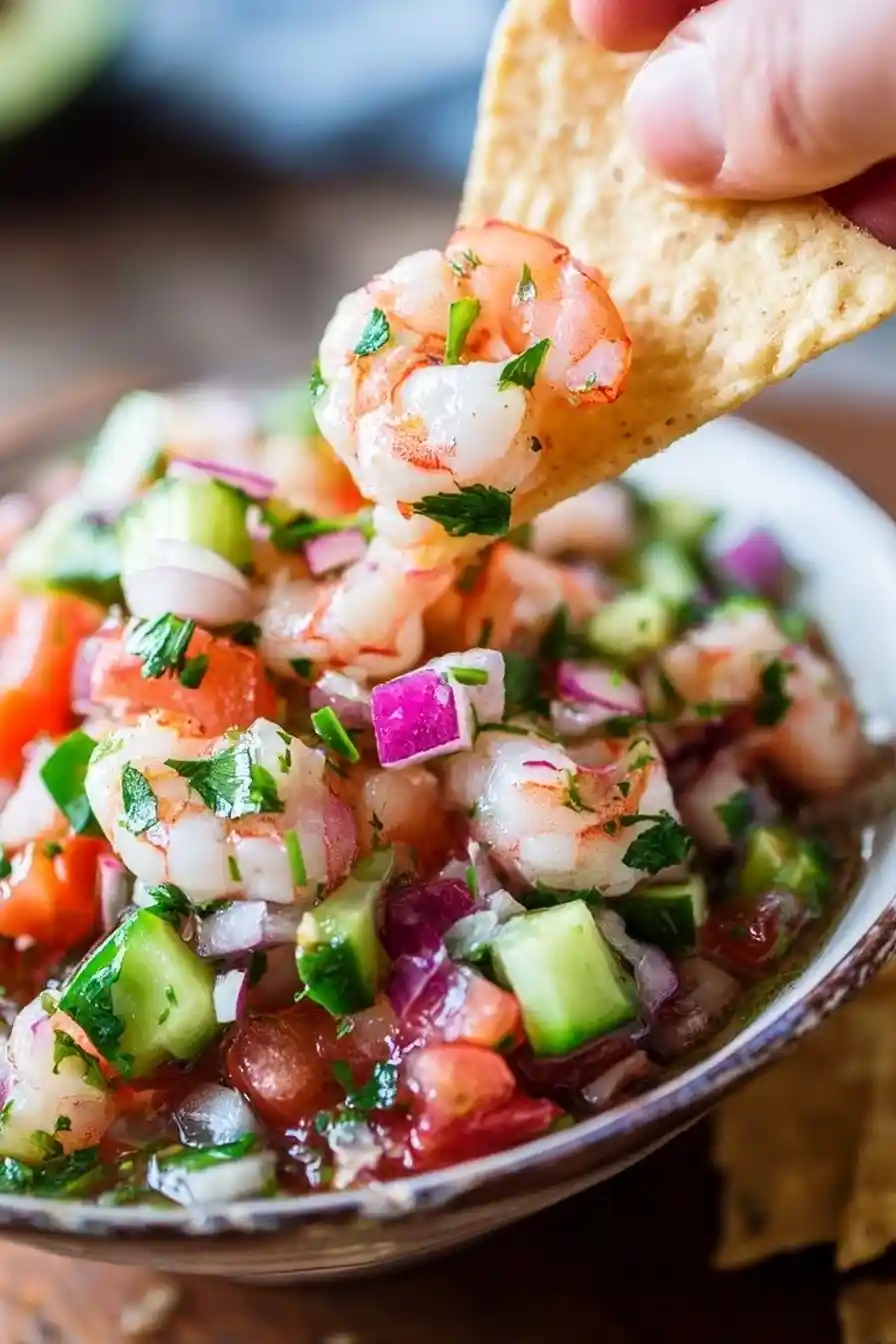
List of ingredients
- 1 lb medium raw shrimp, peeled, deveined, tails removed, cut into ½-inch pieces
- 1 cup fresh lime juice
- ½ cup fresh lemon juice
- ½ small red onion, finely diced, soaked in cold water
- 2 Roma tomatoes, seeded and finely diced
- 1 jalapeño, seeded and minced
- ¼ cup chopped fresh cilantro, plus 2 tbsp extra for garnish
- 1 tsp kosher salt, plus more to taste
- ½ tsp freshly ground black pepper
- ½ cup diced cucumber, peeled and seeded
- 1 avocado, diced
- Tostadas, tortilla chips, or saltine crackers, for serving
step-by-step instructions
- Step: Rinse and pat the cut shrimp dry, place in a non-reactive bowl, cover with lime and lemon juice, then refrigerate covered for 20 minutes until fully opaque.
- Step: While shrimp marinates, prep vegetables: soak diced red onion in cold water for 10 minutes, then drain, and dice tomato, jalapeño, cucumber, and chop cilantro.
- Step: Drain ¾ of the excess citrus juice from the marinated shrimp, return to the mixing bowl.
- Step: Add drained red onion, tomato, jalapeño, cucumber, ¼ cup cilantro, salt, and pepper to the shrimp, stir gently to combine, then refrigerate covered for 10 minutes to meld flavors.
- Step: Right before serving, gently fold in diced avocado, garnish with extra cilantro, and serve with tostadas, chips, or crackers.
Essential Preparation Techniques
Choosing the Right Equipment
Using a non-reactive bowl is crucial when working with high-acid ingredients like citrus juice. Materials such as glass, ceramic, or high-quality plastic prevent a metallic taste from leaching into your seafood. Metal bowls can react negatively with the acid, potentially altering the color and flavor profile of your final dish.
The Role of Citrus in Texturizing
The citrus marinade acts as a curing agent that changes the protein structure of the shrimp, making it safe and delicious to consume without applying heat. Because this process is time-sensitive, monitor your shrimp closely during the initial marination period. You are looking for a completely opaque appearance throughout the entire piece, which indicates the proteins have properly denatured.
Managing Moisture Levels
Properly drying your shrimp before it touches the citrus liquid allows the flavors to penetrate the surface more effectively without diluting the marinade. Similarly, ensuring your vegetables are free from excess moisture prevents the final salad from becoming watery. This extra step ensures that every scoop onto a tostada remains crisp rather than soggy.
Refining the Flavor Balance
Balancing Tartness and Salt
Ceviche relies on a delicate equilibrium between acidity, salt, and the inherent sweetness of the shellfish. If your batch tastes overly acidic, consider adding a pinch of salt rather than trying to mask the lime. The salt acts as a flavor enhancer that pulls the earthy notes from the cilantro and the subtle spice of the jalapeño to the forefront.
Customizing Heat Intensity
The jalapeño adds a bright, grassy heat that defines this style of dish. For those who prefer a milder profile, ensure you remove all the white pith and seeds before mincing the pepper. Conversely, if you enjoy significant spice, you can leave a portion of the seeds in the mixture to distribute a consistent heat throughout the bowl.
Integrating Textural Contrasts
The addition of diced cucumber and red onion provides a satisfying crunch that complements the snap of the shrimp. Soaking the red onion is the secret to avoiding a lingering, sharp aftertaste that can otherwise dominate the more delicate flavors of the lime and cilantro. This brief soak allows the onion to retain its crisp texture while stripping away the overwhelming sulfur intensity.
Serving and Presentation Advice
Pairing with Accompaniments
The ideal vessel for this dish provides a structural crunch that balances the tender shrimp. Tostadas are the traditional choice, offering a flat surface that holds a generous amount of the mixture. If you prefer a smaller bite, saltine crackers provide a classic, clean flavor that allows the citrus and seafood to stand out, while sturdy corn chips are excellent for a more casual, dip-style presentation.
Timing the Avocado Addition
Avocado provides a creamy, rich element that cuts through the sharp acidity of the citrus. However, it is highly prone to oxidation and will turn brown if exposed to air or acidic liquids for too long. By adding the avocado in the final seconds before serving, you ensure it retains its vibrant green color and perfect buttery consistency.
Enhancing the Plating
If you are hosting a gathering, consider building individual portions on pre-arranged tostadas just before guests arrive. A small dollop of sour cream or a dash of hot sauce on top of the ceviche can add further depth and visual appeal. Serving with extra lime wedges on the side allows guests to adjust the tartness to their own liking, which is a common practice in coastal regions.
Managing Storage and Quality
Short Term Preservation
Ceviche is at its best when enjoyed immediately upon completion because the ingredients continue to “cook” the longer they sit in the acidic liquid. If you must store the mixture, place it in an airtight container and ensure it is kept in the coldest part of your refrigerator. Aim to consume any leftovers within 12 to 24 hours, as the texture of the shrimp will gradually become firmer and less delicate over time.
Preparing in Advance
You can successfully prep the vegetables and the marinade base separately up to a few hours ahead of time. However, do not combine the seafood with the citrus until you are close to the serving window. By keeping the components separate until the final stage, you maintain total control over the texture and ensure the highest possible quality for your guests.
Common Queries Addressed
Can I use frozen shrimp for this recipe?
Yes, frozen shrimp is perfectly acceptable, provided it is thawed completely before you begin the marination process. Ensure the shrimp is thoroughly patted dry after thawing to avoid introducing excess water into the citrus base. High-quality, responsibly sourced shrimp will yield the most satisfying results for your ceviche.
What if I cannot find Roma tomatoes?
Roma tomatoes are preferred because of their low seed content and dense flesh, but any firm, ripe tomato will work in this recipe. Just be sure to remove the seeds and excess watery gel inside the tomato to keep the salad mixture tight and flavorful. You can use cherry tomatoes as a substitute, provided you dice them carefully and remove the seeds.
Is it possible to make this dish without cilantro?
If you find that the flavor of cilantro is not to your preference, you can substitute it with fresh parsley or even a small amount of finely chopped mint. While the traditional profile is heavily dependent on the clean, citrusy notes of cilantro, fresh parsley provides a similar herbaceous quality that supports the other ingredients without adding a new flavor profile.
Why does the shrimp texture change after an hour?
Extended exposure to citric acid will eventually cause the proteins in the shrimp to tighten excessively, leading to a tough or rubbery mouthfeel. This is why it is recommended to drain the majority of the liquid after the 20-minute mark and incorporate the vegetables. This stops the aggressive chemical cooking process and maintains the bouncy, tender texture that makes this dish so enjoyable.
Print
Mexican Shrimp Ceviche
- Total Time: 1 hour 10 minutes
- Yield: 4 servings 1x
- Diet: Pescatarian
Description
A vibrant and zesty Mexican-style shrimp ceviche that uses the acidity of fresh lime and lemon juice to cure the shrimp, resulting in a refreshing, no-cook dish perfect for warm days.
Ingredients
- 1 lb medium raw shrimp, peeled, deveined, tails removed, cut into ½-inch pieces
- 1 cup fresh lime juice
- ½ cup fresh lemon juice
- ½ small red onion, finely diced, soaked in cold water
- 2 Roma tomatoes, seeded and finely diced
- 1 jalapeño, seeded and minced
- ¼ cup chopped fresh cilantro, plus 2 tbsp extra for garnish
- 1 tsp kosher salt, plus more to taste
- ½ tsp freshly ground black pepper
- ½ cup diced cucumber, peeled and seeded
- 1 avocado, diced
- Tostadas, tortilla chips, or saltine crackers, for serving
Instructions
- Step: Rinse and pat the cut shrimp dry, place in a non-reactive bowl, cover with lime and lemon juice, then refrigerate covered for 20 minutes until fully opaque.
- Step: While shrimp marinates, prep vegetables: soak diced red onion in cold water for 10 minutes, then drain, and dice tomato, jalapeño, cucumber, and chop cilantro.
- Step: Drain ¾ of the excess citrus juice from the marinated shrimp, return to the mixing bowl.
- Step: Add drained red onion, tomato, jalapeño, cucumber, ¼ cup cilantro, salt, and pepper to the shrimp, stir gently to combine, then refrigerate covered for 10 minutes to meld flavors.
- Step: Right before serving, gently fold in diced avocado, garnish with extra cilantro, and serve with tostadas, chips, or crackers.
Notes
Ensure you use a glass or plastic bowl, as metal can react with the citrus juice. Marinate the shrimp for exactly 20 minutes to achieve the perfect texture; do not exceed 30 minutes.
- Prep Time: 30 minutes
- Cook Time: 40 minutes
- Category: Appetizer
- Method: Citrus Curing
- Cuisine: Mexican
Nutrition
- Serving Size: 1 serving
- Calories: 210 kcal
- Sugar: 3 g
- Sodium: 650 mg
- Fat: 9 g
- Saturated Fat: 1.5 g
- Unsaturated Fat: 6 g
- Trans Fat: 0 g
- Carbohydrates: 12 g
- Fiber: 5 g
- Protein: 22 g
- Cholesterol: 145 mg