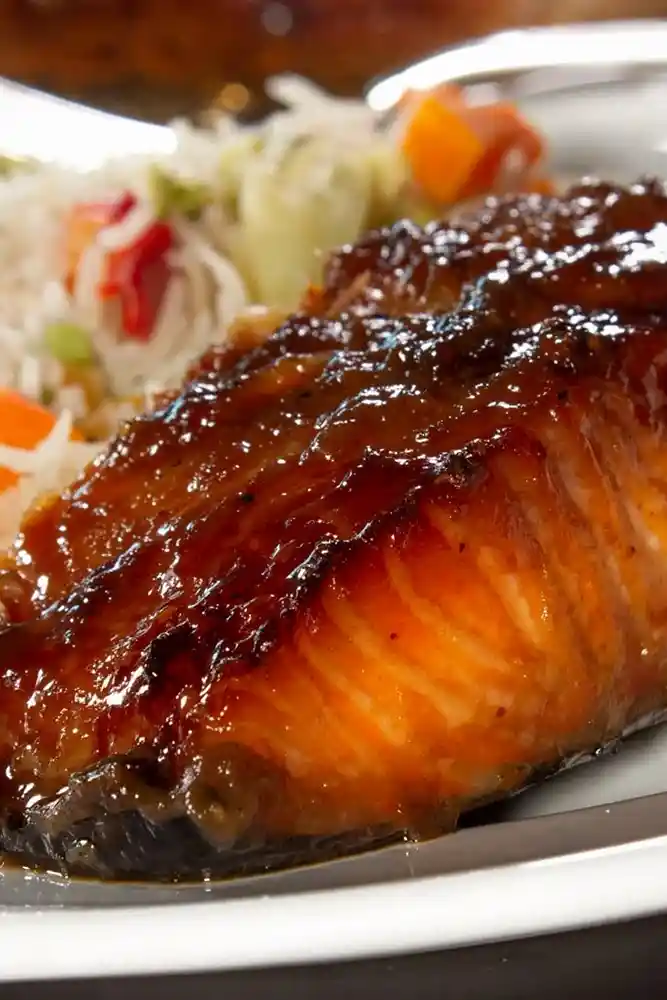
This maple glazed salmon is a quick and nutritious dinner option perfect for busy weeknights. The blend of sweet maple syrup and savory soy sauce creates a rich glaze that enhances the fish perfectly.
List of ingredients
- 1 lb. salmon fillet – use a center-cut piece for even cooking.
- 1/4 cup Maple syrup – pure maple syrup provides the best flavor.
- 2 tbsp. soy sauce – adds a salty balance to the sweetness.
- 2 cloves garlic, finely minced – fresh garlic provides the most aroma.
- Pinch of ground ginger – or more to taste – adds a subtle warmth.
- Pinch of pepper – for a light seasoning.
step-by-step instructions
- Season the fish: Place the salmon in a glass baking dish and sprinkle it with the minced garlic, ground ginger, and pepper.
- Apply the glaze: Combine the soy sauce and maple syrup in a small measuring cup, then pour the mixture over the salmon.
- Marinate: Let the salmon marinate in the dish for about 30 minutes. Flip the salmon over halfway through the process so the skin side is up and the pink flesh is immersed in the sauce to distribute flavors.
- Prepare for cooking: Flip the salmon back so the pink side is facing up. Spoon some of the marinade from the dish over the top of the fillet.
- Broil: Set the oven to broil and cook for approximately 15 to 20 minutes. Every few minutes, spoon the maple syrup mixture from the bottom of the dish onto the salmon.
- Finish and serve: Remove when the top is golden and the fish is flaky. Split into four portions and serve with rice and vegetables, drizzling the remaining pan sauce over each piece.
Optimizing the Baking Process
Use a Glass or Ceramic Baking Dish
Glass and ceramic dishes distribute heat more evenly than some metal pans. This prevents the fish from cooking too quickly on the bottom and helps keep the glaze from burning too rapidly.
Master the Broiler Setting
Broiling uses direct heat from the top element, which caramelizes the sugars in the maple syrup. Keep the dish on the middle rack to avoid charring the surface before the center is cooked.
Monitor Internal Temperature
Use a digital meat thermometer to ensure the salmon is cooked safely. The fish is done when it reaches an internal temperature of 145°F, which ensures it is flaky but not dry.
Prevent Sticking with Cooking Spray
If you are concerned about the salmon sticking to the dish, apply a light coating of cooking spray before adding the fish. This makes cleanup easier and ensures the fillet releases cleanly.
Flavor Modifications and Enhancements
Incorporate Hoisin Sauce for Depth
Adding a tablespoon of hoisin sauce to the maple mixture adds a thick, plum-like sweetness. This creates a more complex glaze with an aromatic depth that complements the salmon.
Add Honey for a Stickier Glaze
Combining honey with the maple syrup increases the viscosity of the sauce. This results in a thicker coating that clings more effectively to the fish during the broiling process.
Use Chili Flakes for a Spicy Kick
For a spicy variation, stir in a pinch of red chili flakes or a teaspoon of Sriracha. The heat balances the sweetness of the maple syrup and adds a modern twist to the dish.
Mix in Dijon Mustard for Tanginess
A small amount of Dijon mustard adds a sharp, vinegary contrast to the glaze. This tanginess cuts through the richness of the salmon fat and the sweetness of the syrup.
Garnish with Green Onions and Sesame Seeds
Sprinkle sliced green onions and toasted sesame seeds over the salmon immediately after removing it from the oven. These additions provide a fresh crunch and a visually appealing finish.
Alternative Cooking Methods
Utilize an Air Fryer for Speed
Preheat your air fryer to 400°F before cooking. Place the marinated salmon inside and cook for 8 to 10 minutes, or until the fish is cooked through and the edges are browned.
Grill the Salmon on High Heat
Preheat a grill to medium-high and lightly oil the grates. Grill the salmon for about 5-7 minutes per side, brushing on the maple glaze frequently during the last few minutes of cooking.
Pan-Sear for a Crispy Texture
Sear the salmon in a hot skillet with a small amount of oil for 4 minutes on the skin side. Flip the fish and add the glaze to the pan, spooning it over the salmon until the sauce reduces into a thick syrup.
Ingredient Substitutions
Replace Pure Maple Syrup with Pancake Syrup
If pure maple syrup is unavailable, pancake syrup can be used as a substitute. While the flavor profile is slightly different, the result is still sweet and effective for glazing.
Substitute Soy Sauce with Coconut Aminos
For a soy-free alternative, use coconut aminos in a 1:1 ratio. Coconut aminos provide a similar salty-sweet flavor but contain less sodium and no soy.
Use Fresh Ginger Instead of Powder
Swap the ground ginger for finely grated fresh ginger root. Fresh ginger offers a brighter, more pungent flavor that enhances the aromatic quality of the marinade.
Alternative Sweeteners for Glazing
Brown rice syrup or agave nectar can be used if you prefer a different type of sweetness. These syrups have different viscosities, so you may need to adjust the cooking time slightly.
Serving and Pairing Ideas
Pair with Steamed Rice
White jasmine or basmati rice are excellent choices to soak up the excess maple glaze. Brown rice provides a nuttier flavor and more fiber for a heartier meal.
Serve with Roasted Root Vegetables
Carrots, parsnips, and sweet potatoes roasted with olive oil and salt pair well with the sweet glaze. The earthiness of the vegetables balances the sugary notes of the salmon.
Combine with a Fresh Green Salad
A simple salad of mixed greens, cucumber, and a lemon vinaigrette adds a necessary acidic component to the plate. This refreshes the palate between bites of the rich salmon.
Pair with Creamy Pasta
Linguine with a light garlic parmesan or alfredo sauce works well with this recipe. The creaminess of the pasta complements the flaky texture of the broiled fish.
Storage and Maintenance
Refrigeration Guidelines
Store leftover salmon in an airtight container in the refrigerator. It will remain fresh and safe to eat for approximately two days.
Freezing Cooked Salmon
Cooked salmon can be frozen for up to two months. Wrap the fish tightly in foil and place it in a freezer-safe bag to prevent freezer burn.
Reheat Using the Oven
To maintain moisture, reheat leftovers in the oven at 350°F. Place the salmon in a covered baking dish and heat for 15 to 20 minutes until warmed through.
Avoid Microwave Reheating
Microwaves tend to overcook fish quickly, making it rubbery. Using the oven or an air fryer ensures the salmon retains its flaky texture.
Salmon Preparation FAQ
How long should salmon be marinated?
Salmon should be marinated for at least 30 minutes to absorb the flavors. Avoid marinating for more than two hours, as the acid and salt in the soy sauce can begin to break down the fish’s texture.
What is the white substance on cooked salmon?
The white substance is called albumin, a natural protein. It is pushed to the surface as the muscle fibers contract during cooking and is completely safe to eat.
Is the salmon skin edible?
Yes, salmon skin is edible and rich in Omega-3 fatty acids. When broiled, it becomes crisp and flavorful, though you can remove it before cooking if preferred.
How do I know when the salmon is fully cooked?
The salmon is done when the flesh changes from translucent pink to opaque and flakes easily with a fork. A meat thermometer reading of 145°F is the most accurate indicator.
Can I use a different type of fish?
This glaze works well with other fatty fish like steelhead trout or Arctic char. Leaner fish may require shorter cooking times to prevent them from drying out.
How do I prevent the glaze from burning?
Keep a close eye on the salmon during the broiling process. If the glaze browns too quickly, move the baking dish to a lower rack in the oven.
Print
Maple Glazed Salmon
- Total Time: 55 minutes
- Yield: 4 servings 1x
- Diet: General
Description
A simple and healthy maple glazed salmon recipe that is high in protein and low in fat, featuring a sweet and savory glaze of maple syrup, soy sauce, garlic, and ginger.
Ingredients
- 1 lb. salmon fillet
- 1/4 cup Maple syrup
- 2 tbsp. soy sauce
- 2 cloves garlic, finely minced
- Pinch of ground ginger
- Pinch of pepper
Instructions
- Step: Place the salmon in a glass baking dish and sprinkle with garlic, ginger and pepper.
- Step: Combine the soy sauce and in maple syrup in a small measuring cup and pour over the salmon.
- Step: Allow the salmon to marinate in the dish with the maple syrup and spices for about 30 minutes. Flip your salmon over half way through marinating so the skin side is up and pink part is immersed in the sauce.
- Step: Before cooking your salmon, flip it back over so the pink side is facing up. Spoon some of the sauce over top. Set your oven to broil and cook the salmon for about 15 to 20 minutes. While the salmon is cooking, be sure to check on it a few times and spoon some of the maple syrup mixture from the bottom of the dish over top of the salmon.
- Step: The top of the salmon should become golden and the texture should be flaky when done.
- Step: Split the salmon into about four pieces and serve with rice and veggies. Spoon some of that delicious sauce from the bottom of the pan onto the tops of your salmon.
Notes
If you marinate the salmon in the fridge, please make sure that you take it out ahead of time and allow it to reach room temperature before cooking. If you’re cooking a bigger piece of salmon, you can double or triple the marinade recipe and increase the cook time accordingly.
- Prep Time: 35 minutes
- Cook Time: 20 minutes
- Category: Seafood
- Method: Bake/Broil
- Cuisine: American
Nutrition
- Serving Size: 1 serving
- Calories: 300 kcal
- Sugar: 15 g
- Sodium: 450 mg
- Fat: 14 g
- Saturated Fat: 3 g
- Unsaturated Fat: 11 g
- Trans Fat: 0 g
- Carbohydrates: 18 g
- Fiber: 0 g
- Protein: 26 g
- Cholesterol: 60 mg