This recipe provides a foolproof method for preparing moist and flaky salmon fillets using a sealed foil packet. The combination of garlic, lemon, and butter creates a rich glaze that locks in natural juices during the baking process.
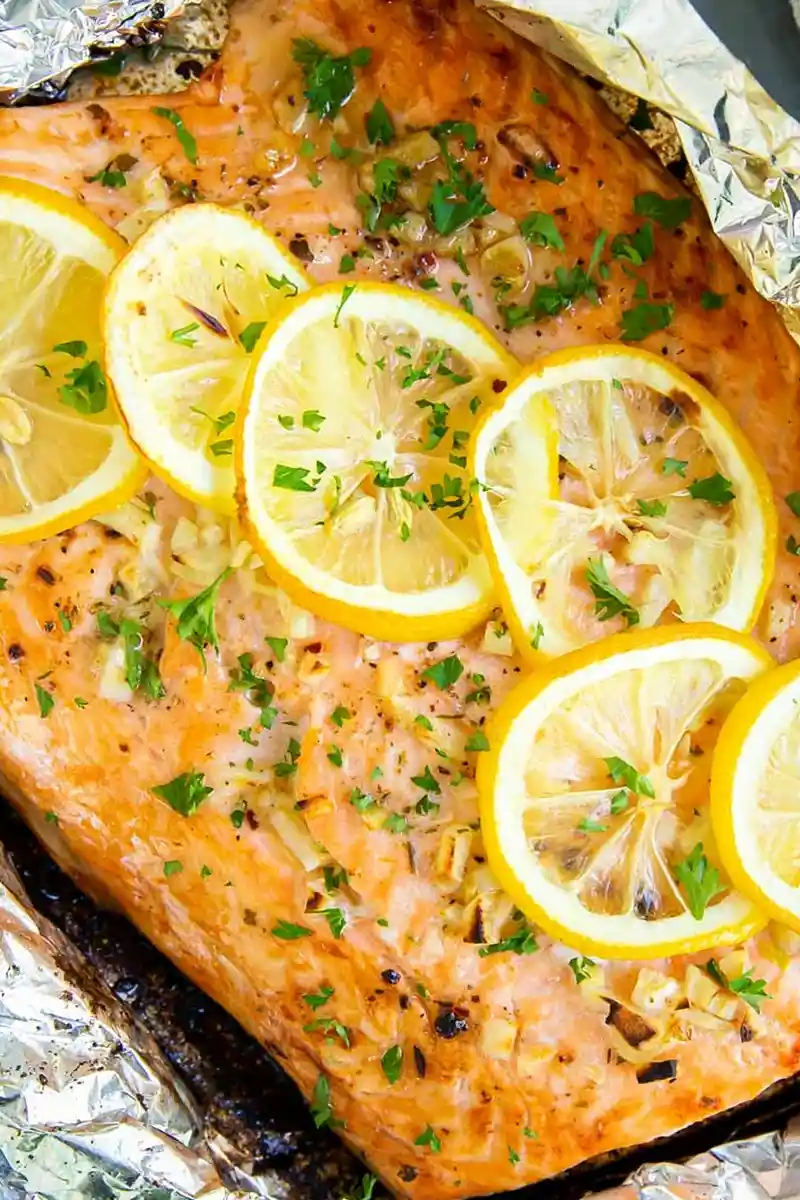
List of ingredients
- 1 ½ pound salmon fillet (skin on) – provides a sturdy base for baking.
- salt and pepper (to taste) – essential for enhancing the natural flavors of the fish.
- 2 tablespoons unsalted butter (melted) – adds richness and helps the sauce adhere.
- 2 tablespoons fresh lemon juice – provides the necessary acidity to balance the butter.
- 2 cloves garlic (minced) – adds a pungent, savory aromatic quality.
- 1 whole lemon – sliced to provide steam and citrus flavor.
- chopped fresh parsley (optional) – used for a fresh, colorful garnish.
step-by-step instructions
- Prepare Oven and Pan: Preheat your oven to 400° F. Place the oven rack in the upper third of the oven. Line a rimmed baking sheet with a piece of aluminum foil large enough to fully encapsulate the salmon.
- Prepare the Salmon: Pat the salmon fillet dry using paper towels to remove excess moisture. Place the fillet in the center of the foil with the skin side facing down. Season the top generously with salt and pepper.
- Mix the Glaze: In a small mixing bowl, whisk together the melted unsalted butter, fresh lemon juice, and minced garlic until well combined.
- Apply Seasoning: Brush the lemon garlic butter mixture evenly over the top and sides of the salmon. Slice the whole lemon into thin rounds and arrange the slices on top of the fillet.
- Seal the Packet: Fold the aluminum foil up and around the salmon, crimping the edges to create a tightly sealed packet.
- Initial Bake: Place the baking sheet in the oven and bake for 13-15 minutes. Use a thermometer to ensure the internal temperature reaches approximately 115° F.
- Broil for Finish: Switch the oven to the broiler setting at 450° F. Carefully open the foil packet to expose the salmon, ensuring the foil does not touch the broiler element. Broil for 3-4 minutes until the internal temperature reaches 145° F.
- Rest and Garnish: Remove the pan from the oven and let the salmon rest for 3 minutes. Sprinkle with chopped fresh parsley before serving.
Expert Cooking Tips for Perfect Salmon
Select High-Quality Salmon Fillets
Look for fillets with a vibrant, consistent color and no gaps in the flesh. Ensure the fish has a mild, fresh scent rather than a strong fishy odor. Atlantic salmon is often preferred for its higher fat content, which keeps the fish moist.
Use a Digital Instant-Read Thermometer
Salmon can overcook in a matter of minutes, leading to a dry texture. A digital thermometer is the only way to guarantee the fish is cooked to the safe internal temperature of 145° F. Insert the probe into the thickest part of the fillet for the most accurate reading.
Ensure the Salmon is Completely Dry
Patting the fish with paper towels before seasoning is a critical step. Excess surface moisture creates steam that can prevent the butter from adhering and stop the edges from browning during the broiling phase. Dry fish allows the seasonings to penetrate more effectively.
Position the Rack for Optimal Broiling
Setting the rack in the upper third of the oven ensures the heat from the broiler is intense enough to caramelize the butter and lemon. Be cautious not to place the rack too high, as the foil could touch the heating element and burn. This positioning provides a balance between steaming and searing.
Ingredient Substitutions and Alternatives
Replace Butter with Olive Oil
If you prefer a dairy-free option, substitute the melted butter with extra virgin olive oil in equal measure. While butter provides a creamier flavor, olive oil offers a lighter profile and healthy monounsaturated fats. The lemon and garlic will still provide the primary flavor punch.
Use Garlic Powder as a Substitute
If fresh garlic is unavailable, you can use garlic powder. Use approximately 1/4 teaspoon of garlic powder for every clove of fresh garlic required. Note that garlic powder has a more concentrated flavor, so adjust the amount to your preference.
Substitute Fresh Lemon with Bottled Juice
Freshly squeezed lemon juice is ideal for its bright, citrusy notes. If using bottled juice, ensure it is 100% lemon juice without added sugars or preservatives. Bottled juice tends to be more acidic, so you may want to start with slightly less.
Try Other Fish Varieties
This method works well with other thick-cut fish fillets such as trout or Arctic char. These fish have similar fat contents and cook at similar speeds to salmon. Adjust the baking time slightly depending on the thickness of the fillets.
Flavor Variations and Customizations
Add Red Pepper Flakes for Heat
For a spicy kick, stir a pinch of crushed red pepper flakes into the melted butter mixture. This adds a subtle warmth that complements the acidity of the lemon. It is particularly effective when serving the salmon with a cooling side like cucumber salad.
Incorporate Fresh Herbal Notes
Replace or augment the parsley with fresh dill, thyme, or oregano. Dill is a classic pairing for salmon and adds a sweet, grassy flavor. Simply chop the herbs finely and stir them into the garlic butter sauce before brushing.
Create a Sweet and Savory Glaze
Stir a teaspoon of honey or maple syrup into the lemon garlic butter. The sugar in the syrup helps the salmon caramelize more deeply under the broiler. This variation is excellent for those who enjoy a contrast between sweet and tart flavors.
Add Briny Capers for Depth
Scatter a tablespoon of drained capers over the salmon before sealing the foil. Capers provide a salty, briny burst that cuts through the richness of the butter. They pair perfectly with the lemon slices and fresh parsley.
Recommended Side Dish Pairings
Pair with Roasted Green Vegetables
Roasted broccoli, asparagus, or green beans provide a nutritional balance to the rich salmon. Toss these vegetables in olive oil, salt, and pepper, and roast them at 400° F. They can often be cooked on the same baking sheet if there is enough room around the foil packet.
Serve with Garlic Mashed Potatoes
Creamy mashed potatoes are a comforting accompaniment that absorbs the extra lemon garlic butter from the foil. Boil peeled potatoes until soft, then mash them with butter, milk, and roasted garlic. This adds a hearty element to the meal.
Complement with Fluffy Grains
Quinoa, brown rice, or wild rice are excellent options for soaking up the sauce. For extra flavor, cook the grains in vegetable broth instead of water. This adds depth and makes the side dish more satisfying.
Create a Crisp Fresh Salad
A simple mixed green salad with a light vinaigrette provides a refreshing contrast to the baked fish. Use baby spinach, arugula, and sliced cucumbers. A dressing made of olive oil and apple cider vinegar mirrors the acidity of the lemon on the salmon.
Storage and Preservation Guidelines
Use Airtight Containers for Storage
Store leftover salmon in a glass or BPA-free plastic airtight container. This prevents the fish from absorbing other odors in the refrigerator and stops it from drying out. Ensure the salmon is completely cooled before sealing the lid.
Follow Safe Cooling Procedures
Do not leave cooked salmon at room temperature for more than two hours. Rapidly cooling the fish helps prevent the growth of harmful bacteria. If the fillet is very large, slice it into smaller portions to speed up the cooling process.
Observe Maximum Refrigeration Limits
Cooked salmon is best consumed within three days when stored in the refrigerator. After this period, the texture may degrade, and the flavor may change. If you cannot eat it within this timeframe, salmon can be frozen for up to two months.
Best Reheating Methods
Reheat Slowly in the Oven
To maintain the moisture of the salmon, reheat it in a low oven at 325° F. Place the fish on a baking sheet and cover it loosely with foil to trap steam. Heat for 5-10 minutes or until the internal temperature reaches 120° F.
Use the Microwave on Medium Power
For a faster option, use the microwave on a medium power setting. Heat the salmon in 30-second intervals to avoid overcooking the edges. Adding a teaspoon of water or a pat of butter to the plate helps keep the fish moist.
Avoid Overcooking During Reheating
The most common mistake when reheating fish is cooking it a second time. Since the salmon is already cooked, you only need to warm it through. Avoid high heat settings that could make the protein fibers toughen and dry out.
Make-Ahead Preparation Advice
Prepare the Sauce in Advance
The lemon garlic butter can be whisked together and stored in a small jar in the refrigerator. When ready to cook, simply melt the butter and whisk in the lemon and garlic. This saves several minutes of prep time on busy weeknights.
Assemble Foil Packets Early
You can season the salmon and wrap it in foil several hours before baking. Keep the sealed packets refrigerated until you are ready to place them in the oven. This allows the flavors of the garlic and lemon to penetrate the fish more deeply.
Slice Lemons Ahead of Time
Slice the whole lemon into rounds and store them in a sealed container with a damp paper towel. This keeps the slices fresh and prevents them from drying out. Having them ready makes the final assembly of the packet much faster.
Common Troubleshooting Solutions
Prevent Salmon from Sticking to Foil
If you find the salmon skin sticks to the foil, try using heavy-duty non-stick aluminum foil. Alternatively, lightly grease the foil with a small amount of olive oil before placing the fish on top. This creates a barrier that allows the fish to slide off easily.
Fix Dry or Overcooked Fish
If the salmon is too dry, it was likely in the oven or under the broiler for too long. Reduce the baking time by two minutes next time and check the internal temperature more frequently. Always allow the fish to rest, as this redistributes the juices.
Adjust Thin or Watery Sauce
If the sauce is too thin, it may be due to excess moisture from the salmon or too much lemon juice. Pat the fish more thoroughly before adding the butter. You can also add a small pinch of cornstarch to the butter mixture to help it thicken.
Resolve Undercooked Centers
If the edges are browned but the center is raw, the fillet may be too thick for the standard timing. Increase the initial baking time by 2-3 minutes. Ensure you are using the broiler to finish the cooking process, as this provides the necessary heat to reach the center.
Frequently Asked Questions
Can I use frozen salmon fillets?
Yes, but they must be completely thawed before baking. Thaw the fillets slowly in the refrigerator overnight for the best texture. Using frozen fillets directly in the foil will lead to uneven cooking and excessive water release.
Should I leave the skin on or take it off?
Keeping the skin on is recommended as it acts as a protective barrier against the heat. This prevents the bottom of the fillet from overcooking. The skin will easily peel away from the cooked meat after the resting period.
What is the ideal internal temperature for salmon?
The USDA recommends an internal temperature of 145° F for food safety. However, many people prefer salmon at 130-135° F for a more tender, moist texture. Always use a thermometer to verify the doneness.
Can I use parchment paper instead of foil?
You can use parchment paper, but it does not seal as tightly as aluminum foil. This means less steam is trapped, and the fish may cook slightly slower. If using parchment, ensure you fold the edges securely to mimic a packet.
Print
Lemon Garlic Butter Baked Salmon in Foil
- Total Time: 28 minutes
- Yield: 4 servings 1x
- Diet: Gluten Free
Description
This Baked Salmon in Foil is seasoned with lemon, garlic and butter and bakes up perfectly moist and flaky. It’s one of our favorite baked salmon recipes for an easy dinner!
Ingredients
- 1 ½ pound salmon fillet (skin on)
- salt and pepper (to taste)
- 2 tablespoons unsalted butter (melted)
- 2 tablespoons fresh lemon juice
- 2 cloves garlic (minced)
- 1 whole lemon
- chopped fresh parsley (optional, for garnish)
Instructions
- Preheat: Preheat oven to 400° F with an oven rack in the upper third of the oven. Cover a rimmed baking sheet with a piece of aluminum foil large enough to wrap up the salmon.
- Prepare: Pat the salmon dry with paper towels and place it in the center of the foil, skin side down. Sprinkle on salt and pepper.
- Whisk: In a small bowl, whisk together the melted butter, lemon juice and minced garlic.
- Season: Brush the lemon garlic butter over the salmon. Cut the whole lemon into slices and lay the lemon slices over the top of the fish.
- Wrap: Wrap the foil up and around the salmon to make a sealed packet.
- Bake and Broil: Bake salmon in foil for 13-15 minutes, or until the internal temperature is about 115° F. Then turn on the broiler and set it to 450° F. Open up the foil so that the salmon is exposed and place it under the broiler for 3-4 minutes, until it cooks through to 145° F.
- Rest: Let salmon rest for 3 minutes, then sprinkle with chopped fresh parsley and serve.
Notes
Leftovers can be stored in an airtight container in the refrigerator for up to 3 days. Reheat leftovers in the microwave or in a 375° F oven until hot.
- Prep Time: 10 minutes
- Cook Time: 18 minutes
- Category: Main Course
- Method: Baking
- Cuisine: American
Nutrition
- Serving Size: 1 serving
- Calories: 296 kcal
- Sugar: 0.2 g
- Sodium: 76 mg
- Fat: 16 g
- Saturated Fat: 5 g
- Unsaturated Fat: 10 g
- Trans Fat: 0.2 g
- Carbohydrates: 1 g
- Fiber: 0.1 g
- Protein: 34 g
- Cholesterol: 109 mg