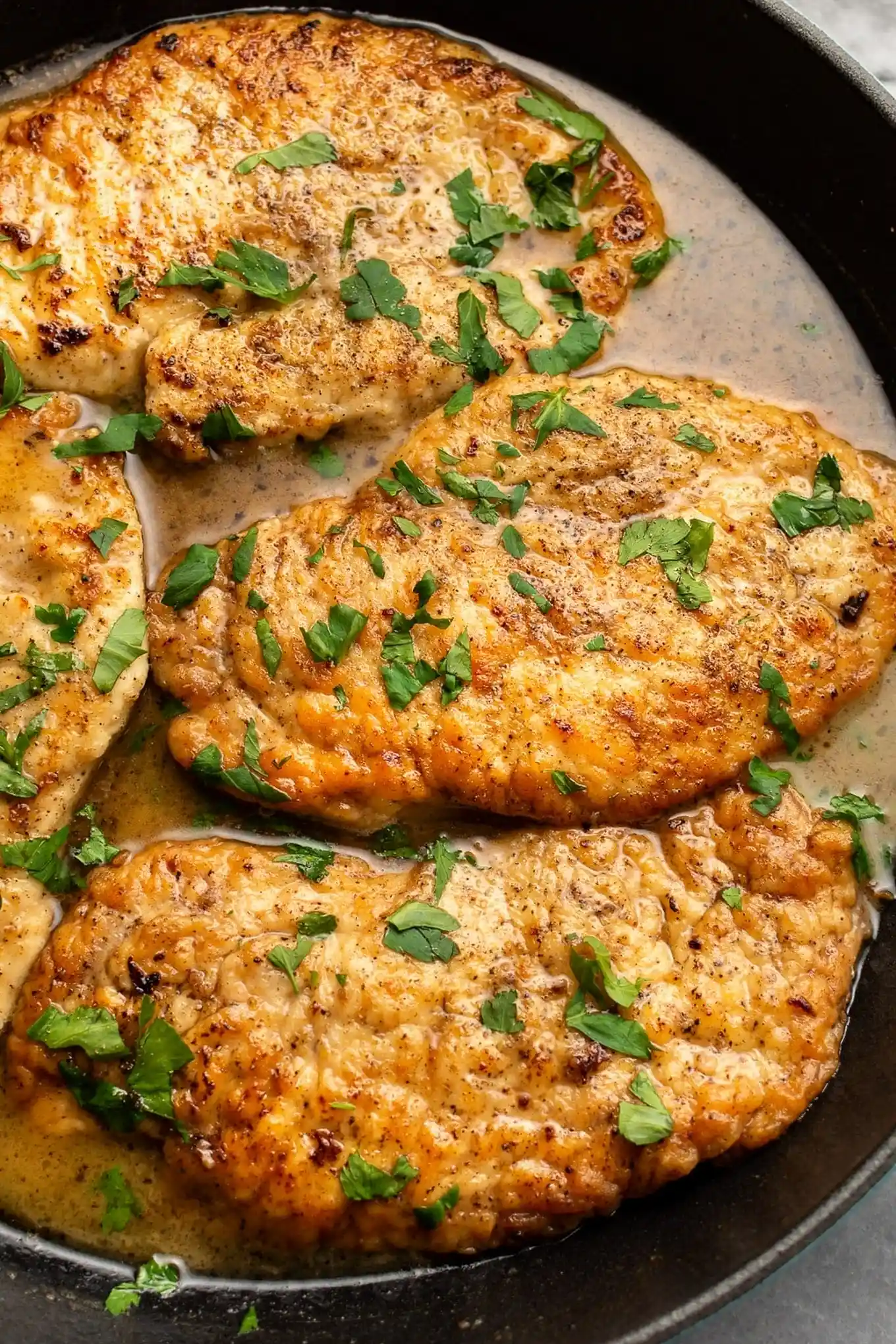
This quick chicken scallopini features tender, pounded breasts in a zesty lemon butter sauce. It is an efficient meal that delivers a refined flavor and restaurant-quality texture in under 40 minutes.
List of ingredients
- 2 large chicken breasts – cut in half lengthwise to create 4 cutlets.
- Salt and pepper – to taste for seasoning.
- 1/2 teaspoon garlic powder – for added savory depth.
- Flour – for dredging the chicken pieces.
- 1 tablespoon olive oil – used for initial searing.
- 4 tablespoons butter – divided for frying and the sauce.
- 3/4 cup chicken broth – used as the base for the pan sauce.
- 1 tablespoon lemon juice – freshly squeezed for acidity.
- 1 tablespoon chopped parsley – for a fresh finish.
- Freshly grated parmesan cheese – optional garnish to taste.
step-by-step instructions
- Prepare the chicken: Cut the chicken breasts in half lengthwise to produce 4 thinner cutlets. Place the meat between two sheets of plastic wrap and use a meat mallet to pound each piece to a uniform 1/2 inch thickness.
- Season and coat: Season both sides of every cutlet with salt, pepper, and garlic powder. Dredge the chicken in flour, shaking off any excess to ensure a thin coating.
- Sear the meat: Heat olive oil and 1 tablespoon of butter in a large skillet over medium-high heat. Fry the chicken in two batches for about 4 minutes on the first side and 2-3 minutes on the second side until cooked through. Add another tablespoon of butter for the second batch. Transfer the cooked chicken to a plate and cover loosely with foil.
- Make the sauce: Pour the chicken broth and lemon juice into the same skillet. Simmer the liquid until it reduces by half, then turn off the heat and stir in the remaining 2 tablespoons of butter.
- Combine and serve: Return the chicken to the pan and spoon the lemon butter sauce over the meat. Garnish with chopped parsley and optional grated parmesan cheese before serving immediately.
Professional Cooking Techniques for Scallopini
Pounding Chicken for Uniform Thickness
Pounding the chicken is essential to ensure that every part of the cutlet cooks at the same rate. When chicken is uneven, the thinner edges overcook and become rubbery before the center reaches the safe internal temperature of 165F. Aiming for a consistent 1/2 inch thickness allows for a fast sear and a tender interior.
Using Plastic Wrap to Prevent Tearing
Placing the meat between plastic wrap or parchment paper protects the delicate fibers of the chicken from tearing during the pounding process. It also prevents the meat from sticking to the mallet and keeps your workspace clean. This method ensures the cutlet remains intact while expanding in surface area.
Achieving the Perfect Pan Sear
Using a combination of olive oil and butter provides the best searing results. The oil raises the overall smoke point of the fat, which prevents the butter from burning too quickly over medium-high heat. This combination facilitates the Maillard reaction, creating a golden-brown crust that locks in flavor.
Managing Pan Temperature for Second Batches
The skillet remains very hot after the first batch of chicken is cooked. When adding the second batch, you may find the meat browns faster than the first. Adjust the heat slightly or add the extra tablespoon of butter carefully to prevent the fat from smoking or burning.
Ingredient Substitutions and Flavor Tweaks
Replacing Flour for Gluten-Free Options
For a gluten-free version, replace the all-purpose flour with cornstarch or almond flour. Cornstarch creates a slightly crispier, thinner crust, while almond flour adds a nutty flavor. Ensure the coating is light to avoid a thick paste forming in the pan sauce.
Using Different Citrus Options
While lemon is traditional, lime juice can be used for a brighter, more tropical acidity. Orange juice provides a sweeter profile that pairs well if you add a pinch of red pepper flakes for heat. Always use fresh citrus juice rather than bottled concentrates to maintain a clean taste.
Adding Capers for a Piccata Style
To transform this dish into a chicken piccata, add 1 to 2 tablespoons of drained capers to the sauce during the reduction phase. The briny, salty flavor of the capers complements the lemon butter and adds a complex layer of taste to the chicken.
Incorporating Fresh Herbs
Fresh parsley is used for garnish, but you can incorporate other herbs into the dredging flour or the sauce. Dried thyme or oregano added to the flour provides an earthy aroma. Fresh basil stirred into the butter at the end offers a sweet, peppery contrast.
Best Side Dish Pairings
Starch Options for Sauce Absorption
Because the lemon butter sauce is the highlight of the dish, pair it with a starch that can absorb the liquid. Mashed potatoes, steamed white rice, or buttered noodles are excellent choices. Creamy pasta, such as penne or linguine, complements the acidity of the lemon.
Fresh Vegetable Accompaniments
Steam or roast green vegetables to balance the richness of the butter sauce. Garlic butter broccolini, roasted carrots, or sautéed spinach provide necessary nutrients and color. These vegetables should be seasoned lightly to avoid overpowering the chicken.
Light Salad Combinations
A crisp side salad helps cut through the richness of the pan-fried chicken. An arugula salad with a simple lemon-olive oil vinaigrette and shaved parmesan is a traditional pairing. The peppery notes of the arugula contrast well with the savory garlic and butter.
Storage and Reheating Guidelines
Refrigerator Storage Duration
Store leftover chicken scallopini in an airtight container in the refrigerator for 3 to 4 days. Keep the chicken and the sauce together so the meat stays moist. Ensure the container is fully sealed to prevent the chicken from absorbing other odors from the fridge.
Proper Reheating Methods
Avoid using a microwave, as it can make the thinly pounded chicken tough and rubbery. Instead, reheat the chicken and sauce in a small saucepan over low heat. Add a splash of chicken broth or water to loosen the sauce and restore its original emulsion.
Freezing and Thawing Process
The dish can be frozen for up to 3 months in a freezer-safe container. Thaw the chicken in the refrigerator overnight before reheating. Be aware that the sauce may separate during freezing; stir vigorously while reheating to bring it back together.
Troubleshooting Common Issues
Preventing the Sauce from Separating
The sauce is an emulsion of butter and broth. To prevent it from breaking or separating into oil and liquid, remove the skillet from the heat before stirring in the final butter. This technique, known as mounting with butter, ensures a glossy and stable finish.
Fixing Overcooked Chicken
Thin cutlets cook very quickly and can easily dry out. Use an instant-read meat thermometer to pull the chicken off the heat exactly when it hits 165F. If the chicken is slightly overcooked, adding an extra spoonful of sauce can help restore some moisture.
Managing Too Much Flour
Excess flour on the chicken can lead to a gummy texture or cause the sauce to become overly thick. After dredging, always shake the chicken pieces vigorously or tap them with your hand to remove loose flour before placing them in the pan.
Adjusting Sauce Thickness
If the sauce is too thin after reducing, simmer it for another minute or two before adding the butter. If it becomes too thick, whisk in a tablespoon of chicken broth or water to reach the desired consistency.
Frequently Asked Questions
Can I use chicken tenders instead of breasts?
Yes, chicken tenders can be used and often do not require as much pounding as full breasts. However, they may still benefit from a light press with a mallet to ensure they are of uniform thickness for even cooking.
Is it necessary to dredge the chicken in flour?
The flour serves two purposes: it creates a golden crust on the meat and acts as a thickening agent for the pan sauce. Without the flour, the chicken will not brown as effectively, and the sauce will remain thin and watery.
What is the best way to pound chicken without a mallet?
If you do not own a meat mallet, you can use the flat bottom of a heavy skillet or a rolling pin. Apply firm, even pressure across the entire surface of the meat to flatten it without tearing the fibers.
Can I make this dish in an oven?
This recipe relies on pan-searing for the crust and a pan-reduction for the sauce, so it cannot be made entirely in the oven. You can finish the chicken in the oven if the breasts are thick, but the sauce must be prepared on the stovetop.
Print
Lemon Butter Chicken Scallopini
- Total Time: 35 minutes
- Yield: 4 servings 1x
- Diet: General
Description
This chicken scallopini recipe has tender thinly pounded chicken that’s pan-fried until golden and served with a tangy lemon butter sauce!
Ingredients
- 2 large chicken breasts (cut in half lengthwise)
- Salt & pepper (to taste)
- 1/2 teaspoon garlic powder
- Flour (for dredging)
- 1 tablespoon olive oil
- 4 tablespoons butter (divided)
- 3/4 cup chicken broth
- 1 tablespoon lemon juice
- 1 tablespoon parsley (chopped)
- Freshly grated parmesan cheese (optional, to taste)
Instructions
- Prepare: Cut the chicken breasts in half lengthwise so you have 4 thinner cutlets. Place the chicken pieces between two pieces of plastic wrap (spread them out so there’s a gap between each piece), and then use the flat side of a meat mallet to pound the chicken pieces so they’re about 1/2″ thick.
- Season: Season both sides of each piece of chicken with salt & pepper and the garlic powder. Coat the chicken pieces in flour.
- Cook: Add the oil and 1 tablespoon of butter to a large skillet. Let the skillet heat up over medium-high heat for a few minutes until it’s hot. Cook chicken in two batches. Cook the chicken for about 4 minutes on the first side and another 2-3 minutes on the second side (ensure chicken is cooked through). For the second batch, add another tablespoon of butter to the pan. Transfer the chicken to a plate and cover it loosely with foil to keep it warm.
- Reduce: To the skillet, add the chicken broth and lemon juice. Let it bubble until it’s reduced by half, then turn off the heat and stir in the remaining 2 tablespoons of butter.
- Finish: Add the chicken back to the pan and spoon some sauce over top of the chicken and sprinkle with parsley. Serve immediately. Optional: grate some parmesan on top as well.
Notes
Chicken is safe to eat at 165F. Using an instant read thermometer is highly recommended to avoid overcooking.
- Prep Time: 15 minutes
- Cook Time: 20 minutes
- Category: Main Course
- Method: Pan-frying
- Cuisine: Italian American
Nutrition
- Serving Size: 1 serving
- Calories: 312 kcal
- Sugar: 1 g
- Sodium: 234 mg
- Fat: 18 g
- Saturated Fat: 8 g
- Unsaturated Fat: 9 g
- Trans Fat: 1 g
- Carbohydrates: 4 g
- Fiber: 1 g
- Protein: 25 g
- Cholesterol: 102 mg