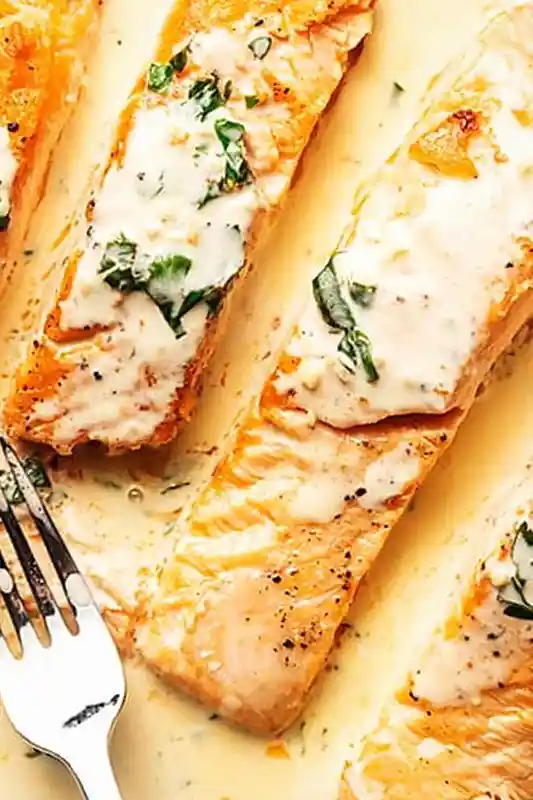
This high-protein dinner features perfectly seared salmon filets topped with a rich, velvety lemon garlic sauce. It is a low-carb meal that comes together in just 25 minutes using a single skillet for easy cleanup.
List of ingredients
- 1 pound Salmon filets (skin on or skinless), cut into 4 portions – use pieces at least 1 inch thick.
- Kosher salt and pepper – used for basic seasoning on both sides of the fish.
- 2 Tablespoons avocado oil – selected for its high smoke point during searing.
- 1 1/4 Cup Heavy cream – provides the rich, creamy base for the sauce.
- 2 Tablespoons Lemon juice – freshly squeezed to add brightness and acidity.
- 3 cloves garlic (minced) – adds a pungent, savory depth to the cream.
- 2 Tablespoons freshly chopped parsley – used for freshness and garnish.
step-by-step instructions
- Heat the Pan: Place avocado oil in a heavy bottom skillet over medium high heat until it is shimmering.
- Sear the Salmon: Add salmon filets to the pan skin side up. Cook until the fish is browned and releases easily from the surface. Avoid flipping too early to prevent sticking.
- Crisp the Skin: Flip the filets to the other side (skin side if applicable) and cook until the skin is crispy and the fish releases from the pan.
- Rest the Fish: Remove the salmon filets from the skillet and set them aside on a plate.
- Prepare the Sauce: Lower the skillet heat to medium. Whisk together the heavy cream, minced garlic, chopped parsley, and lemon juice.
- Thicken the Sauce: Let the mixture simmer for a few minutes until it thickens slightly.
- Final Seasoning: Season the sauce with kosher salt and black pepper to taste.
- Plate and Serve: Spoon the creamy lemon garlic sauce over the salmon and garnish with extra parsley. For maximum crispiness, serve the sauce on the side.
Expert Tips for Pan-Searing Salmon
Pat the Fish Dry for Better Searing
Use paper towels to thoroughly pat every side of the salmon filets until they are completely dry. Any remaining surface moisture creates steam when the fish hits the pan, which prevents the skin from crisping properly. A dry surface allows the fish to sear quickly and develop a rich, golden-brown crust. This simple step is essential for achieving a restaurant-quality texture.
Avoid Flipping the Salmon Too Early
Avoid the temptation to move or flip the salmon too early in the cooking process. As the fish sears, it creates a natural crust that will automatically release from the pan surface. If you try to flip it and the fish sticks, it is a sign that the searing process is not yet complete. Wait another minute until the filet lifts easily without tearing.
Use Consistent Filet Thickness for Even Cooking
Select salmon filets that are consistently thick, ideally around one inch, to ensure uniform cooking across all pieces. When pieces vary in size, the thinner filets will overcook and become dry before the thicker ones are finished. Using similar portions allows you to time the entire batch perfectly. This results in a tender, flaky texture in every serving.
Monitor Internal Temperature to Prevent Overcooking
Use a digital meat thermometer to check the internal temperature of the thickest part of the filet. Aim to remove the salmon from the heat when it reaches 130F to 135F. The temperature will continue to rise slightly as the fish rests, bringing it to a perfect medium. This precision prevents the fish from becoming rubbery or dry.
Identify Albumin to Gauge Doneness
Keep an eye out for a white, cloudy substance that may seep out of the salmon as it cooks. This substance is called albumin, which is simply a protein that coagulates when the fish is exposed to high heat. While a small amount is normal, a large volume of albumin often indicates that the fish is overcooking. Reducing the heat or removing the fish sooner can minimize this.
Ingredient Selection and Substitutions
Use Fresh Lemon Juice for Brightness
Freshly squeezed lemon juice provides a sharp acidity that cuts through the richness of the heavy cream. Bottled lemon juice often has a metallic taste and lacks the fresh aroma needed for this sauce. Using a real lemon ensures the flavor remains vibrant and balanced. It prevents the sauce from feeling too heavy on the palate.
Substitute Coconut Cream for Dairy-Free Needs
Full-fat canned coconut cream can replace heavy cream if you need a dairy-free alternative. While it adds a slight coconut flavor, it maintains the creamy consistency and richness of the original sauce. Ensure the coconut cream is well-shaken or stirred before adding it to the pan. This is a practical swap for those with dairy sensitivities.
Use Olive Oil if Avocado Oil is Unavailable
Avocado oil is preferred because of its high smoke point, but olive oil is a viable alternative. If using olive oil, be mindful not to let the pan get too hot to avoid burning the oil. A light-tasting olive oil works best to ensure it does not overpower the delicate flavor of the salmon. Ensure the oil is shimmering before adding the fish.
Swap Parsley for Fresh Dill or Chives
Fresh dill is a classic pairing for salmon and adds a distinct, lemony herb flavor. Chives provide a mild onion note that complements the garlic in the cream sauce. You can use a combination of both or choose one based on your preference. Always add fresh herbs at the end to preserve their bright color and flavor.
Use Frozen Salmon for Convenience
Frozen salmon filets are often flash-frozen at peak freshness and are very convenient to keep in stock. To use them, thaw the filets completely in the refrigerator overnight. Alternatively, submerge the sealed filets in cold water for about 30 minutes for a faster thaw. Always pat them dry after thawing to ensure a proper sear.
Customizing Your Salmon Dish
Stir in Fresh Spinach for Added Greens
Adding a few handfuls of fresh baby spinach to the sauce at the very end is an easy way to incorporate vegetables. The residual heat of the simmering cream will wilt the leaves quickly without overcooking them. This adds a pop of color and a boost of nutrients to the meal. Stir gently until the spinach is just wilted before serving.
Add Red Pepper Flakes for a Spicy Kick
For those who enjoy a bit of heat, stir in a pinch of red pepper flakes or cayenne pepper. This adds a subtle warmth that contrasts well with the cool, creamy lemon sauce. Adjust the amount based on your heat tolerance, starting with a small pinch. The spice helps break up the richness of the heavy cream.
Mix in Grated Parmesan for Extra Richness
Freshly grated parmesan cheese can be whisked into the sauce for a saltier, nuttier flavor. The cheese also helps thicken the sauce further, creating a more decadent coating for the fish. Use a finely grated variety so the cheese melts smoothly into the cream. This turns the sauce into a rich garlic-parmesan cream.
Incorporate Capers for a Briny Flavor
Capers provide a salty, briny burst that pairs exceptionally well with lemon and fish. Stir in a tablespoon of drained capers just before removing the sauce from the heat. They offer a sharp contrast to the velvetiness of the cream. This addition gives the dish a sophisticated, Mediterranean-style profile.
Replace Salmon with Shrimp for a Different Protein
This creamy lemon garlic sauce is versatile and works perfectly with large shrimp. Sauté the shrimp in the same manner as the salmon, cooking them only until they turn pink and opaque. Remove them from the pan and prepare the sauce exactly as described. The result is a luxurious shrimp dish that is just as low-carb.
Bake the Salmon for a Hands-Off Approach
If you prefer not to pan-sear, you can bake the salmon at 400F for 12 to 15 minutes. While the fish is in the oven, prepare the cream sauce on the stovetop. Once the salmon is cooked, spoon the fresh sauce over the baked filets. This method is more convenient for larger groups where pan-searing every piece is impractical.
Serving and Pairing Ideas
Pair with Roasted Broccoli for a Simple Side
Roasted broccoli with a touch of lemon and garlic mirrors the flavors of the salmon perfectly. The charred edges of the broccoli provide a nice texture contrast to the soft fish. Roast the florets at 400F until they are tender and browned. This keeps the entire meal low-carb and nutrient-dense.
Serve with Air Fryer Asparagus
Air fryer asparagus stays crisp-tender and takes very little time to prepare. Toss the spears in a bit of oil and salt before air frying them for 6 to 8 minutes. The fresh, grassy flavor of asparagus balances the richness of the lemon garlic cream. It is an elegant side dish that complements the presentation of the salmon.
Add Air Fryer Green Beans for Texture
Air fried green beans offer a satisfying snap and a fresh taste. They provide a lighter element to the plate, ensuring the meal does not feel too heavy. Season them simply with salt and pepper to let the salmon sauce remain the star of the show. They are a great alternative for those who prefer a crunchier vegetable.
Use a Light Vinaigrette Salad to Balance Richness
A simple mixed green salad with a light lemon or apple cider vinaigrette cleanses the palate. The acidity in the dressing helps cut through the heavy cream of the sauce. Use a mix of arugula, spinach, and cucumber for a refreshing combination. This prevents the rich sauce from becoming overwhelming during the meal.
Serve over Cauliflower Rice to Absorb Sauce
Sautéed cauliflower rice acts as a wonderful sponge for the extra lemon garlic sauce. This makes the meal feel more substantial and filling without adding significant carbohydrates. Simmer the cauliflower rice with a bit of butter and salt for the best flavor. It is the ideal low-carb substitute for traditional white rice.
Use Roasted Potatoes for Non-Keto Dinners
For family members not following a keto diet, roasted red potatoes are a classic accompaniment. The fluffy interior of the potato pairs beautifully with the creamy sauce. Toss the potato chunks in olive oil and herbs before roasting them until golden. This allows you to serve one main protein that satisfies different dietary needs.
Storage and Reheating Guidance
Store Salmon and Sauce Separately in the Fridge
To maintain the best quality, store the seared salmon and the cream sauce in separate airtight containers. Keeping them separate prevents the salmon from absorbing too much moisture and becoming soggy. This preserves the integrity of the sear and the crispness of the skin. The salmon and sauce will stay fresh in the refrigerator for up to 3 days.
Reheat Gently in a Skillet
The best way to reheat this dish is by placing the salmon and sauce in a skillet over low heat. Warm the components gently until they are heated through, avoiding high temperatures that could dry out the fish. This method allows the sauce to emulsify again without separating. It is the most effective way to mimic the original texture.
Use Low-Power Microwave Intervals for Fast Heating
If you are in a rush, you can use a microwave, but do so with caution. Heat the salmon in 30-second intervals at reduced power (50% to 70%). This prevents the protein from rubberizing and the cream from splitting. Let the fish rest for a minute between intervals to ensure even heating.
Avoid Freezing Dairy-Based Sauces
It is not recommended to freeze the finished cream sauce because dairy can separate and grain during the thawing process. If you plan to freeze the meal, freeze the seared salmon alone. Make a fresh batch of the lemon garlic sauce when you are ready to serve. This ensures the sauce remains silky and smooth.
Common Questions
Can I use frozen salmon?
Yes, frozen salmon works great for this recipe. Simply ensure it is completely thawed in the refrigerator and patted dry with paper towels before searing to get a golden crust.
Can I bake the salmon instead?
Yes, you can bake the salmon at 400F for 12 to 15 minutes depending on the thickness. Make the cream sauce separately on the stovetop while the fish bakes in the oven.
How do I know when salmon is done?
Salmon is done when it flakes easily with a fork and reaches an internal temperature of 130F to 135F. Overcooking the fish will make it dry and cause more white albumin to appear.
Can I use skinless salmon?
Absolutely. Both skin-on and skinless salmon work well in this recipe. Skin-on is often easier to find and helps the fish hold together better during the searing process.
Can I make this dairy free?
Yes, you can substitute the heavy cream with full-fat coconut cream. This provides a similar creamy texture while remaining dairy-free and keto-friendly.
What is the best pan for cooking salmon?
A cast iron skillet or a heavy stainless steel skillet is best. These materials distribute heat evenly and help the salmon develop a professional golden crust and crispy skin.
Can I make salmon in the air fryer instead?
Yes, you can air fry the salmon for a crisp exterior. However, you will still need to prepare the cream sauce in a skillet on the stove to achieve the correct consistency.
Print
Keto Pan-Seared Salmon with Creamy Lemon Garlic Sauce
- Total Time: 25 minutes
- Yield: 4 servings 1x
- Diet: Keto
Description
This keto salmon recipe features perfectly seared salmon filets topped with a rich and creamy lemon garlic sauce. This easy low carb dinner is packed with protein, full of flavor, and ready in about 25 minutes using simple ingredients.
Ingredients
- 1 pound Salmon filets (skin on or skinless), cut into 4 portions
- kosher salt and pepper
- 2 Tablespoons avocado oil
- 1 1/4 Cup Heavy cream
- 2 Tablespoons Lemon juice
- 3 cloves garlic (minced)
- 2 Tablespoons freshly chopped parsley
Instructions
- Step: Heat the oil in a heavy bottom skillet over medium high heat.
- Step: Add in the salmon filets skin side up. Cook until the salmon is browned and the fish easily releases from the pan. Try not to flip early or the salmon will stick.
- Step: Flip to the other side (skin side if your salmon has skin) and cook until the salmon skin is crispy and releases from the pan.
- Step: Remove the salmon from the pan and set aside.
- Step: Turn the heat of the skillet down to medium and whisk together the heavy cream, garlic, parsley and lemon juice. Let simmer for a few minutes to thicken.
- Step: Season with salt and pepper to taste.
- Step: Serve the salmon with cream sauce and chopped parsley. If you want your salmon skin to stay crispy, serve the sauce on the side.
Notes
Pat the salmon dry before cooking so it sears properly and develops a golden crust. Use salmon filets that are at least 1 inch thick so they stay tender and flaky. Cook salmon to an internal temperature of 130F to 135F. For a dairy free option, substitute coconut cream for the heavy cream.
- Prep Time: 5 minutes
- Cook Time: 20 minutes
- Category: Dinner
- Method: Pan-searing
- Cuisine: American
Nutrition
- Serving Size: 1 portion
- Calories: 521 kcal
- Sugar: 4 g
- Sodium: 480 mg
- Fat: 41 g
- Saturated Fat: 18 g
- Unsaturated Fat: 23 g
- Trans Fat: 0 g
- Carbohydrates: 6 g
- Fiber: 0 g
- Protein: 29 g
- Cholesterol: 115 mg