This method ensures your chicken breasts remain juicy and tender every time. It utilizes a high-heat roasting technique combined with a quick brine for professional results.
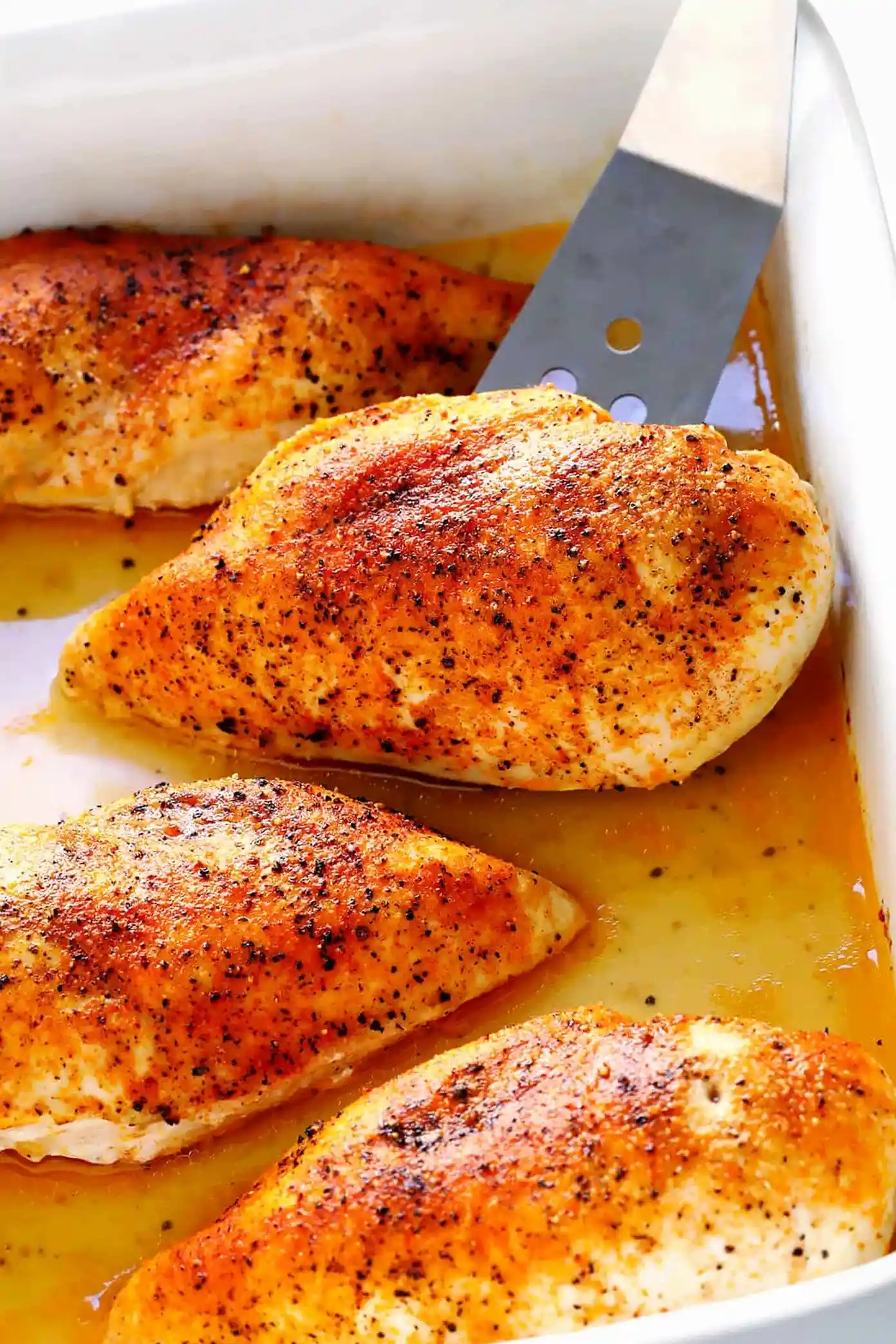
List of ingredients
- 4 boneless skinless chicken breasts (pounded to even thickness) – ensures uniform cooking.
- 1 tablespoon melted butter or olive oil – prevents sticking and adds flavor.
- 1 teaspoon kosher salt – enhances seasoning and aids brining.
- 1/2 teaspoon freshly-ground black pepper – provides a mild heat.
- 1/2 teaspoon garlic powder – adds savory depth.
- 1/2 teaspoon smoked paprika – adds color and a subtle smoky aroma.
step-by-step instructions
- Brine the chicken: Check the label of your chicken breasts. If they have already been pre-brined in a sodium solution, please skip this step. Fill a large mixing bowl with 2 cups of lukewarm water and 1/4 cup kosher salt. Stir to combine until most of the salt is absorbed. Add 2 cups of cold water (or a few ice cubes) to lower the temperature of the water so that it is cool to the touch. Add the chicken breasts and let them sit in the mixture to brine for 15 minutes, or you can also cover the bowl and refrigerate for up to 6 hours. Remove the chicken breasts from the brine, rinse them with cold water, then pat them dry with paper towels.
- Heat the oven: Preheat oven to 450°F.
- Season the chicken: Place the chicken breasts in a single layer in a large baking dish. Brush on both sides (turning once) evenly with the melted butter or olive oil. In a separate small bowl, whisk the salt, pepper, garlic powder and paprika until combined. Sprinkle the seasoning mixture evenly over the chicken on both sides.
- Bake: Bake for 15-18 minutes, or until the chicken is cooked through and no longer pink. Cooking time will depend on the thickness of the chicken breasts, so I recommend using a cooking thermometer to know exactly when the chicken is fully cooked. The thickest part of the breast should measure 165°F. If you want the chicken to be a little bit browned and crispier on top, you can turn the broiler on high for the final 3-5 minutes of the cooking time and broil the chicken until it is cooked through and golden on top. Keep a close eye on the chicken, however, so that it does not overcook and/or burn.
- Rest the chicken: Once the chicken is cooked, remove the pan from the oven, transfer the chicken to a clean plate, and loosely tent the plate with aluminum foil. Let the chicken rest for at least 5-10 minutes.
- Serve: Serve warm and enjoy!
Technical Guides for Better Texture
The Purpose of Saltwater Brining
Brining works through osmosis, allowing the chicken to absorb extra moisture and salt into the muscle fibers. This creates a buffer that prevents the meat from drying out during the high-heat roasting process. It also seasons the meat from the inside out, rather than just on the surface.
Adjusting Brining Time for Better Results
A quick 15-minute brine is sufficient for standard chicken breasts to improve juiciness. For thicker cuts, refrigerating the brine for up to 6 hours allows for deeper penetration of the salt. Do not exceed 6 hours, as the meat may become overly salty or take on a ham-like texture.
Rinsing and Drying the Meat
Rinsing the chicken after brining removes excess surface salt that could lead to an over-salted crust. Patting the meat completely dry with paper towels is critical for the next step. Dry meat allows the oil or butter to adhere better and helps the chicken brown rather than steam.
Essential Equipment and Tooling
Choosing the Correct Baking Pan
A thick metal baking sheet or a metal roasting pan is ideal for this recipe because it conducts heat efficiently. Avoid using glass or Pyrex dishes, as they may not be rated for 450°F and could shatter. Metal pans also allow for better air circulation around the chicken.
Using a Digital Meat Thermometer
An instant-read digital thermometer is the only way to guarantee the chicken is safe without overcooking it. Insert the probe into the thickest part of the breast to ensure it has reached 165°F. This prevents the guesswork and the need to cut into the meat, which lets juices escape.
Pounding Chicken for Even Thickness
Chicken breasts are naturally tapered, meaning the thin end overcooks before the thick end is safe to eat. Use a meat mallet or a heavy skillet to pound the thickest part to a uniform thickness. This ensures that every part of the breast reaches the target temperature at the same time.
Flavor Customization and Seasoning Options
Swapping Smoked Paprika for Other Spices
If you prefer a different flavor profile, replace the smoked paprika with sweet paprika for a milder taste or cayenne pepper for more heat. Cumin can be added for an earthy, southwestern feel. Always maintain the salt ratio to ensure the flavor is balanced.
Creating an Italian-Style Seasoning
Substitute the garlic powder and paprika with a blend of dried oregano, dried basil, and dried thyme. Add a pinch of onion powder for extra depth. This version pairs exceptionally well with melted butter as the fat carries the herbal notes.
Using Zesty Lemon and Herb Rubs
For a brighter flavor, combine lemon zest and dried parsley with the salt and pepper. Brush the chicken with olive oil instead of butter to keep the flavor light. This combination is particularly effective when served with steamed asparagus or sautéed spinach.
Adding a Spicy Kick with Chili Powder
Replace the paprika with a mixture of chili powder and a small amount of brown sugar. This creates a slightly caramelized, spicy crust when roasted at high temperatures. Be careful with the sugar, as it can burn quickly under the broiler.
Serving and Pairing Suggestions
Pairing with Roasted Root Vegetables
Since the oven is already at 450°F, you can roast carrots, parsnips, or Brussels sprouts on a separate tray. Toss them in olive oil and salt and roast them for 20-25 minutes. The high heat caramelizes the natural sugars in the vegetables, complementing the savory chicken.
Adding Chicken to Fresh Grain Bowls
Slice the rested chicken breasts into thin strips and place them over a base of quinoa or farro. Add fresh cucumber, shredded carrots, and a dollop of hummus. The lean protein provides a satisfying contrast to the chewy grains and crisp vegetables.
Incorporating Sliced Chicken into Pasta
Dice the chicken into bite-sized cubes and toss them into a fettuccine alfredo or a spaghetti marinara. Add the chicken at the very end of the pasta cooking process to avoid reheating it too much. This keeps the meat tender and juicy.
Using Chicken for Hearty Salads
Cold or warm sliced chicken breasts are perfect for a Caesar salad or a Greek salad. For a Greek variation, add kalamata olives, feta cheese, and a lemon-olive oil vinaigrette. The simple seasoning of the chicken allows the bold salad flavors to shine.
Storage and Long-Term Preservation
Refrigerating Cooked Chicken Breasts
Place the cooled chicken in an airtight container to prevent it from absorbing other odors in the fridge. It will remain safe to eat for up to 3 days. To prevent the meat from drying out during storage, you can store it in the pan juices.
Freezing Methods for Long-Term Storage
For the best results, slice or dice the chicken before freezing to make it easier to use in future meals. Flash-freeze the pieces on a baking sheet first, then transfer them to a freezer-safe bag. This prevents the pieces from clumping together into one large block.
Thawing Frozen Cooked Chicken
The safest way to thaw frozen chicken is in the refrigerator overnight. This maintains the texture of the meat and keeps it at a safe temperature. Avoid thawing on the counter at room temperature to prevent bacterial growth.
Reheating Without Drying Out
Reheating in the Oven
Place the chicken in a baking dish with a tablespoon of water or chicken broth. Cover the dish tightly with foil to trap the steam. Heat at 325°F for 10-15 minutes until the internal temperature reaches 165°F.
Using a Microwave for Quick Heating
Slice the chicken thinly and place it on a microwave-safe plate. Cover the meat with a damp paper towel to create a steaming effect. Heat in 30-second intervals on medium power to avoid toughening the protein.
Pan-Searing for Added Texture
Place sliced chicken in a skillet over medium heat with a small amount of butter. Sear each side for 1-2 minutes just until warmed through. This method restores some of the exterior crispness that may have been lost during refrigeration.
Common Troubleshooting and FAQs
Why is my chicken breast dry?
Dryness usually occurs due to overcooking or skipping the brining step. If the internal temperature exceeds 170°F, the muscle fibers contract and squeeze out the moisture. Always use a thermometer and let the meat rest before slicing.
How do I prevent sticking to the pan?
Ensure you brush both sides of the chicken liberally with melted butter or olive oil. Using a high-quality metal pan or lining your pan with parchment paper can also help. Make sure the oven is fully preheated before adding the meat.
Can I use frozen chicken breasts?
Yes, but they must be completely thawed before you begin. Brining frozen chicken is ineffective because the salt cannot penetrate the frozen tissues. Thaw them in the refrigerator for 24 hours before following the recipe steps.
What is the safest internal temperature?
The USDA recommends an internal temperature of 165°F (74°C) for poultry. Using a meat thermometer ensures the chicken is safe to eat while remaining juicy. Remove the chicken from the oven when it is very close to this temperature, as it will rise slightly during the resting phase.
Why did my chicken shrink during cooking?
Meat shrinkage is normal as proteins contract and moisture evaporates. Pounding the chicken to an even thickness minimizes uneven shrinkage. High-heat roasting is faster, which generally results in less overall moisture loss compared to low-and-slow methods.
Print
Juicy Oven Baked Chicken Breasts
- Total Time: 35 minutes
- Yield: 4 servings 1x
- Diet: General
Description
Learn how to make juicy, tender, delicious baked chicken breasts with this simple 5-step method.
Ingredients
- 4 boneless skinless chicken breasts (pounded to even thickness)
- 1 tablespoon melted butter or olive oil
- 1 teaspoon kosher salt
- 1/2 teaspoon freshly-ground black pepper
- 1/2 teaspoon garlic powder
- 1/2 teaspoon smoked paprika
Instructions
- Brine: Fill a large mixing bowl with 2 cups of lukewarm water and 1/4 cup kosher salt. Stir to combine. Add 2 cups of cold water (or a few ice cubes) to lower the temperature. Add the chicken breasts and brine for 15 minutes (or refrigerate for up to 6 hours). Remove, rinse with cold water, and pat dry with paper towels.
- Heat: Preheat oven to 450°F.
- Season: Place the chicken breasts in a single layer in a large baking dish. Brush on both sides evenly with the melted butter or olive oil. Whisk the salt, pepper, garlic powder, and paprika in a small bowl, then sprinkle evenly over the chicken on both sides.
- Bake: Bake for 15-18 minutes, or until the thickest part of the breast measures 165°F.
- Rest: Remove the pan from the oven, transfer the chicken to a clean plate, and loosely tent with aluminum foil. Let the chicken rest for at least 5-10 minutes.
Notes
Avoid using glass dishes (such as Pyrex) as they often have a maximum temperature of 425°F; a thick metal baking sheet is recommended. Cooked chicken can be stored in a sealed container and refrigerated for up to 3 days or frozen for up to 3 months.
- Prep Time: 20 minutes
- Cook Time: 15 minutes
- Category: Main Course
- Method: Baking
- Cuisine: American
Nutrition
- Serving Size: 1 chicken breast
- Calories: 280 kcal
- Sugar: 0 g
- Sodium: 720 mg
- Fat: 7 g
- Saturated Fat: 3 g
- Unsaturated Fat: 4 g
- Trans Fat: 0 g
- Carbohydrates: 2 g
- Fiber: 0 g
- Protein: 38 g
- Cholesterol: 95 mg