This method produces tender chicken breasts using a high-heat roasting technique and a specific seasoning blend. The approach ensures the meat remains moist while developing a caramelized exterior.
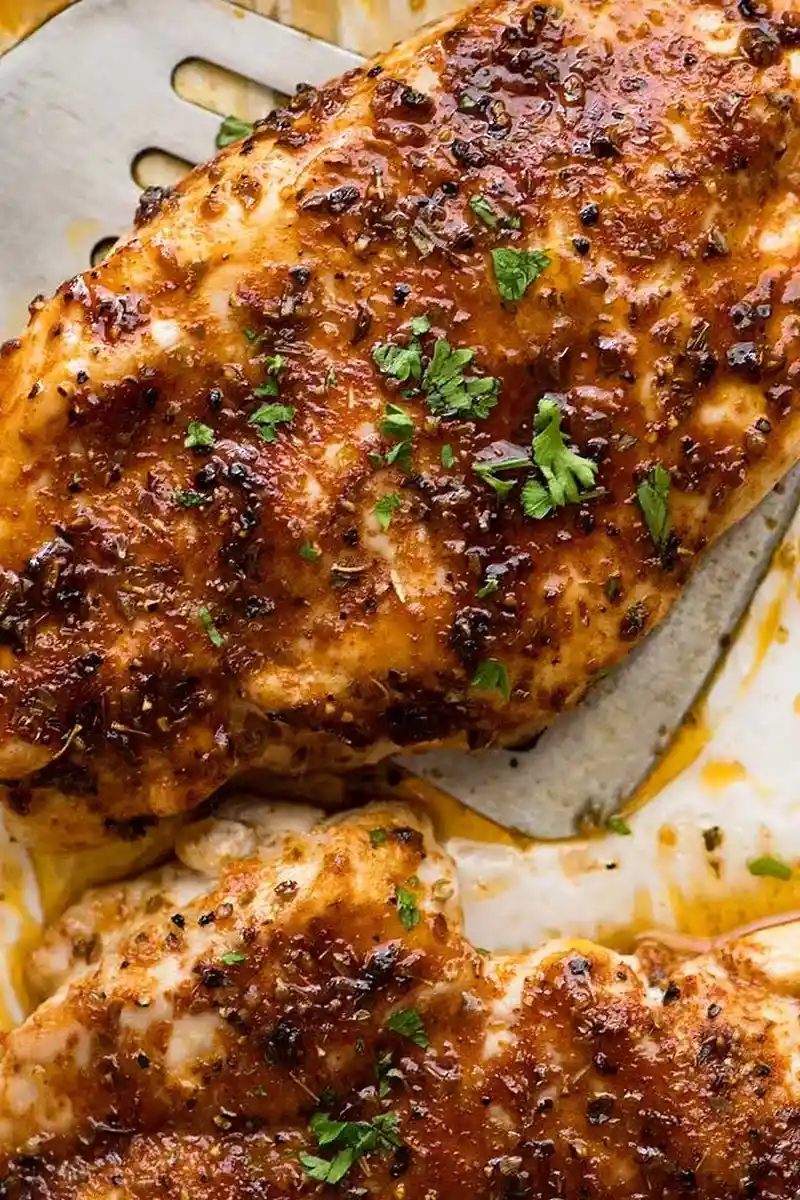
List of ingredients
- 4 chicken breasts (150 – 180g / 5 – 6 oz each) – use boneless, skinless pieces.
- 2 tsp olive oil – used for coating and seasoning adhesion.
- 1 1/2 tbsp brown sugar – helps create a crust and retains moisture.
- 1 tsp paprika – adds color and a mild earthy flavor.
- 1 tsp dried oregano or thyme – or any preferred dried herb.
- 1/4 tsp garlic powder – provides a concentrated savory base.
- 1/2 tsp salt – enhances all other flavors.
- 1/2 tsp pepper – adds a subtle spicy kick.
- Finely chopped parsley – used for a fresh final garnish.
step-by-step instructions
- Preheat Oven: Set your oven to 425°F/220°C (200°C for fan-forced ovens).
- Prepare the Meat: Pound the chicken breasts to a uniform thickness of 1.5cm / 0.6″ at the thickest part. Use a rolling pin, meat mallet, or your fist to ensure even cooking and tenderness.
- Mix Seasoning: Combine the brown sugar, paprika, dried herbs, garlic powder, salt, and pepper in a small bowl.
- First Coating: Line a baking tray with foil and parchment paper. Place the chicken breasts upside down on the tray. Drizzle 1 tsp of olive oil over them, rub it in, and sprinkle with half of the seasoning mix.
- Second Coating: Flip the chicken breasts over. Drizzle with the remaining 1 tsp of oil, rub it in, and apply the rest of the seasoning to cover as much surface area as possible.
- Bake: Roast for 18 minutes. The chicken is done when the surface is golden brown or the internal temperature reaches 165°F/75°C on a meat thermometer.
- Remove: Take the tray out of the oven and immediately transfer the chicken to serving plates.
- Rest and Garnish: Let the meat rest for 3 to 5 minutes before serving. Garnish with freshly chopped parsley if desired.
Meat Preparation Techniques
Pound the Meat for Uniformity
Pounding the chicken breast ensures that the thickest part of the meat is the same size as the thinnest part. This prevents the edges from drying out before the center is fully cooked. Use a meat mallet or a heavy rolling pin to achieve a consistent 1.5cm thickness.
Handle Large Breasts by Slicing
If you have very large chicken breasts exceeding 250g, pounding may be difficult. Instead, slice the breast horizontally to create two thinner steaks. This reduces the cooking time and ensures the heat penetrates the center quickly.
Tenderizing the Muscle Fibers
The physical action of pounding breaks down the tough connective tissues in the breast meat. This results in a more tender texture once the chicken is roasted. This step is essential for preventing the rubbery consistency often found in overcooked white meat.
The Role of Seasoning
Use Brown Sugar for Moisture Retention
The inclusion of brown sugar is a critical component for juiciness. During the baking process, the sugar attracts moisture and creates a light syrup that coats the meat. This acts as a barrier, preventing the internal juices from evaporating too quickly.
Create a Flavorful Crust
Brown sugar also facilitates the Maillard reaction, which is the chemical reaction between amino acids and reducing sugars. This produces the golden-brown caramelization on the surface. The result is a savory-sweet crust that contrasts with the lean meat.
Balance Spices for a Savory Profile
While sugar is present, the paprika, garlic powder, and herbs keep the dish savory. The salt is necessary to penetrate the meat and enhance the natural flavor of the chicken. Ensure the seasoning is spread evenly to avoid concentrated salty spots.
Cooking and Temperature Control
Utilize High-Heat Roasting
Cooking the chicken fast at 425°F (220°C) is the secret to avoiding dry meat. High heat sears the outside quickly, locking in moisture. Slow cooking lean breast meat often leads to overcooking before the desired color is achieved.
Monitor Internal Temperature
The only foolproof way to ensure safety and quality is using a digital meat thermometer. Remove the chicken as soon as it hits 165°F (75°C). Overshooting this temperature by even a few degrees can make the meat dry.
Identify Visual Cues for Doneness
If a thermometer is unavailable, look for the color of the seasoning crust. Once the surface has turned a deep golden brown and the juices run clear, the chicken is typically ready. The meat should feel firm but have a slight spring to it.
Equipment and Setup
Line Pans for Easy Cleanup
Using a combination of aluminum foil and parchment paper prevents the sugar-based seasoning from sticking to the pan. This makes cleanup effortless and prevents the chicken from tearing when you flip or remove it. Avoid using only foil, as the sugar can fuse to the metal.
Select the Right Baking Tray
Use a rimmed baking sheet to prevent any oil or juices from dripping onto the oven floor. Ensure the chicken breasts are not crowded on the tray. Proper spacing allows hot air to circulate around each piece, ensuring an even sear.
Ingredient Substitutions
Swap Oregano for Other Dried Herbs
If you do not have oregano, thyme is an excellent alternative for a woody, aromatic flavor. Rosemary or a generic Italian seasoning blend also work well. Adjust the amount to keep the total herb measurement at 1 teaspoon.
Replace Brown Sugar with Honey or Maple Syrup
For a different sweetness, you can use a liquid sweetener like honey or maple syrup. Since these are liquids, omit the olive oil and rub the sweetener directly onto the meat. Be aware that liquid sugars may brown faster, so monitor the oven closely.
Substitute Olive Oil with Avocado Oil
Avocado oil is a great alternative because it has a higher smoke point than olive oil. This is particularly useful for high-heat roasting. Any neutral oil, such as canola or grapeseed oil, will also work effectively.
Recipe Variations
Adapt for Boneless Skinless Thighs
Chicken thighs are naturally juicier than breasts. You can use the same seasoning and method, but adjust the cooking time. Bake small to medium thighs for 25 minutes and larger ones for 30 minutes.
Create a Spicy Flavor Profile
To add heat, incorporate 1/2 teaspoon of cayenne pepper or smoked paprika into the seasoning mix. This adds a kick that complements the sweetness of the brown sugar. You can also add a pinch of crushed red pepper flakes for extra texture.
Add Citrus for Brightness
Fresh lemon zest added to the dry seasoning provides a bright, citrusy note. Alternatively, squeeze fresh lemon juice over the chicken immediately after it comes out of the oven. This cuts through the richness of the caramelized crust.
Serving Suggestions
Pair with Garlic Butter Rice
A savory grain like garlic butter rice complements the sweetness of the chicken. The richness of the butter balances the lean breast meat. Adding kale or spinach to the rice adds a nutritional boost and color.
Serve with Steamed Green Vegetables
Steamed broccoli, asparagus, or green beans provide a crisp texture and a fresh taste. A light drizzle of lemon and olive oil over the vegetables pairs well with the paprika seasoning. This keeps the meal balanced and healthy.
Complement with a Fresh Salad
A cool cucumber salad with a yogurt dressing or a garden salad with balsamic vinaigrette works well. The acidity in the salad dressing helps cleanse the palate between bites of the seasoned chicken. This is ideal for a lighter lunch or dinner.
Storage and Reheating
Store in Airtight Containers
Place leftover chicken in a sealed airtight container once it has cooled completely. This prevents the meat from absorbing other fridge odors and keeps it from drying out. Refrigerated chicken will stay fresh for 3 to 4 days.
Freeze Cooked Chicken Breast
For longer storage, wrap the cooked chicken tightly in plastic wrap and place it in a freezer bag. It can be stored for up to 3 months. Thaw the chicken in the refrigerator overnight before reheating to maintain the best texture.
Reheat Gently in the Oven
To avoid drying out the meat during reheating, use the oven at 300°F (150°C). Place the chicken in a dish and add a tablespoon of water or vegetable broth to the bottom. Cover with foil and heat until warmed through.
Use the Microwave for Quick Warming
If using a microwave, use a medium power setting rather than high. Cover the chicken with a damp paper towel to trap steam. Heat in 30-second intervals to prevent the proteins from becoming rubbery.
Make-Ahead Advice
Prep the Dry Seasoning in Bulk
You can mix a large batch of the dry seasoning and store it in a jar at room temperature. This reduces prep time for future meals. Label the jar with the date and keep it in a cool, dry place.
Season the Chicken in Advance
You can apply the oil and seasoning to the chicken 2 to 4 hours before cooking. Store the prepared chicken in the refrigerator. This allows the salt to penetrate deeper into the meat, potentially enhancing the flavor.
Troubleshooting Common Issues
Fix Dry Chicken Breast
If your chicken comes out dry, it is likely due to overcooking or using breasts that were too thick. Always use a thermometer and ensure the meat is pounded to an even thickness. If already dry, serve with a sauce or gravy to add moisture.
Prevent Seasoning from Burning
If the sugar in the seasoning burns before the chicken is cooked, lower the oven temperature by 25°F. Ensure you are using a high-quality parchment paper to prevent sticking. Avoid using too much sugar beyond the recommended amount.
Correct Uneven Browning
Uneven browning usually happens if the chicken pieces are different sizes or if the oven has hot spots. Rotate the baking tray halfway through the cooking process. Pounding the meat ensures a more uniform surface for browning.
Frequently Asked Questions
Can I use frozen chicken breasts?
It is not recommended to bake frozen chicken breasts directly. Thaw them completely in the refrigerator first to ensure even cooking and to prevent the outside from overcooking while the inside remains raw.
How do I know when the chicken is safe to eat?
Chicken is safe to eat when it reaches an internal temperature of 165°F (75°C). Use a meat thermometer inserted into the thickest part of the breast to verify this temperature.
Why do I need to pound the chicken?
Pounding creates a uniform thickness, which means every part of the chicken cooks at the same rate. Without this step, the thin end will overcook and dry out by the time the thick center is safe to eat.
Can I use a different type of sugar?
White sugar can be used, but it does not have the molasses flavor or the same moisture-retaining properties as brown sugar. Coconut sugar is a good alternative for those seeking a different flavor profile.
Do I have to use a baking tray?
A baking tray is necessary to support the meat and collect juices. You can use a cast-iron skillet or a baking dish, provided they are oven-safe and you can easily flip the chicken.
Print
Juicy Oven Baked Chicken Breast
- Total Time: 23 minutes
- Yield: 4 servings 1x
- Diet: General
Description
A juicy, Oven Baked Chicken Breast with a touch of brown sugar in the seasoning to create a semi-sauce and a beautiful crust, cooked fast at a high temperature.
Ingredients
- 4 chicken breasts (150-180g / 5–6 oz each)
- 2 tsp olive oil
- 1 1/2 tbsp brown sugar
- 1 tsp paprika
- 1 tsp dried oregano or thyme
- 1/4 tsp garlic powder
- 1/2 tsp salt
- 1/2 tsp pepper
- Finely chopped parsley
Instructions
- Step: Preheat oven to 425°F/220°C (200°C fan).
- Step: Pound chicken to 1.5cm / 0.6″ at the thickest part using a rolling pin, meat mallet or your fist.
- Step: Mix the seasoning ingredients.
- Step: Line tray with foil and baking/parchment paper, place chicken upside down on tray, drizzle with about 1 tsp oil, rub over with fingers, and sprinkle with seasoning.
- Step: Flip chicken, drizzle with 1 tsp oil, rub with fingers, and sprinkle with seasoning, covering as much of the surface area as you can.
- Step: Bake 18 minutes, or until surface is golden or internal temperature is 165°F/75°C.
- Step: Remove from oven and immediately transfer chicken to serving plates.
- Step: Wait 3-5 minutes before serving, garnished with freshly chopped parsley if desired.
Notes
If chicken breasts are large (250g/8oz+), cut them in half horizontally to form 2 thin steaks and skip pounding. This recipe can also be used with boneless, skinless thigh fillets, cooking for 25-30 minutes.
- Prep Time: 5 minutes
- Cook Time: 18 minutes
- Category: Mains
- Method: Baking
- Cuisine: Western
Nutrition
- Serving Size: 1 serving
- Calories: 286 kcal
- Sugar: 4 g
- Sodium: 403 mg
- Fat: 7 g
- Saturated Fat: 1 g
- Unsaturated Fat: 2 g
- Trans Fat: 0 g
- Carbohydrates: 4 g
- Fiber: 0 g
- Protein: 46 g
- Cholesterol: 127 mg