This hearty soup combines earthy collard greens with protein-rich black-eyed peas in a savory, aromatic broth. It is a robust, one-pot meal that comes together quickly in a pressure cooker, making it an ideal choice for busy weeknight dinners or a comforting weekend lunch. The blend of seasoned beef, tender vegetables, and zesty aromatics creates a deep, satisfying flavor profile that warms you from the inside out.
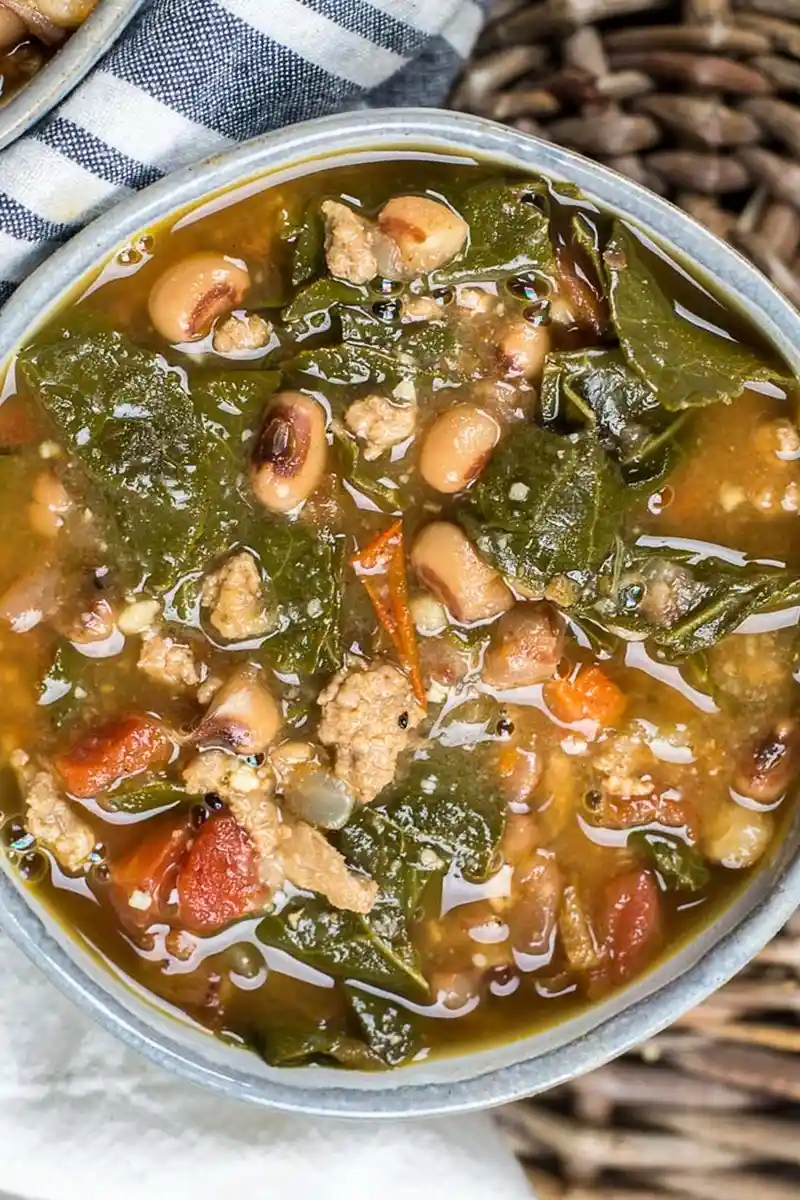
List of ingredients
- 1 pound of ground beef or turkey
- 2 15 oz cans black eyed peas (drained and rinsed)
- 1 10 oz can tomatoes with green chilis (undrained)
- 1 cup chopped carrots
- 1 bunch of collards (roughly 8 cups)
- 1 cup chopped onion
- 1 tablespoon minced garlic
- 1 tablespoon rice vinegar
- 2 tablespoons worcestershire
- 1 tablespoon paprika
- ½ teaspoon garlic powder
- 2 teaspoons onion powder
- 1 teaspoon salt
- 1 teaspoon pepper
- 1 32 ounce beef broth
step-by-step instructions
- Step: Turn your Instant Pot on the sauté mode and lightly spray the bottom with cooking oil. Brown the ground beef and drain off any fat.
- Step: Add the onion, carrots, and garlic, then sauté until tender.
- Step: Remove the tough stems from the collard greens and tear or chop them into bite-sized pieces. Add them to the Instant Pot.
- Step: Add in the drained and rinsed black eyed peas, undrained can of tomatoes, and all remaining ingredients.
- Step: Stir well and secure the lid to the Instant Pot, ensuring the steam valve is set to closed. Set the pressure cooker to 8 minutes.
- Step: Allow 15-20 minutes for the machine to reach temperature and begin the cycle. When finished, carefully release the steam manually.
Practical Preparation Tips
Preparing Collard Greens for Texture
To ensure the most pleasant eating experience, prioritize the removal of the tough center veins from your collard greens before chopping. These stems remain quite chewy even after pressure cooking, so stripping them away yields a much softer, more enjoyable result in your final bowl. If you are in a rush, you can fold the leaf in half lengthwise and slice down the side of the stem to remove it in one swift motion.
Achieving Uniform Vegetable Sizes
Consistency is key when chopping your carrots and onions to ensure they reach the perfect tenderness simultaneously. Aim for pieces that are roughly half an inch in size, which allows them to soften adequately during the pressure cooking process without turning into mush. Uniform pieces also look much more appealing in the bowl and provide a balanced bite of texture every time.
Managing the Sauté Step
When browning your meat, ensure you give it enough time to develop a good sear before adding your onions and carrots. This caramelization on the bottom of the pot adds significant depth to the flavor of the broth once the liquid is added. If you notice small brown bits sticking to the bottom, do not worry; these are packed with flavor and will release easily once you add the broth and stir.
Understanding Ingredient Substitutions
Swapping Ground Meat Types
If you prefer a lighter base, ground turkey or ground chicken are excellent alternatives to ground beef in this soup. Because poultry is leaner, you may need a slightly larger splash of oil in the pot during the initial sauté to prevent sticking. If you use poultry, consider using a high-quality vegetable or chicken stock instead of beef broth to better complement the lighter flavor profile.
Alternative Leafy Green Varieties
While collard greens are traditional, this recipe is highly adaptable to other sturdy greens. Kale or Swiss chard are wonderful substitutes that cook down to a similar texture in the pressure cooker. If you use baby kale, consider reducing the cooking time by one minute, as it is much more delicate than standard mature collard greens and can overcook quickly under intense pressure.
Serving Ideas for Hearty Soups
Pairing with Freshly Baked Bread
This soup possesses a dense, rustic quality that is perfectly balanced by warm, absorbent bread. Consider serving thick slices of crusty sourdough or homemade cornbread alongside the bowls. The cornbread acts as a perfect vehicle for soaking up the savory tomato and beef broth at the bottom of the bowl.
Adding Fresh Garnish Elements
Elevate the brightness of the finished soup by topping each bowl with a sprinkle of fresh scallions or a squeeze of fresh lemon juice just before eating. A small dash of hot sauce can also be added at the table for those who enjoy a sharper heat profile. These finishing touches help to highlight the complex spices already present in the liquid.
Storage and Quality Preservation
Cooling Before Sealing
Always allow your soup to reach room temperature on the counter before placing it in the refrigerator or freezer. Sealing a hot pot of soup in an airtight container will trap steam, which turns into condensation and can negatively impact the texture of the greens. Once the steam has dissipated and the soup is cool, secure the lid and store it immediately to maintain maximum freshness.
Freezer Storage Guidelines
This soup is a fantastic candidate for batch cooking and freezing for future meals. When preparing to freeze, try to use a freezer-safe bag or container with as little air as possible to prevent frost formation. When you are ready to eat, move the container to the refrigerator the night before to allow it to thaw gradually, which helps maintain the integrity of the beans and greens.
Reheating and Troubleshooting
Avoiding Overcooked Vegetables
The biggest challenge when reheating bean and green soups is preventing the vegetables from becoming stringy or overly soft. Use gentle, low-heat methods such as a stovetop burner on low or short intervals in the microwave to bring the soup to serving temperature. Stir the pot occasionally during the heating process to ensure even distribution of heat without scorching the bottom.
Adjusting Soup Consistency
If the soup becomes too thick after sitting in the refrigerator, it is because the black-eyed peas have absorbed some of the liquid. Simply add a small splash of vegetable or beef broth when reheating to restore your preferred consistency. Taste the soup after adding the liquid, as you may need a tiny pinch of salt to balance out the extra moisture.
Troubleshooting Texture Issues
If you find your greens are not tender enough, it is usually because they were not submerged properly during the pressure cooking process. Ensure the greens are pushed down into the liquid before securing the lid, as the liquid is what cooks them through the pressure steam. If they remain too tough, you can simmer the soup for a few extra minutes on the stovetop after the pressure release.
Frequently Asked Questions
Can I make this soup without the rice vinegar?
While you can omit the vinegar, it provides a crucial acidity that brightens the entire dish and cuts through the earthy flavor of the collard greens. If you prefer to use a substitute, apple cider vinegar or a splash of lemon juice will achieve a similar flavor balance. Avoid omitting acid entirely, as the soup may taste flat or heavy without that zesty component to lift the profile.
How long can I keep this in the refrigerator?
For the best texture and safety, consume the stored soup within four days of cooking. Beyond this timeframe, the beans will begin to soften too much and the greens may lose their vibrancy. If you find you cannot finish the batch within that window, store the leftovers in the freezer on the second day to preserve their quality for up to six months.
Are black-eyed peas considered a legume or a vegetable?
Black-eyed peas are technically legumes, which are a family of plants that include beans, lentils, and peas. They are highly valued for their high protein and fiber content, making them an excellent plant-based addition to meat-centric soups. In this recipe, they provide a dense, satisfying texture that contrasts beautifully with the soft, cooked greens.
Print
Instant Pot Collard Green and Black Eyed Pea Soup
- Total Time: 23 minutes
- Yield: 8 servings 1x
- Diet: High Protein
Description
This Collard Green and Black Eyed Pea Soup is the ultimate comfort food! Loaded with ground beef, carrots, collard greens and black eyed peas this is the perfect winter food!
Ingredients
- 1 pound of ground beef or turkey
- 2 15 oz cans black eyed peas (drained and rinsed)
- 1 10 oz can tomatoes with green chilis (undrained)
- 1 cup chopped carrots
- 1 bunch of collards (roughly 8 cups)
- 1 cup chopped onion
- 1 tablespoon minced garlic
- 1 tablespoon rice vinegar
- 2 tablespoons worcestershire
- 1 tablespoon paprika
- ½ teaspoon garlic powder
- 2 teaspoons onion powder
- 1 teaspoon salt
- 1 teaspoon pepper
- 1 32 ounce beef broth
Instructions
- Step: Turn your Instant Pot on the sauté mode and lightly spray the bottom with cooking oil. Brown the ground beef and drain off any fat.
- Step: Add the onion, carrots, and garlic, then sauté until tender.
- Step: Remove the tough stems from the collard greens and tear or chop them into bite-sized pieces. Add them to the Instant Pot.
- Step: Add in the drained and rinsed black eyed peas, undrained can of tomatoes, and all remaining ingredients.
- Step: Stir well and secure the lid to the Instant Pot, ensuring the steam valve is set to closed. Set the pressure cooker to 8 minutes.
- Step: Allow 15-20 minutes for the machine to reach temperature and begin the cycle. When finished, carefully release the steam manually.
Notes
If freezing, consider reducing cook time to 6-7 minutes to keep greens perfectly tender after reheating. Use rice vinegar or apple cider vinegar to balance the flavor.
- Prep Time: 15 minutes
- Cook Time: 8 minutes
- Category: Main Dish
- Method: Pressure Cooking
- Cuisine: Southern
Nutrition
- Serving Size: 1.5 cups
- Calories: 260 kcal
- Sugar: 5 g
- Sodium: 434 mg
- Fat: 12 g
- Saturated Fat: 4 g
- Unsaturated Fat: 8 g
- Trans Fat: 0 g
- Carbohydrates: 15 g
- Fiber: 4 g
- Protein: 24 g
- Cholesterol: 67 mg