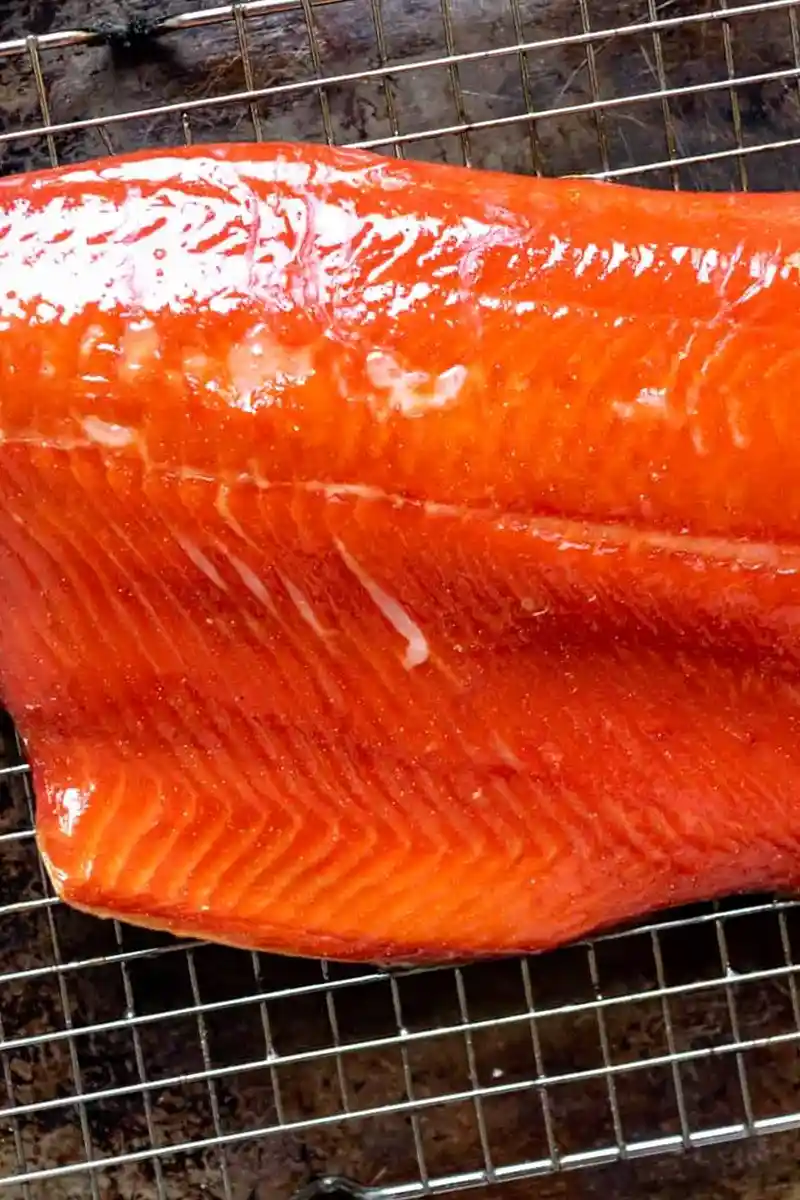
This hot smoked salmon is a versatile preparation perfect for appetizers or main courses. Using a pellet or wood smoker allows you to infuse the fish with a deep, rich flavor that complements the natural oils of the salmon.
List of ingredients
- 2-3 pounds salmon – use skin-on fillets for better stability.
- 4 cups water – used as the base for the brining solution.
- 1 cup brown sugar – balances the salt in the brine.
- 1/3 cup kosher salt – essential for curing and preserving the fish.
- 1/4 cup brown sugar – for the external dry rub.
- 1 teaspoon kosher salt – adds seasoning to the surface.
- 1 teaspoon paprika – provides a mild flavor and golden color.
- 1/4 teaspoon black pepper – adds a subtle spicy kick.
- 3/4 cup maple syrup – used for basting to create a sweet glaze.
step-by-step instructions
- Prepare the Brine: Mix the water, 1 cup brown sugar, and 1/3 cup kosher salt in a large shallow dish with a lid or a 2-gallon ziploc bag.
- Brine the Fish: Add the salmon to the brine, seal the container, and refrigerate for 4 to 8 hours.
- Clean and Dry: Remove the salmon from the brine, rinse it thoroughly under cold water, and pat it dry with paper towels.
- Develop the Pellicle: Place the salmon skin side down on a wire rack over a baking sheet. Let it air dry in a cool, breezy spot for 2 hours, or in the refrigerator for 8 to 12 hours.
- Prepare the Smoker: Heat your smoker to 180°F and place a water tray on the grate to maintain humidity.
- Apply the Rub: Combine the 1/4 cup brown sugar, 1 teaspoon salt, paprika, and black pepper, then sprinkle the mixture over the salmon.
- Smoke the Salmon: Place the fish skin side down on the grill and close the lid. Smoke for 3 to 5 hours until the internal temperature reaches 135°F to 140°F, brushing with maple syrup every hour.
- Finish and Store: Remove from the grill to serve immediately or store in an airtight container in the refrigerator for 8 to 10 days.
Mastering the Smoking Process
Understanding the Pellicle
The pellicle is a sticky, tacky layer of proteins that forms on the surface of the fish during the drying phase. This layer is critical because it allows the smoke particles to adhere to the meat rather than sliding off. Without a proper pellicle, your salmon will lack that characteristic smoky depth and professional finish.
The Science of Brining
Brining uses salt and sugar to draw out excess moisture and season the fish deeply. This process firms up the texture of the salmon, making it less likely to flake apart during the smoking process. Additionally, the sugar in the brine helps create a beautiful caramelized exterior when exposed to heat.
Optimal Smoker Temperature
Keeping the smoker at 180°F ensures the fish cooks slowly and retains its moisture. If your smoker fluctuates, you can start at 150°F for the first two hours to prevent the exterior from overcooking. Gradually increasing the heat helps reach the target internal temperature without drying out the center.
The Importance of Humidity
Adding a water tray to your smoker is a vital step for maintaining a humid environment. This prevents the surface of the salmon from drying out too quickly, which can lead to a tough exterior. The moisture also helps the smoke distribute more evenly across the fillets.
Choosing the Right Salmon and Wood
Comparing Wild-Caught and Farmed Salmon
Wild-caught salmon typically has a more robust flavor and a deeper red color, especially in Sockeye varieties. Farmed Atlantic salmon is often fattier and has a milder taste, which can be a great canvas for the smoke and rub. Both options work well, but wild salmon often holds up better to longer smoke times.
Sockeye and Coho Salmon
Sockeye salmon is prized for its intense flavor and high omega-3 content, making it a favorite for smoking. Coho salmon is slightly milder and leaner, providing a more subtle taste. When using leaner cuts, monitor the internal temperature closely to avoid overcooking.
King Salmon and Steelhead Trout
King salmon is the richest of all, with high oil content that results in a buttery texture after smoking. Steelhead trout is technically a trout but behaves almost exactly like salmon in a smoker. It is an excellent, often more affordable, substitute that yields similar results.
Selecting the Best Wood Pellets
Fruitwoods like apple, cherry, and peach are ideal for salmon because they offer a mild, sweet smoke profile. Alder is the traditional choice in the Pacific Northwest for its clean and light flavor. Avoid heavy woods like hickory or mesquite, as they can easily overpower the delicate taste of the fish.
Customizing Your Flavor Profile
Alternative Sweeteners for Basting
While maple syrup provides a classic sweetness, honey is an excellent alternative for a thicker, floral glaze. You can also use agave nectar for a more neutral sweetness. For a deeper flavor, a small amount of brown sugar dissolved in water can be used as a baste.
Enhancing the Dry Rub
To add complexity, consider mixing in a pinch of garlic powder or onion powder to the standard rub. A small amount of smoked paprika can deepen the color and add an extra layer of smokiness. For a bit of brightness, a touch of dried lemon peel can be ground into the salt and sugar mix.
Adding a Spicy Element
If you prefer a kick, add a quarter teaspoon of cayenne pepper or chipotle powder to your rub. The heat contrasts beautifully with the sweetness of the maple syrup glaze. Be careful not to overdo the spice, as it can mask the natural flavor of the salmon.
Using Fresh Herbs
Adding finely chopped fresh dill or parsley after the salmon has finished smoking adds a fresh, aromatic finish. These herbs pair traditionally with smoked fish and help cut through the richness of the oils. Always add fresh herbs at the end to prevent them from burning in the smoker.
Serving and Pairing Ideas
Classic Appetizer Presentations
Serve the smoked salmon chilled and flaked on a platter with high-quality crackers and cream cheese. Add capers, sliced red onions, and lemon wedges to provide acidity and contrast. This is a standard party presentation that highlights the smoky flavor of the fish.
Breakfast and Brunch Integration
Flake the hot smoked salmon into scrambled eggs for a luxury breakfast option. It also works perfectly on toasted bagels with a schmear of cream cheese and sliced cucumbers. The saltiness of the salmon pairs well with the richness of eggs and dairy.
Incorporating into Main Dishes
Use the smoked salmon as a topping for a creamy risotto or a lemon-garlic pasta. The fish is already cooked, so simply fold it in at the end to avoid overheating. This turns a simple side dish into a hearty, flavorful meal.
Creating a Smoked Salmon Chowder
Chunks of hot smoked salmon are the perfect addition to a thick seafood chowder. The smoke infuses into the creamy broth, adding a level of depth that fresh salmon cannot provide. Simmer your vegetables and cream first, then stir in the smoked salmon just before serving.
Storage and Long-Term Preservation
Refrigeration Guidelines
Store your smoked salmon in an airtight container to prevent it from absorbing other odors in the fridge. It will remain fresh and flavorful for 8 to 10 days when kept at a consistent cold temperature. Ensure the container is fully sealed to prevent the edges of the fish from drying out.
Vacuum Sealing for Freshness
If you have a vacuum sealer, this is the best way to extend the life of your salmon. Removing the oxygen prevents oxidation and can extend the refrigerator life up to three weeks. This method also makes the salmon easier to stack and store in small freezer spaces.
Freezing and Thawing Process
Smoked salmon can be frozen for up to one year without significant loss of quality. Wrap the fillets tightly in freezer paper or use a vacuum seal bag to avoid freezer burn. Thaw the salmon slowly in the refrigerator overnight to maintain the best texture.
Identifying Quality and Freshness
Fresh smoked salmon should have a clean, smoky aroma and a firm yet moist texture. If you notice a sour smell or a slimy film on the surface, the fish has spoiled and should be discarded. Always check the color; while it may darken slightly, it should not look dull or grey.
Reheating and Finishing Techniques
The Benefits of Serving Chilled
Many people prefer hot smoked salmon chilled because the flavors become more concentrated and the texture firms up. This makes it easier to flake and slice for appetizers. Simply take it out of the fridge 15 minutes before serving to let it temper slightly.
Gentle Oven Reheating
If you prefer the salmon warm, use a low oven temperature around 250°F. Place the fillets on a baking sheet and warm them for 5 to 10 minutes just until they are heated through. Avoid high temperatures, as this will cause the fats to leak out and the fish to become dry.
Quick Microwave Tips
For a very fast reheat, use the microwave on a medium power setting in short 30-second bursts. Cover the salmon with a damp paper towel to trap moisture and prevent the edges from curling. This method is fast but can easily overcook the fish if not monitored.
Maintaining Moisture During Reheat
When reheating, adding a small pat of butter or a drizzle of olive oil on top of the fillets helps maintain moisture. This replaces some of the oils that may have escaped during the initial smoking process. It also adds a rich sheen to the finished product.
Troubleshooting Common Issues
Preventing Dry Salmon
The most common issue is overcooking the fish, which leads to a dry, chalky texture. Always use a digital meat thermometer to pull the salmon exactly at 135°F to 140°F. Remember that carryover cooking will raise the temperature by a few degrees after it leaves the smoker.
Managing Overpowering Smoke
If the salmon tastes too strongly of smoke, you may have used a wood that is too aggressive or smoked it for too long. Next time, try a lighter fruitwood like apple or reduce the amount of wood pellets. You can also balance a smoky taste by serving the fish with a squeeze of fresh lemon juice.
Fixing Pellicle Issues
If the pellicle does not form, it is usually due to high humidity in the drying area or insufficient air circulation. Try using a fan or placing the fish in a colder part of the refrigerator. Ensure the salmon is patted completely dry after brining before you begin the drying phase.
Avoiding Rub Burn
If the sugar in the rub burns and becomes bitter, your smoker temperature may be spiking. Ensure your smoker is stabilized at 180°F before adding the fish. You can also apply the rub more lightly or baste more frequently with maple syrup to keep the surface moist.
Frequently Asked Questions
Can I use a regular oven instead of a smoker?
You cannot truly smoke salmon in a regular oven, but you can roast it with a smoked salt or liquid smoke for a similar flavor. However, the texture and authentic aroma will differ significantly from a real wood or pellet smoker.
How do I know when the salmon is perfectly done?
The most reliable method is using an instant-read thermometer to check the thickest part of the fillet. It is done when it reaches 135°F to 140°F. The fish should flake easily with a fork but still remain moist in the center.
Is skin-on salmon better than skinless?
Skin-on salmon is highly recommended because the skin acts as a barrier, protecting the meat from direct heat and preventing it from sticking to the grill. It also helps the fillet maintain its shape during the long smoking process.
Can I brine the salmon for longer than 8 hours?
Brining for too long can result in the fish becoming overly salty and curing it like a ham. Stick to the 4 to 8 hour window for the best balance of flavor and texture. If you must brine longer, reduce the amount of salt in your recipe.
Print
Hot Smoked Salmon
- Total Time: 15 hours
- Yield: 12 servings 1x
- Diet: General
Description
This Hot Smoked Salmon recipe is easy to make on your wood or pellet smoker and can be used in so many ways. Eat it plain as an appetizer or for dinner, scramble it with eggs, make smoked salmon chowder, and lots more!
Ingredients
- 2–3 pounds salmon
- 4 cups water
- 1 cup brown sugar
- 1/3 cup kosher salt
- 1/4 cup brown sugar
- 1 teaspoon kosher salt
- 1 teaspoon paprika
- 1/4 teaspoon black pepper
- 3/4 cup maple syrup
Instructions
- Step: Mix the brine ingredients together in a large shallow dish with a lid or a 2-gallon ziploc bag.
- Step: Add the salmon to the brine, then cover or seal and brine for 4 to 8 hours in the refrigerator.
- Step: Remove the salmon from the brine, rinse, and pat dry.
- Step: Place the salmon skin side down on a wire rack set over a baking sheet. Allow to dry in a cool, breezy spot for 2 hours or for 8 to 12 hours in the refrigerator to develop a pellicle.
- Step: Heat your smoker to 180°F. Set a water tray on the smoker grate to create a humid environment.
- Step: Mix rub ingredients together, then sprinkle over the salmon.
- Step: Place the salmon on the grill with the skin side down and close the lid. Smoke for 3 to 5 hours, until the internal temperature reaches 135°F to 140°F, brushing with maple syrup once each hour.
- Step: Remove from the grill and serve or store in the refrigerator in an airtight container for 8 to 10 days.
Notes
If your smoker goes lower, start smoking the fish at 150°F and increase to 180°F after 2 hours to reduce the risk of drying it out. For storage, vacuum-sealed salmon lasts up to 3 weeks in the fridge or up to 1 year in the freezer.
- Prep Time: 12 hours
- Cook Time: 3 hours
- Category: Dinner
- Method: Smoking
- Cuisine: American
Nutrition
- Serving Size: 1 serving
- Calories: 249 kcal
- Sugar: 34 g
- Sodium: 3383 mg
- Fat: 5 g
- Saturated Fat: 1 g
- Unsaturated Fat: 4 g
- Trans Fat: 0 g
- Carbohydrates: 36 g
- Fiber: 1 g
- Protein: 15 g
- Cholesterol: 42 mg