This oven-baked salmon is a fast and nutritious dinner option that combines sweet and savory flavors. It is an ideal choice for busy weeknights when you need a high-protein meal ready in under 30 minutes.
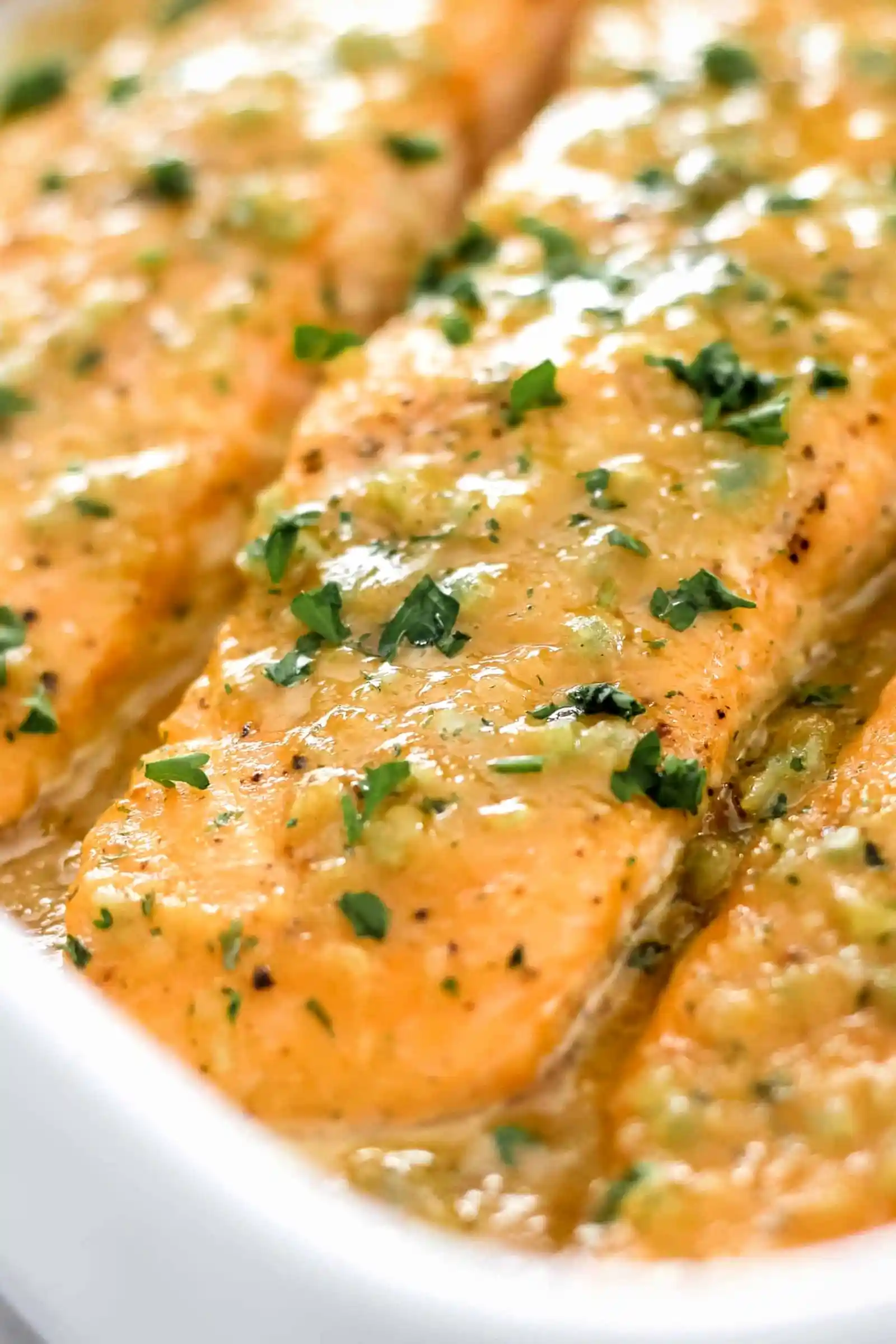
List of ingredients
- 3 6-7oz Salmon Fillets – skin-on or off, rinsed and patted dry.
- 3 tbsp Butter – softened, salted or unsalted.
- 2 tbsp Honey – any liquid variety works well.
- 2 tbsp Dijon Mustard – provides the primary tangy base.
- 4 cloves Garlic – freshly minced for maximum flavor.
- 1/2 tsp Salt – adjust based on your preference.
- 1/2 tsp Black Pepper – freshly ground for a woody heat.
- 3 tbsp Fresh Parsley – finely chopped for garnish.
- Lemon Wedges – optional for a final citrus touch.
step-by-step instructions
- Prepare Oven: Preheat your oven to 400°F (200°C) and lightly coat a 9×13-inch baking dish with non-stick cooking spray.
- Mix the Glaze: In a small mixing bowl, whisk together the softened butter, honey, Dijon mustard, and minced garlic until the mixture is smooth.
- Season the Fish: Pat the salmon fillets dry with paper towels and season both sides evenly with salt and black pepper.
- Arrange Fillets: Place the salmon fillets in the prepared baking dish with the skin or bottom side facing down.
- Apply Sauce: Spoon the honey mustard butter mixture over the top of each fillet, ensuring an even coating.
- Bake: Cook in the oven for 11 to 14 minutes, or until the fish is opaque, pink, and flakes easily with a fork.
- Garnish and Serve: Remove from the oven and immediately garnish with fresh parsley and lemon wedges before serving.
Selecting the Best Salmon Fillets
Wild-Caught vs. Farm-Raised Options
Wild-caught salmon, such as Sockeye, King, or Coho, typically has a deeper reddish-orange color and a more robust flavor. These fish are generally leaner and contain different nutrient profiles compared to farmed varieties. Farm-raised Atlantic salmon is more common in stores and usually has a lighter pink hue and a higher fat content.
The higher fat content in farmed salmon often makes it more forgiving during the baking process, as it is less likely to dry out. However, wild salmon is often preferred for its natural diet and environmental profile. Both options work well for this recipe, provided the fish is fresh.
Identifying Atlantic and Pacific Varieties
Pacific salmon includes species like Chinook and Sockeye, which are known for their rich Omega-3 content and distinct tastes. Atlantic salmon is almost exclusively farmed in modern markets due to the scarcity of wild populations. When choosing, consider that Pacific varieties may have a firmer texture.
The thickness of the fillet will vary between these types, which directly impacts your baking time. Always check the thickest part of the fillet to ensure it is cooked through without overdoing the thinner edges.
How to Check for Freshness at the Market
Fresh salmon should have a mild, clean scent and should not smell strongly of fish or ammonia. The flesh should be firm to the touch and spring back immediately when pressed with a finger. Look for a bright, consistent color without any brown spots or dull patches.
If you are buying fillets, ensure they are moist but not sitting in an excessive amount of liquid. Avoid any fish that feels slimy or has a cloudy appearance on the surface, as these are signs of degradation.
Understanding the Ingredient Roles
The Purpose of Softened Butter
Butter serves as the fat base for the glaze, providing a rich mouthfeel and helping the sauce adhere to the fish. It also helps to mellow out the sharp acidity of the mustard and the sweetness of the honey. Using softened butter allows it to whisk easily into a smooth paste.
The fat in the butter also protects the salmon from the direct heat of the oven, keeping the proteins from tightening too quickly. This results in a more tender and succulent piece of fish.
Using Honey for Natural Sweetness
Honey provides a natural sweetness that balances the pungent notes of the Dijon mustard. During the baking process, the sugars in the honey caramelize, creating a slight glaze on the surface of the salmon. This adds both a visual appeal and a depth of flavor.
Liquid honey is recommended for this recipe because it blends seamlessly with the butter and mustard. If you only have crystallized honey, gently warm it before mixing to ensure a smooth consistency.
The Tangy Profile of Dijon Mustard
Dijon mustard is chosen for its sharp, spicy, and tangy characteristics, which cut through the richness of the salmon’s natural oils. Unlike yellow mustard, Dijon has a more refined flavor and a thicker texture that holds up well under heat.
The acidity in the mustard acts as a tenderizer for the fish. It enhances the overall flavor profile by adding a layer of complexity that prevents the dish from tasting overly sweet.
Adding Depth with Minced Garlic
Fresh garlic adds a pungent, aromatic quality that complements the honey and mustard. Mincing the garlic finely ensures that the flavor is distributed evenly across the fillets without creating large, burnt chunks.
Garlic interacts with the butter during baking to create a savory base. This aromatic combination is what gives the salmon its professional, restaurant-style flavor profile.
Pro Tips for Perfect Baking
Importance of Patting the Salmon Dry
Moisture on the surface of the fish creates steam, which can prevent the glaze from adhering and stop the salmon from roasting properly. Using a lint-free paper towel to pat the fillets dry ensures the seasoning sticks and the glaze stays put.
Dry salmon also allows the heat to penetrate the flesh more efficiently. This results in a better texture and a more consistent cook throughout the fillet.
Managing Internal Temperature for Doneness
The ideal internal temperature for cooked salmon is 145°F (63°C), but many chefs prefer to pull it at 140°F. This is because the fish continues to cook as it rests, a process known as carry-over cooking.
Using a digital meat thermometer in the thickest part of the fillet is the most accurate way to prevent overcooking. Overcooked salmon becomes dry, chalky, and loses its characteristic flakiness.
The Benefits of Keeping the Skin On
Keeping the skin on during the baking process acts as a thermal shield for the delicate flesh. It prevents the bottom of the fillet from overcooking and helps the fish retain its natural juices.
Additionally, the skin provides a structural base that keeps the fillet intact while you move it from the baking dish to the plate. If you prefer not to eat the skin, it can be easily removed after cooking.
Ensuring Even Glaze Coverage
To get the most flavor, the honey mustard mixture should be dolloped and then spread evenly across the entire top surface. Ensure that the edges of the fillets are covered to prevent them from drying out in the oven.
A consistent layer of sauce ensures that every bite has the same balance of sweet and tangy notes. Avoid adding too much sauce, as it may slide off the fish and pool in the bottom of the pan.
Customizing Your Recipe
Alternative Mustard Varieties
If Dijon mustard is unavailable, whole grain mustard is an excellent substitute and adds a pleasant texture. Spicy brown mustard can also be used for a bolder, more pungent kick.
When using a different mustard, taste the sauce before applying it to the fish. You may need to slightly increase the honey if the chosen mustard is significantly spicier than Dijon.
Using Different Types of Fish
While salmon is the primary recommendation, this glaze works wonderfully with other fatty fish like Arctic char or steelhead trout. These fish have similar flavor profiles and cooking requirements.
For leaner white fish like cod or halibut, reduce the baking time slightly. Because these fish have less natural fat, they can dry out more quickly than salmon.
Swapping Honey for Other Syrups
Maple syrup is a fantastic alternative to honey, offering a woody and earthy sweetness that pairs well with salmon. Agave syrup can also be used for a more neutral sweetness.
Keep in mind that maple syrup is thinner than honey, so you may need to whisk the glaze slightly longer to achieve the desired thickness. The sweetness level remains similar, so measurements can stay the same.
Adding Different Citrus Elements
While lemon is the standard pairing, lime wedges can add a tropical twist to the dish. A small amount of orange zest whisked into the glaze can also enhance the sweetness of the honey.
Citrus acidity is crucial because it cuts through the fat of the salmon and butter. Always add the fresh citrus juice just before serving to keep the flavor bright.
Ideal Side Dish Pairings
Hearty Grain Accompaniments
Steakhouse-style mashed potatoes provide a creamy contrast to the tangy glaze of the salmon. For a more nutrient-dense option, quinoa or brown rice works well to soak up any extra sauce from the baking dish.
Wild rice is particularly effective as its nuttiness complements the richness of the fish. You can cook the grains in vegetable broth for added depth.
Fresh and Roasted Vegetable Options
Roasted asparagus or steamed broccoli are classic pairings that add color and crunch to the meal. These vegetables can often be roasted on the same tray or a separate one at 400°F.
Carrots glazed with a bit of honey and butter also mirror the flavors of the salmon, creating a cohesive meal. Sautéed spinach with garlic is another fast and healthy side.
Light Salads for Balance
A crisp garden salad with a light vinaigrette helps balance the richness of the buttered salmon. A cucumber and dill salad is especially refreshing and pairs well with the fish’s flavor profile.
Mixed greens with sliced apples or pears can add a fruity element that complements the honey in the glaze. Keep the salad dressing simple to avoid overpowering the main course.
Preservation and Reheating Guide
Proper Refrigeration Techniques
Allow the salmon to cool slightly before transferring it to an airtight container. This prevents excess moisture from building up inside the container, which can make the fish soggy.
Store the salmon in the coldest part of the refrigerator. It will remain fresh and safe to eat for up to three days.
Freezing for Long-Term Storage
To freeze the cooked salmon, wrap the fillets tightly in plastic wrap and then place them in a heavy-duty freezer bag or aluminum foil. This double-layering prevents freezer burn and preserves the flavor.
Cooked salmon can be kept in the freezer for up to three months. When you are ready to use it, thaw the fish slowly in the refrigerator overnight to maintain the best texture.
The Best Way to Reheat Leftovers
The best way to reheat salmon is over medium-low heat on a stovetop in a pan with a teaspoon of butter. This gently warms the fish without overcooking the center.
If using a microwave, use a medium power setting and heat in short 30-second intervals. Cover the fish with a damp paper towel to keep the moisture locked in and prevent the salmon from becoming rubbery.
Common Cooking Questions
Do you need to flip the salmon in the oven?
No, there is no need to flip the salmon when baking it in the oven. As long as the fillets are placed skin-side down, the heat will circulate evenly and cook the fish thoroughly.
Should salmon be baked skin side up or down?
It is highly recommended to bake salmon skin-side down. The skin protects the delicate flesh from the direct heat of the pan and helps the fish retain its moisture during the process.
Can the honey mustard sauce be made in advance?
Yes, the sauce can be prepared a few days in advance and stored in the refrigerator. Simply bring it back to room temperature or gently soften it before applying it to the salmon.
How do I know when the salmon is fully cooked?
The salmon is done when the flesh is opaque and pink and flakes easily when pressed with a fork. For complete accuracy, use a thermometer to ensure the internal temperature has reached 140-145°F.
Print
Honey Mustard Glazed Oven Baked Salmon
- Total Time: 25 minutes
- Yield: 3 servings 1x
- Diet: Gluten-Free
Description
Baked Honey Mustard Salmon is a rich, buttery, herby dish, slathered with a homemade honey mustard sauce and baked to perfection. Made with just 5 ingredients in less than 30 minutes, this flavourful family-friendly entree is a quick and easy solution to weeknight dinner.
Ingredients
- 3 6-7oz Salmon Fillets
- 3 tbsp Butter, softened
- 2 tbsp Honey
- 2 tbsp Dijon Mustard
- 4 cloves Garlic, minced
- 1/2 tsp Salt
- 1/2 tsp Black Pepper
- 3 tbsp Fresh Parsley, finely chopped
- Lemon Wedges
Instructions
- Step: Preheat oven to 400°F (200°C), and spray a 9×13-inch baking dish with non-stick cooking spray.
- Step: In a small mixing bowl whisk together softened butter, honey, dijon mustard and minced garlic.
- Step: Pat dry salmon fillets and season both sides with salt and pepper. Lay salmon fillets with skin/bottom side down in the prepared baking dish.
- Step: Dollop buttered honey mustard mixture overtop salmon fillets and bake in oven for 11 – 14 minutes, or until just about flaky, pink and opaque. Garnish with fresh parsley, lemon wedges and serve immediately.
Notes
Salmon Doneness – Once your salmon is done, it will easily flake with a fork or reach an internal temperature of 145°F/63°C.
- Prep Time: 10 minutes
- Cook Time: 15 minutes
- Category: Fish & Seafood
- Method: Baking
- Cuisine: American
Nutrition
- Serving Size: 1 fillet
- Calories: 399 kcal
- Sugar: 12 g
- Sodium: 472 mg
- Fat: 23 g
- Saturated Fat: 9 g
- Unsaturated Fat: 12 g
- Trans Fat: 0.5 g
- Carbohydrates: 14 g
- Fiber: 1 g
- Protein: 35 g
- Cholesterol: 124 mg