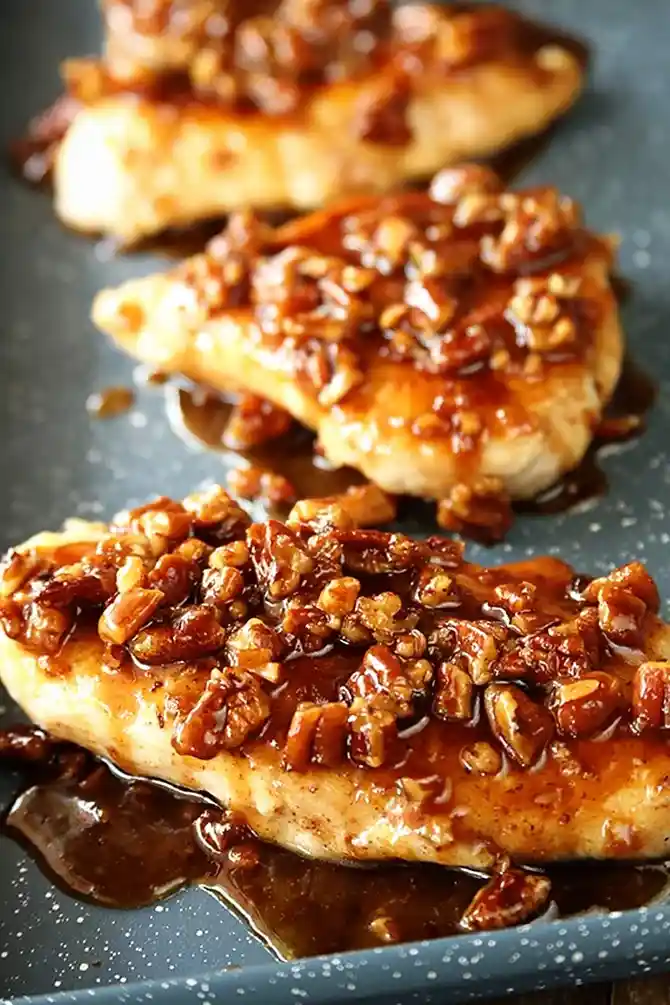
This Honey Garlic Pecan Chicken is a quick pan-seared meal featuring a sweet and savory nut sauce. It is an ideal choice for weeknight dinners that require a sophisticated touch without hours of preparation.
List of ingredients
- 4 thin, boneless, skinless chicken breasts – pounded to 1/2-inch thickness for even cooking.
- 1 teaspoon seasoned salt – use your preferred all-purpose seasoning.
- 2 tablespoons olive oil – used for searing the chicken.
- 1/4 cup all-purpose flour – for lightly dredging the meat.
- 4 tablespoons unsalted butter – provides richness to the pecan sauce.
- 1/2 cup chopped pecans – toasted in butter for aromatic flavor.
- 3 cloves garlic (minced) – provides a pungent, savory base.
- 1/3 cup chicken broth – used to deglaze the pan.
- 1/4 cup honey – adds sweetness and thickness to the glaze.
- 1/2 teaspoon salt – for final seasoning.
- 1/4 teaspoon pepper – for a touch of spice.
step-by-step instructions
- Prepare the Chicken: Place chicken breasts between two pieces of plastic wrap or in a ziptop bag and pound to about 1/2-inch thick. Place on a tray and season both sides with the seasoned salt. Set aside.
- Heat the Pan: Heat the olive oil in a large heavy-bottomed skillet over medium heat. Ensure the oil is hot enough to create a sizzle upon contact.
- Dredge and Sear: Add flour to a plate and lightly dredge the chicken. Add the chicken to the hot oil; if it does not sizzle, heat the oil longer. Sear for 4 to 5 minutes per side until golden brown and cooked through.
- Rest the Meat: Remove the chicken from the skillet and set on a wire rack. Tent the meat with foil to keep it warm and juicy.
- Toast the Pecans: Add butter to the skillet and allow it to melt. Add chopped pecans and cook, stirring frequently, for about 3 minutes until fragrant and foamy.
- Sauté Garlic: Add minced garlic to the butter and pecans. Cook while stirring constantly for 1 minute to avoid burning.
- Deglaze the Skillet: Pour in the chicken broth. Stir and scrape the bottom of the skillet to release the browned bits of meat, known as the fond.
- Thicken the Sauce: Reduce heat to a simmer and stir in the honey, salt, and pepper. Cook, stirring frequently, for about 5 minutes until the mixture thickens.
- Serve: Place the chicken on a platter or plate and spoon the honey garlic pecan sauce over the top.
Professional Cooking Techniques
Ensuring Uniform Chicken Thickness
Pounding the chicken to a consistent 1/2-inch thickness is critical for success. This ensures that the edges do not overcook before the center is fully done. Use a meat mallet or a heavy rolling pin to achieve this uniformity.
Managing Pan Temperature for Searing
The oil must be shimmering and hot before the chicken is added to the pan. A distinct sizzle indicates that the temperature is high enough to create a golden-brown crust. If the chicken sticks or doesn’t sizzle, remove it and allow the oil to heat further.
The Importance of Deglazing the Pan
The browned bits left in the pan after searing are called the fond and contain concentrated flavor. Adding chicken broth and scraping these bits incorporates that deep, savory taste into the final sauce. Use a wooden spoon to ensure all the fond is integrated.
Handling Garlic to Prevent Burning
Garlic has a low burn point and can turn bitter if exposed to high heat for too long. Add it only after the pecans are toasted and cook it for no more than 60 seconds. Immediately follow with the broth to lower the pan temperature.
Ingredient Alternatives and Swaps
Alternative Nut Options
If pecans are unavailable, chopped walnuts provide a similar earthy flavor and texture. Sliced almonds can also be used for a lighter, crunchier result. Ensure the nuts are chopped to a similar size for consistent toasting.
Honey Replacements for Sweetness
Pure maple syrup is an excellent substitute for honey, offering a distinct woody sweetness. Agave nectar can also be used as a vegan-friendly alternative that blends easily into the sauce. Adjust the quantity slightly as sweetness levels vary between these liquids.
Flour Alternatives for Coating
Cornstarch can be used instead of all-purpose flour to create a slightly crispier exterior. For a gluten-free option, use a blend of almond flour and a pinch of cornstarch. Keep the dredging light to avoid a heavy batter.
Butter Substitutes for the Sauce
Ghee is a great alternative to butter as it has a higher smoke point and a rich, nutty taste. For a dairy-free version, use a high-quality plant-based butter or a neutral oil. Note that oil will not foam like butter during the pecan toasting phase.
Side Dish and Serving Suggestions
Best Grain Accompaniments
Jasmine rice is highly recommended because its aromatic profile complements the honey and garlic. Steamed brown rice or quinoa provides a heartier, nuttier base that pairs well with the pecans. These grains are excellent for soaking up the extra sauce.
Fresh Vegetable Side Pairings
Steamed broccoli or sautéed green beans add a necessary brightness and crunch to the meal. Roasted Brussels sprouts also pair well with the sweetness of the honey glaze. Keep the vegetables lightly seasoned to allow the chicken sauce to remain the star.
Potato Side Dish Ideas
Creamy mashed potatoes offer a soft contrast to the toasted pecans. Roasted fingerling potatoes or a simple baked potato also work well. Spooning the extra sauce over the potatoes adds additional flavor to the plate.
Proper Storage and Preservation
Refrigerating Leftovers
Store leftover chicken and sauce in separate airtight containers to maintain the best texture. Place them in the refrigerator immediately after they have cooled to room temperature. This prevents the sauce from soaking into the meat and making it soggy.
Freezing Instructions
While the fresh seared chicken is best, you can freeze the cooked breasts for up to two months. Freeze the sauce separately in a freezer-safe bag or container. Thaw them in the refrigerator overnight before reheating.
Maximum Storage Duration
Cooked chicken and sauce should be consumed within 3 to 4 days when kept in the refrigerator. If the sauce begins to separate or the chicken develops an off-smell, discard it. Always ensure the containers are airtight to prevent odor transfer.
Methods for Reheating
Stovetop Reheating Method
Place the chicken in a skillet over low to medium heat with a teaspoon of water or broth. Cover the pan to steam the meat and keep it moist. Warm the sauce in a separate small pot until it reaches a simmer before pouring it over the chicken.
Microwave Reheating Tips
Place the chicken and sauce on a microwave-safe plate and cover it with a damp paper towel. Heat in short 30-second intervals, stirring the sauce in between. This prevents the chicken from becoming rubbery or the sauce from splitting.
Oven Reheating Approach
Preheat the oven to 300 degrees Fahrenheit and place the chicken in a baking dish. Add a splash of broth to the bottom of the dish and cover it tightly with foil. Heat for 10 to 15 minutes until warmed through, then top with the heated sauce.
Preparation and Make-Ahead Tips
Preparing the Chicken in Advance
You can pound and season the chicken breasts several hours before cooking. Store them in a sealed container in the refrigerator to allow the seasoning to penetrate the meat. This saves time during the actual cooking process.
Pre-chopping Ingredients
Mince the garlic and chop the pecans ahead of time and keep them in small bowls. Having all ingredients measured and ready (mise en place) prevents the garlic from burning while you search for other items. This is especially helpful for busy weeknights.
Storing the Sauce Separately
If you are preparing this for a dinner party, you can make the sauce entirely in advance. Reheat it slowly on the stove just before serving the chicken. This allows you to focus on getting the perfect sear on the meat.
Common Cooking Troubleshooting
Fixing a Sauce That is Too Thin
If the sauce has not thickened enough after five minutes, continue to simmer it for another few minutes. Alternatively, you can whisk in a tiny pinch of cornstarch mixed with water. Stir constantly over heat until the desired consistency is reached.
Addressing Overcooked Chicken
To avoid dry meat, use an instant-read thermometer to ensure the chicken reaches 165 degrees Fahrenheit. If the chicken is already overcooked, serve it with extra sauce to add moisture back into the meat. Resting the meat under foil also helps redistribute juices.
Preventing Pecans from Burning
Keep the heat at a medium level and stir the pecans constantly. Because they contain natural oils, they can go from toasted to burnt very quickly. Remove them from the pan the moment they become fragrant.
Frequently Asked Questions
Can I use chicken thighs instead of breasts?
Yes, boneless skinless chicken thighs can be used and will remain very juicy. However, they may require a slightly longer sear time than the pounded breasts. Follow the same dredging and sauce process for a delicious result.
How do I know when the chicken is done?
The safest way is to use a meat thermometer to check for an internal temperature of 165 degrees Fahrenheit. Visually, the chicken should be golden brown and the juices should run clear. The meat should feel firm to the touch.
Can I use salted butter?
You can use salted butter, but you should reduce the additional salt added to the sauce. Taste the sauce before adding the final 1/2 teaspoon of salt to avoid over-seasoning. Always adjust seasoning at the end of the process.
What is the best oil for searing?
Olive oil is recommended for this recipe, but any oil with a medium-to-high smoke point will work. Avocado oil or grapeseed oil are excellent alternatives if you prefer a neutral taste. Avoid using butter for the initial sear as it can burn at high temperatures.
Print
Honey Garlic Pecan Chicken
- Total Time: 35 minutes
- Yield: 4 servings 1x
- Diet: General
Description
A pan-seared, juicy chicken recipe with a delectable pecan, garlic, and honey sauce. Quick, easy, and utterly delicious!
Ingredients
- 4 thin, boneless, skinless chicken breasts
- 1 teaspoon seasoned salt
- 2 tablespoons olive oil
- 1/4 cup all-purpose flour
- 4 tablespoons unsalted butter
- 1/2 cup chopped pecans
- 3 cloves garlic (minced)
- 1/3 cup chicken broth
- 1/4 cup honey
- 1/2 teaspoon salt
- 1/4 teaspoon pepper
Instructions
- Pound and Season: Place chicken breast between two pieces of plastic wrap or in a ziptop bag and pound to about 1/2-inch thick. Place on a tray and season both sides of the chicken with the seasoned salt. Set aside.
- Heat Oil: Heat the olive oil in a large heavy-bottomed skillet over medium heat.
- Dredge and Sear: Add the flour to a plate and lightly dredge the chicken in the flour. Add it to the hot oil.
- Cook Chicken: Sear the chicken for 4 to 5 minutes on each side or until golden brown and cooked through. Remove and set on a wire rack. Tent with foil.
- Toast Pecans: Add the butter to the skillet and allow it to melt. Add the pecans and cook, stirring frequently, for about 3 minutes or until the pecans are fragrant.
- Sauté Garlic: Add the garlic and cook, stirring constantly, for 1 minute. Add the chicken broth and stir, scraping the bottom of the skillet to get the browned bits off the bottom.
- Thicken Sauce: Reduce the heat to a simmer and add the honey, salt, and pepper. Cook, stirring frequently until the mixture thickens – about 5 minutes. Serve the chicken with the sauce spooned over the top.
Notes
Use an instant read thermometer to ensure chicken reaches 165°F without drying out. Pounding the chicken to a thin uniform thickness is important for quick and even cooking.
- Prep Time: 10 minutes
- Cook Time: 25 minutes
- Category: Main Course
- Method: Pan-searing
- Cuisine: American
Nutrition
- Serving Size: 1 serving
- Calories: 483 kcal
- Sugar: 18 g
- Sodium: 1079 mg
- Fat: 31 g
- Saturated Fat: 10 g
- Unsaturated Fat: 21 g
- Trans Fat: 0.5 g
- Carbohydrates: 26 g
- Fiber: 2 g
- Protein: 27 g
- Cholesterol: 103 mg