This honey-garlic glazed salmon is a fast and flavorful meal perfect for busy weeknights. It combines a sweet and savory sauce with seared fillets for a restaurant-quality dinner in under 30 minutes.
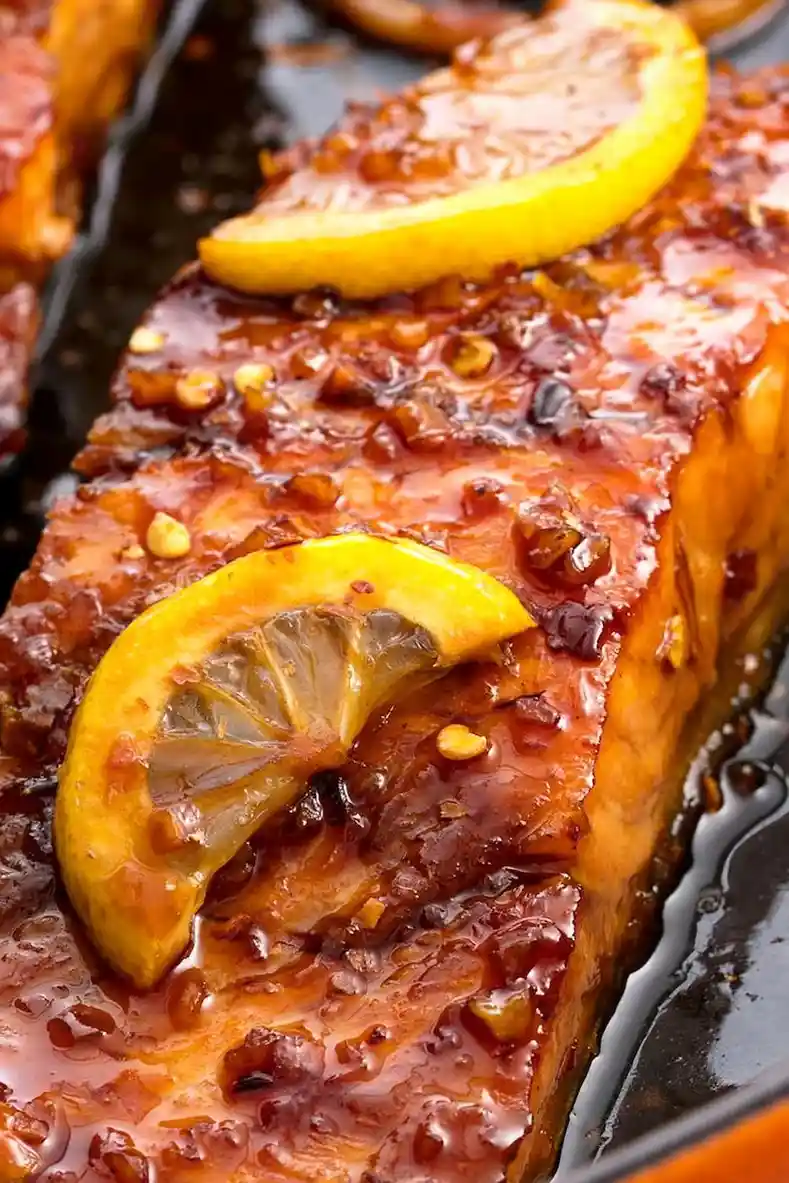
List of ingredients
- 1/3 cup honey – provides sweetness and helps the sauce thicken.
- 1/4 cup reduced-sodium soy sauce – adds a savory, salty depth of flavor.
- 2 tbsp. fresh lemon juice – cuts through the richness of the salmon.
- 1 tsp. crushed red pepper flakes – adds a subtle hint of heat.
- 3 tbsp. extra-virgin olive oil, divided – used for searing and sautéing garlic.
- 4 (6-oz.) salmon fillets, patted dry with paper towels – ensures a proper sear.
- Kosher salt – to taste for seasoning.
- Freshly ground black pepper – to taste for seasoning.
- 3 garlic cloves, minced – provides a pungent, aromatic base.
- 1 lemon, thinly sliced into rounds – used for flavor and garnish.
step-by-step instructions
- Prepare the glaze: In a medium bowl, whisk together the honey, soy sauce, lemon juice, and red pepper flakes until the mixture is well combined.
- Sear the salmon: Heat 2 tablespoons of oil in a large skillet over medium-high heat. When the oil is hot but not smoking, place the salmon fillets in the pan skin side up, then season the flesh with salt and black pepper. Cook undisturbed for about 2 minutes until the flesh is seared and golden.
- Glaze and finish: Flip the salmon fillets skin side down and add the remaining 1 tablespoon of oil to the pan. Stir in the minced garlic and cook for about 1 minute until fragrant. Pour in the honey mixture and add the lemon slices, basting the salmon occasionally as the sauce reduces by about one-third, which takes approximately 3 more minutes.
Professional Searing Techniques
Dry the Salmon Surfaces Thoroughly
Moisture is the enemy of a good sear. Use heavy-duty paper towels to pat every side of the fillets dry before they hit the pan. This prevents the fish from steaming and allows for a deep, golden-brown crust.
Maintain Optimal Pan Temperature
The skillet must be hot enough that the oil shimmers, but not so hot that it smokes. If the oil smokes, it can break down and leave a bitter taste. If the fish doesn’t sizzle immediately upon contact, remove the pan from the heat for a moment to adjust.
Avoid Over-Handling the Fish
Once the salmon is in the pan, leave it alone for the first two minutes. Moving the fillets too early prevents the Maillard reaction from occurring, which is what creates the flavorful crust. Use a thin spatula to gently check if the fish releases easily from the surface.
Achieving a Crispy Skin
Flipping the fish to the skin side for the final few minutes allows the skin to crisp up. The high heat and the addition of the glaze create a caramelized exterior while keeping the interior moist. Ensure the pan is not overcrowded to maintain a consistent temperature.
Ingredient Substitutions and Swaps
Replace Soy Sauce with Coconut Aminos
For those avoiding soy, coconut aminos are an excellent alternative. They provide a similar savory profile but are naturally sweeter and contain less sodium. You may need to slightly reduce the amount of honey to balance the extra sweetness.
Use Maple Syrup Instead of Honey
Maple syrup can be swapped in a 1:1 ratio for honey. This change introduces a woody, autumnal flavor that pairs exceptionally well with the lemon juice. It also tends to thin out slightly more, so you may need an extra minute of reduction time.
Swap Lemon Juice for Lime Juice
Lime juice offers a sharper, more tropical acidity than lemon. This variation works particularly well if you are serving the salmon with coconut rice or other Asian-inspired sides. Use the same quantity of lime juice as indicated for lemon juice.
Adjusting the Heat Level
If you prefer a spicier dish, replace the red pepper flakes with a tablespoon of Sriracha or chili garlic sauce. Conversely, if you are cooking for children or those sensitive to spice, simply omit the red pepper flakes entirely without affecting the overall structure of the glaze.
Recommended Side Dish Pairings
Coconut Rice for Sauce Absorption
Cook jasmine rice using a mixture of coconut milk and water instead of plain water. The creaminess of the coconut rice perfectly complements the sweet and salty honey-garlic glaze. It also helps soak up any extra sauce left in the pan.
Sautéed Bok Choy with Ginger
Bok choy provides a fresh, crunchy contrast to the rich salmon. Quickly sauté the greens with a bit of minced ginger and a splash of soy sauce. This keeps the meal balanced and adds a vibrant green color to the plate.
Caramelized Brussels Sprouts
Roast halved Brussels sprouts at 400 degrees Fahrenheit until the edges are charred. The earthy bitterness of the sprouts cuts through the sweetness of the honey glaze. Toss them with a small amount of olive oil and salt before roasting.
Steamed Asparagus Tips
For a lighter option, steam fresh asparagus until tender-crisp. Season them with a squeeze of lemon juice and a pinch of salt. This provides a clean, bright flavor that doesn’t compete with the bold garlic glaze.
Quinoa or Wild Rice Blend
A blend of wild rice and quinoa adds a nutty flavor and extra protein to the meal. Cook it in vegetable broth instead of water for more depth. This option is ideal for those looking for a heartier, whole-grain accompaniment.
Storage and Reheating Guidance
Refrigeration and Shelf Life
Store any leftover salmon in an airtight glass container in the refrigerator. It will remain fresh and safe to eat for up to three days. Ensure the fish is completely cooled before sealing the container to avoid excess moisture buildup.
Gentle Reheating Methods
To avoid overcooking the fish, reheat salmon in the oven at 275 degrees Fahrenheit for about 10-15 minutes. Avoid using a microwave on high power, as this can make the fish rubbery. If using a microwave, use the medium power setting and heat in 30-second intervals.
Reviving the Glaze Texture
The glaze may thicken or separate during refrigeration. When reheating in a pan, add a teaspoon of water or vegetable broth to loosen the sauce. This restores the glossy appearance and allows it to coat the fish evenly again.
Make-Ahead Preparation Tips
Prepping the Glaze in Advance
The honey-garlic mixture can be made up to a week in advance. Whisk the ingredients together and store them in a sealed jar in the refrigerator. Shake well before using to ensure the honey and soy sauce are fully integrated.
Preparing the Salmon Fillets
You can portion your salmon and pat them dry a few hours before cooking. Store them on a plate covered with plastic wrap in the fridge. This saves time during the actual cooking process and ensures the fillets are at a stable temperature.
Slicing the Garnish Early
Slice the lemon rounds and mince the garlic during your morning prep. Store the minced garlic in a small container with a drop of oil to prevent it from oxidizing. This allows you to move straight to the searing process when dinner time arrives.
Cooking Troubleshooting
Preventing the Fish from Sticking
If the salmon sticks to the pan, it is usually because the pan wasn’t hot enough or the fish was flipped too soon. Wait for the fish to naturally release from the surface. Using a stainless steel pan with a proper oil layer is the best way to ensure a clean release.
Fixing a Sauce That Reduces Too Fast
Honey-based sauces can burn quickly if the heat is too high. If the glaze becomes too thick or sticky before the fish is done, stir in a tablespoon of water. This thins the sauce and gives the salmon more time to cook through.
Avoiding Burnt Garlic
Garlic burns much faster than salmon cooks. Add the garlic to the pan only after the salmon has been flipped and is nearly finished. This ensures the garlic becomes fragrant and golden without turning bitter and black.
Removing Pin Bones Safely
Even supermarket fillets can have small pin bones. Run your finger along the center of the fillet to feel for any protrusions. Use clean kitchen tweezers to pull the bone out in the direction it is pointing to avoid tearing the flesh.
Frequently Asked Questions
Can I use frozen salmon for this recipe?
Yes, but you must thaw the salmon completely in the refrigerator overnight. Cooking frozen salmon directly in the pan will result in an uneven cook and a steamed texture rather than a sear. Always pat the thawed fillets very dry.
What is the best cut of salmon to use?
Center-cut fillets are the best choice because they have a uniform thickness. This ensures that all pieces cook at the same rate. If your fillets vary in size, add the thicker pieces to the pan first.
How do I know when the salmon is fully cooked?
The salmon is done when the internal temperature reaches 145 degrees Fahrenheit. Alternatively, use a fork to gently press the top of the fillet; if the flesh flakes easily along the lines, it is ready. Avoid overcooking to keep the fish moist.
Can this recipe be made in the oven?
Yes, you can bake the salmon at 400 degrees Fahrenheit for 12-15 minutes. However, you will miss the characteristic sear of the pan. For the best of both worlds, sear the fish in a pan for 2 minutes per side and finish it in the oven while brushing on the glaze.
Print
Honey-Garlic Glazed Salmon
- Total Time: 20 minutes
- Yield: 4 servings 1x
- Diet: General
Description
This easy honey-garlic glazed salmon recipe is simple to make for quick and easy weeknights, but is also fancy enough to impress for your next dinner party.
Ingredients
- 1/3 cup honey
- 1/4 cup reduced-sodium soy sauce
- 2 tbsp fresh lemon juice
- 1 tsp crushed red pepper flakes
- 3 tbsp extra-virgin olive oil, divided
- 4 (6-oz) salmon fillets, patted dry with paper towels
- Kosher salt
- Freshly ground black pepper
- 3 garlic cloves, minced
- 1 lemon, thinly sliced into rounds
Instructions
- Step 1: In a medium bowl, whisk honey, soy sauce, lemon juice and red pepper flakes.
- Step 2: In a large skillet over medium-high heat, heat 2 Tbsp. oil. When oil is hot but not smoking, add salmon skin side up; season with salt and black pepper. Cook until flesh is just heated through and seared, about 2 minutes.
- Step 3: Flip salmon skin side down and add remaining 1 Tbsp. oil. Add garlic and cook until fragrant, about 1 minute. Add honey mixture and lemons and cook, basting salmon occasionally, until sauce is reduced by about one-third, about 3 minutes more.
Notes
To achieve a delicious crust, let the fillets cook undisturbed for a few minutes. Use a spatula to gently lift a corner to check if it releases easily before flipping.
- Prep Time: 5 minutes
- Cook Time: 15 minutes
- Category: Dinner
- Method: Searing
- Cuisine: Asian-American
Nutrition
- Serving Size: 1 fillet
- Calories: 552 kcal
- Sugar: 18 g
- Sodium: 720 mg
- Fat: 32 g
- Saturated Fat: 8 g
- Unsaturated Fat: 24 g
- Trans Fat: 0 g
- Carbohydrates: 22 g
- Fiber: 1 g
- Protein: 38 g
- Cholesterol: 105 mg